


The 3-Line Summary
- The 2nd ArmIGF met in Yerevan on 5 October 2016 under the theme 'Internet governance for sustainable and inclusive development', packing OTT regulation, cybersecurity and the fight against misinformation into one day.
- The transport and communications minister opened alongside ICANN VP Mikhail Yakushev, who reported on the IANA stewardship transition completed just four days earlier; the cybersecurity panel mixed international experts with a general.
- The line that survives is the organiser's: neither bureaucracy nor legislation can keep up with the internet's pace — the same gap every platform-regulation debate wrestles with today.
Welcome — this is the Japan IGF Support Organization. This in-depth report on 2nd Armenian Internet Governance Forum (ArmIGF 2016) draws on official outputs, session records and on-site reporting. In a hurry? The three lines above and the diagrams carry the gist.
Conference at a Glance (from official records)
| Item | Detail |
|---|---|
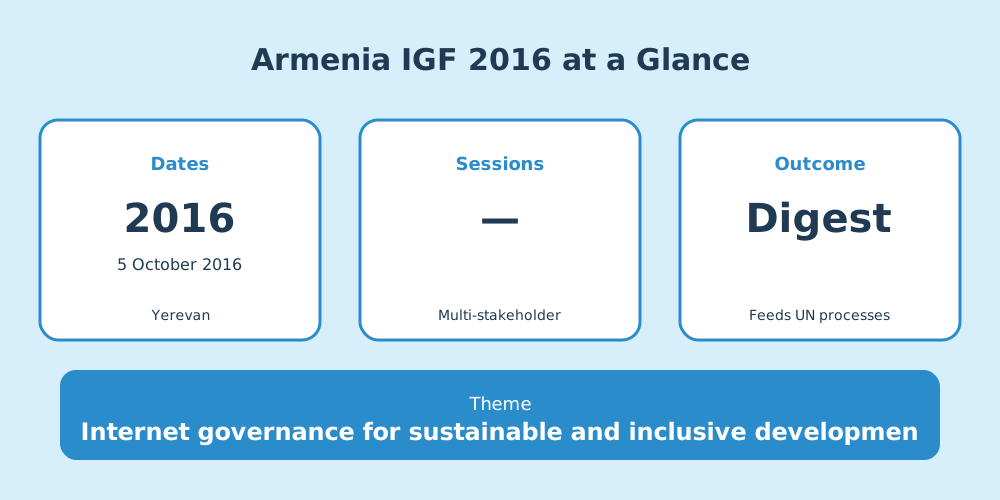
| Official name | 2nd Armenian Internet Governance Forum (ArmIGF 2016) |
| Dates | 5 October 2016 |
| Venue | Yerevan |
| Theme | Internet governance for sustainable and inclusive development |
| Host | The inter-agency Internet governance working group (IGC), the Ministry of Transport and Communications, and the Internet Society NGO |
(See the source list at the end of this article.)
Discussion Digest — from the Session Records
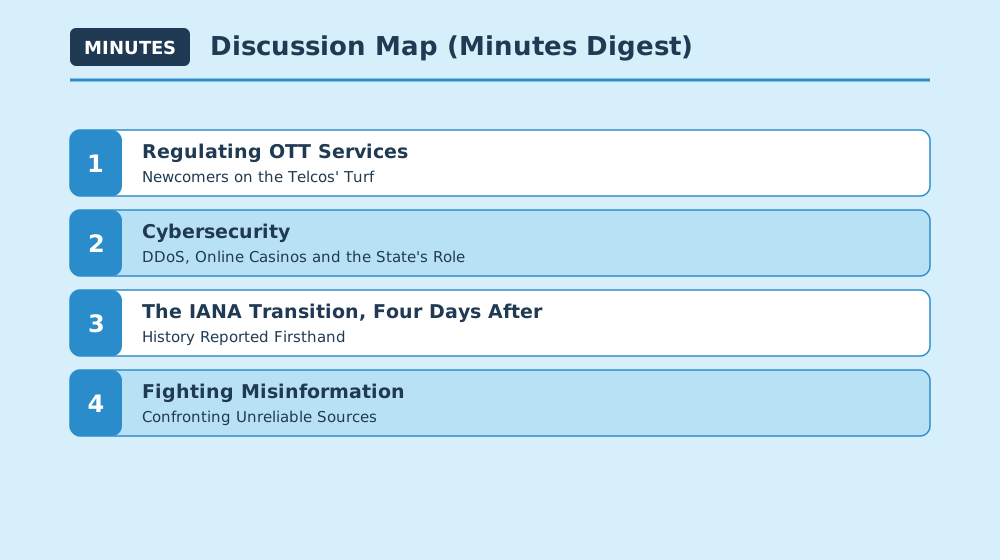
Key exchanges extracted from session records and transcripts.
1. Regulating OTT Services — Newcomers on the Telcos' Turf
Sessions: Panel 'Regulating OTT Services in the Market' (10:20–11:30, moderated by Grigori Saghyan)
- As messaging and streaming services moved onto telecom turf, the panel — including ISOC's Frédéric Donck — asked whether OTT players should carry licensed operators' obligations [2]
- It localised the OTT-regulation debate then brewing around the ITU, prefiguring today's platform-regulation arguments [2]
2. Cybersecurity — DDoS, Online Casinos and the State's Role
Sessions: Panel 'Cybersecurity: Today's Imperative' (15:15–16:30)
"The development rates of internet are so high nowadays that neither bureaucratic government system nor legislation keep up with it (as reported in English by Arminfo)"
— Grigori Saghyan (IGC Secretary; VP, ISOC Armenia) [3][2]
- The panel spanned PIR Center's Oleg Demidov, ICANN's Alexandra Kulikova, DNSSEC pioneer Richard Lamb and General Hayk Kotanjyan [3][2]
- Press coverage lists DDoS defence, child protection online, online casino operations and state-community cooperation as the key threads [3][2]
- Saghyan contrasted Armenia's horizontal, democratic governance model — built on network-neutrality principles — with content control delegated to operators [3][2]
3. The IANA Transition, Four Days After — History Reported Firsthand
Sessions: Talk 'IANA Transition Updates' (15:00–15:15, ICANN VP Mikhail Yakushev)
- US oversight of IANA ended on 1 October 2016; four days later an ICANN vice-president explained what that meant at a national forum [2]
- A small country's domestic forum received the news of core internet resources leaving single-government control essentially in real time [2]
4. Fighting Misinformation — Confronting Unreliable Sources
Sessions: Panel 'Fighting Misinformation Online' (17:15–18:15, moderated by Samvel Martirosyan)
- Editors and communications experts debated how to handle unreliable online sources — weeks before the US election's fake-news storm made the topic global [2][3]
- Adjacent sessions covered social networks as business tools, the IT labour market, and the data-protection agency's enforcement under Gevorg Hayrapetyan, rounding out the 'inclusive development' theme [2][3]
Three-Minute Short Talk — Your Questions Answered
Q. What did this meeting decide?
A. Nothing binding — the second edition of an annual forum where government, business and civil society spend a day on issues like OTT regulation and misinformation, then send the conclusions to the authorities.
Q. What was the biggest news?
A. An ICANN vice-president reporting on the IANA stewardship transition four days after it completed — the moment core internet resources left US-government oversight.
Q. Why should I care?
A. The organiser's line — bureaucracy and law can't keep up with the internet — is the exact tension every platform- and AI-regulation debate still turns on.
What Is Armenia IGF? (for first-time readers)
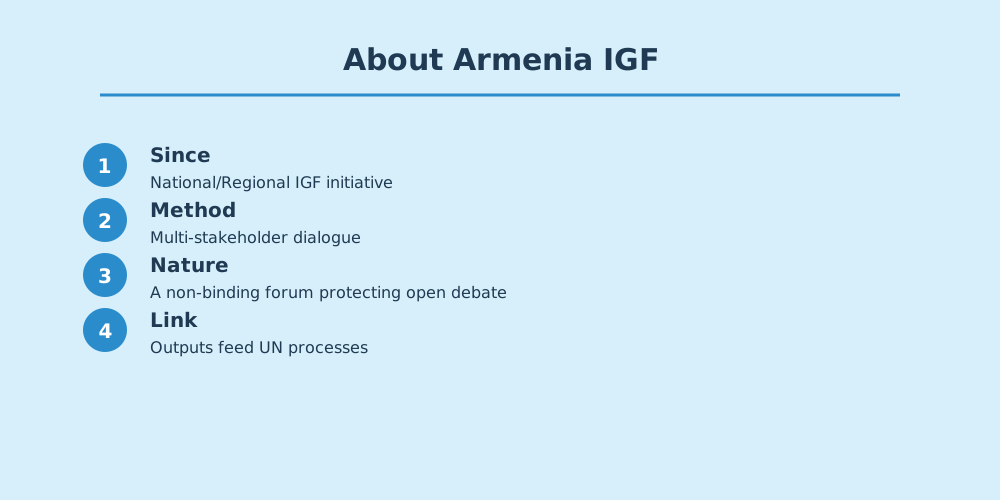
Armenia IGF is a National or Regional IGF Initiative (NRI), aligning local internet governance discussion with global IGF principles.
Why It Matters to You
What was discussed here becomes the baseline for national digital policy, platform rules and AI regulation worldwide within a few years. The principles confirmed at the 2016 meeting are the foundation of the "next rules" for the phones, social platforms and AI services you use every day.
Sources & References
- ARMIGF 2016(公式アーカイブ) — ArmIGF公式サイト (accessed 2026-07-11)
- ArmIGF 2016 Agenda(公式プログラム・全セッションと登壇者) — ArmIGF公式サイト (accessed 2026-07-11)
- Armenian Internet Governance Forum finished in Yerevan(2016年10月7日付) — Arminfo(アルメニア通信社) (accessed 2026-07-11)
- Armenian Internet Governance Forum (ArmIGF)(系列概要) — Internet Society NGO(ISOC Armenia、.am/.հայレジストリ) (accessed 2026-07-11)
Quotes are translated or condensed from the records listed above. Bracketed numbers [n] refer to the source list.
Related links
- IGF official (NRI list): https://www.intgovforum.org/en/content/national-and-regional-igf-initiatives
- Japan IGF: https://japanigf.jp/
- Yuki Nakazawa's blog: https://nkzw.jp/category/igf/
Revision History
Rev. 1 — published 23 June 2016, 14:00 (Article published)
Rev. 2 — updated 17 July 2026, 12:32 (Fully revised into the in-depth edition: added the 3-line summary, minutes digest, short talk, source list and diagrams (all quotes verified against the listed sources))
— 中澤祐樹

