


The 3-Line Summary
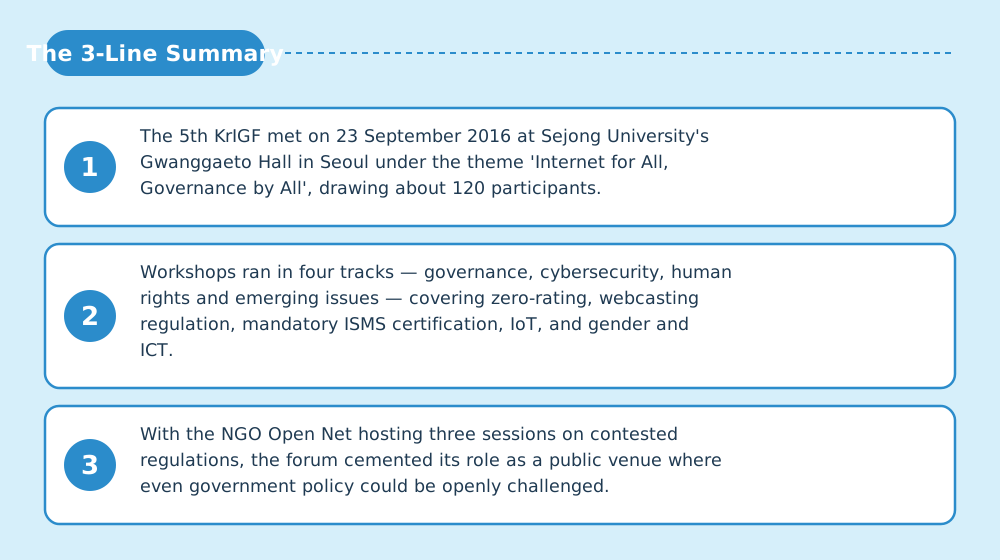
- The 5th KrIGF met on 23 September 2016 at Sejong University's Gwanggaeto Hall in Seoul under the theme 'Internet for All, Governance by All', drawing about 120 participants.
- Workshops ran in four tracks — governance, cybersecurity, human rights and emerging issues — covering zero-rating, webcasting regulation, mandatory ISMS certification, IoT, and gender and ICT.
- With the NGO Open Net hosting three sessions on contested regulations, the forum cemented its role as a public venue where even government policy could be openly challenged.
Welcome — this is the Japan IGF Support Organization. This in-depth report on 5th Korea Internet Governance Forum (KrIGF 2016) draws on official outputs, session records and on-site reporting. In a hurry? The three lines above and the diagrams carry the gist.
Conference at a Glance (from official records)
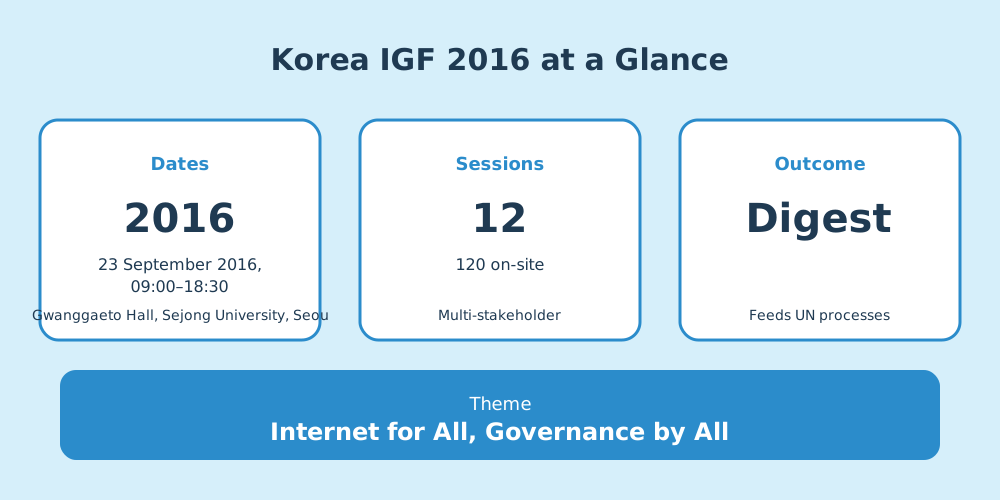
| Item | Detail |
|---|---|
| Official name | 5th Korea Internet Governance Forum (KrIGF 2016) |
| Dates | 23 September 2016, 09:00–18:30 |
| Venue | Gwanggaeto Hall, Sejong University, Seoul |
| Theme | Internet for All, Governance by All |
| Participants | 120 |
| Sessions | 12 |
| Host | Hosted by the Korea Internet Governance Alliance (KIGA), co-organised by 21 bodies including KISA and Kakao; sponsored by the Ministry of Science, ICT and Future Planning, Naver, Kakao and Gabia |
(See the source list at the end of this article.)
Discussion Digest — from the Session Records
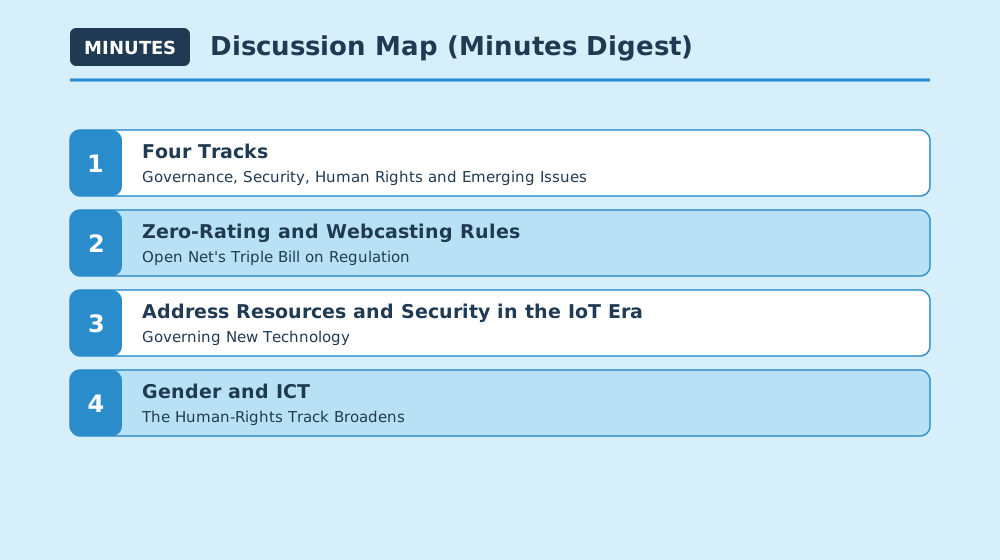
Key exchanges extracted from session records and transcripts.
1. Four Tracks — Governance, Security, Human Rights and Emerging Issues
Sessions: Multiple sessions
- Ten workshops were clustered into four tracks — internet governance, cybersecurity, human rights and emerging issues — mirroring the global IGF's architecture at national scale, as dig.watch records [2][3]
- KIGA's official history logs 12 sessions and about 120 participants, with address-resource governance, IoT and information-security management as headline topics [2][3]
2. Zero-Rating and Webcasting Rules — Open Net's Triple Bill on Regulation
Sessions: Multiple sessions
- The NGO Open Net hosted three sessions on contested regulations: webcasting rules, zero-rating and mandatory ISMS (information security management system) certification [4][2]
- Zero-rating raised net-neutrality alarms, and the ISMS mandate — then being extended to universities — was among the year's most disputed rules, making the forum a channel for open policy criticism [4][2]
3. Address Resources and Security in the IoT Era — Governing New Technology
Sessions: Multiple sessions
- With IoT adoption accelerating, governance of address resources and security-management regimes topped the agenda, per KIGA's official history [3][2]
- Workshops on domain names and international politics, cryptographic policy, and network security brought the technical community and policymakers to the same table, dig.watch notes [3][2]
4. Gender and ICT — The Human-Rights Track Broadens
Sessions: Multiple sessions
- Sessions on gender and ICT, net neutrality, privacy and data protection, intermediary liability and online-to-offline commerce anchored the human-rights and emerging-issues tracks [2][1]
- True to the theme 'Internet for All', the programme deliberately wove user and citizen perspectives into technology policy debates [2][1]
Three-Minute Short Talk — Your Questions Answered
Q. What did this meeting decide?
A. Nothing binding — it is an annual forum where government, business and civil society debate as equals. Its value in 2016 was subjecting live regulations, from zero-rating to the ISMS mandate, to public scrutiny.
Q. What was the most contentious topic?
A. Regulation itself: is zero-rating fair to competitors, and did mandatory security certification go too far? Civil-society groups pressed these questions directly.
Q. Why should I care?
A. Mobile data pricing, webcasting rules, IoT security — the agenda was the everyday internet, debated in the open.
What Is Korea IGF? (for first-time readers)
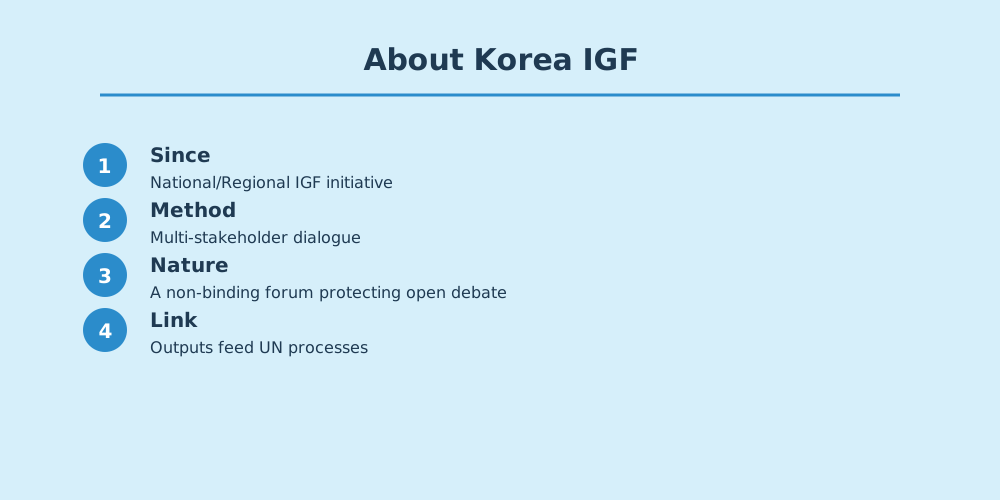
Korea IGF is a National or Regional IGF Initiative (NRI), aligning local internet governance discussion with global IGF principles.
Why It Matters to You
What was discussed here becomes the baseline for national digital policy, platform rules and AI regulation worldwide within a few years. The principles confirmed at the 2016 meeting are the foundation of the "next rules" for the phones, social platforms and AI services you use every day.
Sources & References
- 2016 KrIGF 개요(第5回フォーラム概要) — KrIGF公式サイト(Kr-IGF 한국 인터넷거버넌스포럼) (accessed 2026-07-11)
- Korea Internet Governance Forum(2016年版イベントページ) — DiploFoundation (accessed 2026-07-11)
- 한국 인터넷거버넌스포럼 (KrIGF) 소개・개최 이력(開催履歴表) — KRNIC 한국인터넷정보센터(KISA運営) (accessed 2026-07-11)
- Summary of Activities(2016年のKrIGFセッション主催記録) — Open Net Korea(오픈넷) (accessed 2026-07-11)
- 2025년 제14회 한국 인터넷거버넌스포럼 세미나 정보(歴代テーマ一覧を含む) — 韓国国会図書館(국회도서관) (accessed 2026-07-11)
Quotes are translated or condensed from the records listed above. Bracketed numbers [n] refer to the source list.
Related links
- IGF official (NRI list): https://www.intgovforum.org/en/content/national-and-regional-igf-initiatives
- Japan IGF: https://japanigf.jp/
- Yuki Nakazawa's blog: https://nkzw.jp/category/igf/
Revision History
Rev. 1 — published 3 July 2016, 10:00 (Article published)
Rev. 2 — updated 16 July 2026, 20:09 (Fully revised into the in-depth edition: added the 3-line summary, minutes digest, short talk, source list and diagrams (all quotes verified against the listed sources))
— 中澤祐樹

