

The 3-Line Summary
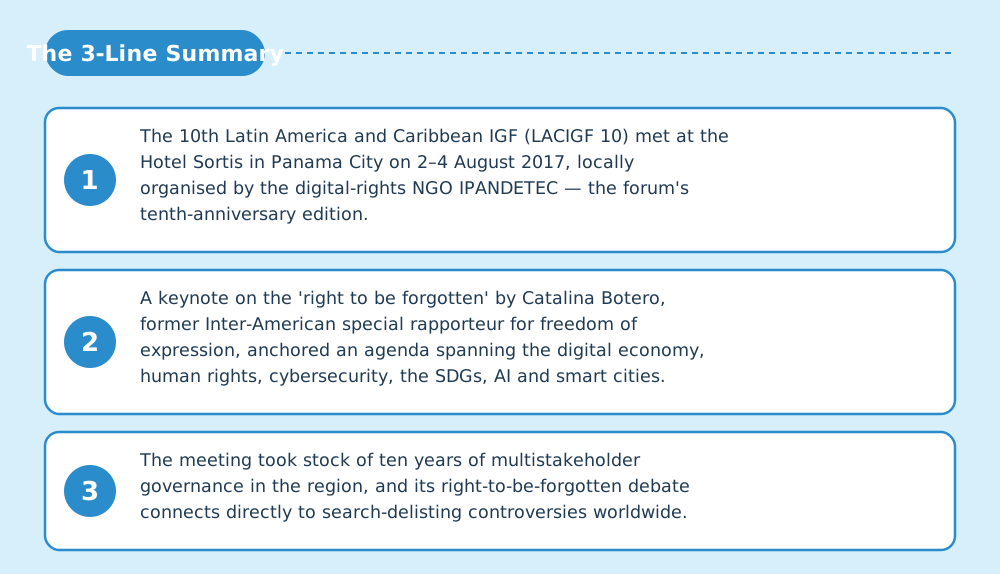
- The 10th Latin America and Caribbean IGF (LACIGF 10) met at the Hotel Sortis in Panama City on 2–4 August 2017, locally organised by the digital-rights NGO IPANDETEC — the forum's tenth-anniversary edition.
- A keynote on the 'right to be forgotten' by Catalina Botero, former Inter-American special rapporteur for freedom of expression, anchored an agenda spanning the digital economy, human rights, cybersecurity, the SDGs, AI and smart cities.
- The meeting took stock of ten years of multistakeholder governance in the region, and its right-to-be-forgotten debate connects directly to search-delisting controversies worldwide.
Welcome — this is the Japan IGF Support Organization. This in-depth report on LACIGF 2017 in Panama City draws on official outputs, session records and on-site reporting. In a hurry? The three lines above and the diagrams carry the gist.
Conference at a Glance (from official records)
| Item | Detail |
|---|---|
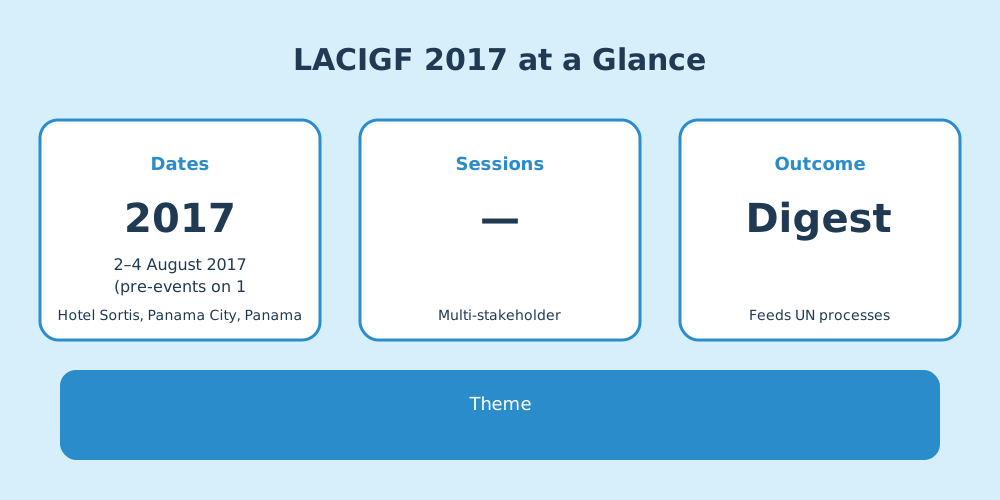
| Edition | 10th edition (LACIGF 10) — completing the forum's first decade |
| Dates | 2–4 August 2017 (pre-events on 1 August) |
| Venue | Hotel Sortis, Panama City, Panama |
| Theme | Regional governance themes |
| Keynote | Keynote on the 'right to be forgotten' by Catalina Botero Marino (Universidad de los Andes; former Special Rapporteur for Freedom of Expression, Inter-American Commission on Human Rights) |
| Youth | The 2nd Youth LACIGF was held alongside the forum, with more than 30 young people from 14 countries |
| Fellows | 12 |
| Host | Locally organised by IPANDETEC, a Panamanian digital-rights NGO, with financial support from LACNIC and ASIET among others |
(See the source list at the end of this article.)
Discussion Digest — from the Session Records
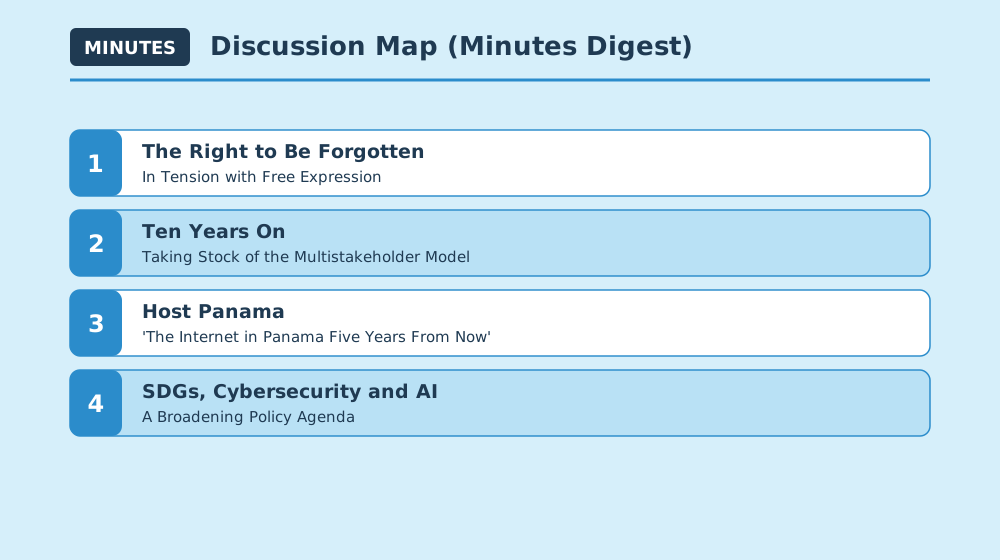
Key exchanges extracted from session records and transcripts.
1. The Right to Be Forgotten — In Tension with Free Expression
Sessions: Keynote by Catalina Botero / data-protection session
- Panels examined the spread of 'right to be forgotten' legislation across Latin America after Europe's Google Spain ruling, weighing it against free expression and access to information [2][4]
- With a keynote by the former Inter-American special rapporteur for freedom of expression, the balance between privacy protection and access to information framed the debate [2][4]
2. Ten Years On — Taking Stock of the Multistakeholder Model
Sessions: Opening and closing sessions and the regional governance dialogue session
- The tenth edition was framed as the completion of the forum's 'first ten-year cycle' and a qualitative turning point, prompting a stock-take of achievements and limits [4][3]
- Civil society pressed concrete demands: broader government participation (Colombia, Mexico and Uruguay being exceptions), more transparent committee operations, and diversified funding models [4][3]
3. Host Panama — 'The Internet in Panama Five Years From Now'
Sessions: Host-country session on the future of the internet in Panama
- A host-country session looked five years ahead for Panama's internet; the same year Panama held its first national IGF, showing how hosting the regional meeting can seed national dialogue [2][5]
- Local digital-rights NGO IPANDETEC ran the meeting, a precedent for Central American civil society hosting the regional forum [2][5]
4. SDGs, Cybersecurity and AI — A Broadening Policy Agenda
Sessions: Sessions on integrating the SDGs with internet governance, cybersecurity from a human-rights perspective, and the future internet (AI, smart cities)
- In a characteristically regional move, panels reframed cybersecurity as a human-rights question rather than purely a national-security one [2][6]
- Emerging topics — meaningful access beyond connectivity, digital inclusion and accessibility, AI and smart cities — entered the agenda in earnest for the first time [2][6]
Three-Minute Short Talk — Your Questions Answered
Q. What did the meeting decide?
A. Nothing binding. It is the annual regional forum where governments, business, civil society and the technical community identify shared priorities, which fed into the global IGF in Geneva that December.
Q. What was the highlight?
A. The keynote on the 'right to be forgotten' by Catalina Botero, former Inter-American special rapporteur for freedom of expression — should people be able to delist their past from search results, and at what cost to free expression?
Q. Why should I care?
A. Courts worldwide were wrestling with search-delisting at the time, so the debate travels well beyond Latin America. And the growing pains of a ten-year-old regional forum hold lessons for any national or regional IGF.
What Is LACIGF? (for first-time readers)
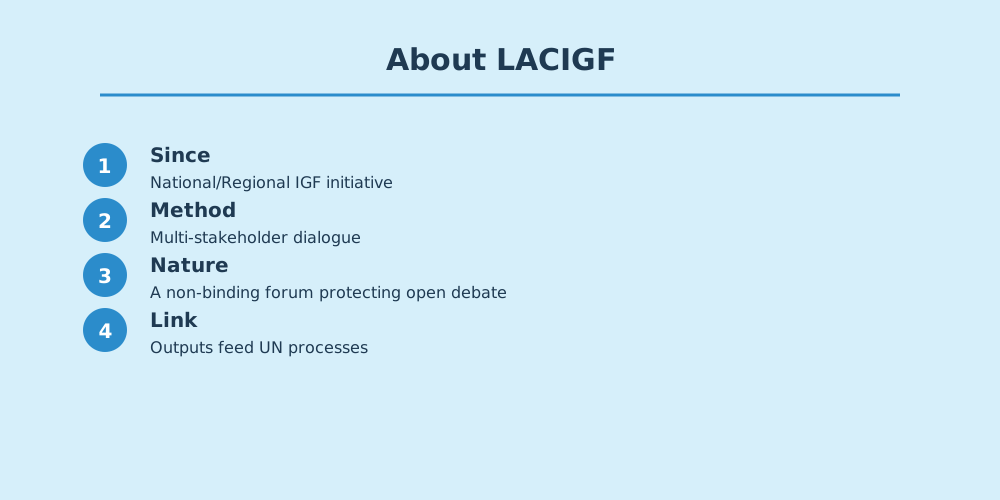
LACIGF is a National or Regional IGF Initiative (NRI), aligning local internet governance discussion with global IGF principles.
Why It Matters to You
What was discussed here becomes the baseline for national digital policy, platform rules and AI regulation worldwide within a few years. The principles confirmed at the 2017 meeting are the foundation of the "next rules" for the phones, social platforms and AI services you use every day.
Sources & References
- Foros anteriores(歴代開催一覧) — LACIGF(公式サイト) (accessed 2026-07-10)
- LACIGF 10(セッション一覧・relatorías・動画) — LACIGF(公式アーカイブ) (accessed 2026-07-10)
- LACIGF 10: Dinámicas que deben mantenerse y cambios urgentes(スペイン語) — Hiperderecho(ペルー) (accessed 2026-07-10)
- Reunión Regional Preparatoria para el Foro para la Gobernanza de Internet(スペイン語) — es (accessed 2026-07-10)
- Foro de Gobernanza de Internet(スペイン語) — IPANDETEC(パナマ) (accessed 2026-07-10)
- Ediciones anteriores — Youth LACIGF — Youth LACIGF (accessed 2026-07-10)
Quotes are translated or condensed from the records listed above. Bracketed numbers [n] refer to the source list.
Related links
- IGF official (NRI list): https://www.intgovforum.org/en/content/national-and-regional-igf-initiatives
- Japan IGF: https://japanigf.jp/
- Yuki Nakazawa's blog: https://nkzw.jp/category/igf/
Revision History
Rev. 1 — published 1 August 2017, 09:00 (Article published)
Rev. 2 — updated 10 July 2026, 23:16 (Fully revised into the in-depth edition: added the 3-line summary, minutes digest, short talk, source list and diagrams (all quotes verified against the listed sources))
— 中澤祐樹