

The 3-Line Summary
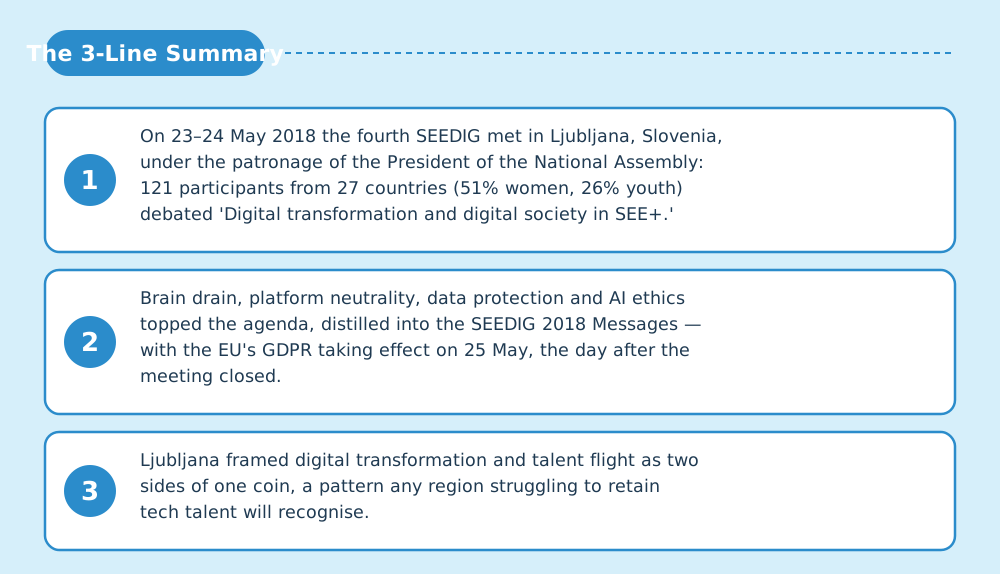
- On 23–24 May 2018 the fourth SEEDIG met in Ljubljana, Slovenia, under the patronage of the President of the National Assembly: 121 participants from 27 countries (51% women, 26% youth) debated 'Digital transformation and digital society in SEE+.'
- Brain drain, platform neutrality, data protection and AI ethics topped the agenda, distilled into the SEEDIG 2018 Messages — with the EU's GDPR taking effect on 25 May, the day after the meeting closed.
- Ljubljana framed digital transformation and talent flight as two sides of one coin, a pattern any region struggling to retain tech talent will recognise.
Welcome — this is the Japan IGF Support Organization. This in-depth report on SEEDIG 2018 in Ljubljana draws on official outputs, session records and on-site reporting. In a hurry? The three lines above and the diagrams carry the gist.
Conference at a Glance (from official records)
| Item | Detail |
|---|---|
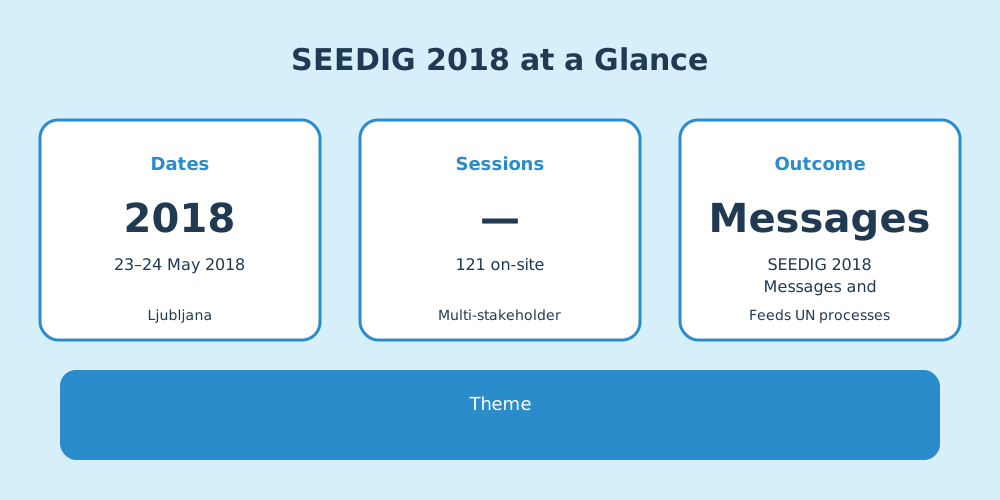
| Dates | 23–24 May 2018 |
| Venue | Ljubljana, Slovenia |
| Theme | Digital transformation and digital society in SEE+ |
| Participants | 121 (121 participants from 27 countries; 87% from the SEE+ region, 51% women, 26% youth) |
| Host | Hosted by the Digitas Institute, under the patronage of the President of the National Assembly of the Republic of Slovenia |
| Outcome | SEEDIG 2018 Messages and annual report; second editions of the Youth School and Fellowship Programme |
(See the source list at the end of this article.)
Discussion Digest — from the Session Records
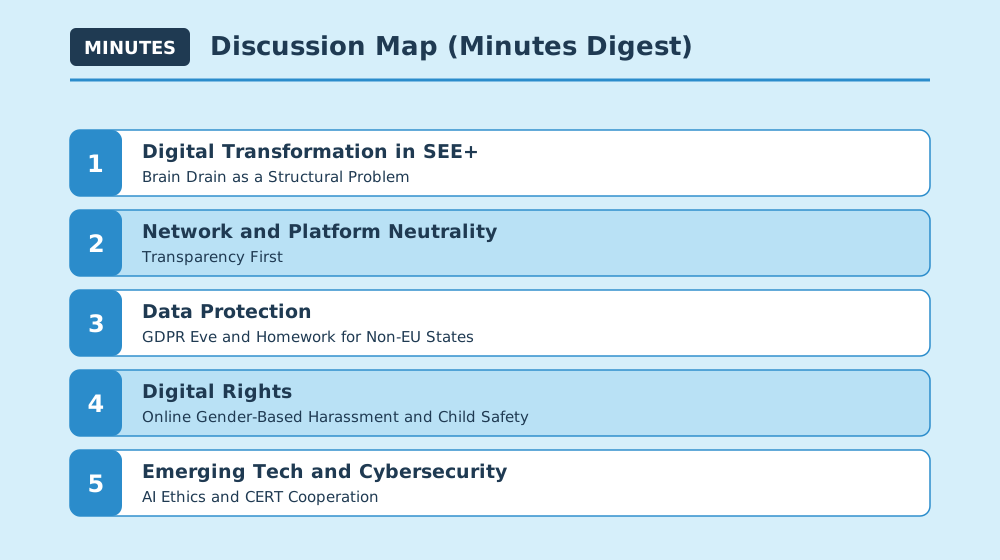
Key exchanges extracted from session records and transcripts.
1. Digital Transformation in SEE+ — Brain Drain as a Structural Problem
Sessions: High-level session 'Digitalisation and digital policies in SEE+'
- The region needs a coordinated digital strategy and stronger cross-border cooperation, with infrastructure — including rural broadband — as the foundation [1][2]
- On brain drain, the session was blunt: only structural educational and economic reforms will create conditions for talent to stay [1][2]
- Digital skills, economic growth and cybersecurity must advance together with rights protection, through a multistakeholder, bottom-up approach involving communities [1][2]
2. Network and Platform Neutrality — Transparency First
Sessions: Session on network and platform neutrality
- Authorities must keep the Internet open, with transparency as the foundation [2]
- Platform impartiality supports democratic participation and competitive innovation; balanced, principle-based regulation was recommended to serve both business and users [2]
- Consumers need clear information about discriminatory practices, and regulators need the capacity to monitor and address platform conduct [2]
3. Data Protection — GDPR Eve and Homework for Non-EU States
Sessions: Session on data protection and GDPR implementation
- Meeting on the eve of GDPR taking effect (25 May 2018), participants stressed that regulation only works with strong enforcement [2]
- Raising public awareness of how data is owned and processed, and establishing clear breach-notification protocols, were key recommendations [2]
- With many SEE countries outside the EU, the Messages called for mapping regional GDPR implementation challenges, especially in non-EU states [2]
4. Digital Rights — Online Gender-Based Harassment and Child Safety
Sessions: Session on digital rights
- The Internet should remain accessible as a space for self-discovery and open dialogue [2]
- Tech companies bear responsibility for addressing gender-based online harassment, the Messages stated plainly [2]
- Child safety is strengthened through stakeholder cooperation and awareness, while media literacy and critical thinking from an early age counter disinformation [2]
5. Emerging Tech and Cybersecurity — AI Ethics and CERT Cooperation
Sessions: Sessions on emerging technologies (IoT, blockchain, AI) and cybersecurity
- AI development requires embedded ethical principles — and recognition of AI's limits regarding human values and emotions [2]
- Blockchain offers transparency and user-centred solutions, but the immutability of data carries abuse risks [2]
- On cybersecurity, the Messages proposed exploring closer collaboration between national CERTs and ENISA, with SEEDIG itself framed as a vital multistakeholder platform for the region [2]
Three-Minute Short Talk — Your Questions Answered
Q. So what did the meeting decide?
A. It's a dialogue forum, but the discussions were distilled into the SEEDIG 2018 Messages and shared with governments, regulators and international processes — with the symbolic backing of the President of Slovenia's National Assembly.
Q. What was the most pressing issue?
A. Brain drain. The more the region digitalises, the faster its talent leaves for Western Europe — and the meeting concluded only structural educational and economic reform can stop it.
Q. Why should I care?
A. The meeting closed the day before GDPR took effect, capturing how non-EU countries scramble to adapt to EU rules — a dynamic that now repeats with the AI Act and beyond.
What Is SEEDIG? (for first-time readers)
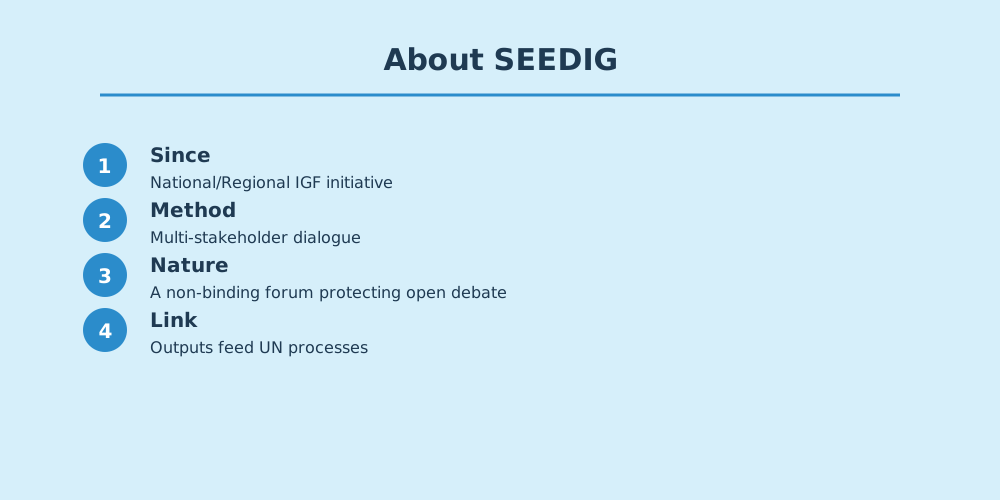
SEEDIG is a National or Regional IGF Initiative (NRI), aligning local internet governance discussion with global IGF principles.
Why It Matters to You
What was discussed here becomes the baseline for national digital policy, platform rules and AI regulation worldwide within a few years. The principles confirmed at the 2018 meeting are the foundation of the "next rules" for the phones, social platforms and AI services you use every day.
Sources & References
- SEEDIG 2018 — SEEDIG(公式) (accessed 2026-07-11)
- Messages from SEEDIG 2018 — SEEDIG(公式) (accessed 2026-07-11)
- 4th SEEDIG Meeting — DiploFoundation (accessed 2026-07-11)
- South Eastern European Dialogue on Internet Governance — Wikipedia(英語版) (accessed 2026-07-11)
Quotes are translated or condensed from the records listed above. Bracketed numbers [n] refer to the source list.
Related links
- IGF official (NRI list): https://www.intgovforum.org/en/content/national-and-regional-igf-initiatives
- Japan IGF: https://japanigf.jp/
- Yuki Nakazawa's blog: https://nkzw.jp/category/igf/
Revision History
Rev. 1 — published 23 May 2018, 15:00 (Article published)
Rev. 2 — updated 11 July 2026, 02:14 (Fully revised into the in-depth edition: added the 3-line summary, minutes digest, short talk, source list and diagrams (all quotes verified against the listed sources))
— 中澤祐樹

