

The 3-Line Summary
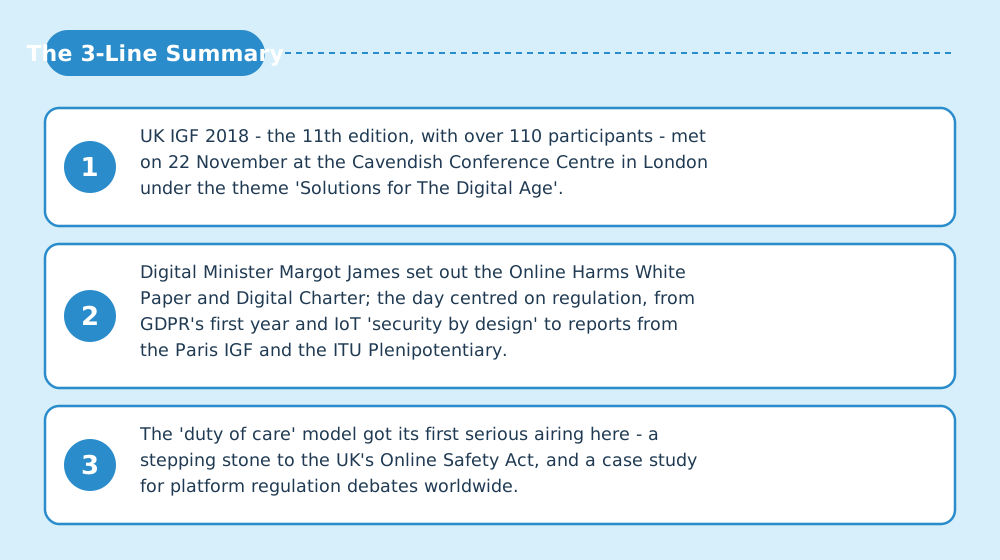
- UK IGF 2018 – the 11th edition, with over 110 participants – met on 22 November at the Cavendish Conference Centre in London under the theme 'Solutions for The Digital Age'.
- Digital Minister Margot James set out the Online Harms White Paper and Digital Charter; the day centred on regulation, from GDPR's first year and IoT 'security by design' to reports from the Paris IGF and the ITU Plenipotentiary.
- The 'duty of care' model got its first serious airing here – a stepping stone to the UK's Online Safety Act, and a case study for platform regulation debates worldwide.
Welcome — this is the Japan IGF Support Organization. This in-depth report on UK Internet Governance Forum 2018 draws on official outputs, session records and on-site reporting. In a hurry? The three lines above and the diagrams carry the gist.
Conference at a Glance (from official records)
| Item | Detail |
|---|---|
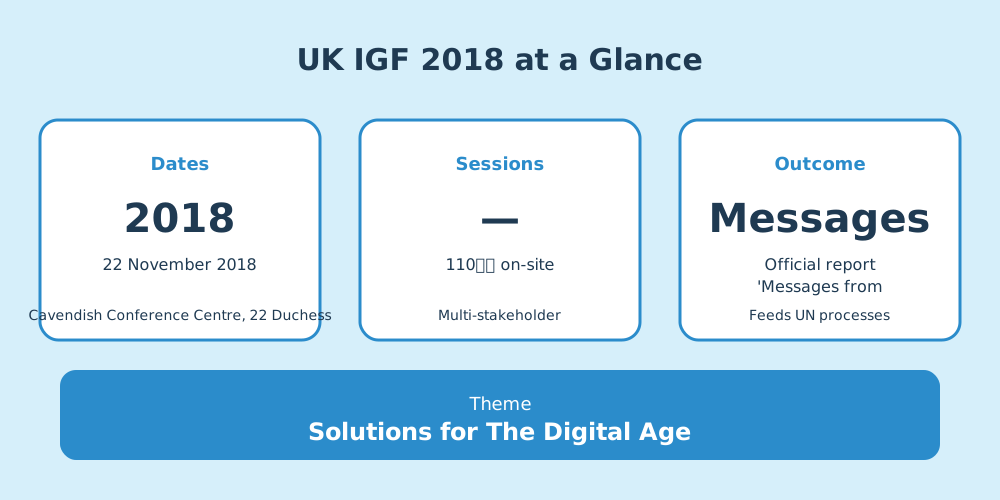
| Official name | UK Internet Governance Forum 2018 |
| Dates | 22 November 2018 |
| Venue | Cavendish Conference Centre, 22 Duchess Mews, Marylebone, London W1G 9DT |
| Theme | Solutions for The Digital Age |
| Participants | Over 110 participants |
| Keynote | Margot James MP, Minister for Digital and the Creative Industries |
| Outcome | Official report 'Messages from London'; all sessions recorded and published |
(See the source list at the end of this article.)
Discussion Digest — from the Session Records
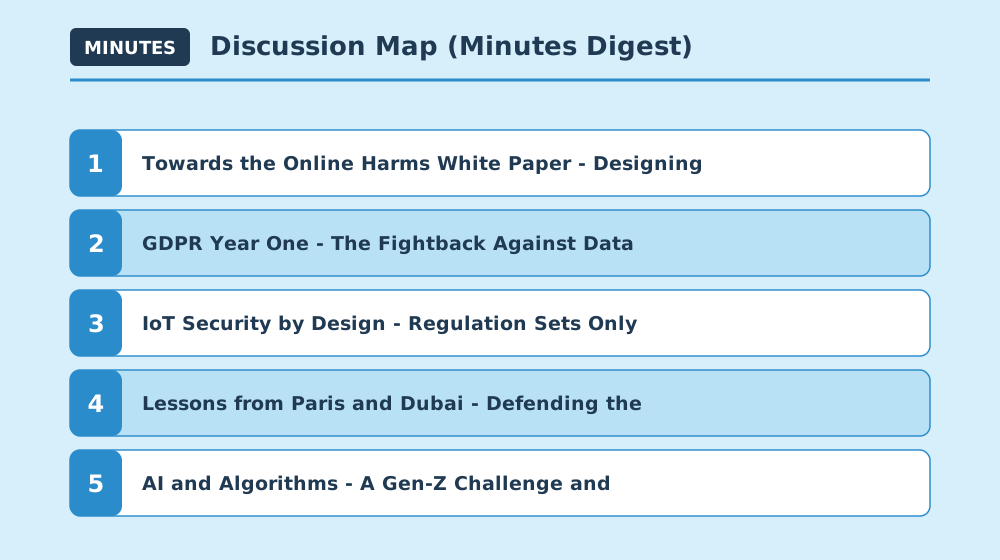
Key exchanges extracted from session records and transcripts.
1. Towards the Online Harms White Paper – Designing the 'Safest Place to Be Online'
Sessions: Keynote by Margot James MP, a DCMS briefing, and the goldfish-bowl panel 'Making the UK the safest place to be online'
- Minister James presented the Digital Charter and said the forthcoming white paper must protect freedom of expression, promote growth by protecting SMEs, and support people's adaptation to technological change [1][2]
- DCMS's Andrew Honeyman traced the path from the 2017 green paper to the government response of May 2018; a joint Home Office-DCMS white paper was due that winter, weighing legislative options including a duty of care on social media platforms [1][2]
- The seven-strong goldfish-bowl panel – including LSE's Sonia Livingstone, Index on Censorship and ARTICLE 19 – warned 'hate speech' was being applied too widely and insisted on distinguishing illegal speech from speech that is legal but harmful [1][2]
2. GDPR Year One – The Fightback Against Data Exploitation
Sessions: 'Mapping the progress of GDPR and the Data Protection Act 2018' panel and the 'Countering Data Exploitation' conversation
- The panel called 2018 the year GDPR and the Data Protection Act 2018 transformed how industry and individuals treat data; the UK aims for an EU adequacy decision after Brexit, with Minister James noting 75% of cross-border data flows are within the EU [1]
- Privacy International's Ailidh Callander said Snowden and Cambridge Analytica had exposed mass data exploitation and hollowed-out consent, reporting complaints filed with the ICO against seven companies – including Oracle, Equifax and Experian – over behavioural advertising and cross-device tracking [1]
- She hoped the most data-exploitative business models 'would now be put to an end' – met with some audience scepticism about enforcement [1]
3. IoT Security by Design – Regulation Sets Only the Floor
Sessions: Panel 'Cybersecurity and the internet of things: security by design', with ISOC, ARM, Privacy International and Chatham House
- Panellists backed the UK's 2018 'Secure by Design' report and Code of Practice, and the government's push to align internationally via the ETSI technical specification [1]
- One study cited said 50% of consumers see security as a key barrier to using IoT devices – yet cost is the other big barrier, posing the challenge of raising security and trust without raising prices [1]
- The consensus: a code of practice is necessary but not sufficient. Regulation can set a minimum bar, but industry must move at hackers' pace, building security cultures and tackling supply-chain risk [1]
4. Lessons from Paris and Dubai – Defending the Multistakeholder Model
Sessions: Panel 'Lessons learnt from Paris and Dubai' with Global Partners Digital, DCMS and ISOC UK
- The previous week's Paris IGF was the first ever addressed by the UN Secretary-General and the host head of state; President Macron made controversial remarks on governments' role in protecting citizens, rejecting the dominance of both the 'Californian' and 'Chinese' models [1]
- From the ITU Plenipotentiary in Dubai came the sobering estimate that roughly 50% of states worldwide firmly reject the multistakeholder approach – though resolutions on OTT services, cybersecurity and internet regulation were largely defeated, making Dubai a success on that score [1]
- DCMS's Mark Carvell reported momentum – led by France and Germany, the 2019 host – for IGF reform focused on outputs and tangible recommendations [1]
5. AI and Algorithms – A Gen-Z Challenge and 'Faux-tomation'
Sessions: 'AI Explainer' by Kari Lawler (founder, Youth4AI) and 'Algorithm Explainer' by Ansgar Koene (University of Nottingham)
- Kari Lawler, one of the UK's youngest start-up founders, argued mainstream media overstate AI and paint dystopias, creating needless fear among Generation Z – and called for education to help her generation plan AI-era careers [1]
- Ansgar Koene explained how algorithmic content prioritisation trades user control for convenience, with implications for bias, transparency and human agency [1]
- He flagged 'faux-tomation' – organisations portraying human decisions or human-created content as machine outputs to look cutting-edge [1]
Three-Minute Short Talk — Your Questions Answered
Q. So what did the meeting decide?
A. Nothing binding, but the discussions became the 'Messages from London' report. The centrepiece was the forthcoming Online Harms White Paper – the duty-of-care idea debated here went on to shape the UK's Online Safety Act.
Q. What was the most contentious point?
A. Where to draw the line on 'harm'. Free-expression groups warned that stretching the concept of hate speech risks suppressing legitimate speech, and insisted illegal speech and lawful-but-harmful speech need different treatment.
Q. Why should I care?
A. GDPR's first year, the IoT security code of practice, and platform duty of care – the 2018 UK debates previewed regulatory battles that most democracies, from the EU to Japan, have fought since.
What Is UK IGF? (for first-time readers)
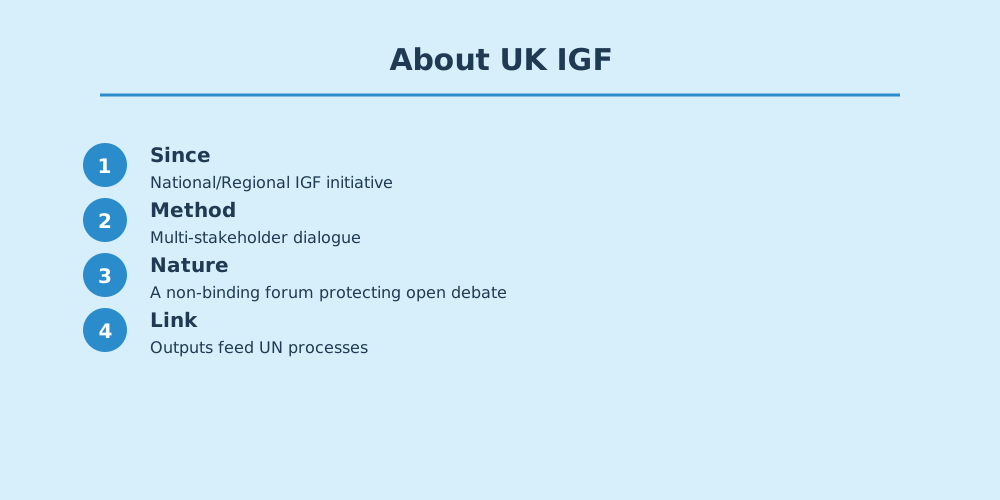
UK IGF is a National or Regional IGF Initiative (NRI), aligning local internet governance discussion with global IGF principles.
Why It Matters to You
What was discussed here becomes the baseline for national digital policy, platform rules and AI regulation worldwide within a few years. The principles confirmed at the 2018 meeting are the foundation of the "next rules" for the phones, social platforms and AI services you use every day.
Sources & References
- UK Internet Governance Forum Report – Messages from London(公式報告書PDF) — UK IGF (accessed 2026-07-11)
- 2018 UK IGF(公式イベントページ) — UK IGF(公式サイト) (accessed 2026-07-11)
- UK Internet Governance Forum 2018 session recordings now available(参加者数・第11回の根拠) — ISOC UK England(インターネットソサエティ英国支部) (accessed 2026-07-11)
- UK IGF 2018 – Sum up by Olivier Crepin Leblond, Chair of the Internet Society UK Chapter — YouTube(Internet Society) (accessed 2026-07-11)
Quotes are translated or condensed from the records listed above. Bracketed numbers [n] refer to the source list.
Related links
- IGF official (NRI list): https://www.intgovforum.org/en/content/national-and-regional-igf-initiatives
- Japan IGF: https://japanigf.jp/
- Yuki Nakazawa's blog: https://nkzw.jp/category/igf/
Revision History
Rev. 1 — published 19 June 2018, 10:00 (Article published)
Rev. 2 — updated 16 July 2026, 20:09 (Fully revised into the in-depth edition: added the 3-line summary, minutes digest, short talk, source list and diagrams (all quotes verified against the listed sources))
— 中澤祐樹