


The 3-Line Summary
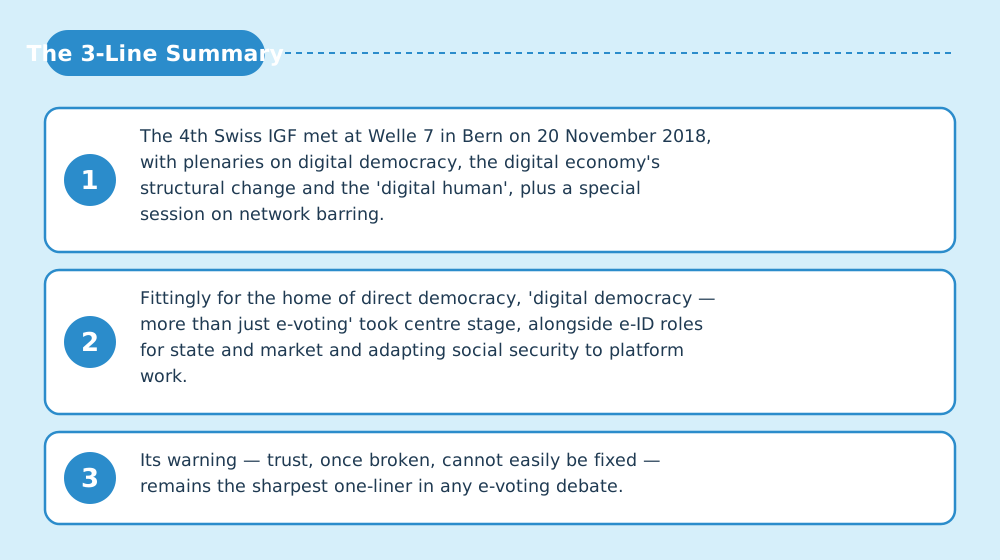
- The 4th Swiss IGF met at Welle 7 in Bern on 20 November 2018, with plenaries on digital democracy, the digital economy's structural change and the 'digital human', plus a special session on network barring.
- Fittingly for the home of direct democracy, 'digital democracy — more than just e-voting' took centre stage, alongside e-ID roles for state and market and adapting social security to platform work.
- Its warning — trust, once broken, cannot easily be fixed — remains the sharpest one-liner in any e-voting debate.
Welcome — this is the Japan IGF Support Organization. This in-depth report on Swiss IGF 2018 (4th Swiss Internet Governance Forum) draws on official outputs, session records and on-site reporting. In a hurry? The three lines above and the diagrams carry the gist.
Conference at a Glance (from official records)
| Item | Detail |
|---|---|
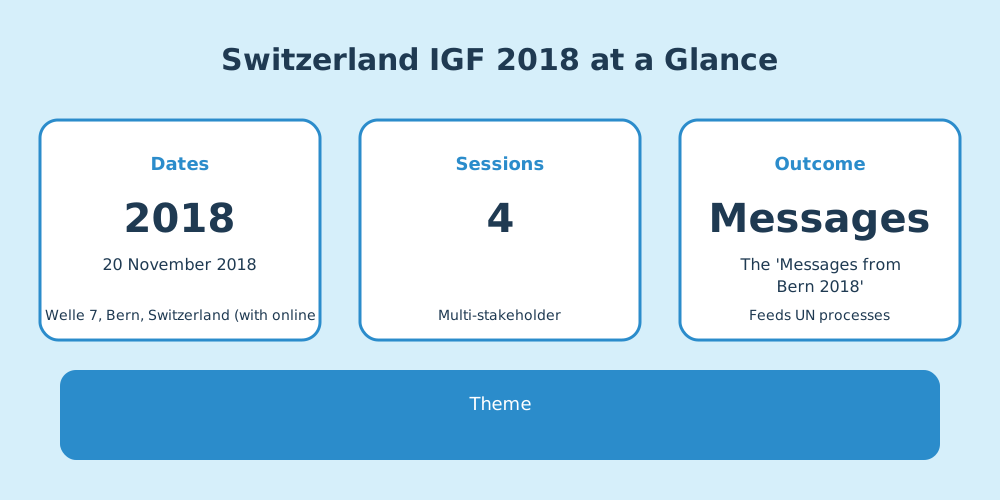
| Official name | Swiss IGF 2018 (4th Swiss Internet Governance Forum) |
| Dates | 20 November 2018 |
| Venue | Welle 7, Bern, Switzerland (with online participation) |
| Theme | Regional governance themes |
| Sessions | 4 (Three plenaries plus a special session on network barring) |
| Host | Multistakeholder steering group under OFCOM patronage |
| Outcome | The 'Messages from Bern 2018', submitted to the UN IGF and EuroDIG; compiled by Jorge Cancio, Olivier MJ Crépin-Leblond and Nicolas Rollier |
(See the source list at the end of this article.)
Discussion Digest — from the Session Records
Key exchanges extracted from session records and transcripts.
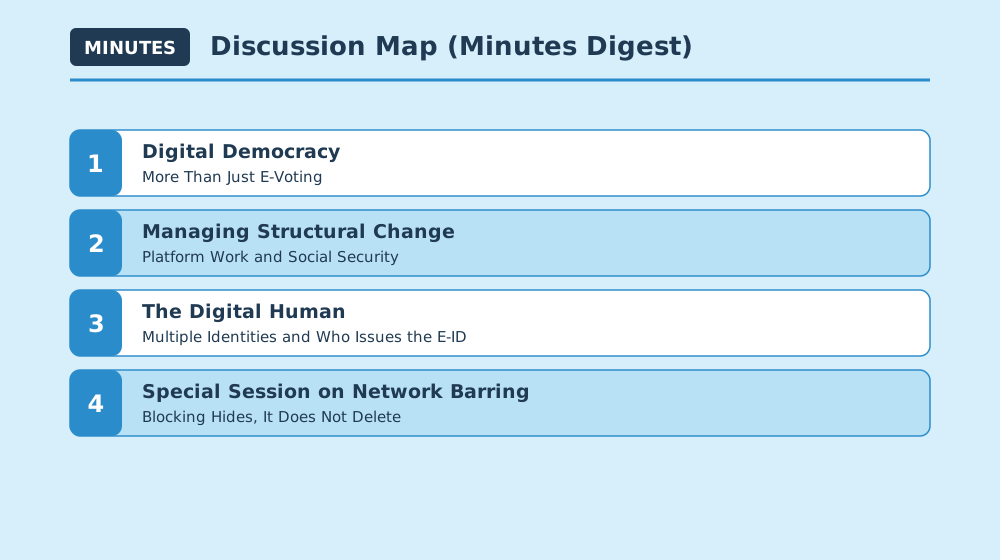
1. Digital Democracy — More Than Just E-Voting
Sessions: Plenary 1 'Digital democracy – more than just e-Voting!'
- Trust in digital democracy demands transparency all along the line from technology to political processes — and once trust is broken, it cannot easily be fixed; the state must guarantee trust and legality through framework conditions [1]
- Digital tools can enrich direct and representative democracy inclusively — everyone can be involved online, vote or no vote; municipalities and cantons should serve as political laboratories, scaling to federal level if successful [1]
- Existing processes must remain usable (e.g. for older people), new tools should not be overestimated, and political education and data-awareness are prerequisites [1]
2. Managing Structural Change — Platform Work and Social Security
Sessions: Plenary 2 'The digital economy – how do we manage the structural change?'
- Broad agreement that Swiss labour-market framework conditions are generally fit for structural change — though forthcoming court cases on employment with global platforms may force social-security adjustments [1]
- Opinions diverged on whether Switzerland must brace for a digitalisation 'tsunami'; digital skills and proactive re-schooling were named key to making change benefit all and avoiding social unrest [1]
- On new learning models, some praised the rich offering while others flagged unclear options and costs as access barriers, especially for older employees [1]
3. The Digital Human — Multiple Identities and Who Issues the E-ID
Sessions: Plenary 3 'The digital human – how do I use, maintain and protect my digital self?'
- In an age of multiple interconnected digital identities, the balance between transparency, self-determination and security was debated — with trust as the cornerstone of any identity framework [1]
- A tiered model emerged: verified identities (e.g. a government-issued e-ID) for public services and e-banking, separate identities for social media — matching security level to service [1]
- Whether the state should issue e-identity itself, act as default provider, or delegate to the private sector remained open; no agreement that blockchain alone provides the answer [1]
4. Special Session on Network Barring — Blocking Hides, It Does Not Delete
Sessions: Special session 'Network barring from the technical, legal and social viewpoint'
- Blocking and filtering do not delete unlawful or harmful content — they only hinder access, with side-effects like overblocking and territorial fragmentation, limited efficacy and easy circumvention [1]
- For content whose access is not forbidden by law and is in principle protected by freedom of information — such as copyrighted works of literature and art — proportionality and legal consistency requirements were underlined [1]
- Views diverged on what precedent the new Swiss Online Gaming Law's blocking regime sets for future legislation, and whether the validity of blocking depends on the importance of the goal pursued [1]
Three-Minute Short Talk — Your Questions Answered
Q. What did it decide?
A. Nothing binding — the essentials went to the UN IGF and EuroDIG as the 'Messages from Bern 2018', headlined by digital democracy beyond e-voting.
Q. Most contentious point?
A. Who should issue the e-ID — state or market. Switzerland's 2021 referendum rejecting a private-led e-ID law later proved how heavy that question was.
Q. Why care?
A. 'Trust, once broken, cannot easily be fixed' is the enduring lesson for every digital-identity and e-voting project.
What Is Switzerland IGF? (for first-time readers)
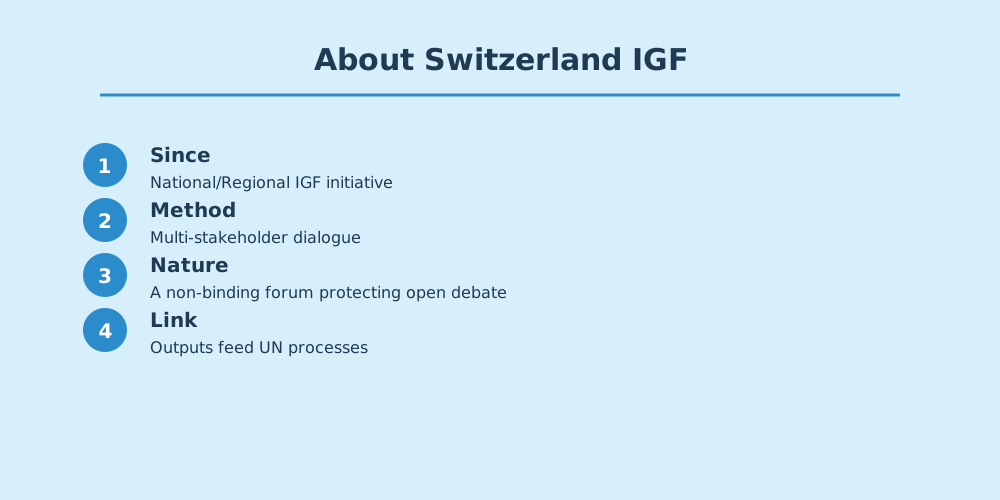
Switzerland IGF is a National or Regional IGF Initiative (NRI), aligning local internet governance discussion with global IGF principles.
Why It Matters to You
What was discussed here becomes the baseline for national digital policy, platform rules and AI regulation worldwide within a few years. The principles confirmed at the 2018 meeting are the foundation of the "next rules" for the phones, social platforms and AI services you use every day.
Sources & References
- Messages from Bern (Swiss IGF 2018) — Swiss IGF (accessed 2026-07-23)
- Swiss IGF 2018(大会ページ) — igf.swiss (accessed 2026-07-23)
- igf.swiss ホーム(2019年10月時点、「次回=2020年3月18日」の告知) — Swiss IGF(Waybackアーカイブ) (accessed 2026-07-23)
- About the Swiss IGF — igf.swiss (accessed 2026-07-23)
Quotes are translated or condensed from the records listed above. Bracketed numbers [n] refer to the source list.
Related links
- IGF official (NRI list): https://www.intgovforum.org/en/content/national-and-regional-igf-initiatives
- Japan IGF: https://japanigf.jp/
- Yuki Nakazawa's blog: https://nkzw.jp/category/igf/
更新履歴
第1稿投稿 2026年8月13日 16時12分(記事コンテンツアップ)
— 中澤祐樹

