


The 3-Line Summary
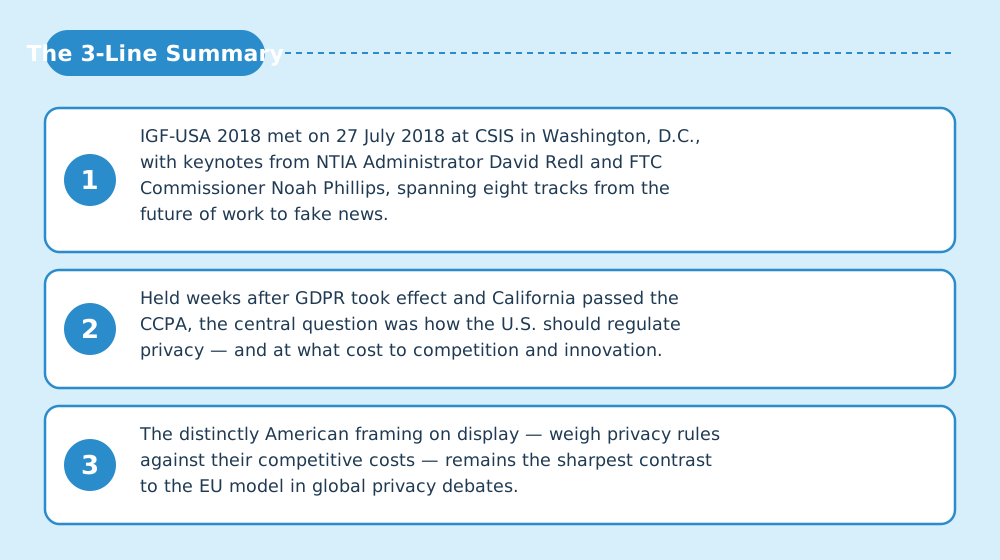
- IGF-USA 2018 met on 27 July 2018 at CSIS in Washington, D.C., with keynotes from NTIA Administrator David Redl and FTC Commissioner Noah Phillips, spanning eight tracks from the future of work to fake news.
- Held weeks after GDPR took effect and California passed the CCPA, the central question was how the U.S. should regulate privacy — and at what cost to competition and innovation.
- The distinctly American framing on display — weigh privacy rules against their competitive costs — remains the sharpest contrast to the EU model in global privacy debates.
Welcome — this is the Japan IGF Support Organization. This in-depth report on IGF-USA 2018 draws on official outputs, session records and on-site reporting. In a hurry? The three lines above and the diagrams carry the gist.
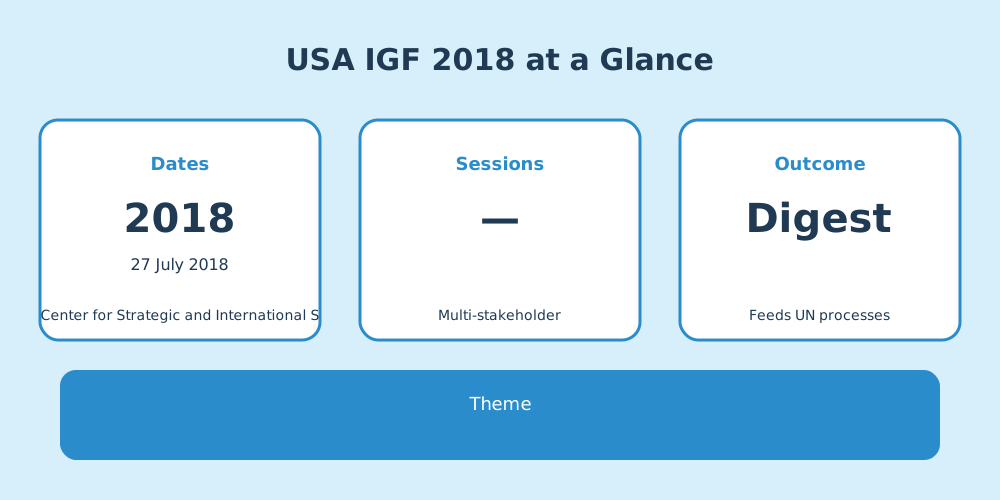
Conference at a Glance (from official records)
| Item | Detail |
|---|---|
| Official name | IGF-USA 2018 |
| Dates | 27 July 2018 |
| Venue | Center for Strategic and International Studies (CSIS), Washington, D.C. |
| Theme | Regional governance themes |
| Host | IGF-USA multistakeholder steering group (civil society, industry, academia and government) |
(See the source list at the end of this article.)
Discussion Digest — from the Session Records
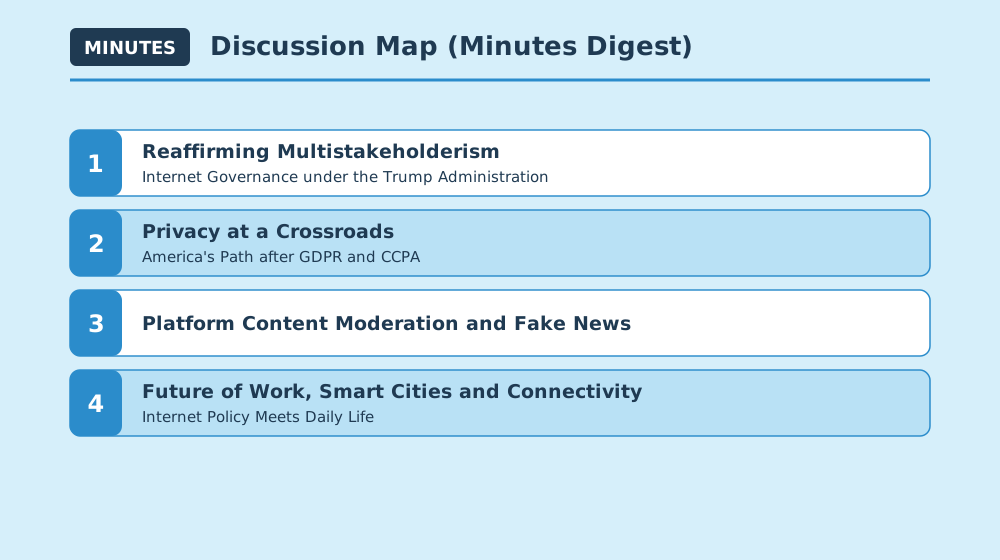
Key exchanges extracted from session records and transcripts.
1. Reaffirming Multistakeholderism — Internet Governance under the Trump Administration
Sessions: Keynote by David J. Redl, Assistant Secretary of Commerce and NTIA Administrator
"The power of the multistakeholder proceeding is in the expression of differing perspectives, which ultimately helps identify areas of overlapping interest."
— David J. Redl (Administrator, NTIA, U.S. Department of Commerce) [2][3]
"Bottom-up, consensus-based processes create policies that are trusted throughout the Internet ecosystem."
— David J. Redl (Administrator, NTIA, U.S. Department of Commerce) [2][3]
- Redl affirmed that the Trump Administration strongly backs the multistakeholder approach to Internet governance and would keep advocating it in international institutions [2][3]
- His speech also flagged NTIA priorities including botnet-focused IoT cybersecurity, ICANN's WHOIS problem and preparations for ITU engagements [2][3]
2. Privacy at a Crossroads — America's Path after GDPR and CCPA
Sessions: Redl keynote; keynote by FTC Commissioner Noah Phillips; "privacy frameworks" panel
"Carefully crafted principles will build consumer confidence, boost our economy, and clear the way for innovation."
— David J. Redl (Administrator, NTIA, U.S. Department of Commerce) [2][4]
- Coming weeks after GDPR took effect and California enacted the CCPA, federal privacy principles dominated; NTIA would launch its request for comments on the administration's privacy approach soon after [2][4]
- FTC Commissioner Phillips argued the benefits of new privacy rules must be weighed against costs to innovation and competition, calling GDPR a live experiment in large-scale regulation [2][4]
- He also warned that heavy regulation could further entrench the biggest technology companies through asymmetric compliance burdens [2][4]
3. Platform Content Moderation and Fake News
Sessions: Panels on platform content moderation and fake news
- Building on 2017, dedicated panels examined how platforms should moderate content and counter fake news without chilling free expression [1]
- A panel on the extraterritoriality of court rulings tackled a newer collision: how far one country's court orders can bind global Internet services [1]
4. Future of Work, Smart Cities and Connectivity — Internet Policy Meets Daily Life
Sessions: Panels on the future of work, smart cities, connectivity and competition
- Four everyday-life tracks ran in parallel: work in the age of automation, data use in smart cities, expanding connectivity, and competition in digital markets [1]
- Remote video participation was again offered, cementing access for stakeholders beyond the Beltway [1]
Three-Minute Short Talk — Your Questions Answered
Q. So what did the conference actually decide?
A. Nothing binding — it's the annual U.S. multistakeholder dialogue. But the NTIA administrator previewed the administration's thinking on privacy principles, a prelude to the federal privacy consultation launched soon after.
Q. What was the most contentious topic?
A. How hard to regulate privacy. Against calls for GDPR-style rules, the FTC's Phillips asked what price in competition and innovation Americans were willing to pay — and whether heavy rules would simply entrench Big Tech.
Q. Why should I care?
A. The U.S.–EU contrast sharpened here still frames privacy lawmaking everywhere: comprehensive rights-based regulation versus cost-benefit, competition-aware enforcement.
What Is USA IGF? (for first-time readers)
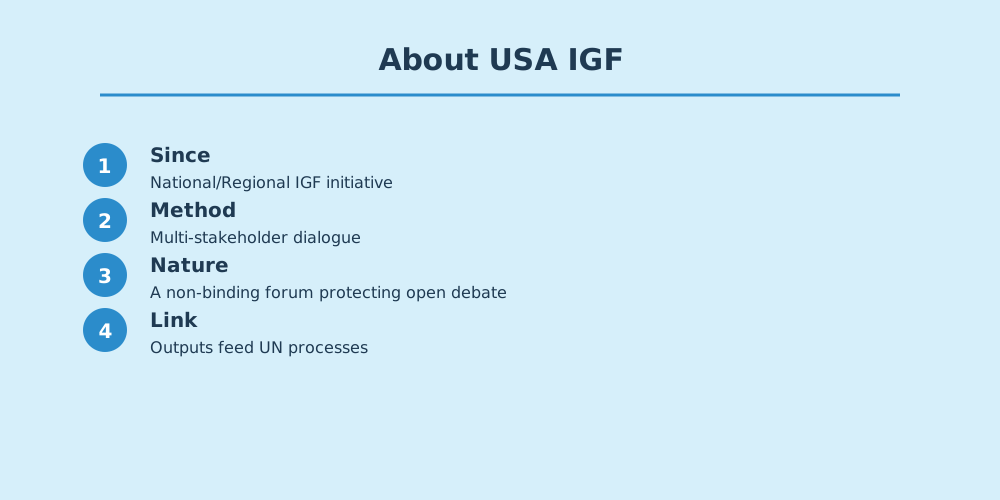
USA IGF is a National or Regional IGF Initiative (NRI), aligning local internet governance discussion with global IGF principles.
Why It Matters to You
What was discussed here becomes the baseline for national digital policy, platform rules and AI regulation worldwide within a few years. The principles confirmed at the 2018 meeting are the foundation of the "next rules" for the phones, social platforms and AI services you use every day.
Sources & References
- IGF-USA 2018 — IGF-USA(公式サイト) (accessed 2026-07-11)
- Remarks of David J. Redl(IGF-USA 2018 基調講演全文) — IGF-USA(公式サイト) (accessed 2026-07-11)
- Remarks of Assistant Secretary Redl at IGF-USA 2018 — 米商務省NTIA (accessed 2026-07-11)
- Cmr. Phillips keynote speaker at 2018 Internet Governance Forum USA conference — 米連邦取引委員会(FTC) (accessed 2026-07-11)
Quotes are translated or condensed from the records listed above. Bracketed numbers [n] refer to the source list.
Related links
- IGF official (NRI list): https://www.intgovforum.org/en/content/national-and-regional-igf-initiatives
- Japan IGF: https://japanigf.jp/
- Yuki Nakazawa's blog: https://nkzw.jp/category/igf/
Revision History
Rev. 1 — published 1 July 2018, 10:00 (Article published)
Rev. 2 — updated 16 July 2026, 20:09 (Fully revised into the in-depth edition: added the 3-line summary, minutes digest, short talk, source list and diagrams (all quotes verified against the listed sources))
— 中澤祐樹

