


The 3-Line Summary
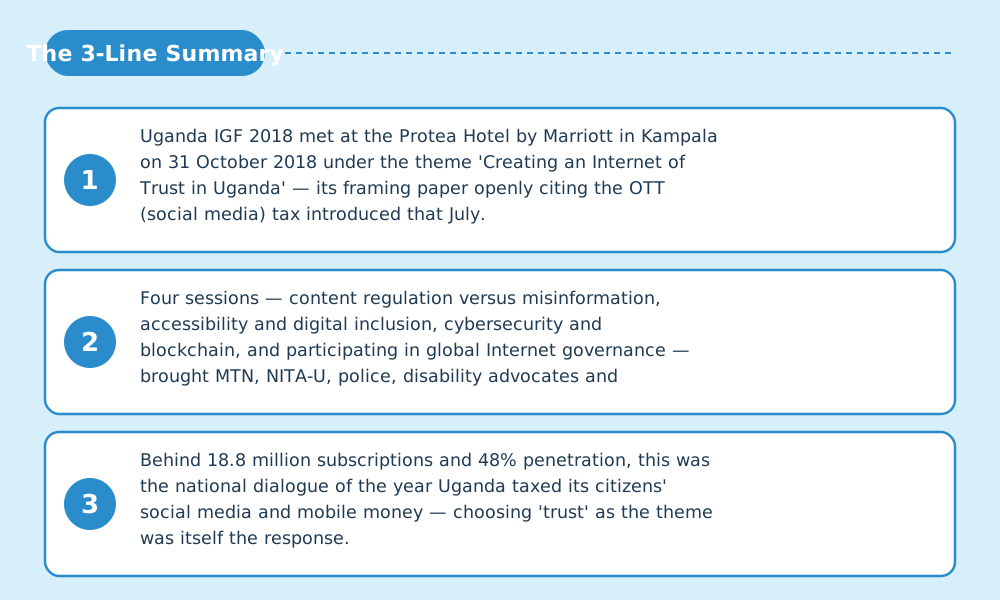
- Uganda IGF 2018 met at the Protea Hotel by Marriott in Kampala on 31 October 2018 under the theme 'Creating an Internet of Trust in Uganda' — its framing paper openly citing the OTT (social media) tax introduced that July.
- Four sessions — content regulation versus misinformation, accessibility and digital inclusion, cybersecurity and blockchain, and participating in global Internet governance — brought MTN, NITA-U, police, disability advocates and journalists onto the panels.
- Behind 18.8 million subscriptions and 48% penetration, this was the national dialogue of the year Uganda taxed its citizens' social media and mobile money — choosing 'trust' as the theme was itself the response.
Welcome — this is the Japan IGF Support Organization. This in-depth report on Uganda Internet Governance Forum 2018 draws on official outputs, session records and on-site reporting. In a hurry? The three lines above and the diagrams carry the gist.
Conference at a Glance (from official records)
| Item | Detail |
|---|---|
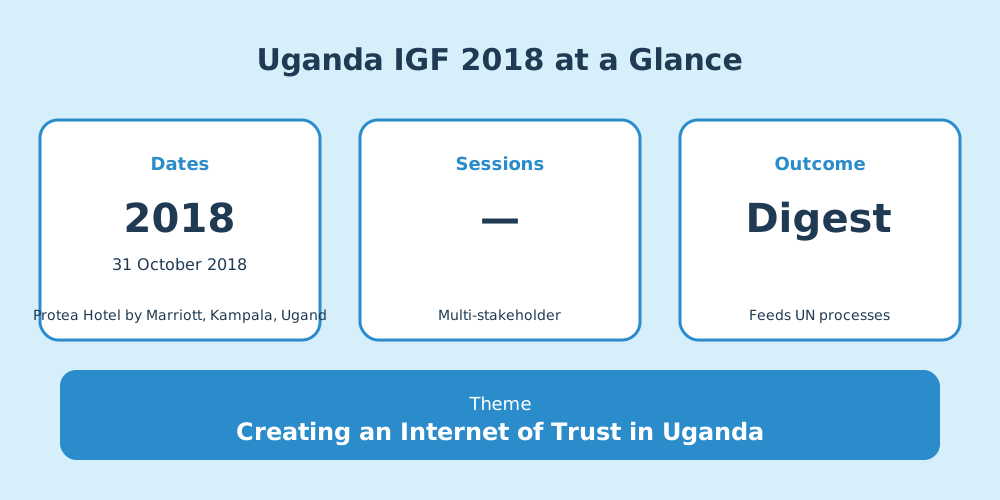
| Official name | Uganda Internet Governance Forum 2018 |
| Dates | 31 October 2018 |
| Venue | Protea Hotel by Marriott, Kampala, Uganda |
| Theme | Creating an Internet of Trust in Uganda |
| Host | The multistakeholder UIGF process (ISOC Uganda Chapter and CIPESA; opening remarks by Lillian Nalwoga) |
(See the source list at the end of this article.)
Discussion Digest — from the Session Records
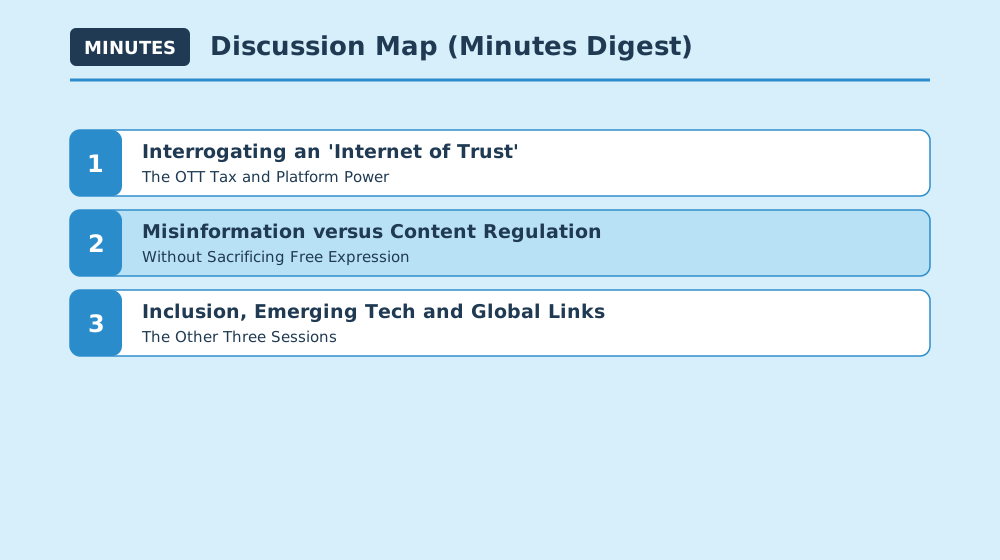
Key exchanges extracted from session records and transcripts.
1. Interrogating an 'Internet of Trust' — The OTT Tax and Platform Power
Sessions: The forum's framing paper (agenda preamble)
- The framing paper diagnosed how OTT giants like Google and Facebook built extraordinarily powerful data-driven businesses, and how the weaponisation of news, algorithms, politics and people had eroded the Internet's foundation of trust [1]
- Against 18.8 million subscriptions and 48% penetration (UCC, December 2017), it noted — citing CIPESA — that unable to tax OTT giants without new taxation regimes, government had shifted the burden to citizens via social-media and mobile-money taxes [1]
- Blockchain and distributed-ledger technologies were introduced as decentralising counterweights promising trust and privacy, alongside the IoT [1]
2. Misinformation versus Content Regulation — Without Sacrificing Free Expression
Sessions: Session with MTN Uganda, the Uganda Media Women's Association chair and communications specialist Rosebell Kagumire, moderated by an NBS TV investigative journalist
- The stated problem: technical and policy fixes for misinformation 'might have even far-reaching implications on freedom of expression online', so the session sought inclusive solutions without compromising fundamental freedoms [1]
- Seating a telco, a women's media association and an independent communicator together deliberately mixed the regulated and the would-be regulators [1]
3. Inclusion, Emerging Tech and Global Links — The Other Three Sessions
Sessions: Sessions on accessibility and digital inclusion, cybersecurity and blockchain, and Internet governance around the world
- The inclusion session centred affordability, usability and safety for disabled, illiterate and low-income users, with CBR Africa Network, NITA-U and northern-Uganda connectivity NGO BOSCO Uganda on the panel [1]
- Police cybercrime officers sat with blockchain entrepreneurs in the emerging-tech session, while the closing session — 'who governs the Internet? nobody' — had an ICANN fellow and the ICT ministry explain how to join global IG processes, moderated by CIPESA [1]
- An opening retrospective on lessons from past UIGFs institutionalised the dialogue's year-to-year continuity [1]
Three-Minute Short Talk — Your Questions Answered
Q. What did the meeting decide?
A. Nothing binding — it was the 2018 round of the annual dialogue. But choosing 'trust' as the theme months after the social-media tax, and headlining the fake-news-versus-free-expression dilemma, was itself civil society's message.
Q. What was the OTT tax?
A. From July 2018 Uganda levied a daily tax on using WhatsApp, Facebook and other OTT services. The forum's framing paper was blunt: unable to tax the OTT giants, government had shifted the burden onto citizens.
Q. Why should I care?
A. How to tax platforms is a global question — digital services taxes and all. Uganda's user-side levy is the most regressive answer on record, making this forum a reference point for that policy debate.
What Is Uganda IGF? (for first-time readers)
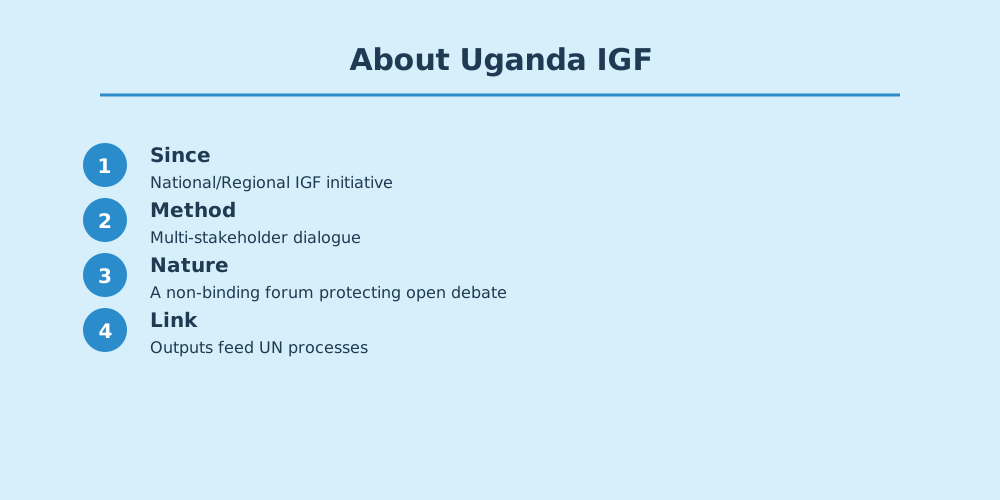
Uganda IGF is a National or Regional IGF Initiative (NRI), aligning local internet governance discussion with global IGF principles.
Why It Matters to You
What was discussed here becomes the baseline for national digital policy, platform rules and AI regulation worldwide within a few years. The principles confirmed at the 2018 meeting are the foundation of the "next rules" for the phones, social platforms and AI services you use every day.
Sources & References
- Uganda Internet Governance Forum 2018 — Creating an Internet of Trust in Uganda(公式アジェンダ: 2018-10-31・Protea Hotel by Marriott・問題提起文書・全4セッションとパネリスト) — UIGF / Internet Society Uganda Chapter・CIPESA (accessed 2026-07-23)
- NRIs Annual Meetings 2018(公式一覧: Uganda IGF — 31 October, Kampala。開催実施の事後記録) — 国連IGF事務局 (accessed 2026-07-23)
- Uganda Internet Governance Forums(系列公式ページ: 「since 2006」・年次報告書/アジェンダ一覧) — Internet Society Uganda Chapter (accessed 2026-07-23)
- Uganda: New social media tax will push basic connectivity further out of reach for millions(アジェンダ文書が引用するOTT税分析) — A4AI / CIPESA (accessed 2026-07-23)
Quotes are translated or condensed from the records listed above. Bracketed numbers [n] refer to the source list.
Related links
- IGF official (NRI list): https://www.intgovforum.org/en/content/national-and-regional-igf-initiatives
- Japan IGF: https://japanigf.jp/
- Yuki Nakazawa's blog: https://nkzw.jp/category/igf/
更新履歴
第1稿投稿 2026年8月10日 19時21分(記事コンテンツアップ)
— 中澤祐樹

