

The 3-Line Summary
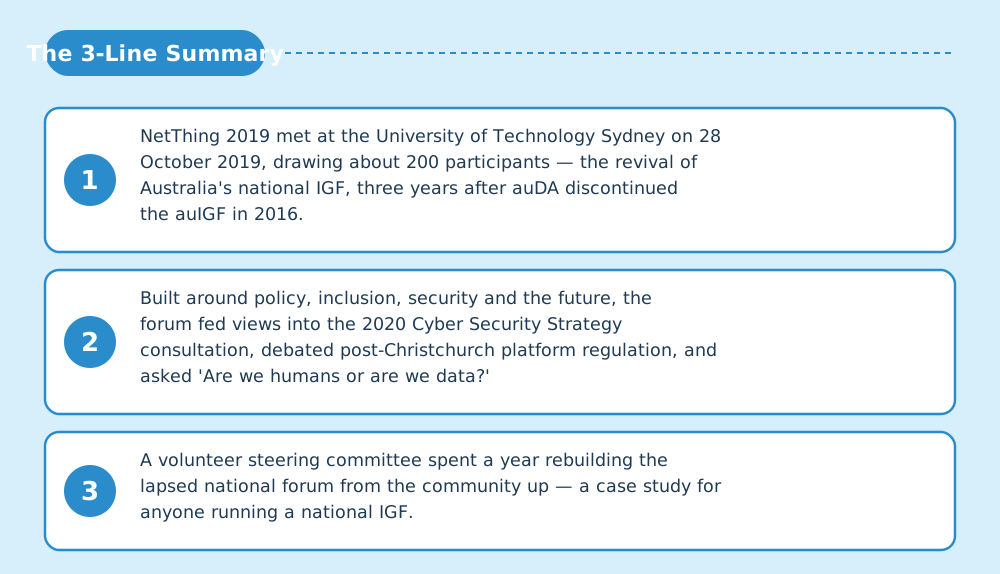
- NetThing 2019 met at the University of Technology Sydney on 28 October 2019, drawing about 200 participants — the revival of Australia's national IGF, three years after auDA discontinued the auIGF in 2016.
- Built around policy, inclusion, security and the future, the forum fed views into the 2020 Cyber Security Strategy consultation, debated post-Christchurch platform regulation, and asked 'Are we humans or are we data?'
- A volunteer steering committee spent a year rebuilding the lapsed national forum from the community up — a case study for anyone running a national IGF.
Welcome — this is the Japan IGF Support Organization. This in-depth report on NetThing 2019 (Australia's Internet Governance Forum) draws on official outputs, session records and on-site reporting. In a hurry? The three lines above and the diagrams carry the gist.
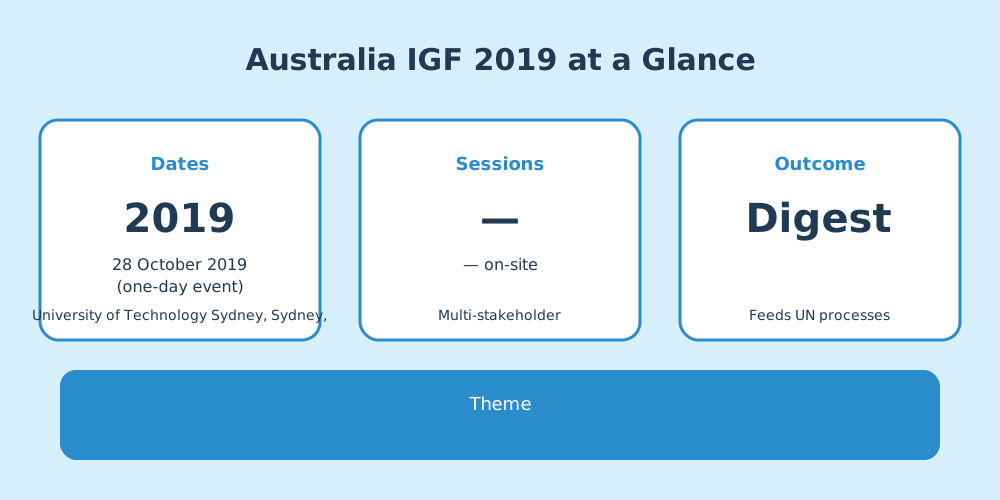
Conference at a Glance (from official records)
| Item | Detail |
|---|---|
| Official name | NetThing 2019 (Australia's Internet Governance Forum) |
| Dates | 28 October 2019 (one-day event) |
| Venue | University of Technology Sydney, Sydney, Australia |
| Theme | Regional governance themes |
| Participants | 約200人 |
| Host | NetThing Steering Committee (volunteer multistakeholder group, supported by sponsors including auDA, APNIC and Afilias) |
(See the source list at the end of this article.)
Discussion Digest — from the Session Records
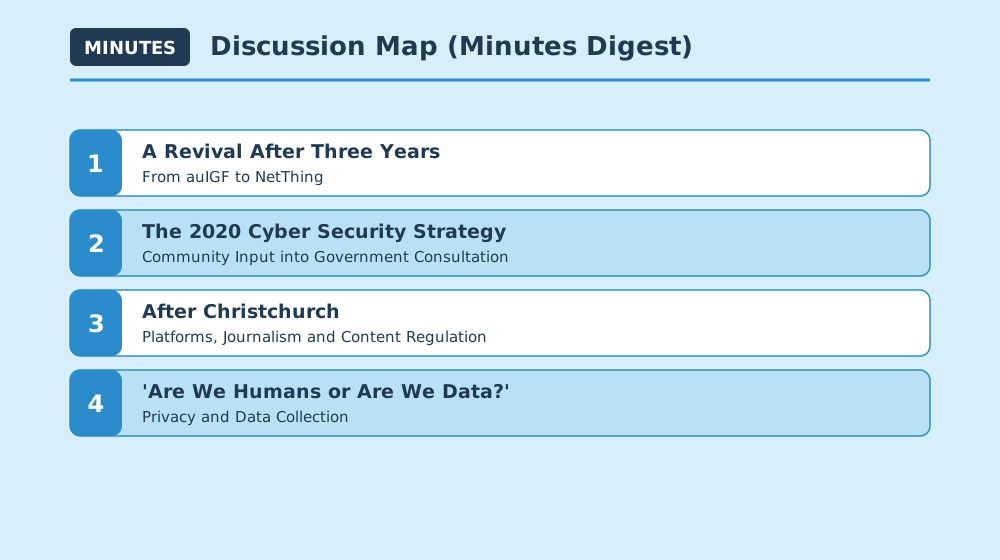
Key exchanges extracted from session records and transcripts.
1. A Revival After Three Years — From auIGF to NetThing
Sessions: Opening (Welcome to Country by Michael West; Chair's welcome by Sandra Davey)
"What was clear to me after NetThing, is that Australia needs a coalition, a community of people and organizations, to advocate for good practices in Internet governance."
— Sandra Davey (Chair, NetThing Steering Committee) [2][3][1]
"A regular gathering, not a conference; a community event about the Internet, where everyone's opinions and ideas are equally valued."
— Sandra Davey (Chair, NetThing Steering Committee) [2][3][1]
- After auDA ended the auIGF in 2016, a volunteer steering committee spent a year rebuilding the forum with a handful of sponsors [2][3][1]
- Inspired by New Zealand's NetHui, the format shifted from the old auIGF's 'sit-behind-a-desk panel' style to conversation-first sessions [2][3][1]
- Michael West of the Metropolitan Local Aboriginal Land Council opened the day by stressing community, diversity, relationships and dignity [2][3][1]
2. The 2020 Cyber Security Strategy — Community Input into Government Consultation
Sessions: Security panel (Geoff Gerrand, Lucie Teague, Matt Tett) and the cyber norms session
- Timed with the consultation on Australia's 2020 Cyber Security Strategy, the forum gathered industry and civil-society input [2][4][1]
- Ambassador for Cyber Affairs Tobias Feakin (DFAT) spoke on Australia's role in shaping international cyber norms [2][4][1]
- An 'IGF engagement in action: Cyber Norms' session explicitly linked domestic debate to UN-level processes [2][4][1]
3. After Christchurch — Platforms, Journalism and Content Regulation
Sessions: Panel 'The Future' (Christchurch, platforms and journalism)
- Following the livestreamed Christchurch attacks of March 2019, participants weighed Australia's rapid-takedown legislation for abhorrent violent material against free expression [2][3][4]
- Jordan Carter of InternetNZ cautioned against 'over-censorship' [2][3][4]
- Platform regulation and the future of journalism — themes that later fed Australia's news media bargaining debate — were already on the table [2][3][4]
4. 'Are We Humans or Are We Data?' — Privacy and Data Collection
Sessions: Panel 'Are we humans or data?' and workshops
- Data collection by digital platforms, privacy and civil-rights protections were debated by technologists alongside journalists and academics [1][4][3]
- Newcomer sessions on how the Internet works and a workshop titled 'The Internet is mostly volunteers' kept the forum deliberately accessible [1][4][3]
Three-Minute Short Talk — Your Questions Answered
Q. What is NetThing — why not call it an IGF?
A. It is Australia's national IGF in substance. When volunteers revived the discontinued auIGF, they chose the deliberately informal name 'NetThing' to signal a gathering open to everyone rather than a formal conference. In 2024 the forum took back the auIGF name.
Q. What was the most contentious topic?
A. Content regulation after Christchurch: Australia's rapid-takedown law for violent material versus fears of over-censorship and threats to free expression.
Q. Why should I care?
A. It shows a national IGF can be rebuilt bottom-up by volunteers — no government mandate required. That lesson travels to any country whose national forum has stalled.
What Is Australia IGF? (for first-time readers)
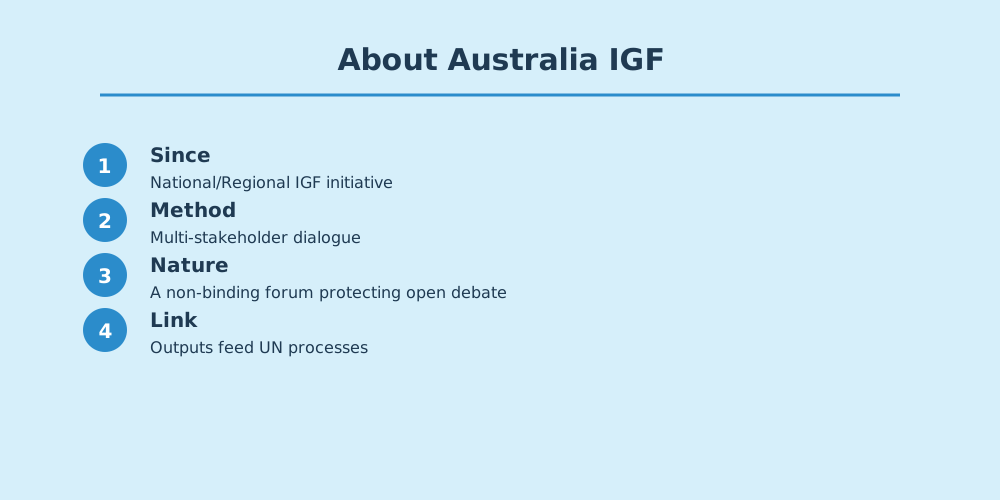
Australia IGF is a National or Regional IGF Initiative (NRI), aligning local internet governance discussion with global IGF principles.
Why It Matters to You
What was discussed here becomes the baseline for national digital policy, platform rules and AI regulation worldwide within a few years. The principles confirmed at the 2019 meeting are the foundation of the "next rules" for the phones, social platforms and AI services you use every day.
Sources & References
- NetThing 2019 — auIGF(旧NetThing)公式サイト (accessed 2026-07-11)
- NetThing: Reinvigorating a community in Australia — APNIC Blog(Sandra Davey 寄稿) (accessed 2026-07-11)
- What to Make of the Inaugural NetThing 2019 — CircleID(Quoc Pham) (accessed 2026-07-11)
- Event recap: NetThing 2019 — Identity Digital AU(旧Afilias Australia) (accessed 2026-07-11)
- NetThing — DiploFoundation (accessed 2026-07-11)
Quotes are translated or condensed from the records listed above. Bracketed numbers [n] refer to the source list.
Related links
- IGF official (NRI list): https://www.intgovforum.org/en/content/national-and-regional-igf-initiatives
- Japan IGF: https://japanigf.jp/
- Yuki Nakazawa's blog: https://nkzw.jp/category/igf/
Revision History
Rev. 1 — published 5 June 2019, 16:00 (Article published)
Rev. 2 — updated 16 July 2026, 20:09 (Fully revised into the in-depth edition: added the 3-line summary, minutes digest, short talk, source list and diagrams (all quotes verified against the listed sources))
— 中澤祐樹