


The 3-Line Summary
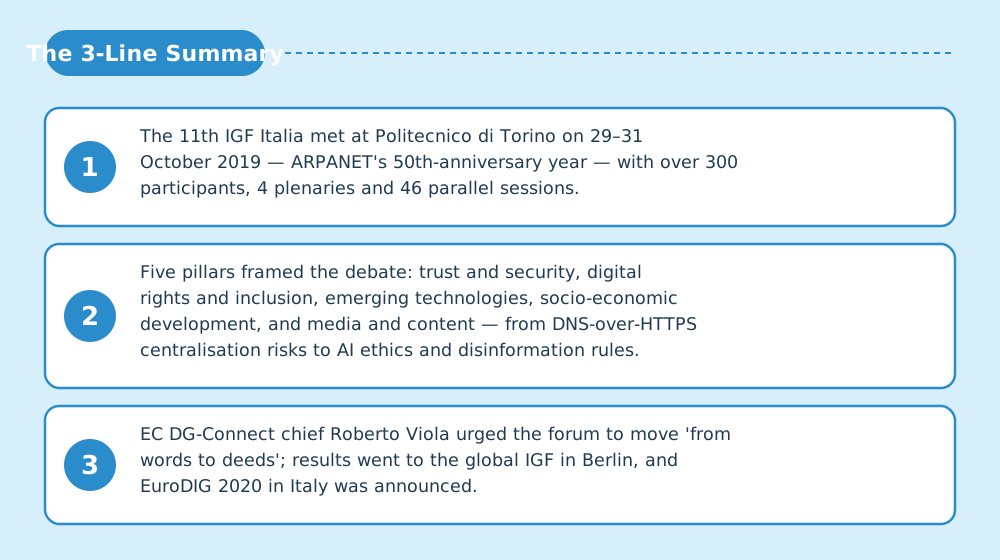
- The 11th IGF Italia met at Politecnico di Torino on 29–31 October 2019 — ARPANET's 50th-anniversary year — with over 300 participants, 4 plenaries and 46 parallel sessions.
- Five pillars framed the debate: trust and security, digital rights and inclusion, emerging technologies, socio-economic development, and media and content — from DNS-over-HTTPS centralisation risks to AI ethics and disinformation rules.
- EC DG-Connect chief Roberto Viola urged the forum to move 'from words to deeds'; results went to the global IGF in Berlin, and EuroDIG 2020 in Italy was announced.
Welcome — this is the Japan IGF Support Organization. This in-depth report on IGF Italia 2019 draws on official outputs, session records and on-site reporting. In a hurry? The three lines above and the diagrams carry the gist.
Conference at a Glance (from official records)
| Item | Detail |
|---|---|
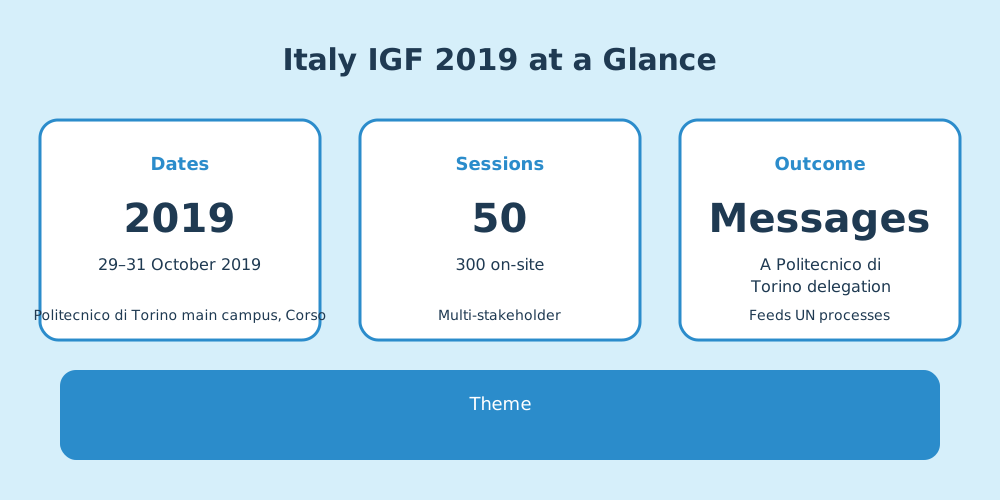
| Official name | IGF Italia 2019 |
| Edition | 11th edition |
| Dates | 29–31 October 2019 |
| Venue | Politecnico di Torino main campus, Corso Duca degli Abruzzi 24, Turin |
| Theme | Regional governance themes |
| Participants | 300 (Over 300 participants and more than 100 speakers; 30% of participants were women and 175 attended for the first time (official report figures)) |
| Sessions | 50 (4 plenaries plus 46 parallel sessions; more than 10 of the 46 were organised by young people) |
| Host | Politecnico di Torino with a 27-member programme and organising committee including AgID |
| Outcome | A Politecnico di Torino delegation presented the results at the global IGF in Berlin, 25–29 November 2019 |
| Note | Held in the 50th-anniversary year of ARPANET |
(See the source list at the end of this article.)
Discussion Digest — from the Session Records
Key exchanges extracted from session records and transcripts.
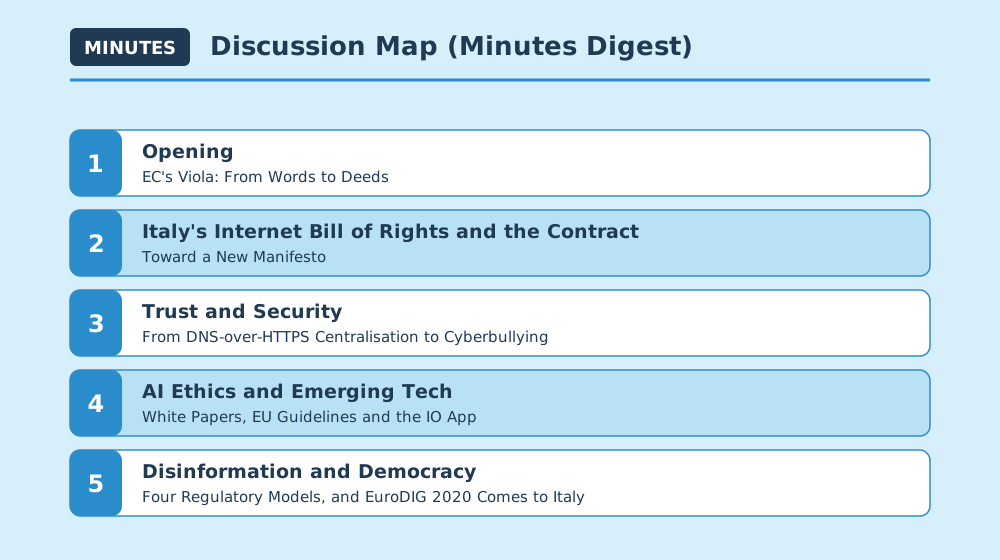
1. Opening — EC's Viola: From Words to Deeds
Sessions: Opening session (29 October, 9:00)
- Rector Guido Saracco opened the forum, pledging the Politecnico's support across research, teaching and outreach [1]
- In a video address, EC DG-Connect director general Roberto Viola thanked AgID and the Politecnico but pressed the IGF to move 'from words to deeds' and deliver tangible, operational results [1]
- MP Mattia Fantinati called for enforceable norms for social platforms and autonomous vehicles, and for academia-industry-government cooperation [1]
2. Italy's Internet Bill of Rights and the Contract for the Web — Toward a New Manifesto
Sessions: Session 2 'The Internet Bill of Rights and A Contract for the Web' (29 October, 10:00)
- ICANN's Andrea Beccalli, MIX's Joy Marino and the Web Foundation's Emily Sharpe compared Italy's 2015 parliamentary Internet Bill of Rights with Tim Berners-Lee's Contract for the Web [1]
- Both were praised as pioneering but dated: the session called for a new, expanded manifesto and a common global framework of ethical principles protecting human rights online [1]
- Preventing internet fragmentation was named as the framework's explicit goal [1]
3. Trust and Security — From DNS-over-HTTPS Centralisation to Cyberbullying
Sessions: 'Trust and Security' track sessions
- Speakers warned that DNS-over-HTTPS turns DNS into a browser-run application service, shifting users from ISP nameservers to a few centralised resolvers; BGP vulnerabilities and ISP mitigations were also examined [1]
- Blockchain-based identity (the European ESSIF framework) and the security-versus-rights balance in 5G and IoT were debated, with self-regulation judged insufficient to protect consumers and human rights [1]
- School cyberbullying programmes and the CyberChallenge.IT university competition anchored the educational side [1]
4. AI Ethics and Emerging Tech — White Papers, EU Guidelines and the IO App
Sessions: 'Challenges of Emerging Technologies' track sessions
- AgID's AI White Paper, the economy ministry's national AI strategy and the EU's Trustworthy AI guidelines were compared, endorsing indicator-based assessment of AI systems' ethical compliance [1]
- Italy's public-services app 'IO' was showcased as a citizen-facing digital service built on security, transparency and data privacy [1]
- Panellists noted GDPR struggles in smart-home IoT, risking fundamental rights, and highlighted AI's potential for disability accessibility [1]
5. Disinformation and Democracy — Four Regulatory Models, and EuroDIG 2020 Comes to Italy
Sessions: 'Media and Content' track sessions and the EuroDIG panel
- Disinformation was framed as damaging everyday opinion-forming, not just elections; four responses were mapped — new legislation, EU-style co-regulation (run by AGCOM in Italy), human-rights-based rules from international bodies, and platform self-regulation [1][4]
- Speakers pressed for stronger statutory duties on platforms such as Facebook and Google, citing the EBU's 2019 news report [1][4]
- The panel announced that EuroDIG 2020, the pan-European dialogue of 47 countries, would be held in Italy at ICTP Trieste on 10–12 June 2020 [1][4]
Three-Minute Short Talk — Your Questions Answered
Q. What did the meeting decide?
A. Nothing binding, but the five-pillar, 46-session debate was distilled into an official report that a delegation carried to the global IGF in Berlin that November.
Q. What was the most contentious topic?
A. How to regulate disinformation: new laws, EU-style co-regulation, human-rights-based rules or platform self-regulation — the forum mapped all four camps.
Q. Why should I care?
A. The DNS-over-HTTPS debate concerns the browser you use every day, and the AI-ethics and IoT-privacy arguments previewed rules now landing worldwide.
What Is Italy IGF? (for first-time readers)
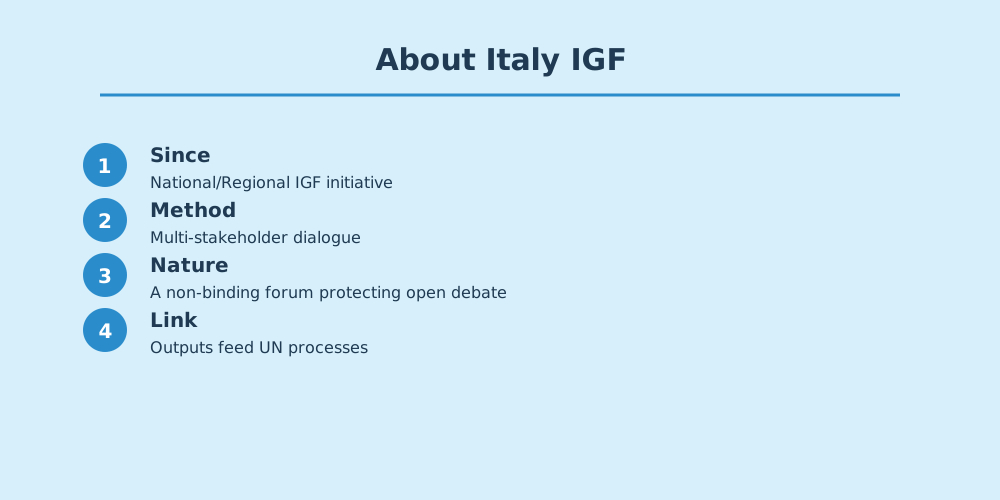
Italy IGF is a National or Regional IGF Initiative (NRI), aligning local internet governance discussion with global IGF principles.
Why It Matters to You
What was discussed here becomes the baseline for national digital policy, platform rules and AI regulation worldwide within a few years. The principles confirmed at the 2019 meeting are the foundation of the "next rules" for the phones, social platforms and AI services you use every day.
Sources & References
- IGF Italia 2019 Report finale(公式最終報告書PDF) — トリノ工科大学・AgID(Anna Carbone / Concettina Cassa編) (accessed 2026-07-11)
- Internet Governance Forum Italia 2019 — AgID(デジタル・イタリア庁) (accessed 2026-07-11)
- Internet Governance Forum Italia October 29th-31st, 2019 — IGF Italia 2019(トリノ工科大学公式サイト) (accessed 2026-07-11)
- Programma Internet Governance Forum Italia — Politecnico di Torino(ポケット版プログラムPDF) — Centro Studi di Informatica Giuridica Ivrea-Torino (accessed 2026-07-11)
Quotes are translated or condensed from the records listed above. Bracketed numbers [n] refer to the source list.
Related links
- IGF official (NRI list): https://www.intgovforum.org/en/content/national-and-regional-igf-initiatives
- Japan IGF: https://japanigf.jp/
- Yuki Nakazawa's blog: https://nkzw.jp/category/igf/
更新履歴
第1稿投稿 2026年7月20日 17時34分(記事コンテンツアップ)
— 中澤祐樹

