


The 3-Line Summary
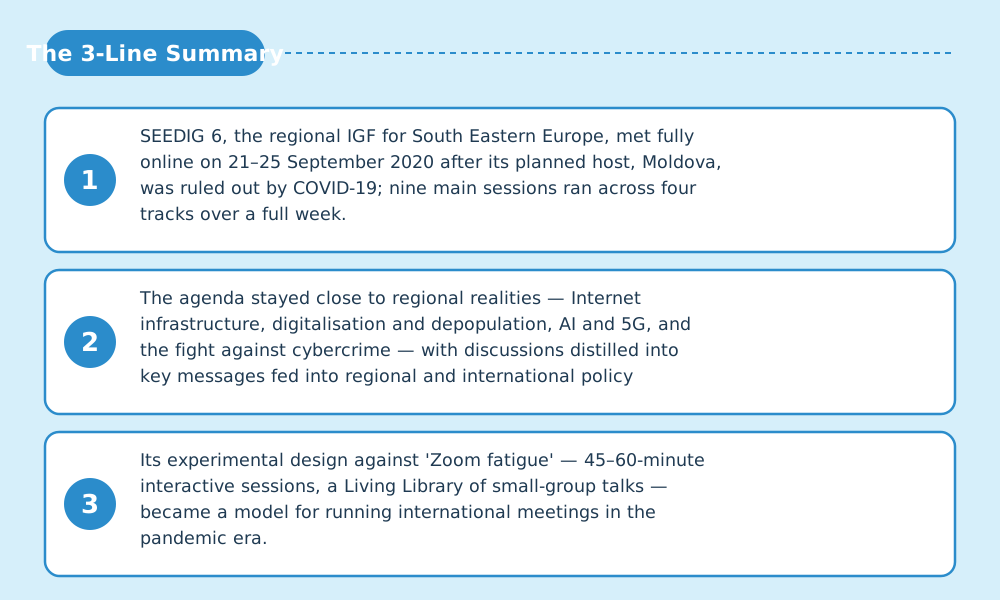
- SEEDIG 6, the regional IGF for South Eastern Europe, met fully online on 21–25 September 2020 after its planned host, Moldova, was ruled out by COVID-19; nine main sessions ran across four tracks over a full week.
- The agenda stayed close to regional realities — Internet infrastructure, digitalisation and depopulation, AI and 5G, and the fight against cybercrime — with discussions distilled into key messages fed into regional and international policy dialogue.
- Its experimental design against 'Zoom fatigue' — 45–60-minute interactive sessions, a Living Library of small-group talks — became a model for running international meetings in the pandemic era.
Welcome — this is the Japan IGF Support Organization. This in-depth report on SEEDIG 2020 in Virtual draws on official outputs, session records and on-site reporting. In a hurry? The three lines above and the diagrams carry the gist.
📍 Matches the catalogue's 'virtual' designation. SEEDIG 6 was originally planned to be hosted in Moldova and was moved fully online due to COVID-19
Conference at a Glance (from official records)
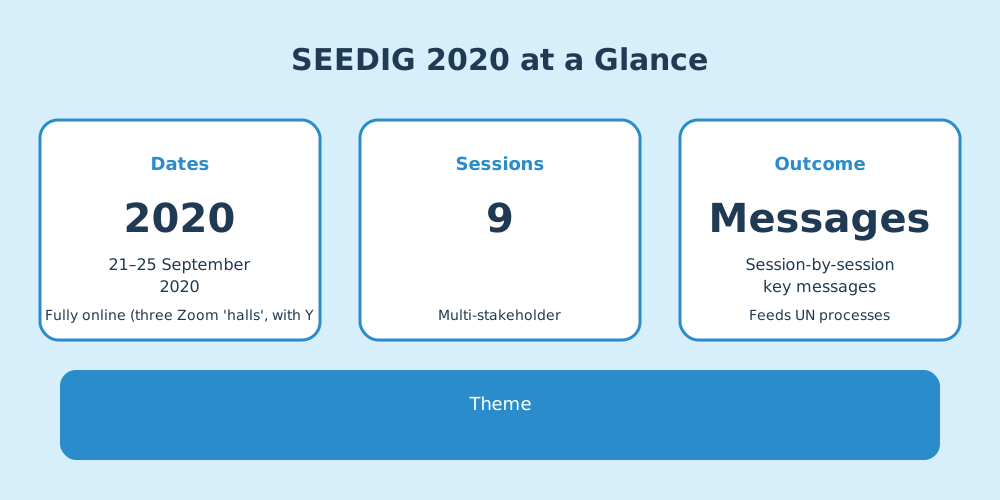
| Item | Detail |
|---|---|
| Edition | 6th annual meeting (SEEDIG 6) |
| Dates | 21–25 September 2020 |
| Venue | Fully online (three Zoom 'halls', with YouTube and Facebook live streaming) |
| Theme | Regional governance themes |
| Sessions | 9 (Nine main sessions in four tracks (Internet infrastructure, digitalisation, trust and security, advanced technologies), plus six creative tracks and two social events) |
| Outcome | Session-by-session key messages (Messages from SEEDIG 6) |
(See the source list at the end of this article.)
Discussion Digest — from the Session Records
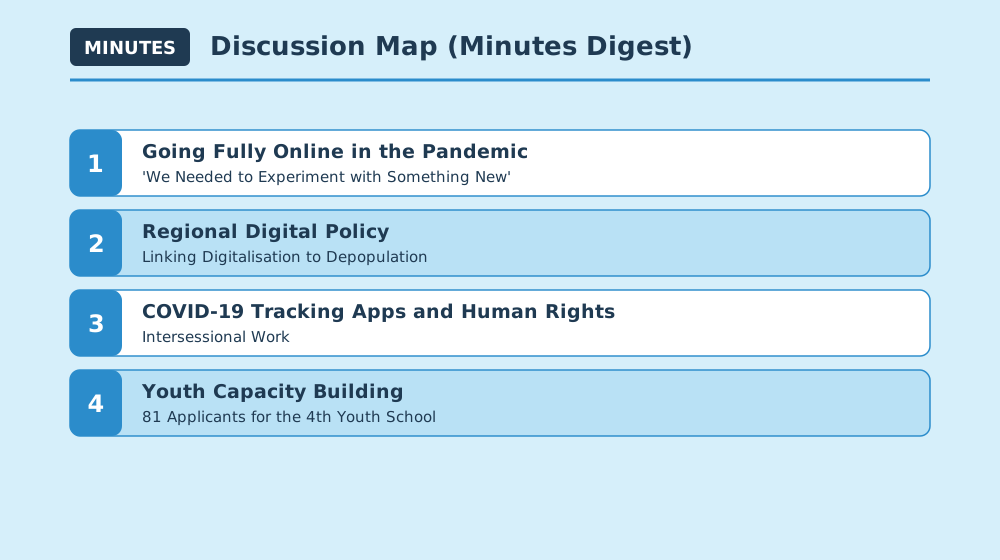
Key exchanges extracted from session records and transcripts.
1. Going Fully Online in the Pandemic — 'We Needed to Experiment with Something New'
Sessions: Overall meeting design (21–25 September 2020; three Zoom halls: SEEdigital, SEEcreative, SEEfun)
"as many of us were already tired of online meetings, we needed to experiment with something new"
— Sorina Teleanu (Chair, SEEDIG Executive Committee) [4][2]
- With Moldova off the table, the meeting was redesigned as a week of 45–60-minute sessions instead of eight-hour days, banning long speeches in favour of interaction [4][2]
- Six creative tracks were added: a Living Library of small-group talks with the Council of Europe, ISOC and ICANN, expert interviews (SEEtalks), and a 'Terms of Service Fantasy Reader' turning app terms into a radio play [4][2]
- A virtual Moldovan wine tasting and a music night tried to recreate the social glue of in-person meetings online [4][2]
2. Regional Digital Policy — Linking Digitalisation to Depopulation
Sessions: Main sessions in four tracks: Internet infrastructure, digitalisation, trust and security, advanced technologies
- A distinctly regional theme took centre stage: how digitalisation relates to South Eastern Europe's depopulation and brain drain [1]
- AI readiness, 5G deployment strategies, cybercrime and critical-infrastructure protection filled the other tracks, with outcomes distributed as key messages to regional and international policy discussions [1]
3. COVID-19 Tracking Apps and Human Rights — Intersessional Work
Sessions: Intersessional work in the 2020 cycle
- A dedicated project examined the human-rights implications of COVID-19 tracking apps across SEE+ countries, probing the tension between pandemic response and privacy [1]
- The monthly SEEsummary continued to monitor and report digital policy developments across the region [1]
4. Youth Capacity Building — 81 Applicants for the 4th Youth School
Sessions: SEEDIG Youth School (4th edition) / SIDI school in Bucharest
- The 4th SEEDIG Youth School drew 81 applicants, with 17 students advancing to Phase 2 — a pillar of the region's Internet-governance talent pipeline [1]
- The SIDI school (School on Internet Governance, Digital Policies and Innovation) in Bucharest gathered participants from 16 countries [1]
Three-Minute Short Talk — Your Questions Answered
Q. What is SEEDIG anyway?
A. It is the regional IGF for South Eastern Europe — a dialogue forum where governments, business and civil society talk as equals. It decides nothing, but its discussions are distilled into key messages that feed national and international policy debates.
Q. What made 2020 special?
A. It was SEEDIG's first fully online meeting. With the planned Moldova venue lost to COVID-19, organisers built three Zoom 'halls' and fought Zoom fatigue with everything from a terms-of-service radio play to a virtual wine tasting.
Q. Why should I care?
A. Its debate linking depopulation to digitalisation applies to shrinking regions everywhere, its review of COVID tracking apps and human rights remains a privacy case study, and its interactive online format became a template for pandemic-era conferences.
What Is SEEDIG? (for first-time readers)
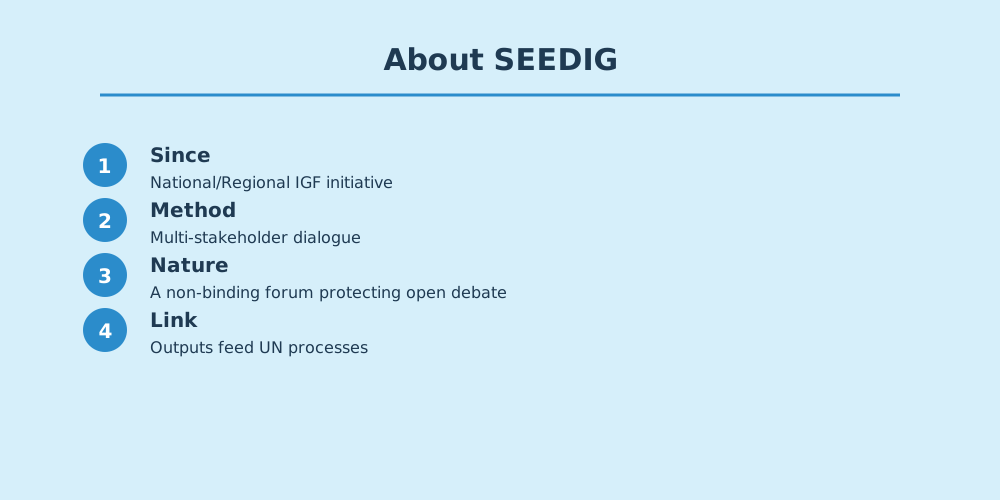
SEEDIG is a National or Regional IGF Initiative (NRI), aligning local internet governance discussion with global IGF principles.
Why It Matters to You
What was discussed here becomes the baseline for national digital policy, platform rules and AI regulation worldwide within a few years. The principles confirmed at the 2020 meeting are the foundation of the "next rules" for the phones, social platforms and AI services you use every day.
Sources & References
- SEEDIG annual report 2020 cycle — SEEDIG(公式年次報告) (accessed 2026-07-11)
- SEEDIG 6 meeting website — SEEDIG / DiploFoundation (accessed 2026-07-11)
- SEEDIG 6 annual meeting — intgovforum.org, NRIsページ (accessed 2026-07-11)
- Innovation in online meetings: SEEDIG 6(Sorina Teleanu 執筆) — SEEDIG(DiploFoundationブログ転載) (accessed 2026-07-11)
- South Eastern European Dialogue on Internet Governance — en (accessed 2026-07-11)
Quotes are translated or condensed from the records listed above. Bracketed numbers [n] refer to the source list.
Related links
- IGF official (NRI list): https://www.intgovforum.org/en/content/national-and-regional-igf-initiatives
- Japan IGF: https://japanigf.jp/
- Yuki Nakazawa's blog: https://nkzw.jp/category/igf/
Revision History
Rev. 1 — published 13 May 2020, 13:00 (Article published)
Rev. 2 — updated 11 July 2026, 02:14 (Fully revised into the in-depth edition: added the 3-line summary, minutes digest, short talk, source list and diagrams (all quotes verified against the listed sources))
— 中澤祐樹

