


The 3-Line Summary
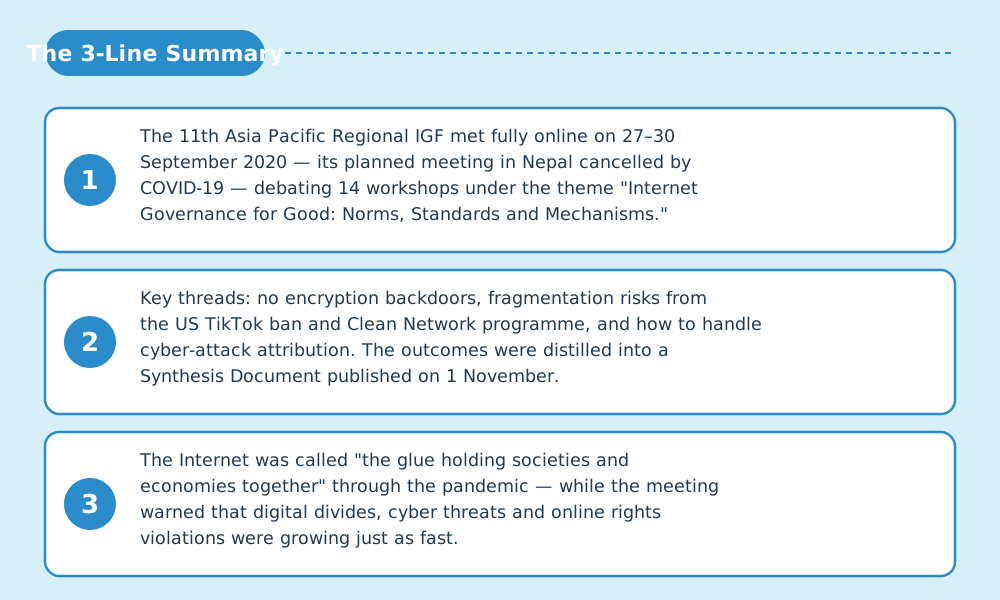
- The 11th Asia Pacific Regional IGF met fully online on 27–30 September 2020 — its planned meeting in Nepal cancelled by COVID-19 — debating 14 workshops under the theme "Internet Governance for Good: Norms, Standards and Mechanisms."
- Key threads: no encryption backdoors, fragmentation risks from the US TikTok ban and Clean Network programme, and how to handle cyber-attack attribution. The outcomes were distilled into a Synthesis Document published on 1 November.
- The Internet was called "the glue holding societies and economies together" through the pandemic — while the meeting warned that digital divides, cyber threats and online rights violations were growing just as fast.
Welcome — this is the Japan IGF Support Organization. This in-depth report on AprIGF 2020 in Virtual draws on official outputs, session records and on-site reporting. In a hurry? The three lines above and the diagrams carry the gist.
📍 The 11th APrIGF. Originally planned as an in-person meeting in Nepal, it was moved fully online by the Multistakeholder Steering Group (MSG) amid COVID-19 uncertainty — the first fully virtual APrIGF, with a Day 0 capacity-building day on 27 September. The Nepal meeting was carried over to the 2021 Kathmandu hybrid edition
Conference at a Glance (from official records)
| Item | Detail |
|---|---|
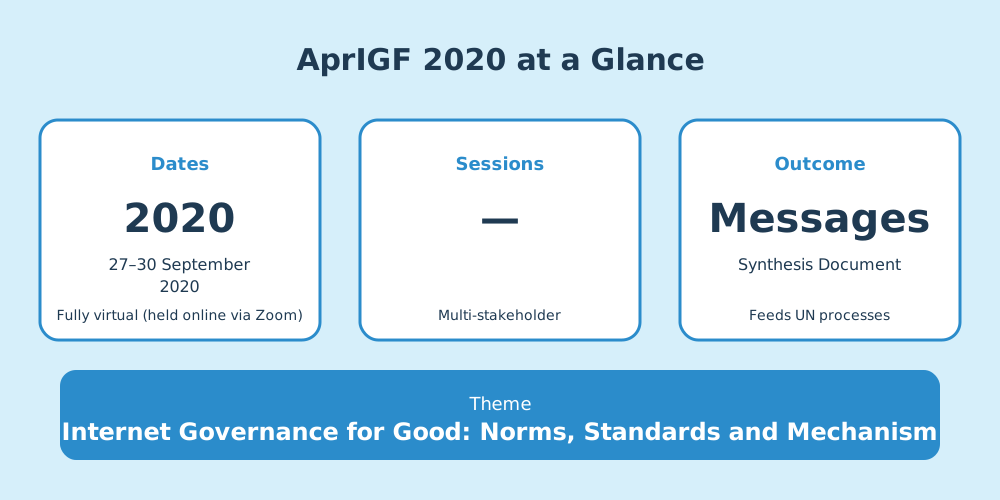
| Dates | 27–30 September 2020 |
| Venue | Fully virtual (held online via Zoom) |
| Theme | Internet Governance for Good: Norms, Standards and Mechanisms |
| Tracks | Four sub-themes: Cybersecurity, Safety and Trust / Digital Inclusion, Gender Equality and Diversity / Human Rights and Ethics / Innovation and Development |
| Host | Hosted by the APrIGF Multistakeholder Steering Group (MSG), executed by the APrIGF Secretariat and DotAsia Organisation |
| Outcome | Synthesis Document (published 1 November 2020) |
(See the source list at the end of this article.)
Discussion Digest — from the Session Records
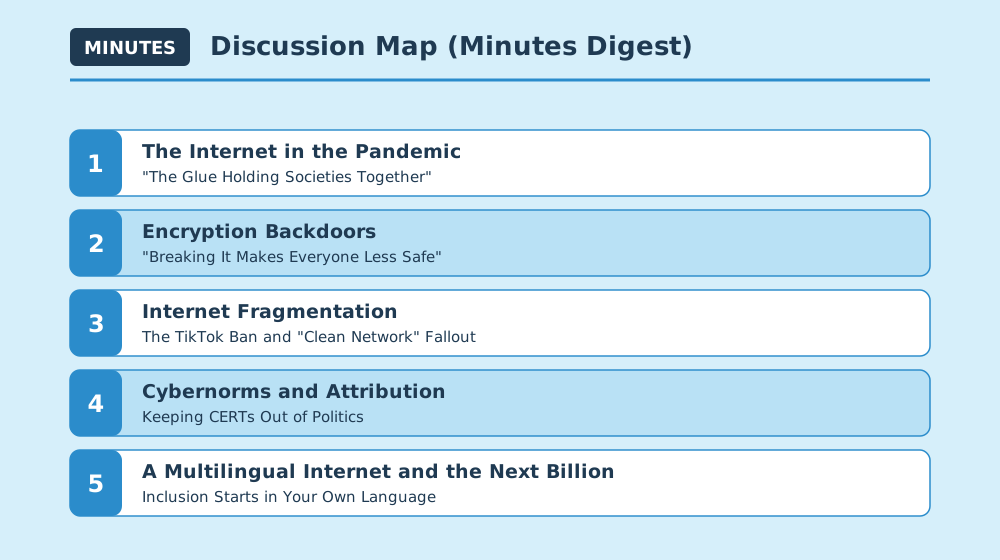
Key exchanges extracted from session records and transcripts.
1. The Internet in the Pandemic — "The Glue Holding Societies Together"
Sessions: "Learn from Home During COVID-19", "The digital rights landscape in Asia Pacific after COVID-19" and others
- The Synthesis Document records the Internet as "the glue that is holding societies and economies together through this period, like nothing else can" — without it, the pandemic's impact would have been far worse [1]
- At the same time, deepening reliance on the Internet exposed the urgency of growing digital divides, cyber threats and online human rights violations [1]
- Digital innovations born of the pandemic — remote education, online public services — should be sustained and developed, not abandoned [1]
2. Encryption Backdoors — "Breaking It Makes Everyone Less Safe"
Sessions: "Breaking Encryption: Is it the Panacea for addressing security issue online?" (Cybersecurity, Safety and Trust sub-theme)
- Encryption is a core component of cybersecurity: the message to regulators and law enforcement is that breaking encryption will result in increased security vulnerabilities for all [1]
- Any lawful interception should be open and transparent, with independent judicial oversight [1]
- Developing economies need support to modernise legislation and regulations so they can join international cybersecurity work [1]
3. Internet Fragmentation — The TikTok Ban and "Clean Network" Fallout
Sessions: "The Single, Global Internet – A Technical Discussion" (Innovation and Development sub-theme)
- Government policies that constrain free connection to the Internet's resources — like the US TikTok ban and Clean Network initiative — are likely to cause fragmentation [1]
- Fragmentation is both institutional (diverging governance approaches) and infrastructural ("splintering" the single, interoperable Internet into islands of connectivity); even 5G network slicing could fragment the network [1]
- Care is needed so emerging technologies do not disrupt the innovation cycle — the Internet must remain open, global and interoperable [1]
4. Cybernorms and Attribution — Keeping CERTs Out of Politics
Sessions: "Do cybernorms help or hinder incident response activities?" (Cybersecurity, Safety and Trust sub-theme)
- Cybernorms are critical to shaping behaviour online, including expectations about State conduct — but attack attribution can be used for political purposes [1][4]
- Attribution comes in political, legal and technical forms, each with its own challenges and approaches [1][4]
- One proposal: let a network of independent organisations handle attribution instead of individual States, freeing CERTs from the politics of accusations and protecting the technical community's trust and independence [1][4]
5. A Multilingual Internet and the Next Billion — Inclusion Starts in Your Own Language
Sessions: Digital Inclusion, Gender Equality and Diversity sub-theme (incl. "Bridging the digital gender divide")
- Asia Pacific is home to over 3,000 languages and the next billion people to come online: Universal Acceptance (UA) is a fundamental requirement for a truly multilingual, inclusive Internet [1][5]
- "Inclusion begins with being able to navigate the Internet in your native language" — mobilising civil society, businesses of all sizes and governments at all levels for UA adoption [1][5]
- Sessions on the digital gender gap audit scorecard, accessible information for persons with disabilities, and technology in women's safety broadened the inclusion agenda [1][5]
Three-Minute Short Talk — Your Questions Answered
Q. So what did the conference actually decide?
A. Nothing binding — it's the Asia-Pacific edition of the IGF, where governments, business, civil society and technologists talk as equals. In 2020 it went fully online for the first time because of COVID-19, and the discussions were distilled into a Synthesis Document that carried the region's voice into UN and national policy debates.
Q. What was the most contentious topic?
A. Whether encryption may be broken in the name of online safety. The forum's answer was blunt: breaking encryption makes everyone less safe, and even lawful interception needs transparency and independent judicial oversight. Fragmentation fears around the US TikTok ban ran a close second.
Q. Why should I care?
A. Because 2020 was the year the Internet became 'the glue holding societies together' — and the year its weak points (divides, disinformation, surveillance) burst into view. Every remote-work and online-schooling policy since builds on debates like these.
What Is AprIGF? (for first-time readers)
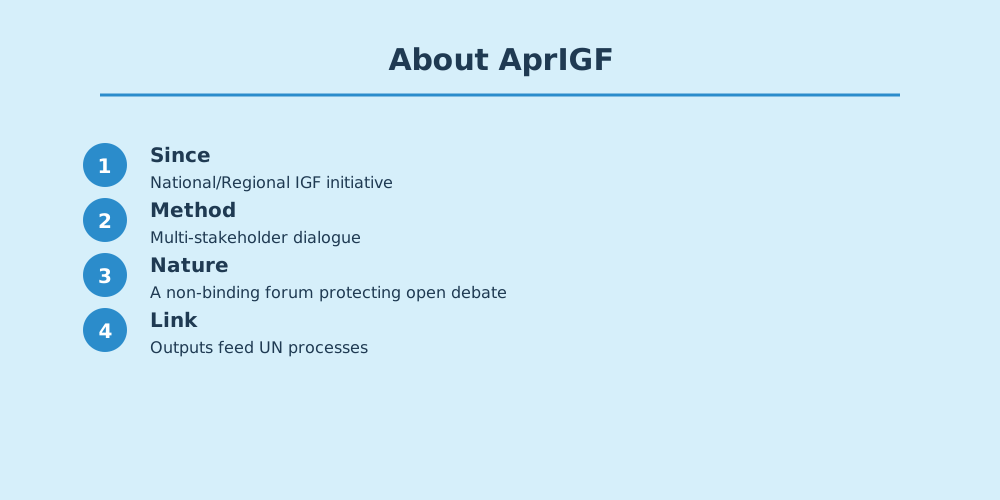
AprIGF is a National or Regional IGF Initiative (NRI), aligning local internet governance discussion with global IGF principles.
Why It Matters to You
What was discussed here becomes the baseline for national digital policy, platform rules and AI regulation worldwide within a few years. The principles confirmed at the 2020 meeting are the foundation of the "next rules" for the phones, social platforms and AI services you use every day.
Sources & References
- APrIGF 2020 Synthesis Document — Internet Governance for Good: Norms, Standards and Mechanisms (PDF) — APrIGF Secretariat (accessed 2026-07-10)
- 2020 APrIGF (Virtual Conference overview) — APrIGF.Asia(公式サイト) (accessed 2026-07-10)
- APrIGF 2020 Going Virtual — APrIGF(公式ニュースアーカイブ) (accessed 2026-07-10)
- Event Wrap: APrIGF 2020 — APNIC Blog (accessed 2026-07-10)
- APC at the Asia Pacific Regional Internet Governance Forum 2020 — Association for Progressive Communications (accessed 2026-07-10)
- APrIGF 2021 To Be Officially Held in Kathmandu Nepal(2020年ネパール開催断念の経緯に言及) — Internet Governance Institute(ネパール) (accessed 2026-07-10)
- APrIGF 2020 Synthesis Document Published! — APrIGF.Asia(公式サイト) (accessed 2026-07-10)
Quotes are translated or condensed from the records listed above. Bracketed numbers [n] refer to the source list.
Related links
- IGF official (NRI list): https://www.intgovforum.org/en/content/national-and-regional-igf-initiatives
- Japan IGF: https://japanigf.jp/
- Yuki Nakazawa's blog: https://nkzw.jp/category/igf/
Revision History
Rev. 1 — published 28 September 2020, 10:00 (Article published)
Rev. 2 — updated 10 July 2026, 23:16 (Fully revised into the in-depth edition: added the 3-line summary, minutes digest, short talk, source list and diagrams (all quotes verified against the listed sources))
— 中澤祐樹

