


The 3-Line Summary
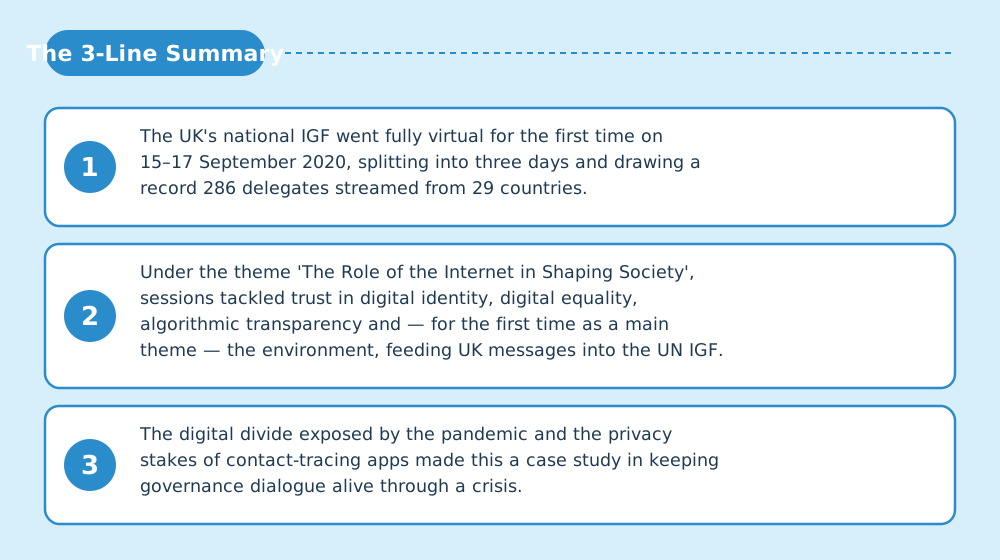
- The UK's national IGF went fully virtual for the first time on 15–17 September 2020, splitting into three days and drawing a record 286 delegates streamed from 29 countries.
- Under the theme 'The Role of the Internet in Shaping Society', sessions tackled trust in digital identity, digital equality, algorithmic transparency and — for the first time as a main theme — the environment, feeding UK messages into the UN IGF.
- The digital divide exposed by the pandemic and the privacy stakes of contact-tracing apps made this a case study in keeping governance dialogue alive through a crisis.
Welcome — this is the Japan IGF Support Organization. This in-depth report on UK IGF 2020 draws on official outputs, session records and on-site reporting. In a hurry? The three lines above and the diagrams carry the gist.
Conference at a Glance (from official records)
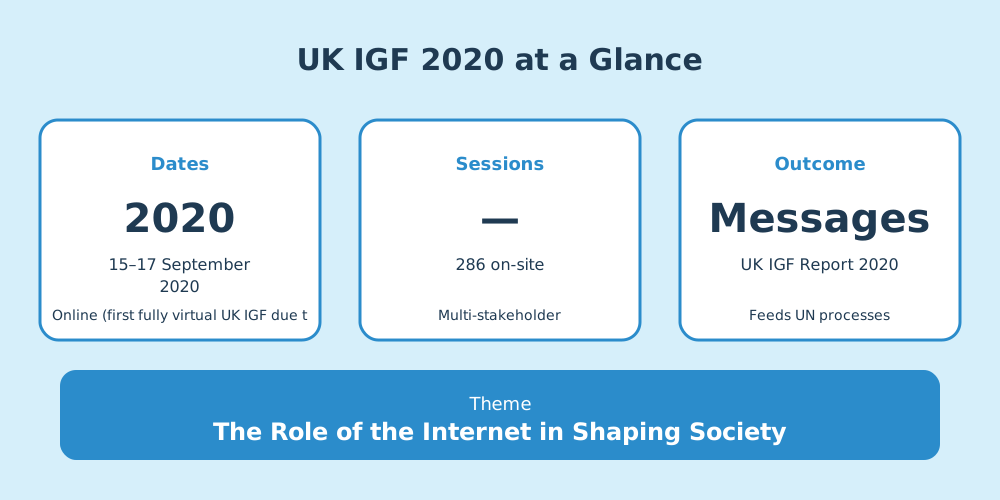
| Item | Detail |
|---|---|
| Official name | UK IGF 2020 |
| Dates | 15–17 September 2020 |
| Venue | Online (first fully virtual UK IGF due to Covid-19, split across three days instead of the usual one) |
| Theme | The Role of the Internet in Shaping Society |
| Participants | 286 (286 delegates from government, parliament, civil society, industry, the technical community and academia — a record attendance, streamed from 29 countries) |
| Sub-themes | Five themes: Trust, Inclusion, Data, Environment and Covid-19 |
| Host | UK IGF Steering Committee; secretariat provided by Nominet, the UK's national domain-name registry |
| Outcome | UK IGF Report 2020, carrying UK messages into the (virtual) UN IGF in November 2020 |
(See the source list at the end of this article.)
Discussion Digest — from the Session Records
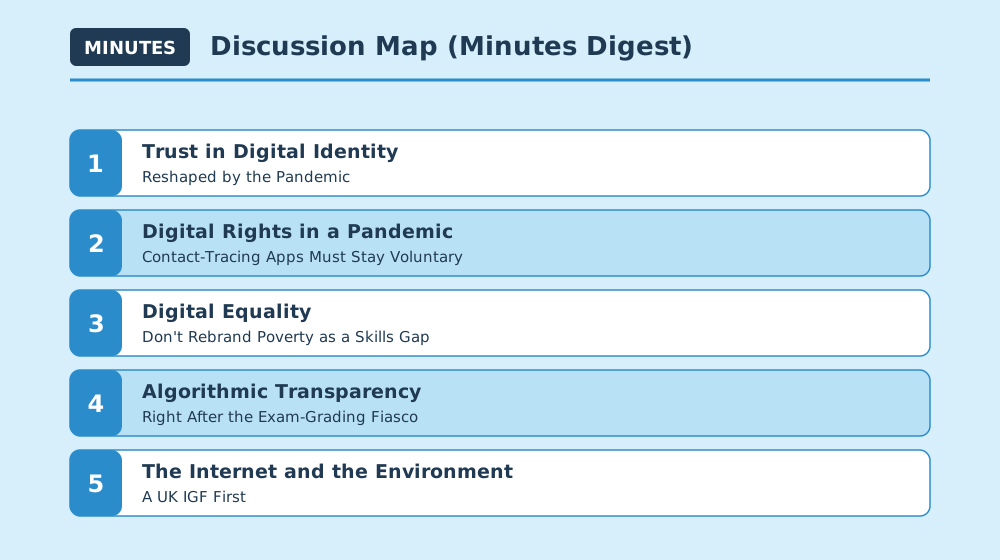
Key exchanges extracted from session records and transcripts.
1. Trust in Digital Identity — Reshaped by the Pandemic
Sessions: Panel 'Building Trust in Digital Identity' (15 September, 11:00–12:30, chaired by Sue Daley)
- Panellists welcomed the Government's response to its digital identity call for evidence as a first step, while demanding more detail and a clearer timeline [1][3]
- Dr Michael Veale (UCL) noted smartphone operating systems had become an unintentional basis for the identity-verification ecosystem, requiring extra checks on intermediaries and scrutiny of where power sits [1][3]
- Genuine public buy-in to transformative technologies needs public education in plain, accessible language on a clear ethical basis [1][3]
2. Digital Rights in a Pandemic — Contact-Tracing Apps Must Stay Voluntary
Sessions: Keynote 'Protecting digital rights during a pandemic' (15 September, Professor Lilian Edwards)
- Edwards argued that installing any state-developed contact-tracing app should be voluntary by law and never a basis for discrimination against vulnerable citizens without smartphones [1][3]
- Workplaces and university campuses were becoming unintended testbeds for new surveillance technologies and wearables, risking people leaving devices at home to protect their privacy [1][3]
- Rather than rejecting tracing, the onus is on those responsible to choose less privacy-invasive measures — a lesson for immunity passports and any future digital health identity [1][3]
3. Digital Equality — Don't Rebrand Poverty as a Skills Gap
Sessions: Panel 'Digital Equality' (15 September, 15:30–17:00, chaired by Helen Milner)
"The biggest asset in the room isn't the technology it's the real experiences."
— Atif Choudhury (CEO, Diversity and Ability) [1][3]
"Let's move away from seeing it as a technical problem to a social problem & realise we have a collective responsibility."
— Ellen Helsper (Professor of Digital Inequalities, LSE) [1][3]
- The panel agreed poverty, socio-economics and a sense of belonging drive digital inequality — 'digital inclusion' is often just a more comfortable word for poverty [1][3]
- They called for a renewed focus on outcomes rather than the delivery of learning and skills training alone [1][3]
- Professor Helsper dispelled the myth that all young people are 'digital natives', noting shame about asking questions exists across generations [1][3]
4. Algorithmic Transparency — Right After the Exam-Grading Fiasco
Sessions: Panel 'Examining algorithmic transparency and how to achieve it' (16 September, 11:00–12:30, chaired by Carly Kind)
"When there is more transparency, there becomes more opportunities to innovate."
— Natalia Domagala (Head of Data Ethics, Cabinet Office) [1][3]
- After the UK's 2020 exam-grading algorithm controversy, Carly Kind (Ada Lovelace Institute) noted the paradox of public bodies retreating from algorithms just when they could help solve hard problems [1][3]
- Milly Zimeta (Open Data Institute): data always carries gaps and biases, and even perfect data never guarantees the 'perfect' outcome — humans must define the society we want [1][3]
- The panel proposed Citizen Assemblies focused on technology and transparency as new models of public deliberation [1][3]
5. The Internet and the Environment — A UK IGF First
Sessions: Keynote by Professor Myles Allen + panel 'The Internet and environment' (16 September, 14:00–16:30, chaired by David Souter)
- Professor Myles Allen (Oxford) argued the tech sector should use its market power not just to decarbonise its own energy supplies but to demand decarbonised fossil fuels generally [1][3]
- Ugo Vallauri (Restart Project): the problem is not only infrastructure but disposable access devices — components must become replaceable, repairable and longer-lasting [1][3]
- Chair David Souter noted the global IGF also discussed the environment as a main theme for the first time that year; the panel agreed the digital sector was the fastest-growing contributor to emissions [1][3]
Three-Minute Short Talk — Your Questions Answered
Q. What kind of event was this?
A. The UK's national internet governance forum — forced fully online by Covid-19 for the first time, yet drawing a record 286 participants. Three days covered trust, inclusion, data, the environment and Covid-19, with conclusions passed to the UN IGF.
Q. What was the biggest debate?
A. The digital divide the pandemic deepened. Panellists insisted the root cause is poverty, not a 'skills gap' — and one keynote argued contact-tracing apps must be voluntary by law.
Q. Why does it still matter?
A. Contact-tracing privacy, algorithmic transparency in government and the right to repair all became mainstream policy fights later — this forum debated them in real time in 2020.
What Is UK IGF? (for first-time readers)
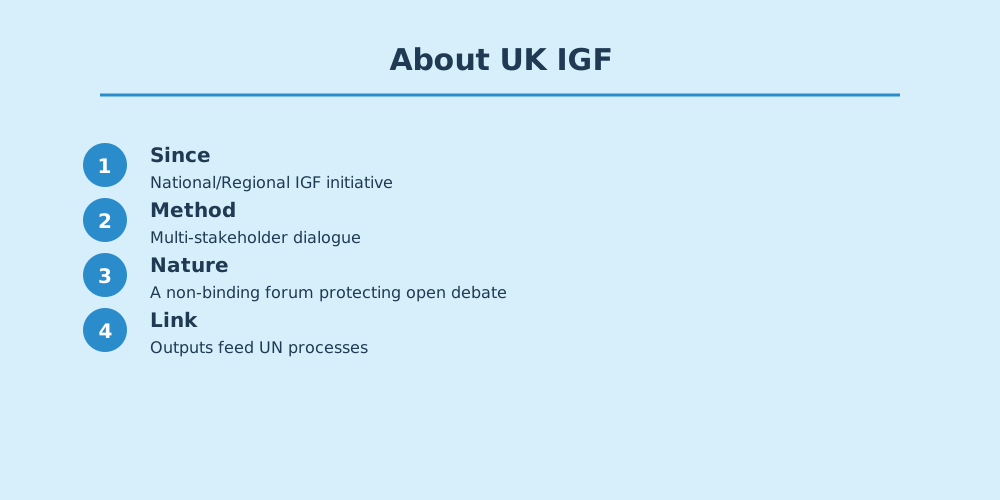
UK IGF is a National or Regional IGF Initiative (NRI), aligning local internet governance discussion with global IGF principles.
Why It Matters to You
What was discussed here becomes the baseline for national digital policy, platform rules and AI regulation worldwide within a few years. The principles confirmed at the 2020 meeting are the foundation of the "next rules" for the phones, social platforms and AI services you use every day.
Sources & References
- UK Internet Governance Forum Report 2020 (PDF) — UK IGF(事務局: Nominet) (accessed 2026-07-11)
- UK IGF 2020(公式イベントページ) — UK IGF (accessed 2026-07-11)
- 2020 Agenda — UK IGF (accessed 2026-07-11)
- UK IGF 2020 — online event 15–17 September — Internet Society England Chapter (accessed 2026-07-11)
Quotes are translated or condensed from the records listed above. Bracketed numbers [n] refer to the source list.
Related links
- IGF official (NRI list): https://www.intgovforum.org/en/content/national-and-regional-igf-initiatives
- Japan IGF: https://japanigf.jp/
- Yuki Nakazawa's blog: https://nkzw.jp/category/igf/
Revision History
Rev. 1 — published 2 October 2020, 16:00 (Article published)
Rev. 2 — updated 16 July 2026, 20:09 (Fully revised into the in-depth edition: added the 3-line summary, minutes digest, short talk, source list and diagrams (all quotes verified against the listed sources))
— 中澤祐樹

