


The 3-Line Summary
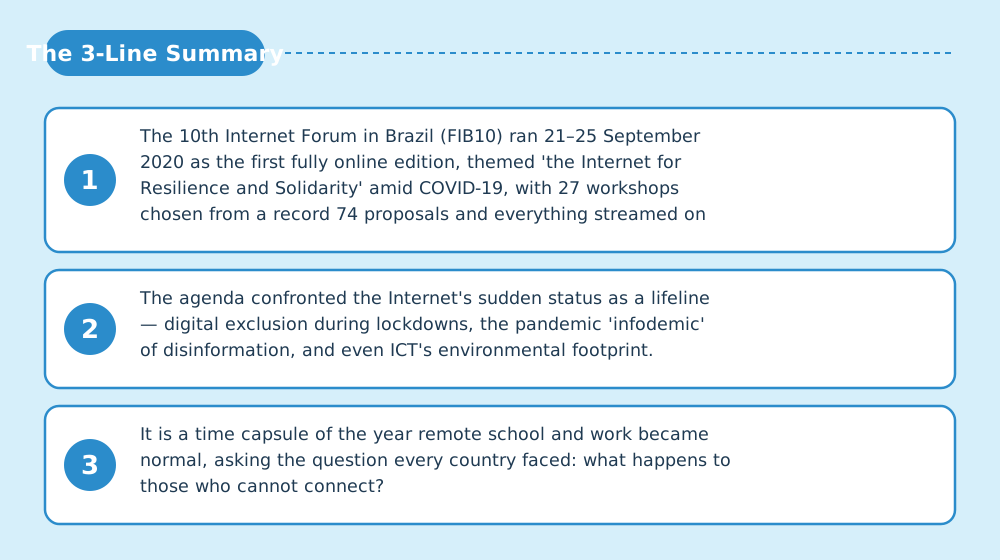
- The 10th Internet Forum in Brazil (FIB10) ran 21–25 September 2020 as the first fully online edition, themed 'the Internet for Resilience and Solidarity' amid COVID-19, with 27 workshops chosen from a record 74 proposals and everything streamed on YouTube.
- The agenda confronted the Internet's sudden status as a lifeline — digital exclusion during lockdowns, the pandemic 'infodemic' of disinformation, and even ICT's environmental footprint.
- It is a time capsule of the year remote school and work became normal, asking the question every country faced: what happens to those who cannot connect?
Welcome — this is the Japan IGF Support Organization. This in-depth report on 10th Internet Forum in Brazil (10º Fórum da Internet no Brasil / FIB10) draws on official outputs, session records and on-site reporting. In a hurry? The three lines above and the diagrams carry the gist.
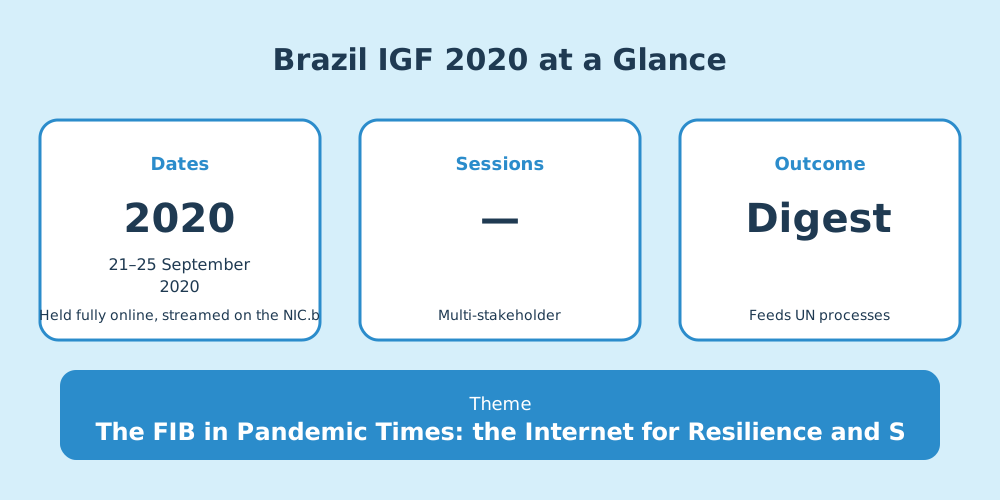
Conference at a Glance (from official records)
| Item | Detail |
|---|---|
| Official name | 10th Internet Forum in Brazil (10º Fórum da Internet no Brasil / FIB10) |
| Dates | 21–25 September 2020 |
| Venue | Held fully online, streamed on the NIC.br YouTube channel |
| Theme | The FIB in Pandemic Times: the Internet for Resilience and Solidarity |
| Workshops | 27 |
| Host | Brazilian Internet Steering Committee (CGI.br), operated by NIC.br |
(See the source list at the end of this article.)
Discussion Digest — from the Session Records
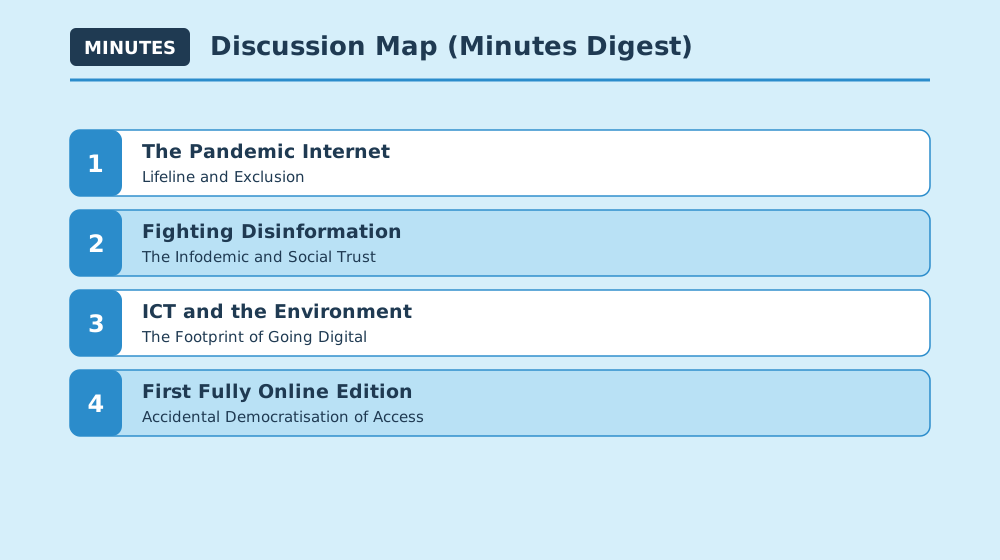
Key exchanges extracted from session records and transcripts.
1. The Pandemic Internet — Lifeline and Exclusion
Sessions: Opening session and forum theme
"The Forum will debate the relevance of the Internet in this pandemic moment, and how it is ever more necessary to preserve it and make it more inclusive, open and democratic"
— Tanara Lauschner (coordinator, CGI.br Forum Working Group) [1][3]
- The Internet's role amid the sanitary and social crisis framed the entire programme [1][3]
- Unequal access to remote education, telehealth and remote work was debated as a question of inclusion and digital citizenship [1][3]
2. Fighting Disinformation — The Infodemic and Social Trust
Sessions: Final main session on countering online disinformation (25 September)
"Disinformation deteriorates the trust mechanisms a society has"
— Felipe Rigoni (Federal Deputy) [2]
"We are constantly under attack, which makes the public lose trust in journalism"
— Tatiana Dias (Intercept Brasil) [2]
- Panellists agreed the pandemic had made disinformation faster and more precise, with Gabriela de Almeida (UnB) noting the harm concentrates on Black, poor and marginalised Brazilians [2]
- Diego Canabarro (Internet Society) urged Brazil not to abandon its record of 'solid measures aligned with the spirit of the Internet' — a nod to the Marco Civil tradition — in the regulatory rush [2]
- With the 'fake news bill' (PL 2630) before Congress, government, WhatsApp, journalists and civil society shared the same virtual stage [2]
3. ICT and the Environment — The Footprint of Going Digital
Sessions: Main session on the environmental impacts of ICT
- A main session took up ICT's environmental impacts — data centres, device life cycles — unusually early for a national IGF [4]
- Speakers challenged the assumption that digitalisation is automatically clean, urging integration of sustainability into digital policy [4]
4. First Fully Online Edition — Accidental Democratisation of Access
Sessions: Overall programme
"This year we received a record number of proposals, which shows the Forum's relevance to Internet-governance debate in the country"
— Flávio Wagner (coordinator, Multisectoral Assessment Commission) [1][3]
- The record 74 workshop proposals were winnowed to 27 by a multisectoral commission applying regional, gender and sectoral diversity criteria [1][3]
- Full YouTube streaming opened the forum to anyone unable to afford travel — an inclusion gain the pandemic forced into being [1][3]
Three-Minute Short Talk — Your Questions Answered
Q. Did COVID-19 cancel the forum?
A. No — the 10th edition went fully online for the first time, and made the pandemic its very theme: 'the Internet for Resilience and Solidarity.'
Q. What was the hottest topic?
A. Disinformation. Health misinformation had become a matter of life and death, and with the 'fake news bill' in Congress, government, WhatsApp, journalists and civil society debated on the same screen.
Q. Why does it still matter?
A. 2020 was the year every country discovered who could not connect. FIB10 recorded how Brazil confronted that gap — and its infodemic — in real time.
What Is Brazil IGF? (for first-time readers)
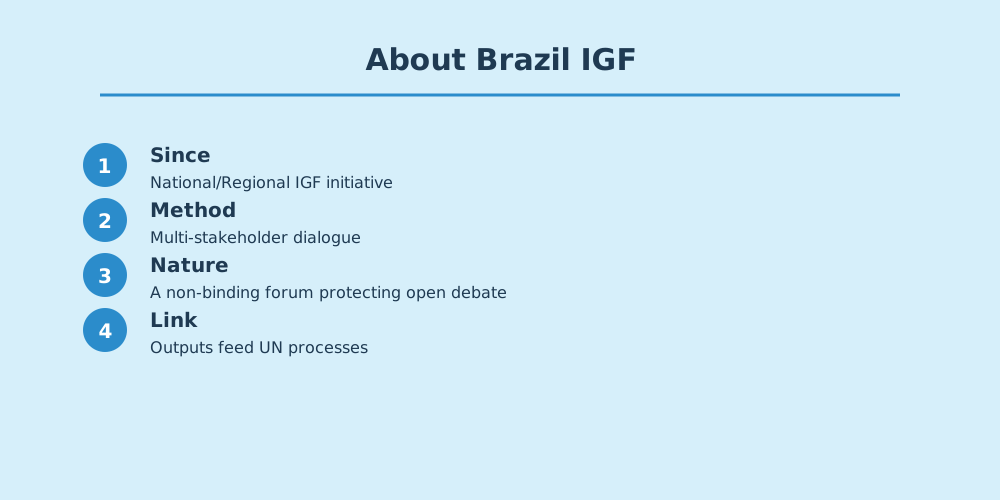
Brazil IGF is a National or Regional IGF Initiative (NRI), aligning local internet governance discussion with global IGF principles.
Why It Matters to You
What was discussed here becomes the baseline for national digital policy, platform rules and AI regulation worldwide within a few years. The principles confirmed at the 2020 meeting are the foundation of the "next rules" for the phones, social platforms and AI services you use every day.
Sources & References
- 10º Fórum da Internet no Brasil acontece em setembro em formato on-line. Participe! — CGI.br(公式リリース) (accessed 2026-07-11)
- Combate à desinformação on-line é pauta da última sessão principal do FIB10 — CGI.br(公式リリース) (accessed 2026-07-11)
- X Fórum da Internet no Brasil — サイト — FIB / CGI.br(公式サイト) (accessed 2026-07-11)
- 10º Fórum da Internet no Brasil debate os impactos das TIC no meio ambiente — NIC.br(公式リリース) (accessed 2026-07-11)
- AGENDA | Coalizão Direitos na Rede no 10° Fórum da Internet no Brasil — Coalizão Direitos na Rede(市民社会連合) (accessed 2026-07-11)
Quotes are translated or condensed from the records listed above. Bracketed numbers [n] refer to the source list.
Related links
- IGF official (NRI list): https://www.intgovforum.org/en/content/national-and-regional-igf-initiatives
- Japan IGF: https://japanigf.jp/
- Yuki Nakazawa's blog: https://nkzw.jp/category/igf/
Revision History
Rev. 1 — published 13 October 2020, 12:00 (Article published)
Rev. 2 — updated 16 July 2026, 20:09 (Fully revised into the in-depth edition: added the 3-line summary, minutes digest, short talk, source list and diagrams (all quotes verified against the listed sources))
— 中澤祐樹

