


The 3-Line Summary
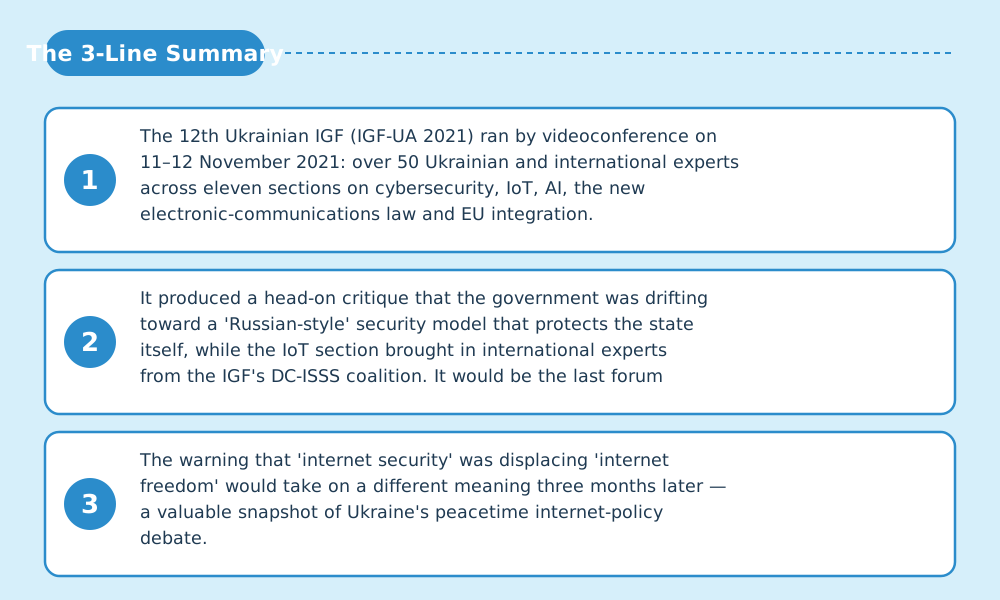
- The 12th Ukrainian IGF (IGF-UA 2021) ran by videoconference on 11–12 November 2021: over 50 Ukrainian and international experts across eleven sections on cybersecurity, IoT, AI, the new electronic-communications law and EU integration.
- It produced a head-on critique that the government was drifting toward a 'Russian-style' security model that protects the state itself, while the IoT section brought in international experts from the IGF's DC-ISSS coalition. It would be the last forum before the full-scale invasion.
- The warning that 'internet security' was displacing 'internet freedom' would take on a different meaning three months later — a valuable snapshot of Ukraine's peacetime internet-policy debate.
Welcome — this is the Japan IGF Support Organization. This in-depth report on IGF-UA 2021 (12th Ukrainian Internet Governance Forum) draws on official outputs, session records and on-site reporting. In a hurry? The three lines above and the diagrams carry the gist.
📍 Catalogued as Kyiv, but the official annual report states it 'was held on November 11-12, 2021 via video conference'; Kyiv is the nominal host city. The archive header's '10–12 November' includes the 4th Youth IGF-UA held online on 10 November
Conference at a Glance (from official records)
| Item | Detail |
|---|---|
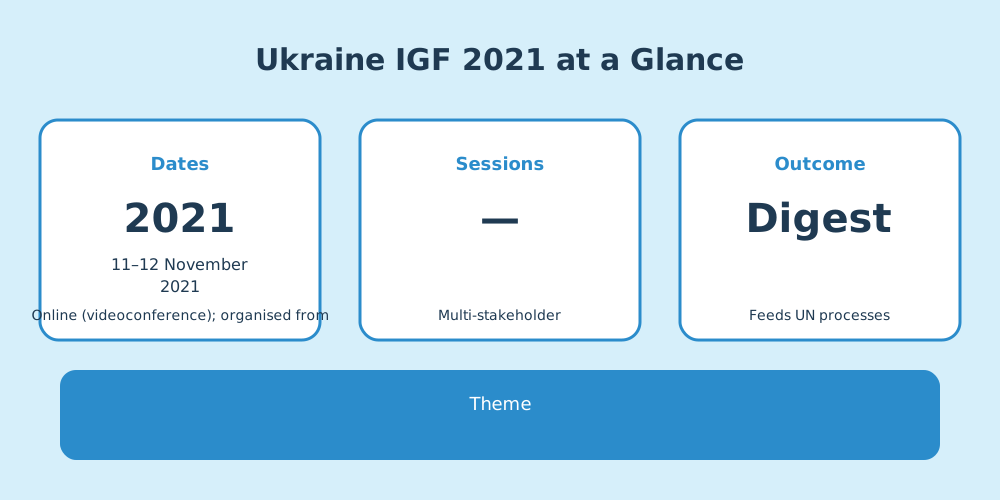
| Official name | IGF-UA 2021 (12th Ukrainian Internet Governance Forum) |
| Edition | 12th edition |
| Dates | 11–12 November 2021 |
| Venue | Online (videoconference); organised from Kyiv |
| Theme | Regional governance themes |
| Host | Internet Association of Ukraine (InAU), Commission on Science and IT of the USPP, RIPE NCC, Internews-Ukraine and Hostmaster Ltd; sponsored by ICANN, IGFSA and the Internet Society, supported by the Digital Transformation Ministry, the NKRZI regulator and the NSDC Office |
(See the source list at the end of this article.)
Discussion Digest — from the Session Records
Key exchanges extracted from session records and transcripts.
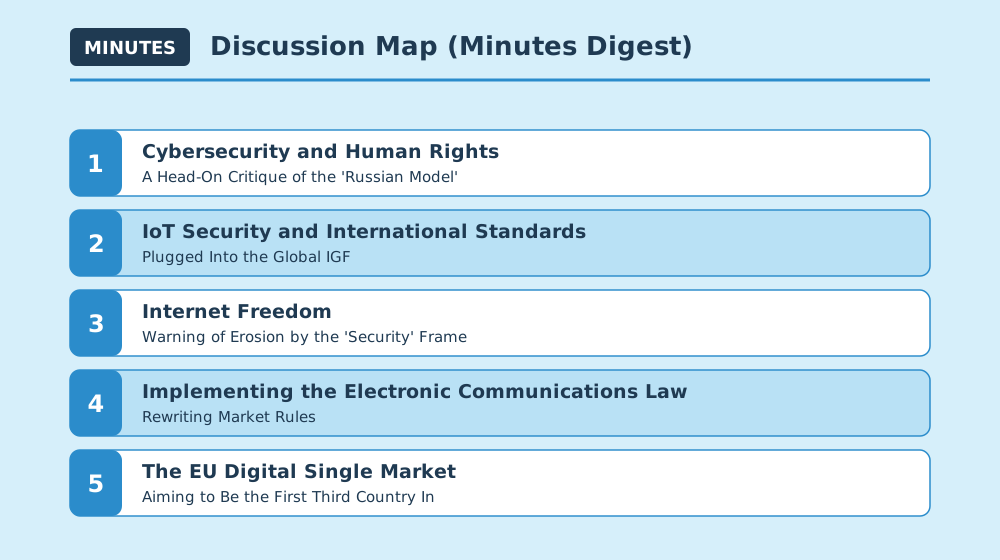
1. Cybersecurity and Human Rights — A Head-On Critique of the 'Russian Model'
Sessions: Section 1 'Cybersecurity and Human Rights in Ukraine; Cybersecurity Standards' (mod. I. Pietukhov, co-mod. O. Semeniaka)
- In unusually blunt language for a national IGF, the section concluded that 'in choosing a model for cybersecurity, the current Ukrainian government has chosen the wrong Russian way: providing security for the government itself' — and recommended abandoning it [1]
- It warned that the share of individual freedom to be ceded as 'payment' for protection from cyber threats had never been defined, itself creating risks of socio-economic instability and new threats to national security [1]
- Risks in draft critical-infrastructure law No. 5219 to constitutional rights and private property were flagged, with national standards to be built on ITU, ISO/IEC and NIST frameworks [1]
2. IoT Security and International Standards — Plugged Into the Global IGF
Sessions: Sections 5 'The Internet of Things and Security Issues' and 11 'Internet Standards' (mods. Yu. Kargapolov / O. Semenyaka)
- Wout de Natris (chair of the IGF's DC-ISSS coalition), IoT security expert Peter Waher and UK internet-governance veteran Mark Carvell joined; Carvell presented the 'security by default' principle and the actions each stakeholder group must take [1]
- Participants proposed a National Internet Governance Steering Committee built on multistakeholder, consensus principles, and de Natris invited Ukrainian IoT developers and users to join DC-ISSS [1]
- With Ukraine's technical community underrepresented in IETF and RIPE standards work, the section called for state and business support — from English-language training to targeted grants [1]
3. Internet Freedom — Warning of Erosion by the 'Security' Frame
Sessions: Section 2 'Internet Freedom and Digital Rights' (mod. Vitalii Moroz, Internews-Ukraine)
- The section's diagnosis: the concept of 'internet security' is gradually displacing 'internet freedom' — as the internet fragments and states pile on regulation, digital rights including anonymity risk being narrowed [1]
- Speakers included Vita Volodovska (Digital Security Lab), Gulsanna Mamedieva (Digital Ministry's European-integration directorate) and CEDEM's Ihor Rozkladai; the private sector's lack of lead time for the new data-protection law and vague liability definitions were flagged as risks [1]
- Government representatives argued effectiveness should be measured not by fines imposed but by real changes in companies' privacy policies [1]
4. Implementing the Electronic Communications Law — Rewriting Market Rules
Sessions: Section 7 'Telecommunications Infrastructure; Introduction of the Law on Electronic Communications' (mod. O. Harutyunyan, InAU)
- MP Oleksandr Fedienko, three members of the NKRZI regulator, the Digital Ministry, InAU's chair and operator Lifecell convened on implementing the new Law on Electronic Communications [1]
- Key issues: how network sharing will work, market-definition procedures, protecting smaller players from being squeezed out, and the regulator's role as arbitrator in infrastructure-access disputes [1]
- Participants insisted Ukrtelecom's duct-tariff increases be preceded by economic justification, and warned that a de facto import duty on cable products threatened rural digitalisation programmes [1]
5. The EU Digital Single Market — Aiming to Be the First Third Country In
Sessions: Section 8 'Stakeholders of Ukraine's Integration into the Digital Single Market' (mod. O. Prykhodko)
- The assessment: Ukraine has a chance to become the first third country to gain access to the EU's Digital Single Market — furthest along in trust services, furthest behind in audiovisual services [1]
- With ISOC's David Frochi, ICANN, RIPE NCC and the International Renaissance Foundation in the room, the section urged stronger bottom-up Ukrainian participation in European and international decision-making [1]
Three-Minute Short Talk — Your Questions Answered
Q. What did year two under Covid look like?
A. A second fully-online edition: 50-plus experts across eleven sections. 'Kyiv' was only the nominal host — everyone joined by videoconference.
Q. What was the most contentious point?
A. The charge that the government's cybersecurity build-out was sliding toward a 'Russian-style' model that protects the state itself. Civil society and industry openly recommended a course change.
Q. Why should I care?
A. The tension between 'security' and freedom online is universal. And this was the last IGF-UA before Russia's full-scale invasion — which, three months later, transformed the premises of every debate held here.
What Is Ukraine IGF? (for first-time readers)
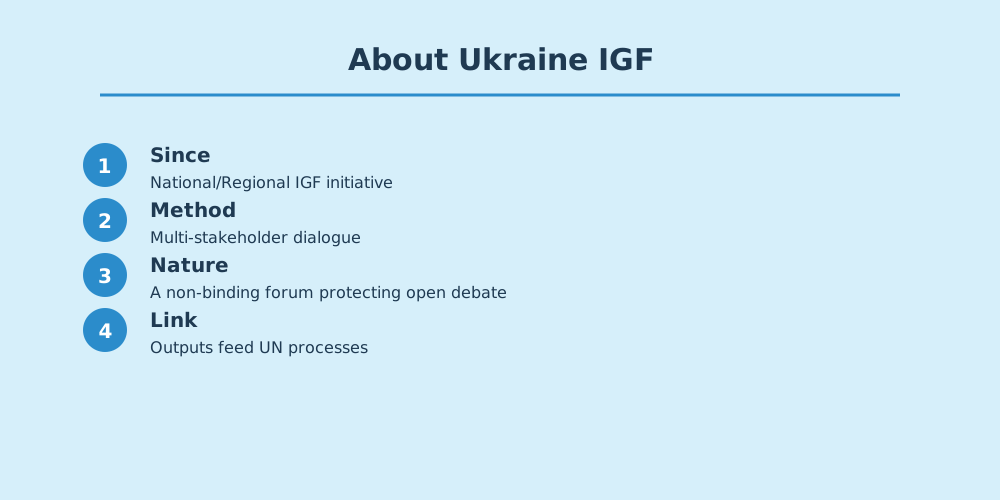
Ukraine IGF is a National or Regional IGF Initiative (NRI), aligning local internet governance discussion with global IGF principles.
Why It Matters to You
What was discussed here becomes the baseline for national digital policy, platform rules and AI regulation worldwide within a few years. The principles confirmed at the 2021 meeting are the foundation of the "next rules" for the phones, social platforms and AI services you use every day.
Sources & References
- Ukrainian IGF-UA 2021 Annual Report(XII Український форум 公式年次報告書・英語DOCX) — IGF-UA組織委員会 (accessed 2026-07-17)
- IGF-UA 2021 公式アーカイブサイト(12-й Український форум з управління Інтернетом IGF-UA 2021) — IGF-UA組織委員会 (accessed 2026-07-17)
- Закінчив роботу 12-й Український форум з управління Інтернетом IGF-UA(第12回IGF-UA閉幕・プレスリリース) — Interfax-Ukraine (accessed 2026-07-17)
- 12-й Український форум з управління Інтернетом(全セッション動画) — I-UA.tv(総合情報スポンサー) (accessed 2026-07-17)
Quotes are translated or condensed from the records listed above. Bracketed numbers [n] refer to the source list.
Related links
- IGF official (NRI list): https://www.intgovforum.org/en/content/national-and-regional-igf-initiatives
- Japan IGF: https://japanigf.jp/
- Yuki Nakazawa's blog: https://nkzw.jp/category/igf/
更新履歴
第1稿投稿 2026年7月18日 19時03分(記事コンテンツアップ)
— 中澤祐樹

