


The 3-Line Summary
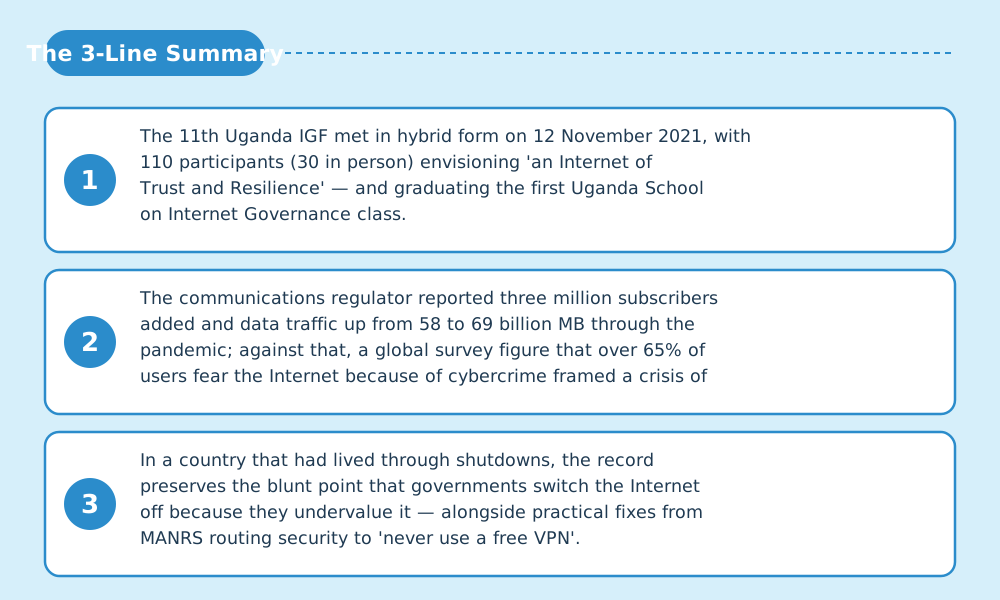
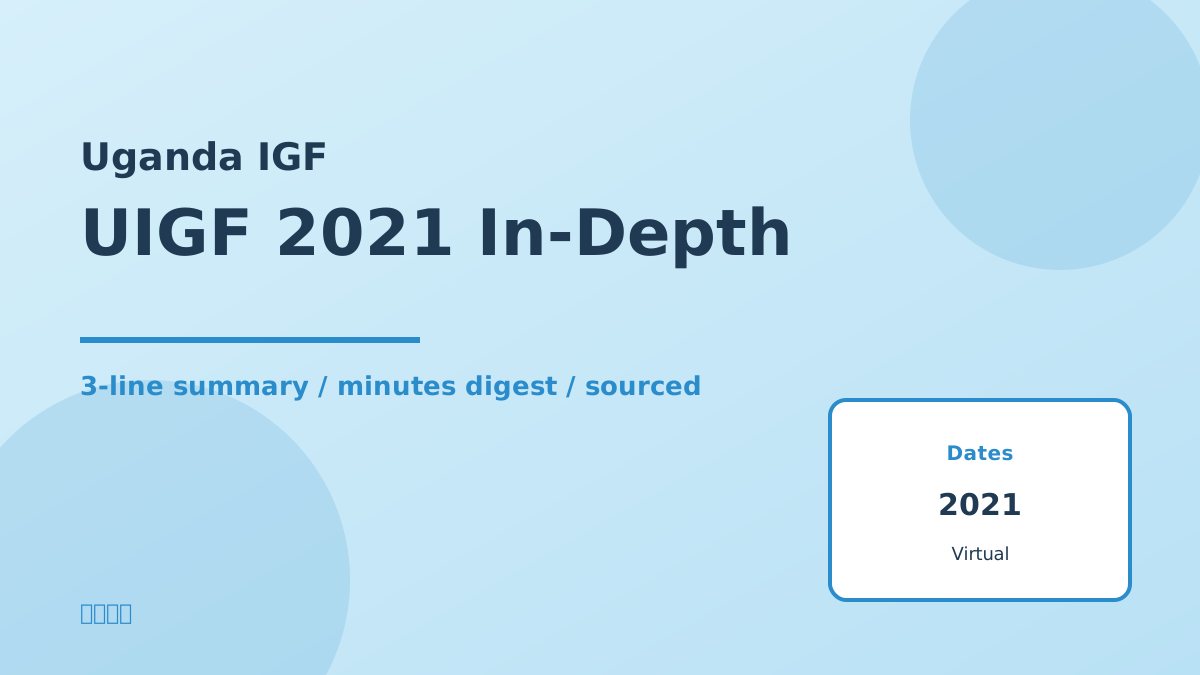
- The 11th Uganda IGF met in hybrid form on 12 November 2021, with 110 participants (30 in person) envisioning 'an Internet of Trust and Resilience' — and graduating the first Uganda School on Internet Governance class.
- The communications regulator reported three million subscribers added and data traffic up from 58 to 69 billion MB through the pandemic; against that, a global survey figure that over 65% of users fear the Internet because of cybercrime framed a crisis of trust.
- In a country that had lived through shutdowns, the record preserves the blunt point that governments switch the Internet off because they undervalue it — alongside practical fixes from MANRS routing security to 'never use a free VPN'.
Welcome — this is the Japan IGF Support Organization. This in-depth report on The 11th Uganda Internet Governance Forum (UIGF 2021) draws on official outputs, session records and on-site reporting. In a hurry? The three lines above and the diagrams carry the gist.
Conference at a Glance (from official records)
| Item | Detail |
|---|---|
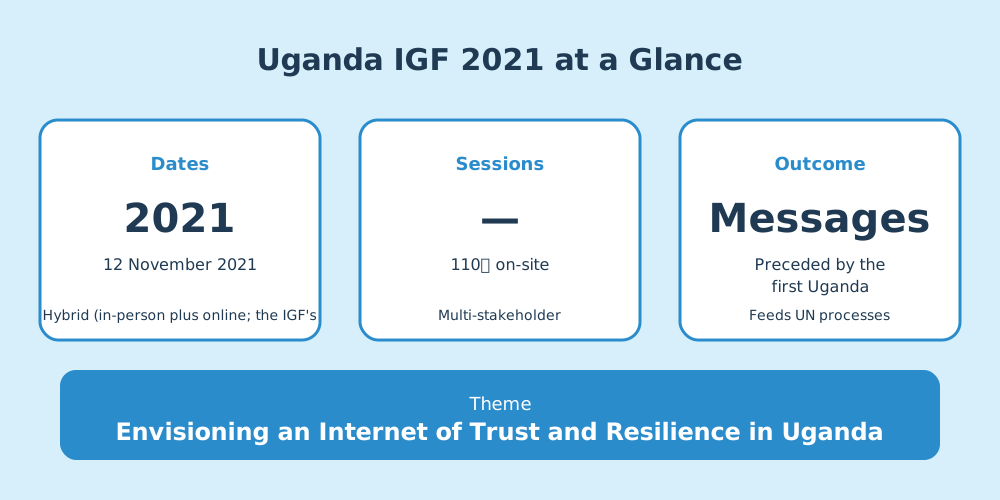
| Official name | The 11th Uganda Internet Governance Forum (UIGF 2021) |
| Edition | 11th edition |
| Dates | 12 November 2021 |
| Venue | Hybrid (in-person plus online; the IGF's NRI record places the meeting in Kampala) |
| Theme | Envisioning an Internet of Trust and Resilience in Uganda |
| Participants | 110 participants, 30 of them attending physically |
| Host | The UIGF (coordinator Lillian Nalwoga), sponsored by the Internet Society Foundation, IGFSA and CIPESA |
| Outcome | Preceded by the first Uganda School on Internet Governance (USIG) and the 2nd Youth IGF, with the USIG graduation at the forum |
(See the source list at the end of this article.)
Discussion Digest — from the Session Records
Key exchanges extracted from session records and transcripts.
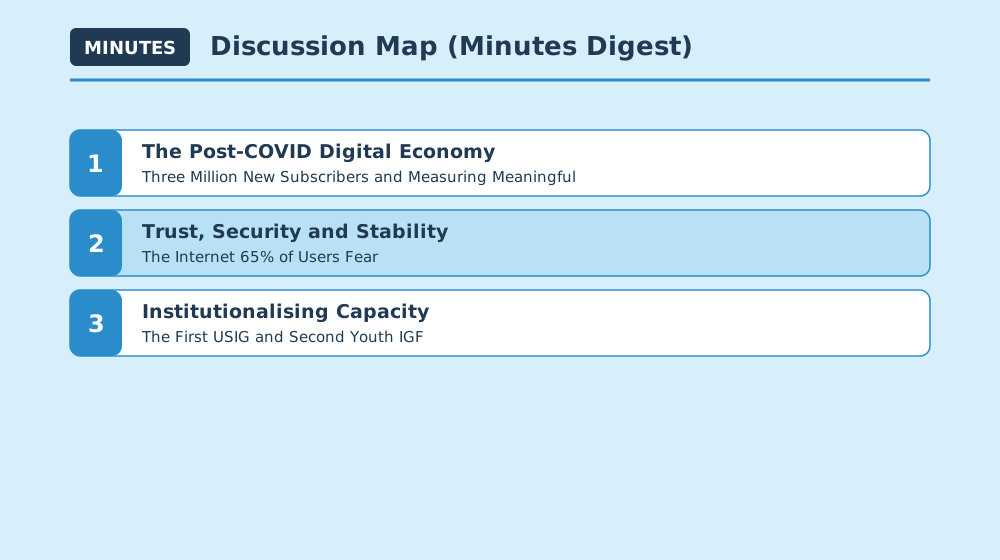
1. The Post-COVID Digital Economy — Three Million New Subscribers and Measuring Meaningful Connectivity
Sessions: First panel with UCC's James Beronda, Airtel Uganda's Bob Kansiime, Crypto Savannah's Noah Balyesaanvu and ISOC Uganda's Lillian Nalwoga
- UCC's Beronda reported three million subscribers added in the pandemic (9% growth in connected devices, 30% of them smartphones) and data traffic up 11 billion MB to 69 billion — evidence of urgent broadband need as work and school moved home [1]
- UCC framed the gaps as literacy, devices and affordability: piloting smart-device handouts to the poorest households in about eight districts, community ICT training with UICT, and a QoS-monitoring app measuring meaningful connectivity rather than mere signal [1]
- Airtel described nationwide 4G and affordable routers and bundles; civil society reported e-learning skills programmes for women and children; and the panel recorded that governments, especially in Africa, switch the Internet off because they have not fully appreciated its value — disruptions that hit e-government services and cost governments and citizens alike [1]
2. Trust, Security and Stability — The Internet 65% of Users Fear
Sessions: Second panel with Milima Security's Emmanuel Chagara, police CID, WOUGNET's Peace Olivia Amuge and RENU's Ben Kyemba
- Chagara cited a global privacy survey in which over 65% of users fear using the Internet because of cybercrime, credited the 2019 Data Privacy Act with building transparency and trust, and declared privacy 'no longer a privilege but a right' [1]
- WOUGNET's Amuge documented rising online gender-based violence against women during the pandemic — cyber-stalking, harassment, bullying, non-consensual image sharing, body-shaming — worsened by digital illiteracy [1]
- Police put over 85% of vulnerabilities down to ignoring basic cyber hygiene like multi-factor authentication and strong passwords, and called for regional cybercrime desks and a better-equipped judiciary; RENU urged ISPs to join MANRS, and the record preserves the warning that free VPNs are extremely dangerous — 'if you are not paying for the product, you are the product' [1]
3. Institutionalising Capacity — The First USIG and Second Youth IGF
Sessions: USIG graduation ceremony and Youth IGF recap by Joan Katambi
- The first Uganda School on Internet Governance and the 2nd Youth IGF preceded the forum, whose programme closed with the USIG graduation; the report also codifies the bottom-up call for topics and multistakeholder organising committee [1]
- The conclusions centred marginalised groups — rural women and girls, persons with disabilities — and the affordability, literacy and online-violence barriers they face, alongside upholding digital rights and protecting people's data [1]
Three-Minute Short Talk — Your Questions Answered
Q. What did the meeting decide?
A. It aired concrete policy progress — UCC's device-handout pilot and QoS-monitoring app — and codified homework: regional cybercrime desks, judicial capacity, ISP participation in MANRS, and inclusion of marginalised groups. The first USIG class also graduated.
Q. The heaviest number?
A. That over 65% of users, per a global survey, fear the Internet because of cybercrime. Connectivity was growing faster than trust — the theme 'Trust and Resilience' answered that gap.
Q. Why should I care?
A. 'Free VPNs are dangerous' and '85% of vulnerabilities come from skipping basic hygiene' translate anywhere — and the finding that shutdowns hit e-government and the economy is first-hand evidence for treating Internet availability as a public good.
What Is Uganda IGF? (for first-time readers)
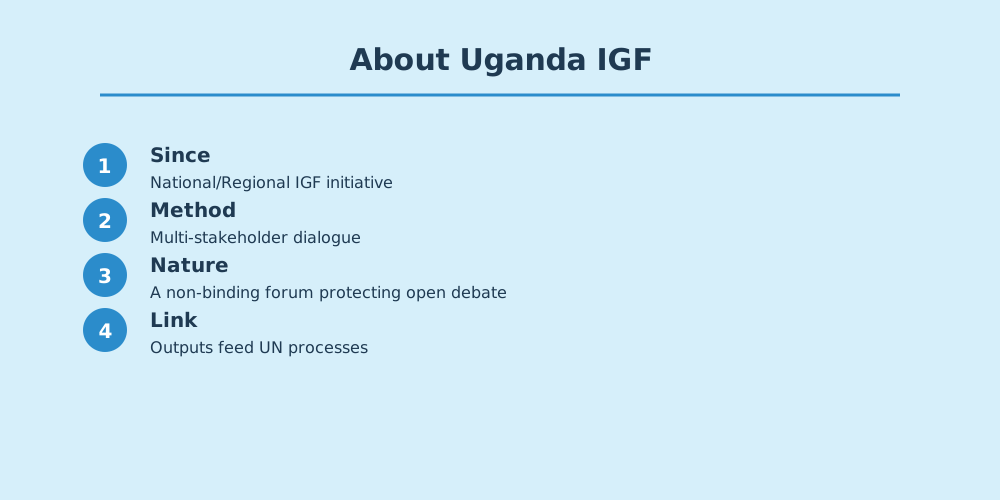
Uganda IGF is a National or Regional IGF Initiative (NRI), aligning local internet governance discussion with global IGF principles.
Why It Matters to You
What was discussed here becomes the baseline for national digital policy, platform rules and AI regulation worldwide within a few years. The principles confirmed at the 2021 meeting are the foundation of the "next rules" for the phones, social platforms and AI services you use every day.
Sources & References
- THE 11th UGANDA INTERNET GOVERNANCE FORUM 2021(公式報告書: 2021-11-12・ハイブリッド・110名〈対面30名〉・2セッションの詳細・USIG/ユースIGF・プログラム) — UIGF(国連IGF filedepot経由) (accessed 2026-07-23)
- Uganda IGF(NRI公式記録: 2021-11-12開催をカンパラ・バーチャルとして記録 — 公式報告書の「Hybrid」表記と併記) — 国連IGF事務局 (accessed 2026-07-23)
- Past UIGF Events(公式一覧: 2021 UIGF〈11th Edition〉— 12 November 2021・テーマ・協賛者) — Uganda Internet Governance Forum(uigf.ug) (accessed 2026-07-23)
- Uganda Internet Governance Forums(系列公式ページ: 「since 2006」) — Internet Society Uganda Chapter (accessed 2026-07-23)
Quotes are translated or condensed from the records listed above. Bracketed numbers [n] refer to the source list.
Related links
- IGF official (NRI list): https://www.intgovforum.org/en/content/national-and-regional-igf-initiatives
- Japan IGF: https://japanigf.jp/
- Yuki Nakazawa's blog: https://nkzw.jp/category/igf/
更新履歴
第1稿投稿 2026年8月12日 20時03分(記事コンテンツアップ)
— 中澤祐樹

