

The 3-Line Summary
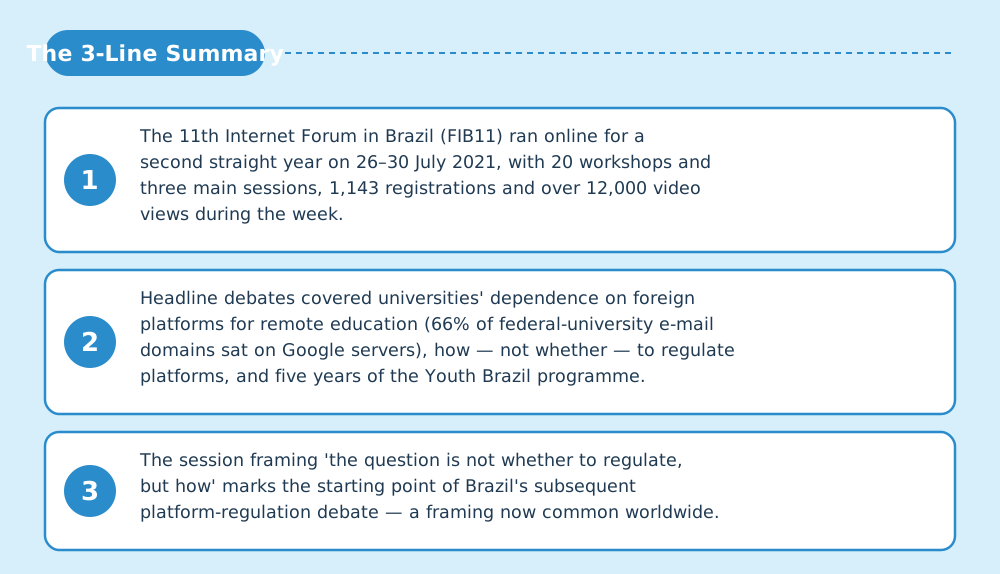
- The 11th Internet Forum in Brazil (FIB11) ran online for a second straight year on 26–30 July 2021, with 20 workshops and three main sessions, 1,143 registrations and over 12,000 video views during the week.
- Headline debates covered universities' dependence on foreign platforms for remote education (66% of federal-university e-mail domains sat on Google servers), how — not whether — to regulate platforms, and five years of the Youth Brazil programme.
- The session framing 'the question is not whether to regulate, but how' marks the starting point of Brazil's subsequent platform-regulation debate — a framing now common worldwide.
Welcome — this is the Japan IGF Support Organization. This in-depth report on 11th Internet Forum in Brazil (11º Fórum da Internet no Brasil / FIB11) draws on official outputs, session records and on-site reporting. In a hurry? The three lines above and the diagrams carry the gist.
Conference at a Glance (from official records)
| Item | Detail |
|---|---|
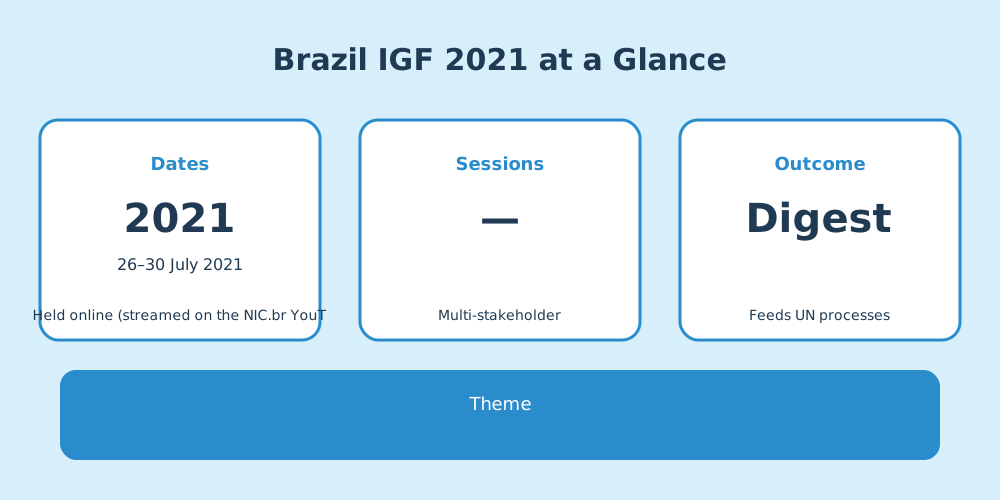
| Official name | 11th Internet Forum in Brazil (11º Fórum da Internet no Brasil / FIB11) |
| Dates | 26–30 July 2021 |
| Venue | Held online (streamed on the NIC.br YouTube channel, with an avatar-based virtual networking space) |
| Theme | Regional governance themes |
| Main sessions | 3 |
| Workshops | 20 |
| Registered | 1,143 |
| Host | Brazilian Internet Steering Committee (CGI.br), operated by NIC.br |
(See the source list at the end of this article.)
Discussion Digest — from the Session Records
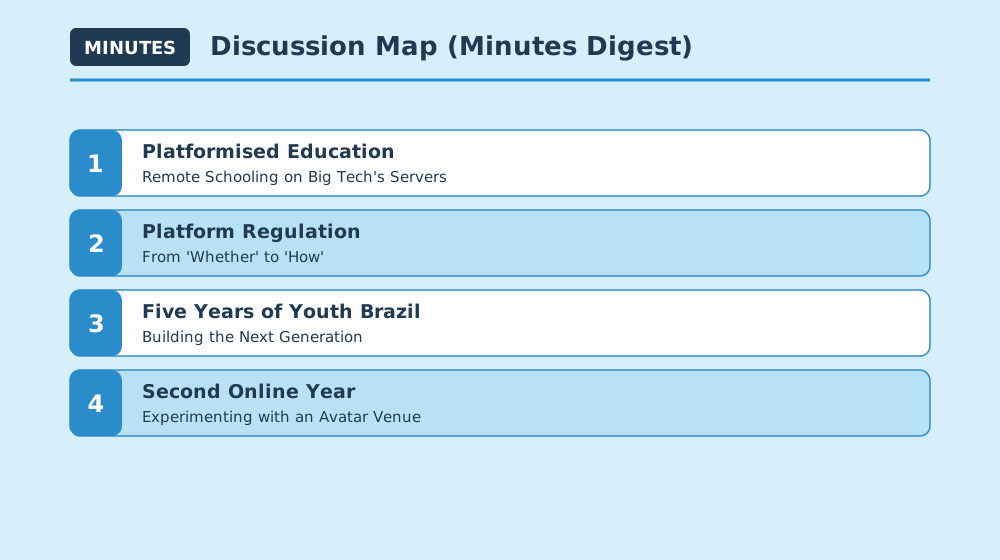
Key exchanges extracted from session records and transcripts.
1. Platformised Education — Remote Schooling on Big Tech's Servers
Sessions: Main session on the adoption of platforms in education
"Brazil has quite a robust framework for protecting children and adolescents, but we still don't have those directives (for educational platforms)"
— Janaina Costa (ITS-Rio) [2]
- Research presented by Leonardo Cruz: 66% of federal-university e-mail domains ran on Google servers, 4% on Microsoft, only 30% on institutional servers [2]
- Panellists warned that pandemic-era remote education was locking public education into foreign private platforms [2]
- Guidelines on educational-data sovereignty and children's data protection were flagged as urgent [2]
2. Platform Regulation — From 'Whether' to 'How'
Sessions: Main session on the regulation of informational platforms
"The question is not whether to regulate, but how"
— Murilo César Ramos (University of Brasília) [2]
- Against the stock objection that 'regulation delays innovation,' panellists such as Diego Cerqueira argued outcomes depend entirely on design and implementation [2]
- With the PL 2630 'fake news bill' still in Congress, the forum moved the multistakeholder debate from principle to regulatory design [2]
3. Five Years of Youth Brazil — Building the Next Generation
Sessions: Main session marking five years of the Youth Brazil programme
- Since 2015 the programme had trained more than 700 participants and supported over 100 young people at global Internet-governance forums, session coordinator Tanara Lauschner reported [2]
- Embedding youth-pipeline building inside the national IGF itself is a distinctive Brazilian design choice [2]
4. Second Online Year — Experimenting with an Avatar Venue
Sessions: Overall programme
- A 'virtual venue' let participants mingle as avatars between sessions, recreating the hallway serendipity of in-person forums [1][2][3]
- 1,143 registered, 721 confirmed attendance, and live interactions numbered nearly 2,300; certificates went to those watching live [1][2][3]
- The 20 workshops were built from community-proposed themes, alongside a cultural event [1][2][3]
Three-Minute Short Talk — Your Questions Answered
Q. Second year online — anything new?
A. An avatar-based virtual venue tried to recreate hallway networking, over 1,100 people registered, and videos logged 12,000+ views during the week.
Q. What was the headline?
A. The hidden side of remote schooling: research showed 66% of federal-university e-mail domains ran on Google's servers, turning education's Big Tech dependence into a digital-sovereignty debate.
Q. Why does it matter abroad?
A. Every school system that moved to the cloud during COVID faces the same questions about educational-data sovereignty and children's data that FIB11 debated in 2021.
What Is Brazil IGF? (for first-time readers)
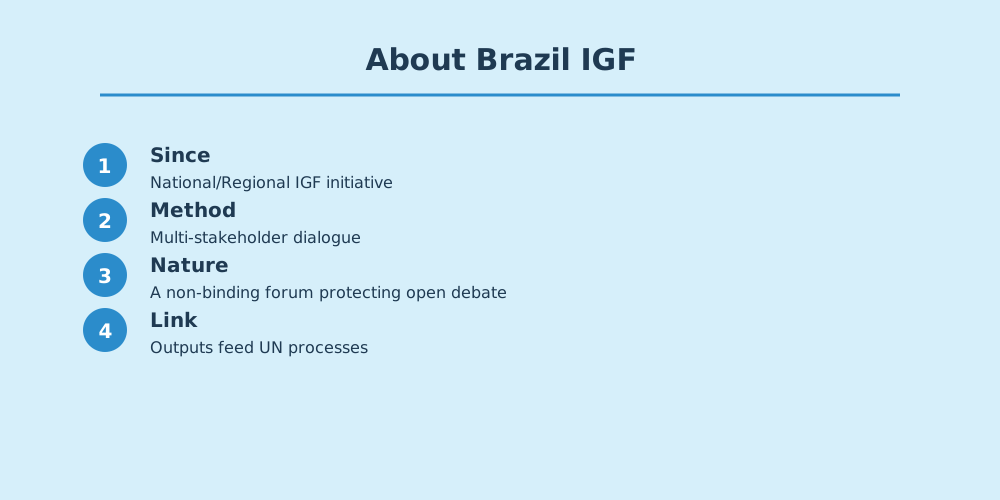
Brazil IGF is a National or Regional IGF Initiative (NRI), aligning local internet governance discussion with global IGF principles.
Why It Matters to You
What was discussed here becomes the baseline for national digital policy, platform rules and AI regulation worldwide within a few years. The principles confirmed at the 2021 meeting are the foundation of the "next rules" for the phones, social platforms and AI services you use every day.
Sources & References
- 11º Fórum da Internet no Brasil (FIB11) começa na próxima segunda-feira (26) – confira a programação — CGI.br(公式リリース) (accessed 2026-07-11)
- Com mais de 12 mil visualizações em sua programação, FIB11 discutiu temas atuais sobre a Internet no Brasil; confira um resumo das sessões principais — CGI.br(公式リリース) (accessed 2026-07-11)
- 11º Fórum da Internet no Brasil — サイト — FIB / CGI.br(公式サイト) (accessed 2026-07-11)
- 11º Fórum da Internet no Brasil (FIB11) — 全セッション動画プレイリスト — NIC.br(YouTube公式チャンネル) (accessed 2026-07-11)
Quotes are translated or condensed from the records listed above. Bracketed numbers [n] refer to the source list.
Related links
- IGF official (NRI list): https://www.intgovforum.org/en/content/national-and-regional-igf-initiatives
- Japan IGF: https://japanigf.jp/
- Yuki Nakazawa's blog: https://nkzw.jp/category/igf/
Revision History
Rev. 1 — published 5 October 2021, 16:00 (Article published)
Rev. 2 — updated 16 July 2026, 20:09 (Fully revised into the in-depth edition: added the 3-line summary, minutes digest, short talk, source list and diagrams (all quotes verified against the listed sources))
— 中澤祐樹