

The 3-Line Summary
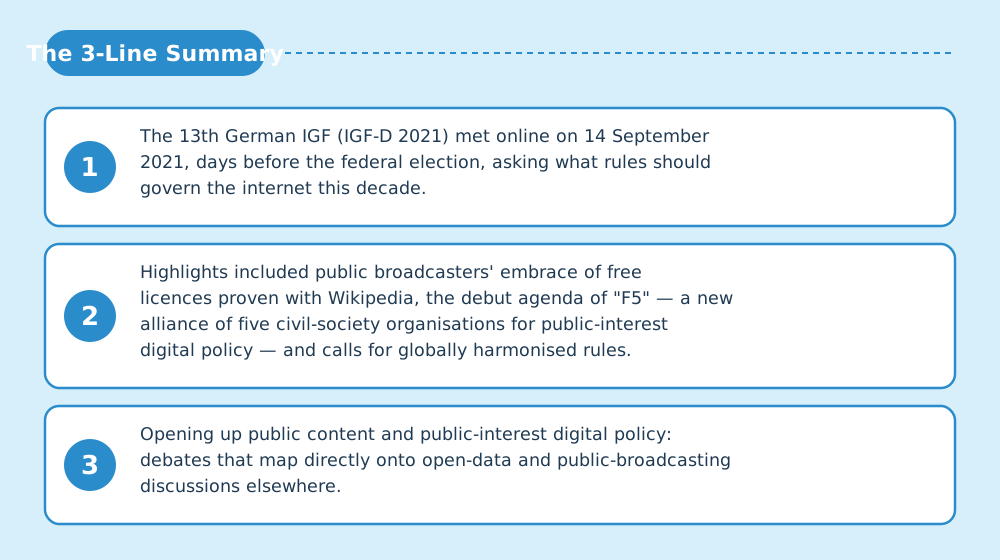
- The 13th German IGF (IGF-D 2021) met online on 14 September 2021, days before the federal election, asking what rules should govern the internet this decade.
- Highlights included public broadcasters' embrace of free licences proven with Wikipedia, the debut agenda of "F5" — a new alliance of five civil-society organisations for public-interest digital policy — and calls for globally harmonised rules.
- Opening up public content and public-interest digital policy: debates that map directly onto open-data and public-broadcasting discussions elsewhere.
Welcome — this is the Japan IGF Support Organization. This in-depth report on IGF-D 2021 (13th German Internet Governance Forum / XIII. Deutsches Internet Governance Forum) draws on official outputs, session records and on-site reporting. In a hurry? The three lines above and the diagrams carry the gist.
📍 Held as an online conference due to COVID-19; speakers convened at the Federal Ministry for Economic Affairs and Energy in Berlin, from where the event was broadcast
Conference at a Glance (from official records)
| Item | Detail |
|---|---|
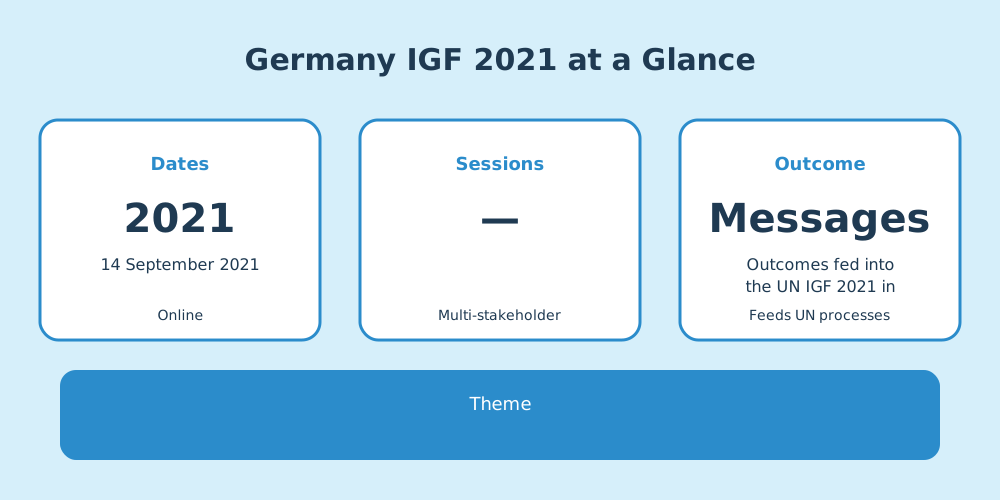
| Official name | IGF-D 2021 (13th German Internet Governance Forum / XIII. Deutsches Internet Governance Forum) |
| Dates | 14 September 2021 |
| Venue | Online |
| Theme | Regional governance themes |
| Host | IGF-D multistakeholder steering committee |
| Outcome | Outcomes fed into the UN IGF 2021 in Katowice, Poland (December 2021) |
(See the source list at the end of this article.)
Discussion Digest — from the Session Records
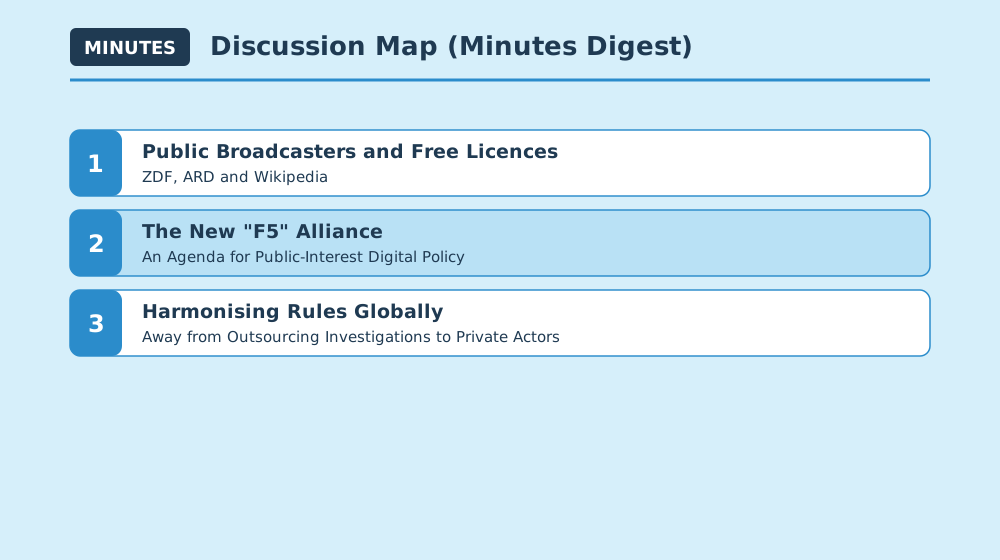
Key exchanges extracted from session records and transcripts.
1. Public Broadcasters and Free Licences — ZDF, ARD and Wikipedia
Sessions: Panel on Creative Commons and open licensing with Bernd Fiedler (Wikimedia Deutschland), Dr. Kirsten Bode (ZDF Terra X) and Thomas Laufersweiler (ARD)
"Heartfelt thanks to the many volunteers of Wikipedia! (original German: "Herzlichen Dank an die vielen Ehrenamtlichen der Wikipedia!")"
— Dr. Kirsten Bode (ZDF Terra X), original German [1]
- ZDF's science strand Terra X releases clips under Creative Commons, and the panel showcased how these are reused across Wikimedia projects [1]
- Broadcasters and Wikimedians alike affirmed the value of freeing licence-fee-funded public content for society [1]
2. The New "F5" Alliance — An Agenda for Public-Interest Digital Policy
Sessions: Presentation of the F5 alliance's agenda
- F5 — the new alliance of Wikimedia Deutschland, AlgorithmWatch, Gesellschaft für Freiheitsrechte, Open Knowledge Foundation Deutschland and Reporter ohne Grenzen — presented its agenda for renewing digital policy [1]
- On the eve of the federal election it pressed for public-interest digitalisation and for topics underrepresented in the policy debate [1]
3. Harmonising Rules Globally — Away from Outsourcing Investigations to Private Actors
Sessions: Contributions from the technical community, including Dirk Krischenowski (dotBERLIN)
- Dirk Krischenowski (dotBERLIN) advocated a globally harmonised legal framework and technical standards, enabling cross-border law enforcement and reducing the delegation of investigative tasks to private service and infrastructure providers [2]
- Under the framing question of what rules should govern online interaction this decade, outcomes were carried to the UN IGF in Katowice that December [2]
Three-Minute Short Talk — Your Questions Answered
Q. What kind of meeting was it?
A. An online edition in the second COVID year, broadcast from the economics ministry, held days before Germany's federal election — asking what rules the internet needs this decade.
Q. The highlight?
A. A ZDF editor thanking Wikipedia's volunteers from the (virtual) stage: licence-fee-funded footage released under Creative Commons now lives on in the encyclopedia — a working model of opening public content.
Q. Why should I care?
A. Anywhere public broadcasters and governments debate opening their archives — Japan included — the ZDF/ARD–Wikimedia collaboration shown here is the concrete precedent.
What Is Germany IGF? (for first-time readers)
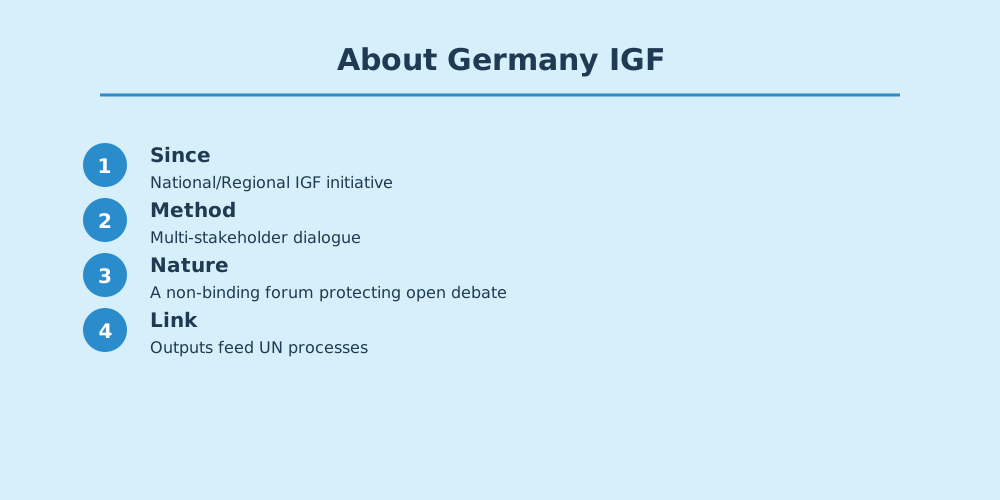
Germany IGF is a National or Regional IGF Initiative (NRI), aligning local internet governance discussion with global IGF principles.
Why It Matters to You
What was discussed here becomes the baseline for national digital policy, platform rules and AI regulation worldwide within a few years. The principles confirmed at the 2021 meeting are the foundation of the "next rules" for the phones, social platforms and AI services you use every day.
Sources & References
- Für gemeinwohlorientierte Digitalisierung: Wikimedia Deutschland beim deutschen Internet Governance Forum — Wikimedia Deutschland(公式ブログ) (accessed 2026-07-11)
- Das deutsche Internet-Governance-Forum 2021 — dotBERLIN GmbH & Co. KG (accessed 2026-07-11)
- Germany IGF(NRI紹介ページ) — UN IGF Secretariat (accessed 2026-07-11)
- Internet Governance Forum Deutschland — DiploFoundation (accessed 2026-07-11)
Quotes are translated or condensed from the records listed above. Bracketed numbers [n] refer to the source list.
Related links
- IGF official (NRI list): https://www.intgovforum.org/en/content/national-and-regional-igf-initiatives
- Japan IGF: https://japanigf.jp/
- Yuki Nakazawa's blog: https://nkzw.jp/category/igf/
Revision History
Rev. 1 — published 16 October 2021, 12:00 (Article published)
Rev. 2 — updated 16 July 2026, 20:09 (Fully revised into the in-depth edition: added the 3-line summary, minutes digest, short talk, source list and diagrams (all quotes verified against the listed sources))
— 中澤祐樹