


The 3-Line Summary
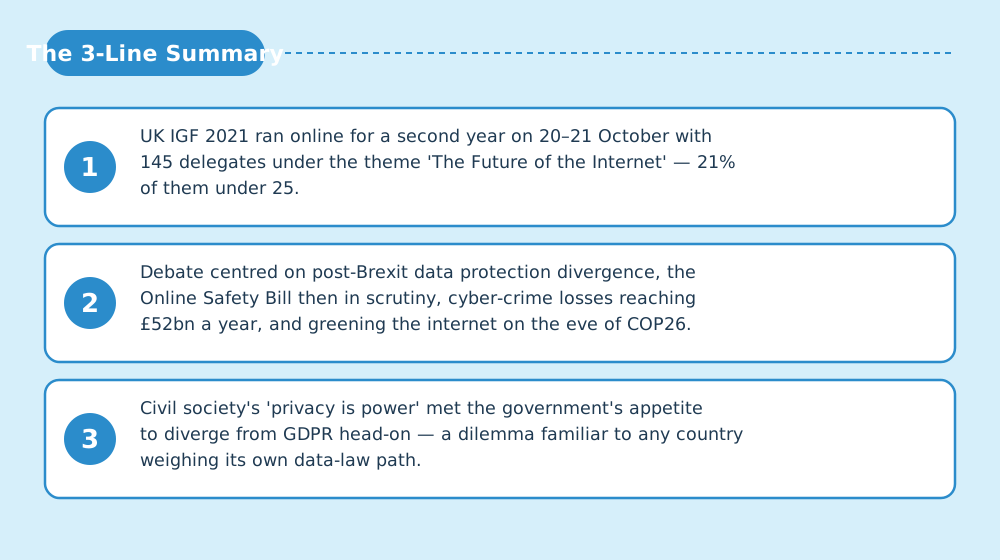
- UK IGF 2021 ran online for a second year on 20–21 October with 145 delegates under the theme 'The Future of the Internet' — 21% of them under 25.
- Debate centred on post-Brexit data protection divergence, the Online Safety Bill then in scrutiny, cyber-crime losses reaching £52bn a year, and greening the internet on the eve of COP26.
- Civil society's 'privacy is power' met the government's appetite to diverge from GDPR head-on — a dilemma familiar to any country weighing its own data-law path.
Welcome — this is the Japan IGF Support Organization. This in-depth report on UK IGF 2021 draws on official outputs, session records and on-site reporting. In a hurry? The three lines above and the diagrams carry the gist.
Conference at a Glance (from official records)
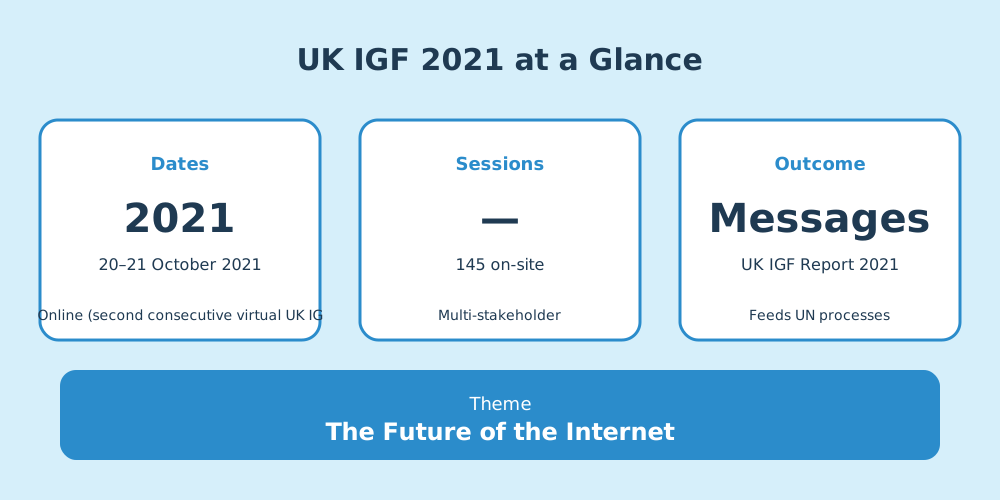
| Item | Detail |
|---|---|
| Official name | UK IGF 2021 |
| Dates | 20–21 October 2021 |
| Venue | Online (second consecutive virtual UK IGF due to Covid-19, with a tighter morning-focused programme) |
| Theme | The Future of the Internet |
| Participants | 145 (145 delegates from government, parliament, civil society, industry, the technical community and academia; 21% aged under 25 (the largest cohort) and two-thirds first-time attendees) |
| Sub-themes | Content aligned to five themes: Trust, Inclusion, Data, Environment and Covid-19 |
| Host | UK IGF Steering Committee (secretariat: Nominet); 2021 sponsors were Nominet, Donuts, ICANN and the Internet Society UK England Chapter |
| Outcome | UK IGF Report 2021, providing key messages for the UN IGF and beyond |
(See the source list at the end of this article.)
Discussion Digest — from the Session Records
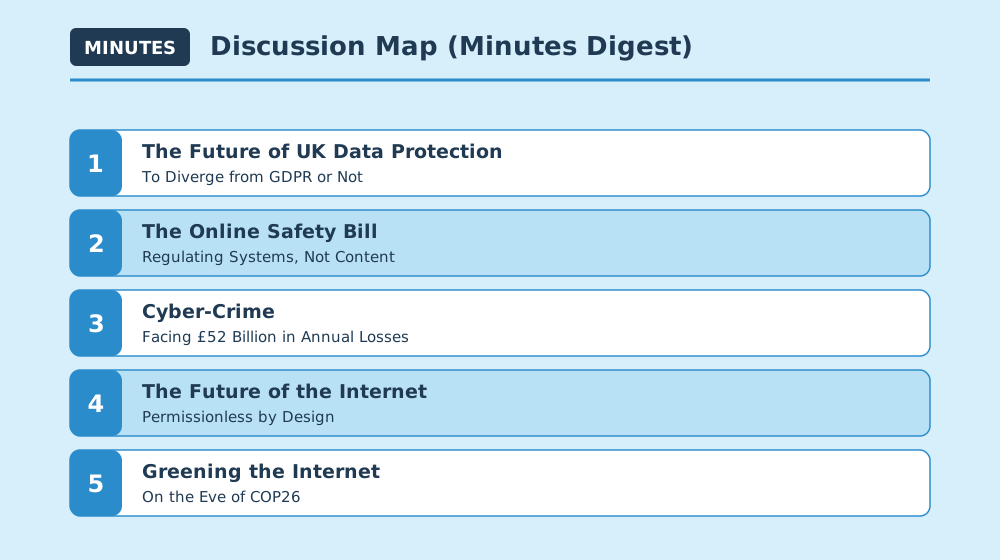
Key exchanges extracted from session records and transcripts.
1. The Future of UK Data Protection — To Diverge from GDPR or Not
Sessions: Panel 'The Future of the UK's Data Protection Frameworks' (20 October, 10:45–11:30, chaired by Kenneth Cukier)
"Privacy is power."
— Sahdya Darr (Open Rights Group) [1][3]
- Chair Kenneth Cukier (The Economist) opened with the deliberately provocative question of whether Brexit was 'the best thing that's ever happened to the UK' to frame the divergence debate [1][3]
- Dr Michael Veale (UCL): GDPR has been misrepresented — many sensible reforms are possible without rewriting the legislation [1][3]
- Panellists agreed putting individual rights at the heart of data does not prevent innovation but underpins user confidence, warning of a slippery slope if protections are stripped back [1][3]
2. The Online Safety Bill — Regulating Systems, Not Content
Sessions: Panel 'Tackling harmful content while protecting freedom of expression' (21 October, 13:00–14:15, chaired by Victoria Nash)
- Orla MacRae (DCMS): the Government's three objectives are tackling criminal activity, protecting children and protecting free expression — the Bill regulates systems and processes, not content [1][3]
- Alan Rusbridger (Facebook Oversight Board): over-moderation could be as harmful as under-moderation, and policymakers should take a global rather than purely Western view [1][3]
- Damian Tambini (LSE) urged more work on the balance of power between Ofcom and the Secretary of State, with Ofcom's independence key to public trust [1][3]
3. Cyber-Crime — Facing £52 Billion in Annual Losses
Sessions: Panel 'How can the UK become a global leader on the prevention of Cyber-Crime?' (21 October, 10:45–11:30, chaired by Dr Louise Bennett)
"All too often the threat feels 'too big, too militarised, and unmanageable'."
— Dr Victoria Baines (Oxford Internet Institute) [1][3]
- UK online crime losses have hit £52bn a year, and with victims and perpetrators in different jurisdictions the response must be both national and global (Bennett) [1][3]
- UK policing follows the 'four Ps' — Pursue, Protect, Prevent, Prepare — and now calls back everyone who reports cyber-crime, though under-reporting still blurs the threat picture (DCI Donnelly) [1][3]
- Dr Baines argued a public-health framework could be applied to cyber threats, just as millions proved able to protect themselves and others in the pandemic [1][3]
4. The Future of the Internet — Permissionless by Design
Sessions: Panel 'The Future of the Internet' (20 October, 13:00–14:15, chaired by Dr Hosein Badran)
- Alain Durand (ICANN): the internet's defining characteristic is openness — no permissions, gatekeepers or barriers; had permission been required, the internet would never have happened the same way [1][3]
- Alissa Cooper (Cisco): forums like the UK IGF must bridge the technical layer and the political and commercial worlds to preserve the multistakeholder model [1][3]
- Lise Fuhr (ETNO): without trust users won't fully use the internet, but centralising security technologies such as DNS over HTTPS can complicate operators' legal compliance [1][3]
5. Greening the Internet — On the Eve of COP26
Sessions: Panel 'Greening the Internet' (21 October, 11:45–12:30, chaired by Ana Yang)
- Ana Yang (Chatham House): staying within 1.5 degrees requires mobilising every sector, and looks near impossible unless policies deploy 'at scale and fast' [1][3]
- Emma Fryer (techUK): freemium services give no price signal of their emissions impact — and a significant number of children think the internet uses no energy at all [1][3]
- Michael Oghia: digital infrastructure is far more than data centres; the business case for sustainability must be made at every part of the value chain [1][3]
Three-Minute Short Talk — Your Questions Answered
Q. What was the theme?
A. 'The Future of the Internet' — dominated by how far post-Brexit Britain should diverge from GDPR and by the Online Safety Bill then under scrutiny. It was the second all-virtual edition, with a fifth of participants under 25.
Q. What was most contested?
A. Loosening data protection. Reform advocates promised growth from flexibility; civil society countered that 'privacy is power' and warned of a slippery slope — while experts noted GDPR already allows sensible reform without a rewrite.
Q. Why should I care?
A. The £52bn-a-year cyber-crime figure, the police 'four Ps' and the idea of a public-health approach to cyber threats travel well beyond the UK, as does the 'regulate systems, not content' design of platform regulation.
What Is UK IGF? (for first-time readers)
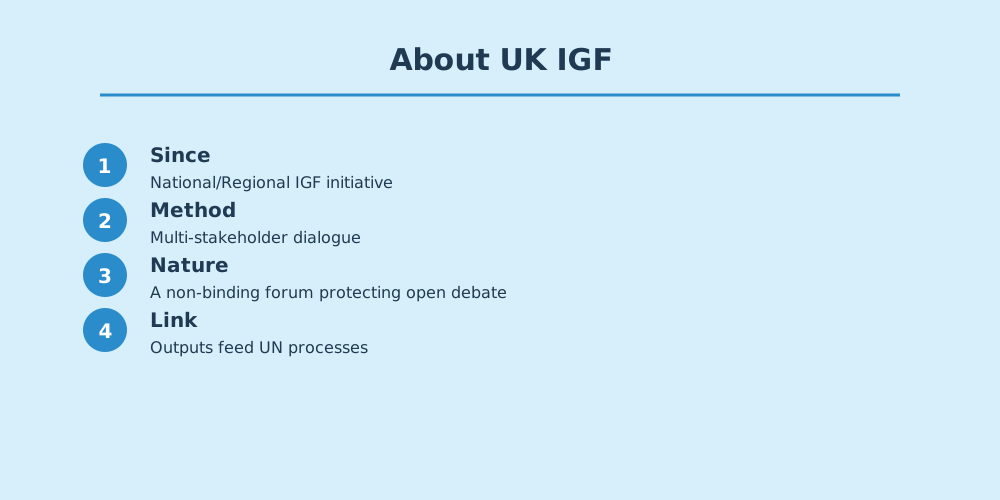
UK IGF is a National or Regional IGF Initiative (NRI), aligning local internet governance discussion with global IGF principles.
Why It Matters to You
What was discussed here becomes the baseline for national digital policy, platform rules and AI regulation worldwide within a few years. The principles confirmed at the 2021 meeting are the foundation of the "next rules" for the phones, social platforms and AI services you use every day.
Sources & References
- UK Internet Governance Forum Report 2021 (PDF) — UK IGF(事務局: Nominet) (accessed 2026-07-11)
- UK IGF 2021(公式イベントページ) — UK IGF (accessed 2026-07-11)
- 2021 Agenda — UK IGF (accessed 2026-07-11)
- UK IGF 2021 Speakers — UK IGF (accessed 2026-07-11)
Quotes are translated or condensed from the records listed above. Bracketed numbers [n] refer to the source list.
Related links
- IGF official (NRI list): https://www.intgovforum.org/en/content/national-and-regional-igf-initiatives
- Japan IGF: https://japanigf.jp/
- Yuki Nakazawa's blog: https://nkzw.jp/category/igf/
Revision History
Rev. 1 — published 21 October 2021, 12:00 (Article published)
Rev. 2 — updated 16 July 2026, 20:09 (Fully revised into the in-depth edition: added the 3-line summary, minutes digest, short talk, source list and diagrams (all quotes verified against the listed sources))
— 中澤祐樹

