


The 3-Line Summary
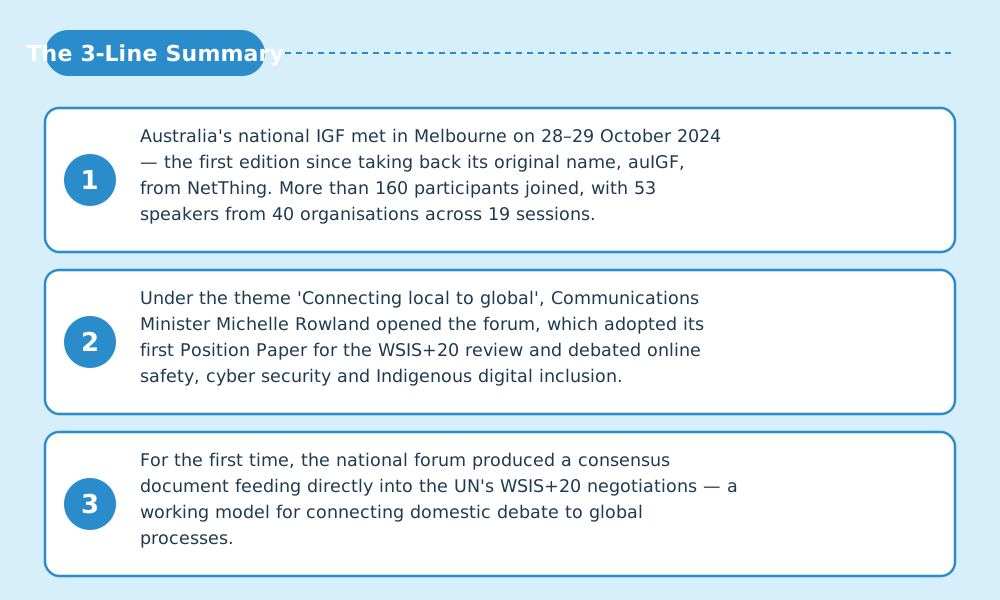
- Australia's national IGF met in Melbourne on 28–29 October 2024 — the first edition since taking back its original name, auIGF, from NetThing. More than 160 participants joined, with 53 speakers from 40 organisations across 19 sessions.
- Under the theme 'Connecting local to global', Communications Minister Michelle Rowland opened the forum, which adopted its first Position Paper for the WSIS+20 review and debated online safety, cyber security and Indigenous digital inclusion.
- For the first time, the national forum produced a consensus document feeding directly into the UN's WSIS+20 negotiations — a working model for connecting domestic debate to global processes.
Welcome — this is the Japan IGF Support Organization. This in-depth report on auIGF 2024 (Australian Internet Governance Forum) draws on official outputs, session records and on-site reporting. In a hurry? The three lines above and the diagrams carry the gist.
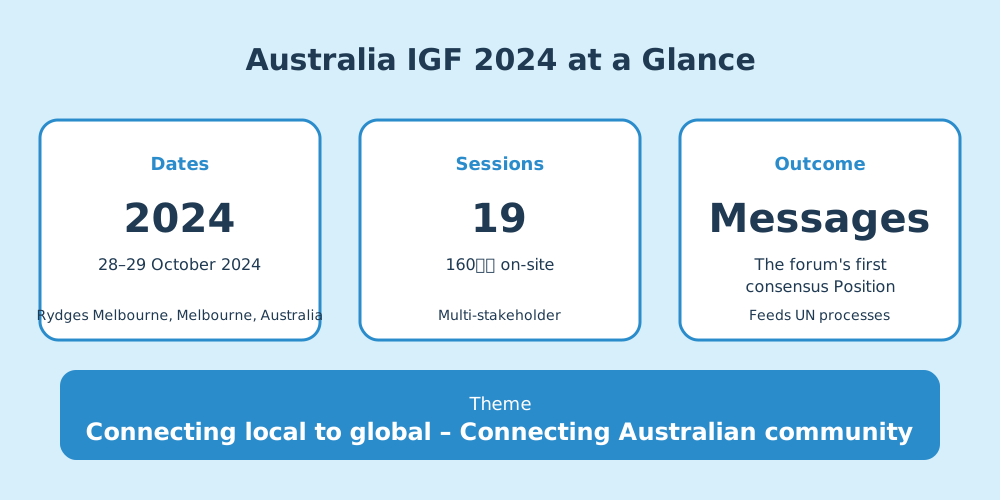
Conference at a Glance (from official records)
| Item | Detail |
|---|---|
| Official name | auIGF 2024 (Australian Internet Governance Forum) |
| Dates | 28–29 October 2024 |
| Venue | Rydges Melbourne, Melbourne, Australia |
| Theme | Connecting local to global – Connecting Australian community and policy debates to the region and the world |
| Participants | 160人超(現地・オンライン各約80人) |
| Sessions | 19 |
| Speakers | 53人(40組織から) |
| Format | Hybrid (in-person and online) |
| Host | auIGF Multi-Stakeholder Steering Committee (MSSC), chaired by Annaliese Williams; secretariat supported by auDA (led by Michael Lewis) |
| Outcome | The forum's first consensus Position Paper, on the WSIS+20 review, developed by the MSSC through open consultation |
(See the source list at the end of this article.)
Discussion Digest — from the Session Records
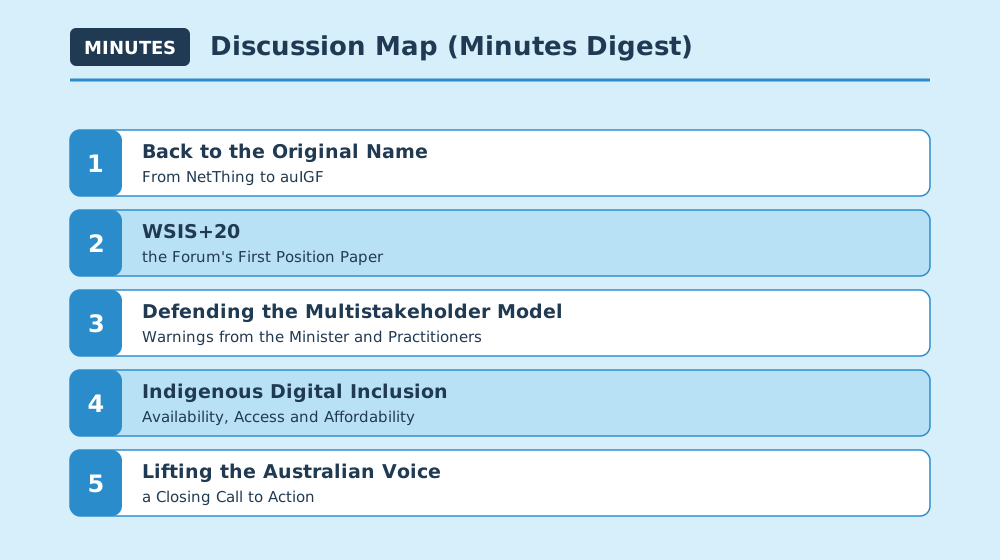
Key exchanges extracted from session records and transcripts.
1. Back to the Original Name — From NetThing to auIGF
Sessions: The forum as a whole (renaming decided by the Multi-Stakeholder Steering Committee)
- The MSSC decided to reinstate the forum's original auIGF name (used 2012–2016), replacing NetThing to make the lineage with the global IGF and its national initiatives (NRIs) explicit [4][2][1]
- The volunteer MSSC, chaired by Annaliese Williams, runs the forum with auDA supporting the secretariat — keeping the community-led structure rather than reverting to the old auDA-run model [4][2][1]
- The old netthing.org.au site now redirects to auigf.au, which lists the NetThing editions since 2019 as past forums of the same series [4][2][1]
2. WSIS+20 — the Forum's First Position Paper
Sessions: Session 'The World Summit on the Information Society 20 year review' and related discussions
- Ahead of the UN's 2025 WSIS+20 review — which includes renewal of the IGF's mandate — the MSSC developed the forum's first consensus Position Paper through open consultation [2][1][3]
- Turning national-forum debate into formal input to a UN process was widely seen as the year's signature achievement [2][1][3]
- A stocktaking session on what happened in 2024 and what comes in 2025, featuring APNIC's Pablo Hinojosa, mapped the road from NETmundial+10 to WSIS+20 [2][1][3]
3. Defending the Multistakeholder Model — Warnings from the Minister and Practitioners
Sessions: Opening keynote by Communications Minister Michelle Rowland and the opening plenary (moderated by auDA CEO Rosemary Sinclair AM, with Johanna Weaver, Jennifer Chung, Ram Mohan and Ian Sheldon)
"No one stakeholder group has a stronger voice than others in multi-stakeholder governance."
— The Hon Michelle Rowland MP (Minister for Communications) [2]
"Without ongoing support and advocacy from all stakeholders, we risk a backward slide toward unilateral control."
— Jennifer Chung (DotAsia Organisation) [2]
- In the opening keynote, Minister Rowland committed the government to the principle that governments, industry and civil society speak as equals [2]
- The opening plenary weighed each sector's role in preventing a slide back to state-led control ahead of WSIS+20 and Global Digital Compact implementation [2]
4. Indigenous Digital Inclusion — Availability, Access and Affordability
Sessions: Session 'Indigenous Australia – Building Digital Availability, Access and Affordability'
- Connectivity in First Nations communities was examined through availability, access and affordability, grounding policy debate in remote-area realities [1][2]
- Building on the Indigenous Leaders Fellowship launched in 2023, sessions designed around First Nations participation are becoming a fixture of the forum [1][2]
5. Lifting the Australian Voice — a Closing Call to Action
Sessions: Panel 'Lifting the Australian voice in Internet governance' (with APNIC's Joyce Chen) and the closing plenary
- Across 19 sessions the forum tied domestic issues — online safety, cyber security, digital rights, critical infrastructure, climate and misinformation — to their international context [3][2][1]
- In the closing plenary, APNIC's Joyce Chen urged every participant to take action and engage in global Internet governance processes [3][2][1]
- True to the 'connecting local to global' theme, the through-line was building channels for the Australian community into APrIGF, the global IGF and WSIS+20 [3][2][1]
Three-Minute Short Talk — Your Questions Answered
Q. Why change the name back from NetThing to auIGF?
A. To make the lineage with the global IGF and other national initiatives (NRIs) unmistakable. The steering committee reinstated the original 2012–2016 name — while keeping the community-led structure intact.
Q. What was the year's biggest outcome?
A. The forum's first Position Paper, on the WSIS+20 review — turning national-forum debate into formal input to the UN negotiations that will decide the IGF's future.
Q. Why should I care?
A. WSIS+20 affects every country's digital policy voice. Australia showed how a national IGF can speak into that process with a consensus document — a playbook other national forums can copy.
What Is Australia IGF? (for first-time readers)
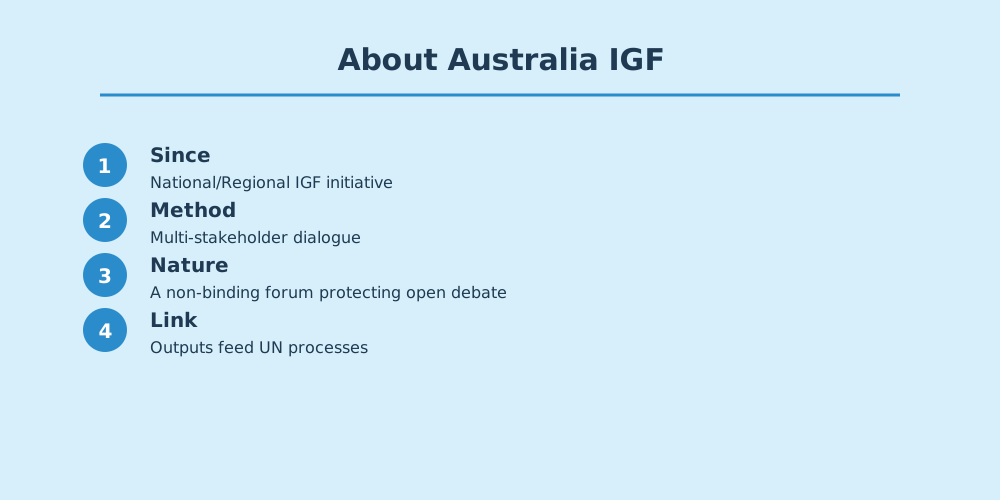
Australia IGF is a National or Regional IGF Initiative (NRI), aligning local internet governance discussion with global IGF principles.
Why It Matters to You
What was discussed here becomes the baseline for national digital policy, platform rules and AI regulation worldwide within a few years. The principles confirmed at the 2024 meeting are the foundation of the "next rules" for the phones, social platforms and AI services you use every day.
Sources & References
- auIGF 2024 — auIGF公式サイト (accessed 2026-07-11)
- Australia's IGF: connecting local to global — auDA(豪州ドメイン管理機構) (accessed 2026-07-11)
- Event Wrap: auIGF 2024 — APNIC Blog (accessed 2026-07-11)
- About auIGF(改称の経緯とMSSCの体制) — auIGF公式サイト (accessed 2026-07-11)
Quotes are translated or condensed from the records listed above. Bracketed numbers [n] refer to the source list.
Related links
- IGF official (NRI list): https://www.intgovforum.org/en/content/national-and-regional-igf-initiatives
- Japan IGF: https://japanigf.jp/
- Yuki Nakazawa's blog: https://nkzw.jp/category/igf/
Revision History
Rev. 1 — published 9 June 2024, 13:00 (Article published)
Rev. 2 — updated 16 July 2026, 20:09 (Fully revised into the in-depth edition: added the 3-line summary, minutes digest, short talk, source list and diagrams (all quotes verified against the listed sources))
— 中澤祐樹

