


The 3-Line Summary
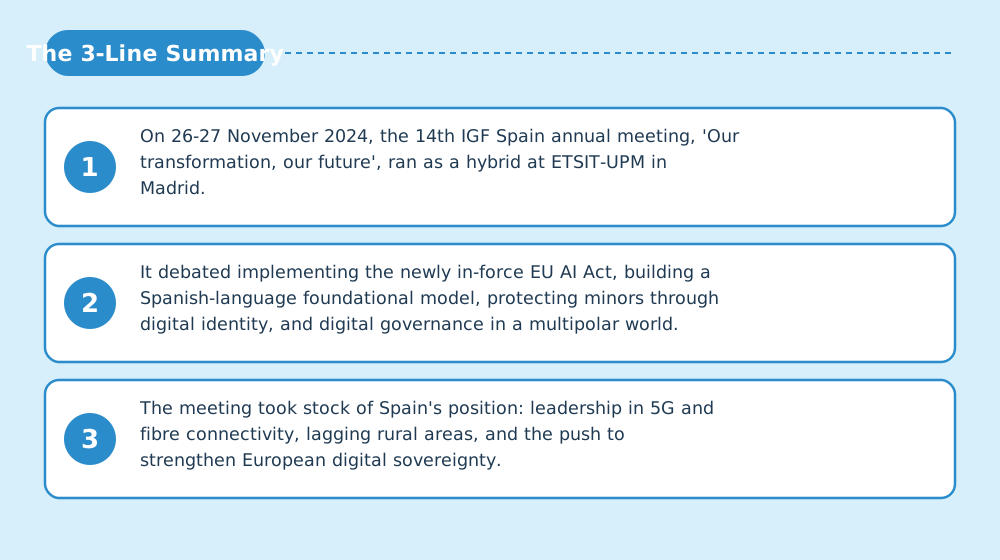
- On 26-27 November 2024, the 14th IGF Spain annual meeting, 'Our transformation, our future', ran as a hybrid at ETSIT-UPM in Madrid.
- It debated implementing the newly in-force EU AI Act, building a Spanish-language foundational model, protecting minors through digital identity, and digital governance in a multipolar world.
- The meeting took stock of Spain's position: leadership in 5G and fibre connectivity, lagging rural areas, and the push to strengthen European digital sovereignty.
Welcome — this is the Japan IGF Support Organization. This in-depth report on 14th Annual Meeting of the Internet Governance Forum Spain (IGF Spain 2024) draws on official outputs, session records and on-site reporting. In a hurry? The three lines above and the diagrams carry the gist.
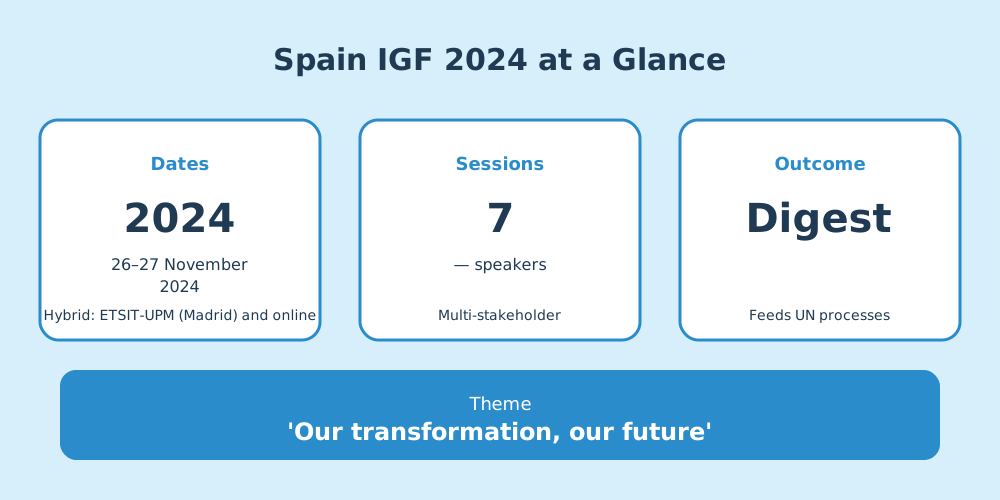
Conference at a Glance (from official records)
| Item | Detail |
|---|---|
| Official name | 14th Annual Meeting of the Internet Governance Forum Spain (IGF Spain 2024) |
| Edition | 14th Annual Meeting |
| Dates | 26–27 November 2024 |
| Venue | Hybrid: ETSIT-UPM (Madrid) and online |
| Theme | 'Our transformation, our future' |
| Sessions | 7 (Seven main sessions per the conclusions page (the archive counts nine roundtables)) |
| Speakers | Over 50 speakers |
| Host | Coordinated by Jorge Pérez; opened with María José Villacampa (deputy DG for the Digital Society, Ministry for Digital Transformation) and UPM vice-rector Antonio Hidalgo; supported by UPM, Telefónica, Google, TikTok and the ministry |
(See the source list at the end of this article.)
Discussion Digest — from the Session Records
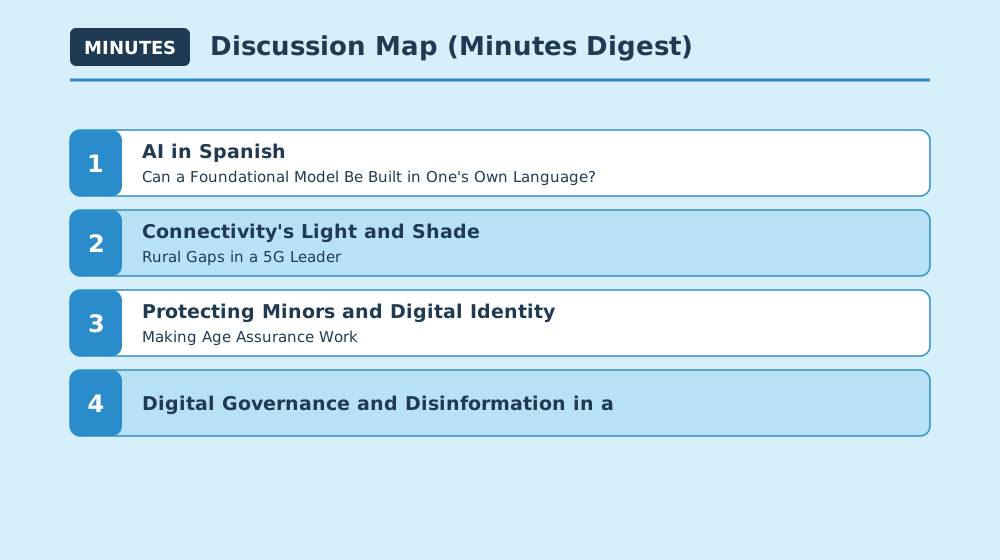
Key exchanges extracted from session records and transcripts.
1. AI in Spanish — Can a Foundational Model Be Built in One's Own Language?
Sessions: Roundtables on developing AI in Spanish and its IP impact, and on implementing AI regulation — is a Spanish foundational model possible?
- Against English-dominated AI development, panellists debated regulation and development of AI adapted to Spanish and the feasibility of a Spanish-language foundational model [1][2]
- The unresolved global question of training data versus intellectual-property rights was examined in the Spanish-speaking context [1][2]
- Implementing the EU AI Act, in force since August 2024, was tied to clear rules and ethical responsibility [1][2]
2. Connectivity's Light and Shade — Rural Gaps in a 5G Leader
Sessions: Roundtable 'Governing digital infrastructures' (26 November)
- Spain's top-tier 5G and broadband connectivity was set against rural areas still left behind [1][2]
- Panellists discussed AI's role in network densification and emerging technologies, insisting adoption comes with clear norms and ethical responsibility [1][2]
- Strengthening European digital sovereignty, common regulation and data security — without choking innovation — framed the way forward [1][2]
3. Protecting Minors and Digital Identity — Making Age Assurance Work
Sessions: Roundtable 'Protecting minors' rights: the importance of digital-identity systems'
- Digital-identity and age-assurance systems were framed as key to protecting minors online — at a time when Spain's government was preparing a minors-protection bill and an age-verification app [1][2]
- Panellists also stressed digital-rights protection, energy-efficient algorithms, tech accessibility, and involving youth and civil society in policy design [1][2]
4. Digital Governance and Disinformation in a Multipolar World
Sessions: Roundtables on digital governance for a multipolar world, freedom of information versus disinformation, and data governance
- Panellists debated redesigning digital governance for an increasingly multipolar world and balancing free expression with counter-disinformation [1][2]
- Data governance had its own session, with institutional debates already pointing to the WSIS+20 review the following year [1][2]
Three-Minute Short Talk — Your Questions Answered
Q. What did the meeting decide?
A. Nothing binding — but as the first annual meeting after the EU AI Act took effect, it set the next agenda: how to implement the rules and how to grow AI in Spanish.
Q. Why does a 'Spanish foundational model' matter?
A. Foundation models are trained mostly on English data, raising linguistic and cultural bias concerns. Whether 500 million Spanish speakers can have their own model is a test of digital sovereignty and cultural diversity.
Q. Why does it matter elsewhere?
A. The same sovereign-LLM debate is running in Japan, France and beyond, and age assurance for minors has become a global regulatory front line.
What Is Spain IGF? (for first-time readers)
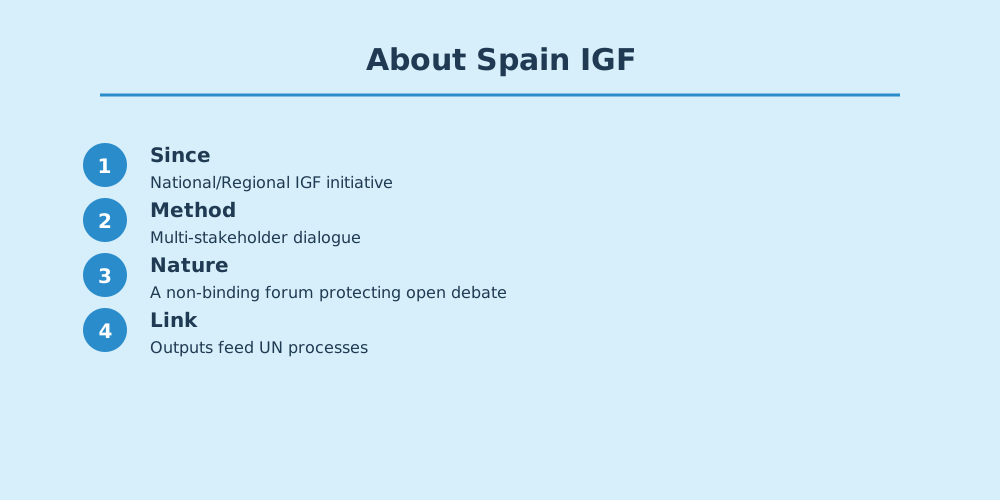
Spain IGF is a National or Regional IGF Initiative (NRI), aligning local internet governance discussion with global IGF principles.
Why It Matters to You
What was discussed here becomes the baseline for national digital policy, platform rules and AI regulation worldwide within a few years. The principles confirmed at the 2024 meeting are the foundation of the "next rules" for the phones, social platforms and AI services you use every day.
Sources & References
- IGF Spain 2024 – Nuestra transformación, Nuestro futuro — igfspain.org (accessed 2026-07-22)
- Mensajes del 14º Foro de la Gobernanza de Internet en España(セッション別結論) — igfspain.org (accessed 2026-07-22)
- Historia de los 10 años del Foro de Gobernanza de Internet Spain — IGF Spain(10周年史, jornadasigfspain.es) (accessed 2026-07-22)
- Acerca de IGF Spain(フォーラム概要・コーディネーター) — igfspain.org (accessed 2026-07-22)
Quotes are translated or condensed from the records listed above. Bracketed numbers [n] refer to the source list.
Related links
- IGF official (NRI list): https://www.intgovforum.org/en/content/national-and-regional-igf-initiatives
- Japan IGF: https://japanigf.jp/
- Yuki Nakazawa's blog: https://nkzw.jp/category/igf/
更新履歴
第1稿投稿 2026年7月10日 8時57分(記事コンテンツアップ)
— 中澤祐樹

