


The 3-Line Summary
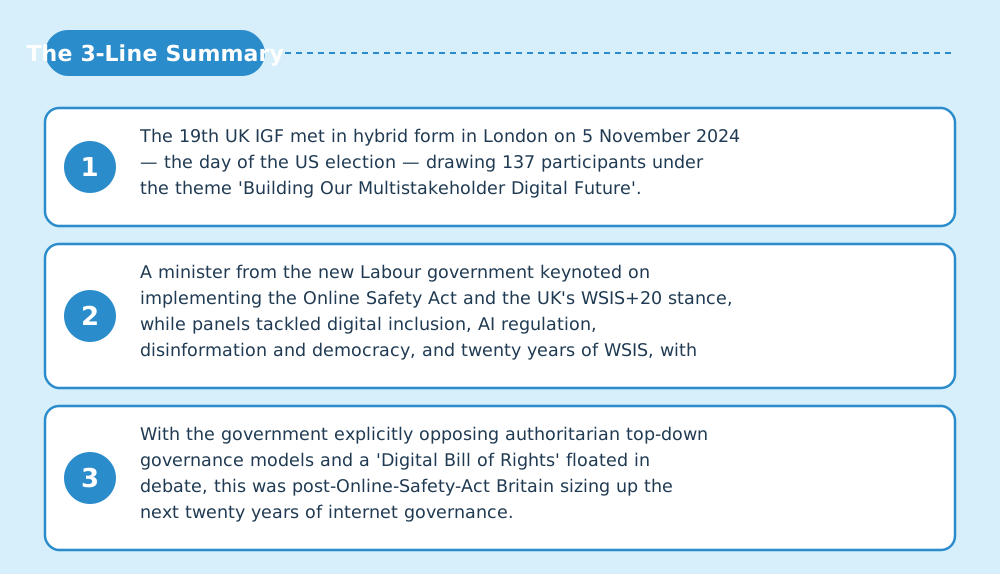
- The 19th UK IGF met in hybrid form in London on 5 November 2024 — the day of the US election — drawing 137 participants under the theme 'Building Our Multistakeholder Digital Future'.
- A minister from the new Labour government keynoted on implementing the Online Safety Act and the UK's WSIS+20 stance, while panels tackled digital inclusion, AI regulation, disinformation and democracy, and twenty years of WSIS, with messages sent to the UN IGF in Riyadh.
- With the government explicitly opposing authoritarian top-down governance models and a 'Digital Bill of Rights' floated in debate, this was post-Online-Safety-Act Britain sizing up the next twenty years of internet governance.
Welcome — this is the Japan IGF Support Organization. This in-depth report on UK IGF 2024 draws on official outputs, session records and on-site reporting. In a hurry? The three lines above and the diagrams carry the gist.
Conference at a Glance (from official records)
| Item | Detail |
|---|---|
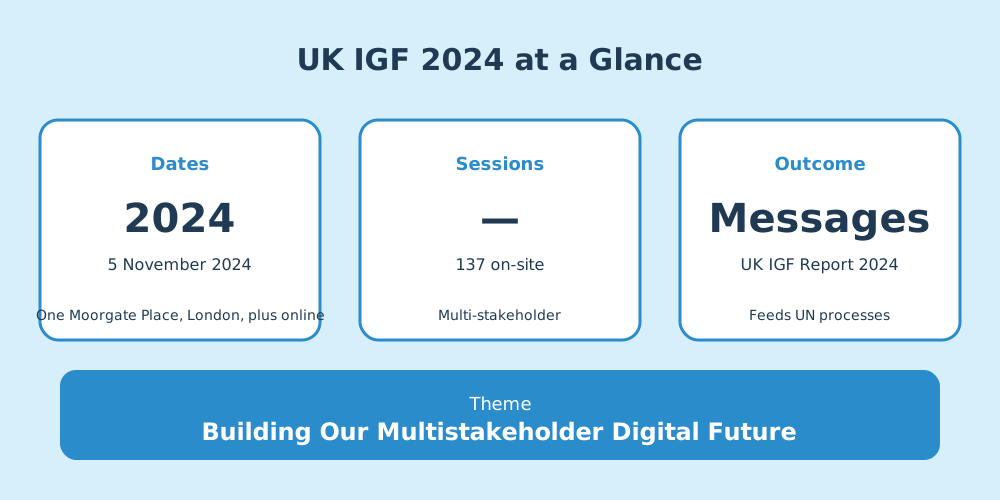
| Official name | UK IGF 2024 |
| Edition | 19th UK IGF (the official report describes Nominet's CEO as opening 'the nineteenth UK Internet Governance Forum') |
| Dates | 5 November 2024 |
| Venue | One Moorgate Place, London, plus online (hybrid, with virtual participants able to put questions live to the room via Zoom) |
| Theme | Building Our Multistakeholder Digital Future |
| Participants | 137 (137 representatives from government, civil society, industry, the technical community and academia; just over a third first-time registrants and a quarter under 34) |
| Host | UK IGF Steering Committee (secretariat: Nominet); sponsored in 2024 by Nominet, Verisign, the Internet Society UK Chapter and ICANN |
| Outcome | UK IGF Report 2024, providing key messages for the UN IGF in Riyadh, Saudi Arabia (15–19 December 2024) |
(See the source list at the end of this article.)
Discussion Digest — from the Session Records
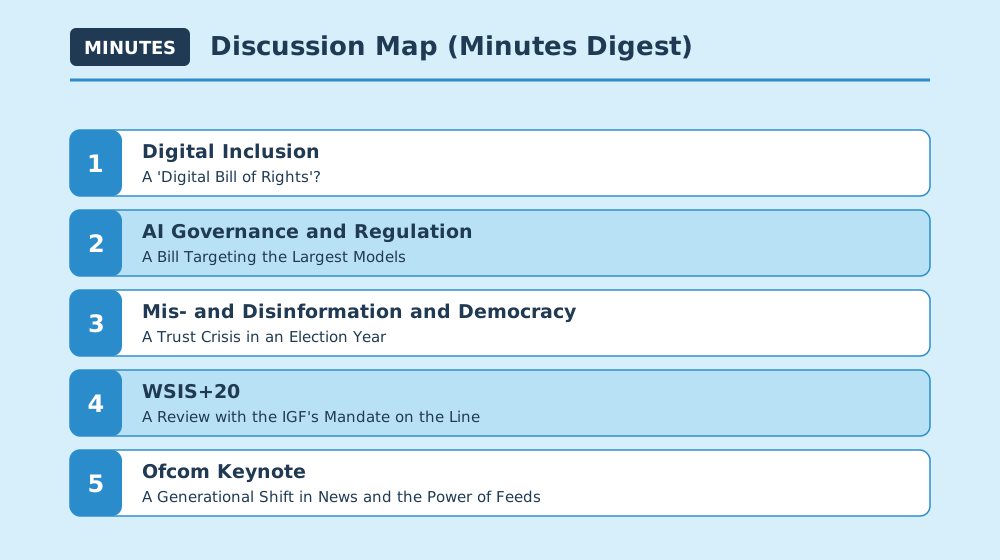
Key exchanges extracted from session records and transcripts.
1. Digital Inclusion — A 'Digital Bill of Rights'?
Sessions: Panel 'How can we foster digital inclusion in the UK?' (10:00–10:55, chaired by Dr Ellen Helsper)
- Lord Clement-Jones proposed a 'Digital Bill of Rights' establishing digital citizenship and entitlement to digital services, plus a new holistic Government Digital Inclusion Strategy — maintaining analogue alternatives until universal access is achieved [1][3]
- Helen Milner (Good Things Foundation): free SIMs and devices matter as a safety net, but building skills, confidence and agency is the real task; the foundations of exclusion could be fixed within ten years [1][3]
- Dr Helsper argued the focus should be improving lives and wellbeing rather than counting devices distributed, with more work needed on who is most at risk from mis- and disinformation [1][3]
2. AI Governance and Regulation — A Bill Targeting the Largest Models
Sessions: Panel 'The governance and regulation of AI' (13:20–14:15, chaired by Jakob Mökander)
- Katherine Yesilirmak (Responsible Tech Adoption Unit) confirmed an AI bill would come when parliamentary time allowed, per the King's Speech — filling gaps sector regulation cannot and focusing on the safety of the largest models; finding skilled AI policy people remains hard [1][3]
- Tommy Shaffer Shane (Centre for Long-Term Resilience) stressed keeping visibility and oversight of fast-evolving AI systems, with transparency rules such as model cards and incident reporting, researcher access and third-party assurance [1][3]
- The panel broadly agreed the UK was on the right track — a consensus audience members challenged, questioning how much accountability was really being brought to government or Big Tech [1][3]
3. Mis- and Disinformation and Democracy — A Trust Crisis in an Election Year
Sessions: Panel 'What is the impact of misinformation and disinformation on democracy?' (14:20–15:15; James Ball, Henry Parker of Logically, Chris Morris of Full Fact, Hannah Perry of Demos)
- The forum's key message: a general lack of trust in society produces a lack of consent — a problem for politics and democracy that hostile actors, including states, can exploit to sow further discord [1][4]
- Viewing disinformation as an observable set of behaviours, rather than through a content lens, may be a better way to identify it [1][4]
- Recommendations included strengthening the local news ecosystem, media literacy by design, closer scrutiny of algorithmic promotion at times of crisis, and using AI to triage the information environment for human fact-checkers [1][4]
4. WSIS+20 — A Review with the IGF's Mandate on the Line
Sessions: Panel '20 years on from WSIS, where should we go next?' (15:45–16:40, led by David Souter) + keynote by Baroness Jones of Whitchurch (DSIT)
- David Souter explained the WSIS+20 review will be UNGA-led and largely intergovernmental with multistakeholder input, with the IGF's mandate up for discussion and implications for the 2030 SDG review [1][3]
- Georgia Osborn highlighted National and Regional IGFs as organic outcomes never envisioned by the original WSIS — concrete evidence of the IGF's value to the community [1][3]
- In her keynote, Baroness Jones said the UK continues to oppose the top-down, intergovernmental model promoted by some authoritarian regimes, framing the multistakeholder settlement — no single organisation or stakeholder controlling the internet — as WSIS's great achievement, and urged UK stakeholders into the review [1][3]
5. Ofcom Keynote — A Generational Shift in News and the Power of Feeds
Sessions: Keynote by Dr Yih-Choung Teh, Group Director for Strategy & Research, Ofcom (16:45–17:15)
- Twenty years of Ofcom data show broadcast TV viewing among 16–24s down 78% since 2013 while barely declining for over-65s; by September 2024 online sources equalled TV for news — a generational shift [1][3]
- Ofcom research from March 2024 found news ranking in social feeds substantially drives engagement, and people who get news from social media tend to see a narrower range of topics, hold more polarised opinions and trust democracy less [1][3]
- Understanding reader preferences now sits with online intermediaries rather than traditional news providers; Ofcom is considering how its Broadcasting Code should evolve to support accurate, trusted news [1][3]
Three-Minute Short Talk — Your Questions Answered
Q. What was the timing?
A. The day after the US presidential election, months into a new Labour government — whose minister set out plans on the Online Safety Act and a coming AI bill. Conclusions went to the UN IGF in Riyadh that December.
Q. What was the biggest issue?
A. The WSIS+20 review looming in 2025, with the IGF's own mandate on the table. The UK government's declared opposition to top-down, authoritarian-backed governance models anchored the day.
Q. Why should I care?
A. Ofcom's finding that social-media news users see narrower topics and hold more polarised views is a warning for every country — and the Digital Bill of Rights and AI bill debates preview regulatory choices others will face.
What Is UK IGF? (for first-time readers)
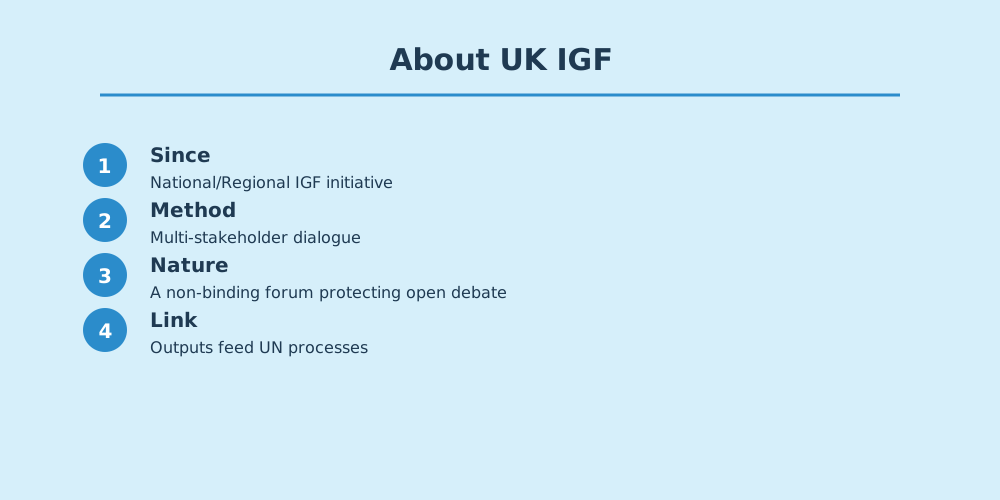
UK IGF is a National or Regional IGF Initiative (NRI), aligning local internet governance discussion with global IGF principles.
Why It Matters to You
What was discussed here becomes the baseline for national digital policy, platform rules and AI regulation worldwide within a few years. The principles confirmed at the 2024 meeting are the foundation of the "next rules" for the phones, social platforms and AI services you use every day.
Sources & References
- UK Internet Governance Forum Report 2024 (PDF) — UK IGF(事務局: Nominet) (accessed 2026-07-11)
- UK IGF 2024(公式イベントページ) — UK IGF (accessed 2026-07-11)
- 2024 Agenda — UK IGF (accessed 2026-07-11)
- UK IGF 2024 Highlights(セッション録画) — UK IGF (accessed 2026-07-11)
Quotes are translated or condensed from the records listed above. Bracketed numbers [n] refer to the source list.
Related links
- IGF official (NRI list): https://www.intgovforum.org/en/content/national-and-regional-igf-initiatives
- Japan IGF: https://japanigf.jp/
- Yuki Nakazawa's blog: https://nkzw.jp/category/igf/
Revision History
Rev. 1 — published 24 October 2024, 14:00 (Article published)
Rev. 2 — updated 16 July 2026, 20:09 (Fully revised into the in-depth edition: added the 3-line summary, minutes digest, short talk, source list and diagrams (all quotes verified against the listed sources))
— 中澤祐樹

