

The 3-Line Summary
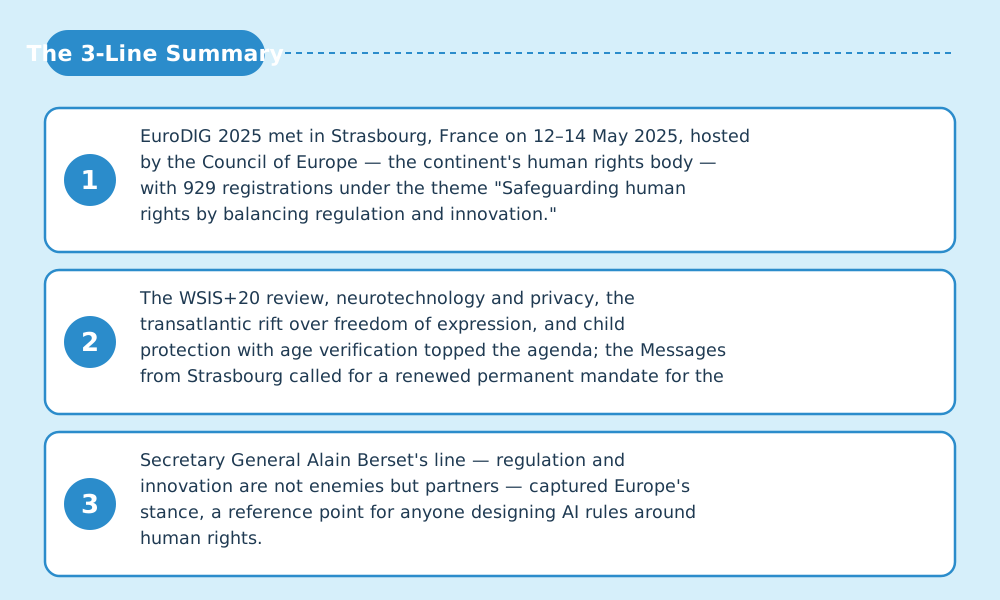
- EuroDIG 2025 met in Strasbourg, France on 12–14 May 2025, hosted by the Council of Europe — the continent's human rights body — with 929 registrations under the theme "Safeguarding human rights by balancing regulation and innovation."
- The WSIS+20 review, neurotechnology and privacy, the transatlantic rift over freedom of expression, and child protection with age verification topped the agenda; the Messages from Strasbourg called for a renewed permanent mandate for the IGF.
- Secretary General Alain Berset's line — regulation and innovation are not enemies but partners — captured Europe's stance, a reference point for anyone designing AI rules around human rights.
Welcome — this is the Japan IGF Support Organization. This in-depth report on EuroDIG 2025 in Strasbourg draws on official outputs, session records and on-site reporting. In a hurry? The three lines above and the diagrams carry the gist.
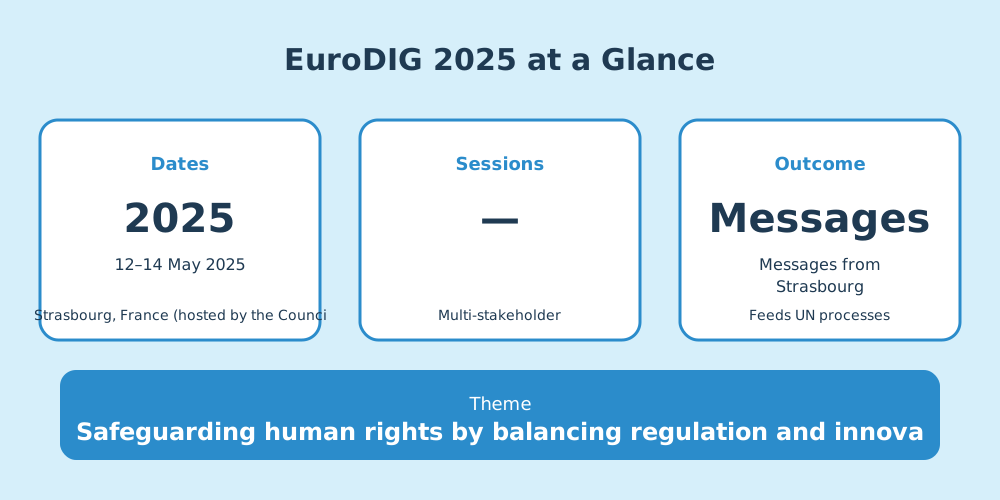
Conference at a Glance (from official records)
| Item | Detail |
|---|---|
| Dates | 12–14 May 2025 |
| Venue | Strasbourg, France (hosted by the Council of Europe) |
| Theme | Safeguarding human rights by balancing regulation and innovation |
| Registrations | 929 |
| Workshops | 11 |
| Host | Council of Europe, in cooperation with the Luxembourg Presidency of the Committee of Ministers of the Council of Europe |
| Outcome | Messages from Strasbourg |
(See the source list at the end of this article.)
Discussion Digest — from the Session Records
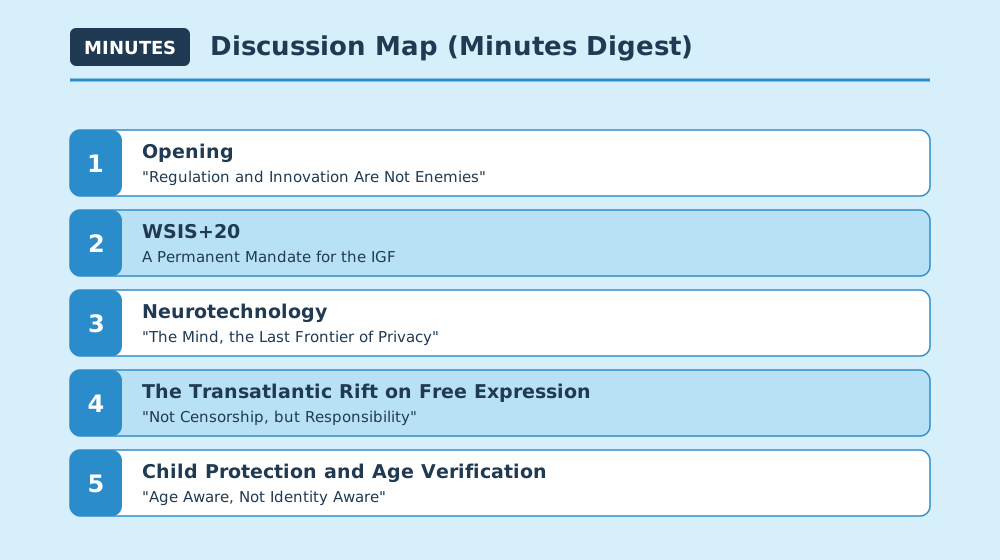
Key exchanges extracted from session records and transcripts.
1. Opening — "Regulation and Innovation Are Not Enemies"
Sessions: Opening session (12 May)
"Regulation and innovation are not enemies. They should be partners"
— Alain Berset (Secretary General, Council of Europe) [3]
- Berset presented the Council of Europe's Framework Convention on AI — the world's first legally binding AI treaty rooted in human rights — as Europe's answer to disinformation, cyberattacks and algorithmic bias [3]
- Luxembourg's Justice Minister Elisabeth Margue (Presidency) and Malta's Minister Michael Falzon (incoming Presidency) also spoke, with Malta emphasising children's rights online [3]
2. WSIS+20 — A Permanent Mandate for the IGF
Sessions: Main Topic session on the WSIS+20 review
- The Messages state that the IGF is a fundamental platform for multistakeholder cooperation and should receive a renewed, permanent mandate [1][4]
- National and regional IGFs (NRIs) were identified as essential drivers of bottom-up engagement in the review [1][4]
- The forum consolidated Europe's position ahead of the UN's WSIS+20 review at the end of 2025 [1][4]
3. Neurotechnology — "The Mind, the Last Frontier of Privacy"
Sessions: Main Topic session on neurotechnology and privacy
- The Messages record the warning that when neurotechnology combines with AI, "the mind – the last frontier of human privacy, is at risk" [1]
- Protection of neural data remains conceptually contested; existing frameworks such as the GDPR may apply but need strengthening for the unique sensitivity of neural data [1]
4. The Transatlantic Rift on Free Expression — "Not Censorship, but Responsibility"
Sessions: Main Topic session on the transatlantic rift on freedom of expression
"This is not about censorship. This is about responsibility"
— Alain Berset (Secretary General, Council of Europe) [3][1][4]
- Against US-side criticism casting the EU's DSA and DMA as censorship, Europe committed to defending its basic principles while refining its regulatory instruments — explicitly rejecting the censorship label [3][1][4]
- That the transatlantic rift itself was a Main Topic speaks to the state of EU–US relations on speech regulation in 2025 [3][1][4]
5. Child Protection and Age Verification — "Age Aware, Not Identity Aware"
Sessions: Main Topic session on child protection online
- Age verification should follow context-aware, rights-based approaches, balancing protection against privacy and access risks [1][4]
- The Messages set out the principle of making the internet "age aware, not identity aware" [1][4]
Three-Minute Short Talk — Your Questions Answered
Q. What made this EuroDIG special?
A. The venue: the Council of Europe, the continent's human rights body. With 'safeguarding human rights' in the theme itself, AI, neurotechnology and child protection were all debated in the language of rights — in the house that produced the world's first binding AI treaty.
Q. What was the most contentious topic?
A. The transatlantic clash over free expression. To criticism branding the EU's platform rules censorship, Secretary General Alain Berset answered head-on: 'This is not about censorship. This is about responsibility.'
Q. Why should I care?
A. The 'age aware, not identity aware' principle is a ready-made template for age-verification debates in any country, and neural-data privacy — the mind as the last frontier — is heading for every jurisdiction that regulates health or biometric data.
What Is EuroDIG? (for first-time readers)
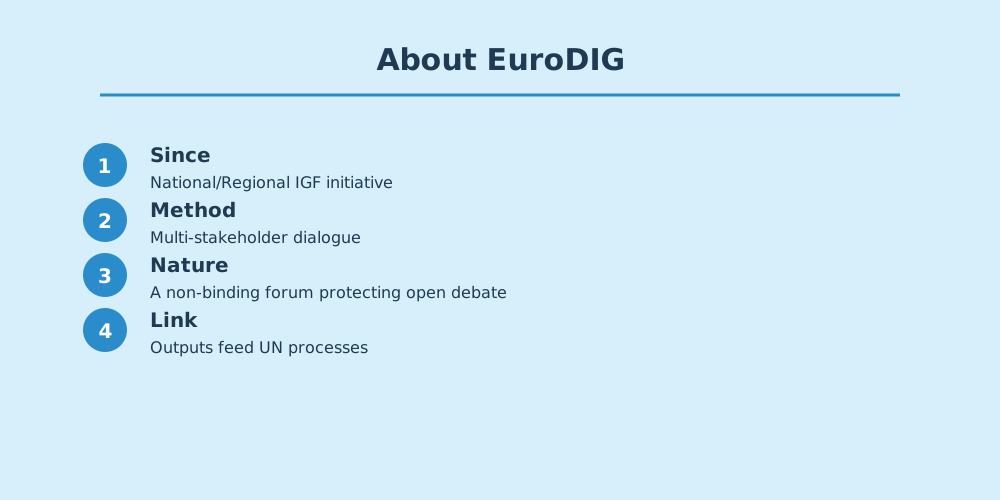
EuroDIG is a National or Regional IGF Initiative (NRI), aligning local internet governance discussion with global IGF principles.
Why It Matters to You
What was discussed here becomes the baseline for national digital policy, platform rules and AI regulation worldwide within a few years. The principles confirmed at the 2025 meeting are the foundation of the "next rules" for the phones, social platforms and AI services you use every day.
Sources & References
- Messages from Strasbourg — eurodig.org (accessed 2026-07-10)
- EuroDIG 2025(公式ページ・登録統計) — eurodig.org (accessed 2026-07-10)
- Opening 2025(開会セッション記録・書き起こし) — eurodigwiki.org (accessed 2026-07-10)
- EURODIG 2025 concludes in Strasbourg — DiploFoundation (accessed 2026-07-10)
- EuroDIG 2025 — DiploFoundation (accessed 2026-07-10)
Quotes are translated or condensed from the records listed above. Bracketed numbers [n] refer to the source list.
Related links
- IGF official (NRI list): https://www.intgovforum.org/en/content/national-and-regional-igf-initiatives
- Japan IGF: https://japanigf.jp/
- Yuki Nakazawa's blog: https://nkzw.jp/category/igf/
Revision History
Rev. 1 — published 12 May 2025, 16:00 (Article published)
Rev. 2 — updated 10 July 2026, 14:28 (Fully revised into the in-depth edition: added the 3-line summary, minutes digest, short talk, source list and diagrams (all quotes verified against the listed sources))
— 中澤祐樹

