

The 3-Line Summary
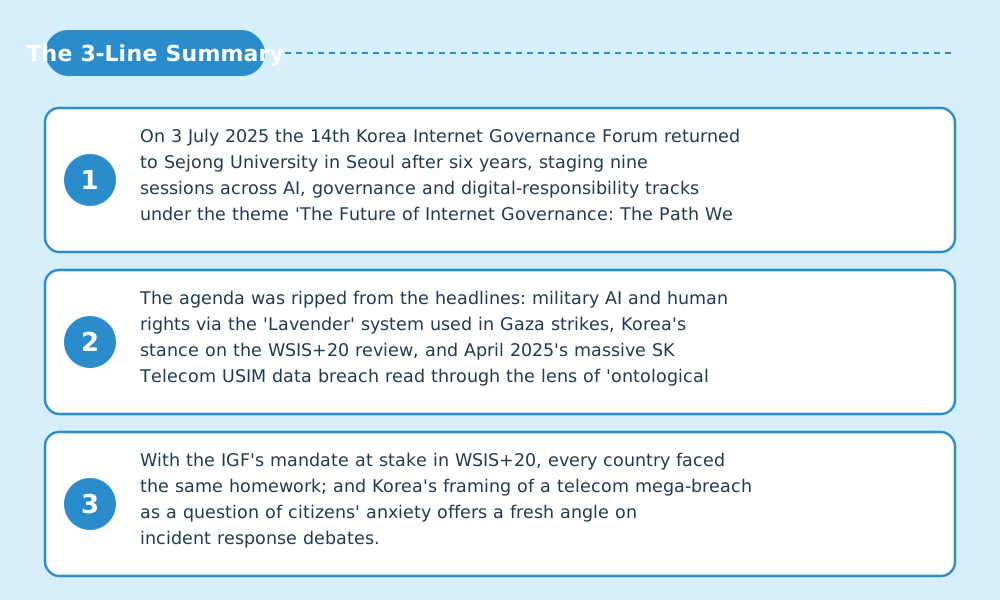
- On 3 July 2025 the 14th Korea Internet Governance Forum returned to Sejong University in Seoul after six years, staging nine sessions across AI, governance and digital-responsibility tracks under the theme 'The Future of Internet Governance: The Path We Must Take.'
- The agenda was ripped from the headlines: military AI and human rights via the 'Lavender' system used in Gaza strikes, Korea's stance on the WSIS+20 review, and April 2025's massive SK Telecom USIM data breach read through the lens of 'ontological security.'
- With the IGF's mandate at stake in WSIS+20, every country faced the same homework; and Korea's framing of a telecom mega-breach as a question of citizens' anxiety offers a fresh angle on incident response debates.
Welcome — this is the Japan IGF Support Organization. This in-depth report on The 14th Korea Internet Governance Forum (KrIGF 2025) draws on official outputs, session records and on-site reporting. In a hurry? The three lines above and the diagrams carry the gist.
📍 The forum's first return to Sejong University since the 8th edition in 2019
Conference at a Glance (from official records)
| Item | Detail |
|---|---|
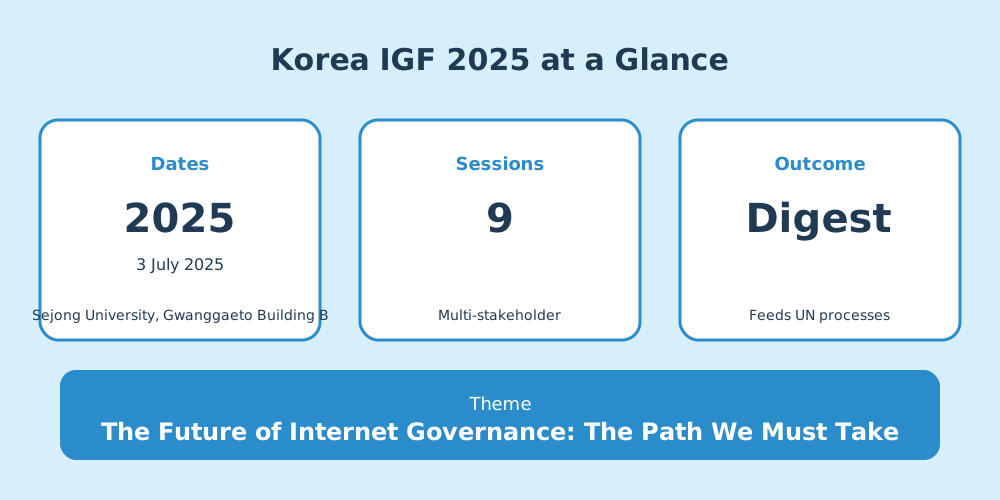
| Official name | The 14th Korea Internet Governance Forum (KrIGF 2025) |
| Edition | 14th |
| Dates | 3 July 2025 |
| Venue | Sejong University, Gwanggaeto Building B1, Seoul, hybrid with online participation (09:00–18:00) |
| Theme | The Future of Internet Governance: The Path We Must Take |
| Sessions | 9 |
| Host | Co-hosted by 20 organisations including KISA and KIGA |
(See the source list at the end of this article.)
Discussion Digest — from the Session Records
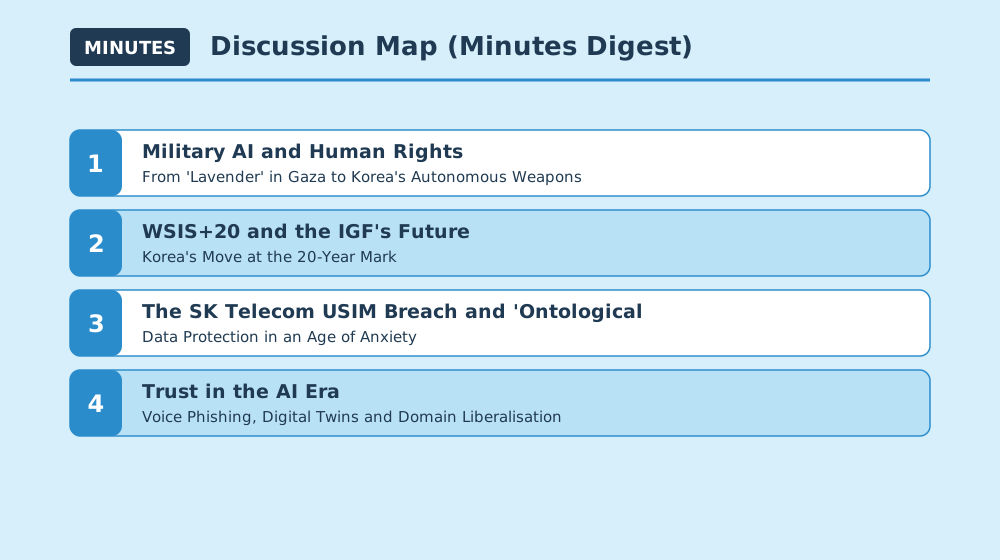
Key exchanges extracted from session records and transcripts.
1. Military AI and Human Rights — From 'Lavender' in Gaza to Korea's Autonomous Weapons
Sessions: Session 7 'Military AI Threatening Human Rights and Peace' (AI track, moderated by AI Ethics Letter)
- Citing defence contractors such as Palantir and the 'Lavender' AI system used in Israeli strikes on Gaza, the session argued AI has entered the stage of directly informing life-and-death decisions [4]
- Korea's own rapid adoption of drones, autonomous weapons and AI-based command-and-control was said to be outpacing debate on human-rights and social impacts [4]
- The panel was strikingly diverse — from a KISA security-technology director to Amnesty International Korea, a Palestine solidarity group and overseas tech-worker activists [4]
2. WSIS+20 and the IGF's Future — Korea's Move at the 20-Year Mark
Sessions: Session 8 'WSIS+20 and Responding to Global Internet Governance Debates' (Governance track, led by KISDI)
- Ahead of the WSIS+20 review, panellists debated strengthening the WSIS process and the IGF's role, and Korea's position on sustainable IGF funding and greater inclusiveness [5]
- KISDI chaired and keynoted, with KISA, Kakao, Jinbonet and academia mapping government, industry and civil-society responses [5]
- Closing the digital divide and ensuring equitable access were revisited as WSIS's founding concerns [5]
3. The SK Telecom USIM Breach and 'Ontological Security' — Data Protection in an Age of Anxiety
Sessions: Session 9 'In an Age of Anxiety, Is Your Data Safe?' (Digital Responsibility track)
- Responding to the massive leak of SK Telecom subscribers' USIM data discovered on 22 April 2025, the session focused on user anxiety beyond technical damage — amplified by the company's inadequate response and swirling uncertainty [6]
- Introducing the concept of 'ontological security,' it framed data breaches as threats to the stability of personal identity, asking where responsibility lies and whether current law suffices [6]
- University researchers presented, with discussants from KISA, industry, the bar and civil society linking the incident to institutional reform [6]
4. Trust in the AI Era — Voice Phishing, Digital Twins and Domain Liberalisation
Sessions: Session 6 on AI-driven voice phishing, Session 3 on digital twins, Session 4 on Korea's public AI-ethics discourse, and a session on opening restricted domain names
"AI is permeating every corner of society and unpredictable issues arise daily; discussion among diverse stakeholders will be a vital foundation for sound internet public policy (translated and abridged from Korean)"
— Park Jung-seop (Head of KRNIC, the Korea Network Information Center, KISA) [2][3]
- AI-powered voice phishing got its own session as a threat to digital trust, alongside sessions on the public discourse of AI ethics and the two faces of digital-twin technology [2][3]
- The governance track also debated opening up restricted domain names — classic resource stewardship sharing the bill with AI-era trust issues across nine sessions [2][3]
Three-Minute Short Talk — Your Questions Answered
Q. The biggest issue in 2025?
A. The future of internet governance itself. In the year of the WSIS+20 review — with the IGF's mandate on the line — government, industry and civil society debated Korea's position at one table.
Q. The rawest topic?
A. The SK Telecom USIM breach. A leak affecting tens of millions of subscribers was debated not as a technical failure but as a crisis of public anxiety and identity security.
Q. Why should I care?
A. Every country had WSIS+20 homework that year, telecom mega-breaches can happen anywhere, and the military-AI debate — from Gaza to autonomous weapons — concerns any security-conscious society.
What Is Korea IGF? (for first-time readers)
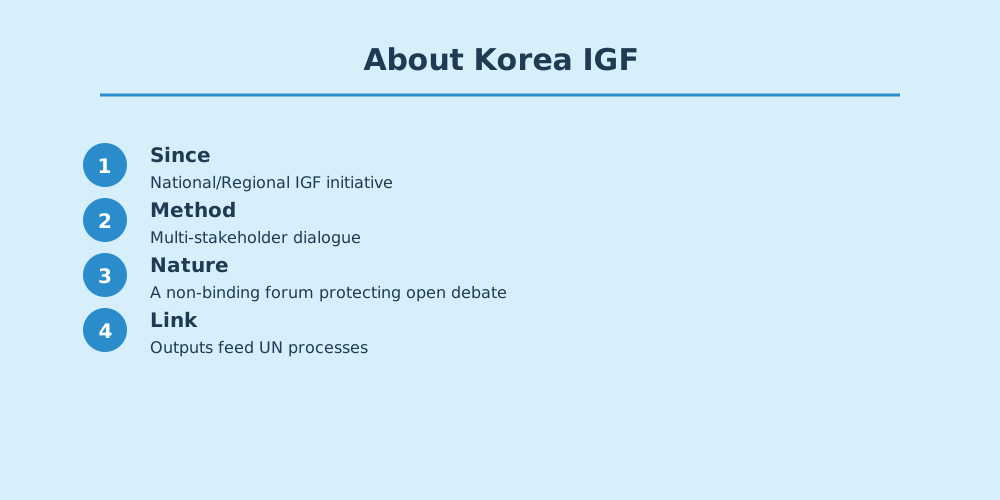
Korea IGF is a National or Regional IGF Initiative (NRI), aligning local internet governance discussion with global IGF principles.
Why It Matters to You
What was discussed here becomes the baseline for national digital policy, platform rules and AI regulation worldwide within a few years. The principles confirmed at the 2025 meeting are the foundation of the "next rules" for the phones, social platforms and AI services you use every day.
Sources & References
- 2025년 제14회 한국인터넷거버넌스포럼(KrIGF) 개최(KISAプレスリリース) — 韓国インターネット振興院(KISA) (accessed 2026-07-11)
- '한국인터넷거버넌스포럼' 개최…AI·거버넌스·디지털책임 논의(韓国IGF開催、AI・ガバナンス・デジタル責任を議論) — 디지털데일리(Digital Daily) (accessed 2026-07-11)
- 2025년 제14회 한국 인터넷거버넌스포럼(KrIGF) セミナー情報 — 大韓民国国会図書館(NANET) (accessed 2026-07-11)
- [세션7] 인권과 평화를 위협하는 군사 인공지능(人権と平和を脅かす軍事人工知能) — KrIGF事務局(韓国インターネットガバナンスフォーラム公式サイト) (accessed 2026-07-11)
- [세션8] WSIS+20와 향후 국내외 글로벌 인터넷거버넌스 논의 대응 방향 — KrIGF事務局(韓国インターネットガバナンスフォーラム公式サイト) (accessed 2026-07-11)
- [세션9] 불안의 시대, 당신의 정보는 안녕하십니까?(不安の時代、あなたの情報は安寧ですか) — KrIGF事務局(韓国インターネットガバナンスフォーラム公式サイト) (accessed 2026-07-11)
- 2025 한국인터넷거버넌스포럼(KrIGF) 국문보고서/영문보고서(公式報告書・韓国語/英語) — KrIGF事務局(韓国インターネットガバナンスフォーラム公式サイト) (accessed 2026-07-11)
Quotes are translated or condensed from the records listed above. Bracketed numbers [n] refer to the source list.
Related links
- IGF official (NRI list): https://www.intgovforum.org/en/content/national-and-regional-igf-initiatives
- Japan IGF: https://japanigf.jp/
- Yuki Nakazawa's blog: https://nkzw.jp/category/igf/
Revision History
Rev. 1 — published 1 July 2025, 11:00 (Article published)
Rev. 2 — updated 16 July 2026, 20:09 (Fully revised into the in-depth edition: added the 3-line summary, minutes digest, short talk, source list and diagrams (all quotes verified against the listed sources))
— 中澤祐樹