

The 3-Line Summary
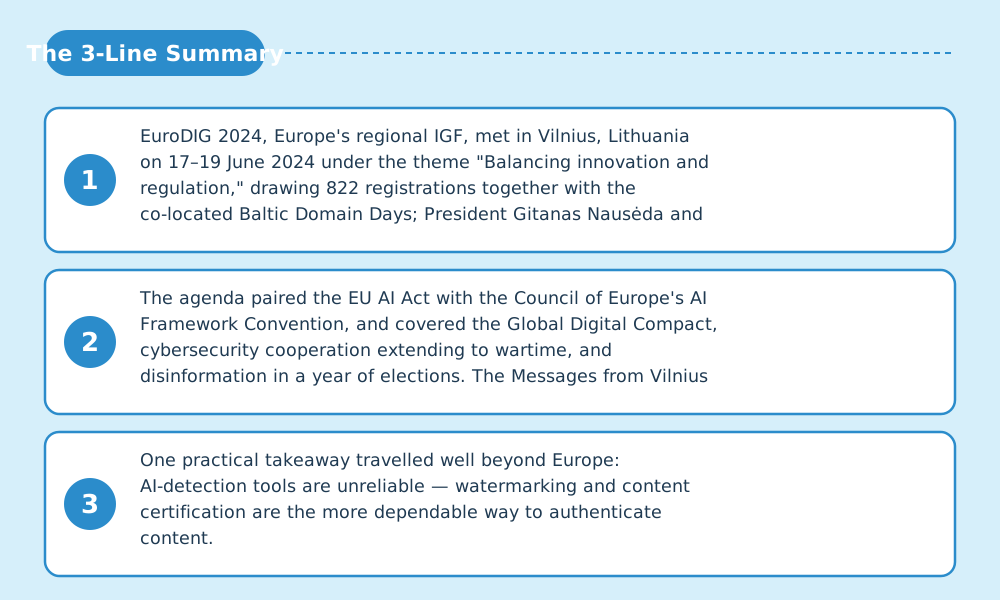
- EuroDIG 2024, Europe's regional IGF, met in Vilnius, Lithuania on 17–19 June 2024 under the theme "Balancing innovation and regulation," drawing 822 registrations together with the co-located Baltic Domain Days; President Gitanas Nausėda and Prime Minister Ingrida Šimonytė opened the event.
- The agenda paired the EU AI Act with the Council of Europe's AI Framework Convention, and covered the Global Digital Compact, cybersecurity cooperation extending to wartime, and disinformation in a year of elections. The Messages from Vilnius went to the UN IGF.
- One practical takeaway travelled well beyond Europe: AI-detection tools are unreliable — watermarking and content certification are the more dependable way to authenticate content.
Welcome — this is the Japan IGF Support Organization. This in-depth report on EuroDIG 2024 in Vilnius draws on official outputs, session records and on-site reporting. In a hurry? The three lines above and the diagrams carry the gist.
Conference at a Glance (from official records)
| Item | Detail |
|---|---|
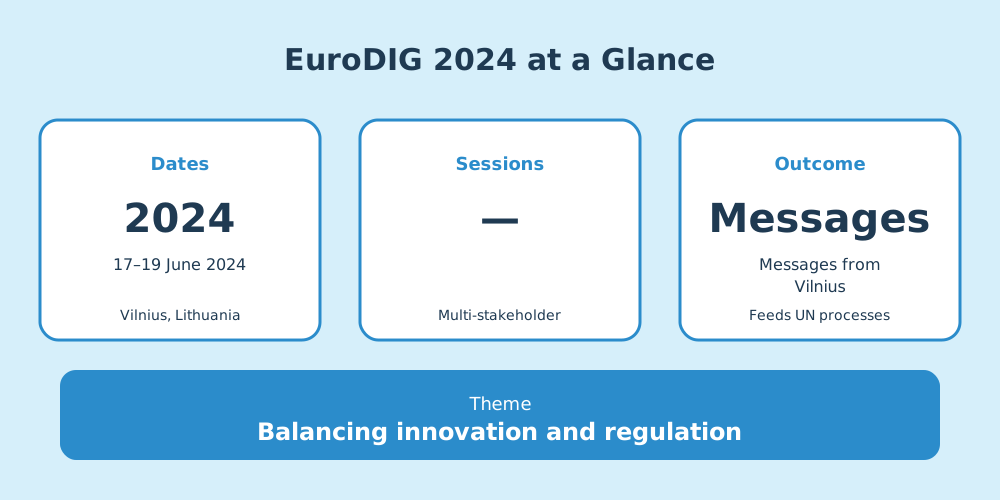
| Dates | 17–19 June 2024 |
| Venue | Vilnius, Lithuania |
| Theme | Balancing innovation and regulation |
| Registrations | 822 (Combined registrations for EuroDIG and the co-located Baltic Domain Days 2024, per the official EuroDIG site) |
| Host | Communications Regulatory Authority of Lithuania (RRT), in cooperation with Lithuania's Ministries of Foreign Affairs, Transport and Communications, and Economy and Innovation, GoVilnius and the Information Society Development Committee |
| Outcome | Messages from Vilnius |
(See the source list at the end of this article.)
Discussion Digest — from the Session Records
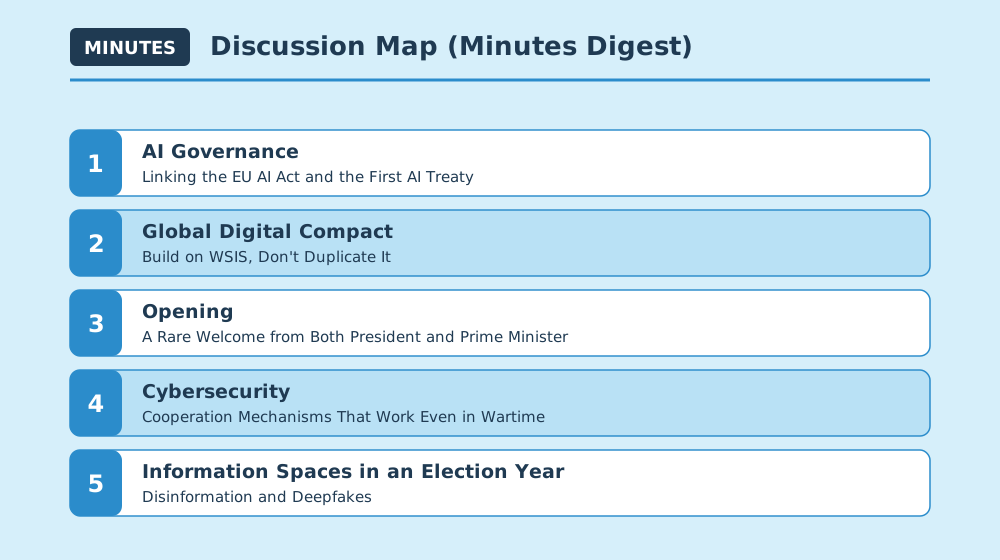
Key exchanges extracted from session records and transcripts.
1. AI Governance — Linking the EU AI Act and the First AI Treaty
Sessions: Main Topic sessions on Artificial Intelligence
- AI innovation requires multistakeholder governance to minimise bias and serve societal interests [1]
- The Council of Europe's AI Framework Convention was framed as complementing the EU AI Act [1]
- AI-detection systems remain unreliable; watermarking and content certification are the more dependable authentication methods [1]
2. Global Digital Compact — Build on WSIS, Don't Duplicate It
Sessions: Main Topic sessions on the Global Digital Compact
- Participants backed a stronger multistakeholder model and an enhanced role for the UN IGF in implementing Global Digital Compact commitments [1][5]
- The Messages call for building on existing WSIS foundations rather than creating duplicate mechanisms [1][5]
- With the UN Summit of the Future weeks away, the GDC and WSIS+20 processes ran through the whole programme [1][5]
3. Opening — A Rare Welcome from Both President and Prime Minister
Sessions: Opening ceremony (17 June, joint with Baltic Domain Days)
"Balancing Innovation and Regulation captures the essence of our journey"
— Ingrida Šimonytė (Prime Minister of Lithuania) [5][2]
- President Gitanas Nausėda and Prime Minister Ingrida Šimonytė both took the opening stage, signalling a whole-of-government commitment by host Lithuania [5][2]
- RRT Council Chair Jūratė Šovienė stressed that the essence of digital transformation is people, not technology [5][2]
4. Cybersecurity — Cooperation Mechanisms That Work Even in Wartime
Sessions: Cybersecurity sessions
- The Messages from Vilnius call for coordinated cross-sectoral collaboration built on trust, including cooperation mechanisms for crises such as wartime [1]
- Training and inclusive security measures were flagged as essential complements [1]
5. Information Spaces in an Election Year — Disinformation and Deepfakes
Sessions: Main Topic sessions on the Evolution of Media Spaces, and YOUthDIG
- Sessions examined how information disorder affects voting dynamics, pointing to critical thinking and media literacy education, voter-friendly communication and electoral transparency as remedies [4][1]
- The YOUthDIG cohort called for mandatory deepfake labelling and explicit opt-in consent for the use of personal data in AI training [4][1]
Three-Minute Short Talk — Your Questions Answered
Q. What did the conference actually decide?
A. Nothing binding — it's a dialogue. But the points of consensus were distilled into the Messages from Vilnius and sent to the UN IGF and European policymakers. The headline act: working out how the EU AI Act and the Council of Europe's AI treaty fit together.
Q. What was the highlight?
A. Both the President and the Prime Minister of Lithuania opened the event — a small state bordering Russia treating internet governance as national strategy. The Messages even speak of cooperation mechanisms for crises such as wartime.
Q. Why should I care?
A. The practical verdict that AI-detection tools are unreliable — watermarking and content certification work better — is directly usable anywhere. And the election-year deepfake debate is coming to every democracy's doorstep.
What Is EuroDIG? (for first-time readers)
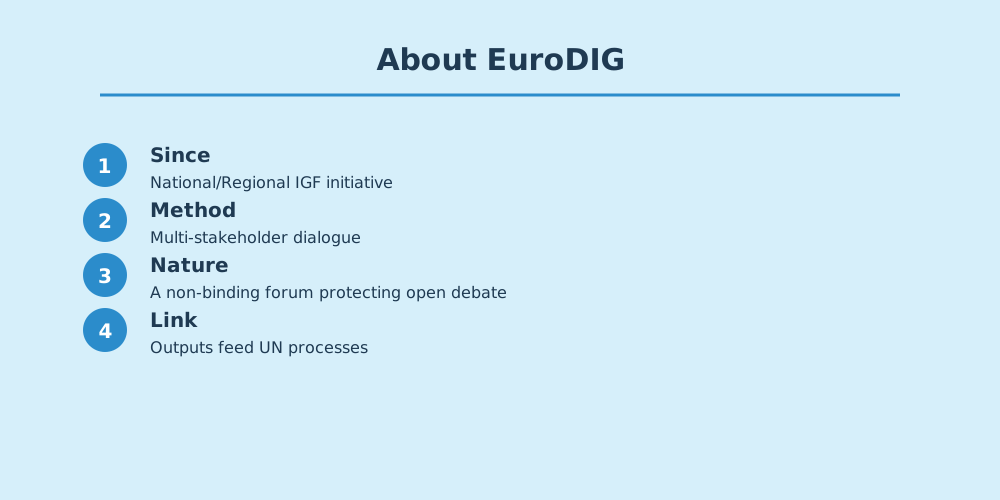
EuroDIG is a National or Regional IGF Initiative (NRI), aligning local internet governance discussion with global IGF principles.
Why It Matters to You
What was discussed here becomes the baseline for national digital policy, platform rules and AI regulation worldwide within a few years. The principles confirmed at the 2024 meeting are the foundation of the "next rules" for the phones, social platforms and AI services you use every day.
Sources & References
- Messages from Vilnius — eurodig.org (accessed 2026-07-10)
- EuroDIG 2024(公式ページ・登録統計) — eurodig.org (accessed 2026-07-10)
- EuroDIG 2024 — eurodigwiki.org (accessed 2026-07-10)
- EuroDIG 2024 — DiploFoundation (accessed 2026-07-10)
- Opening of the EuroDIG2024 and Baltic Domain Days(開会セッション報告) — DiploFoundation (accessed 2026-07-10)
- EuroDIG News 30/2024(メッセージ公表報告) — eurodig.org (accessed 2026-07-10)
Quotes are translated or condensed from the records listed above. Bracketed numbers [n] refer to the source list.
Related links
- IGF official (NRI list): https://www.intgovforum.org/en/content/national-and-regional-igf-initiatives
- Japan IGF: https://japanigf.jp/
- Yuki Nakazawa's blog: https://nkzw.jp/category/igf/
Revision History
Rev. 1 — published 17 June 2024, 15:00 (Article published)
Rev. 2 — updated 10 July 2026, 14:28 (Fully revised into the in-depth edition: added the 3-line summary, minutes digest, short talk, source list and diagrams (all quotes verified against the listed sources))
— 中澤祐樹

