

The 3-Line Summary
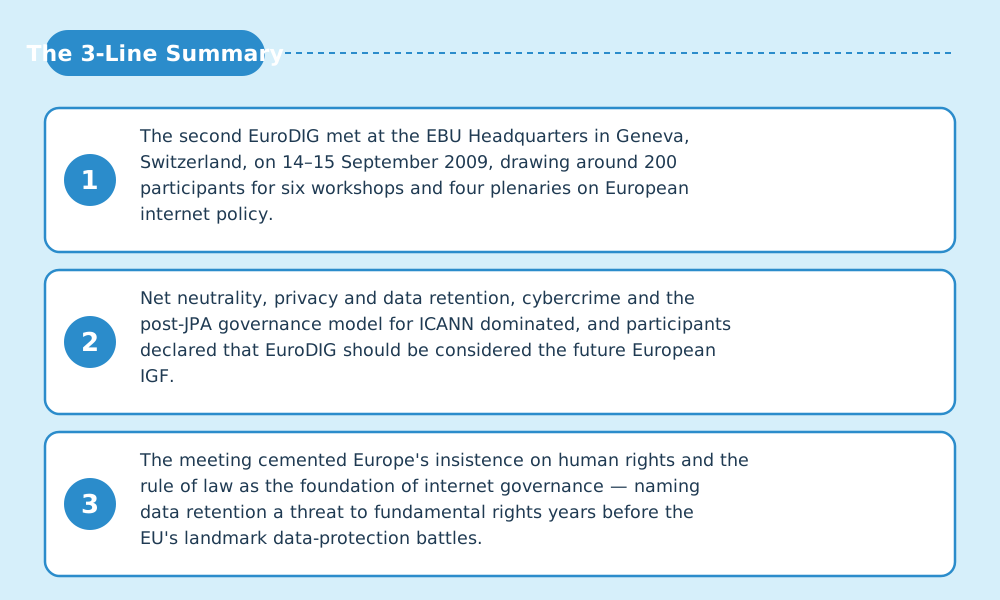
- The second EuroDIG met at the EBU Headquarters in Geneva, Switzerland, on 14–15 September 2009, drawing around 200 participants for six workshops and four plenaries on European internet policy.
- Net neutrality, privacy and data retention, cybercrime and the post-JPA governance model for ICANN dominated, and participants declared that EuroDIG should be considered the future European IGF.
- The meeting cemented Europe's insistence on human rights and the rule of law as the foundation of internet governance — naming data retention a threat to fundamental rights years before the EU's landmark data-protection battles.
Welcome — this is the Japan IGF Support Organization. This in-depth report on EuroDIG 2009 in Geneva draws on official outputs, session records and on-site reporting. In a hurry? The three lines above and the diagrams carry the gist.
Conference at a Glance (from official records)
| Item | Detail |
|---|---|
| Edition | 2nd EuroDIG |
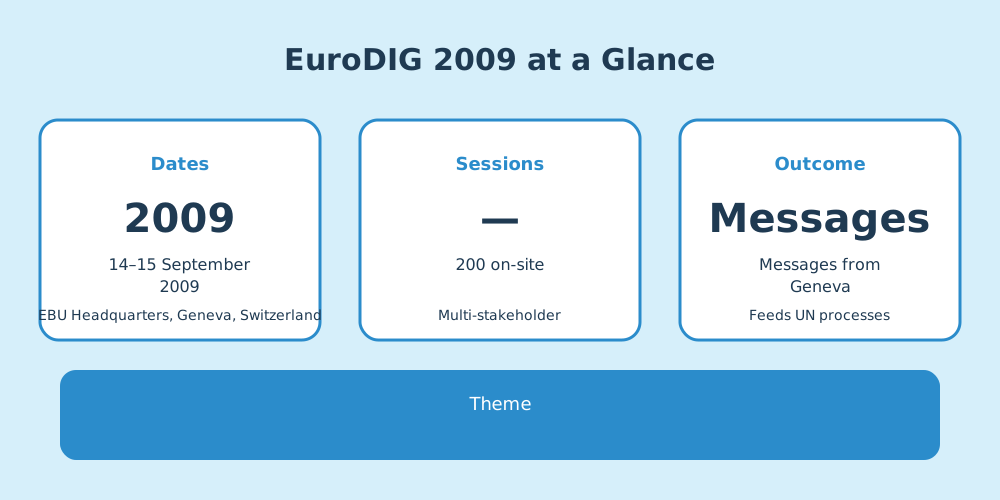
| Dates | 14–15 September 2009 |
| Venue | EBU Headquarters, Geneva, Switzerland |
| Theme | Regional governance themes |
| Participants | 200 (Around 200 participants from all stakeholder groups and regions in Europe) |
| Sessions | Six workshops and four plenary sessions |
| Host | Co-organised by the Swiss Federal Office of Communications (OFCOM) and the European Broadcasting Union (EBU), supported by the Council of Europe |
| Outcome | Messages from Geneva |
(See the source list at the end of this article.)
Discussion Digest — from the Session Records
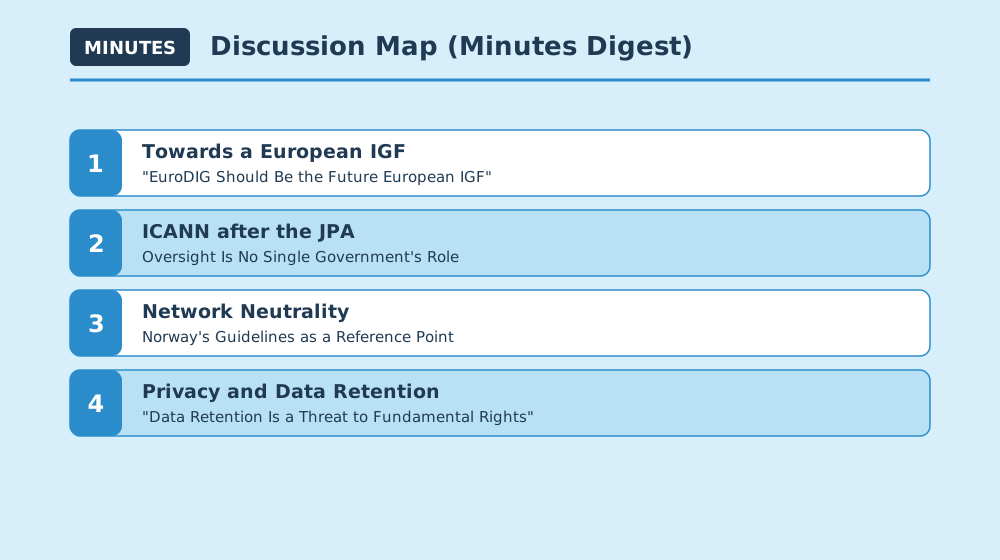
Key exchanges extracted from session records and transcripts.
1. Towards a European IGF — "EuroDIG Should Be the Future European IGF"
Sessions: Plenary 4: "Arrangements for a European IGF and future EuroDIG events" (15 September, 15:00)
- Participants expressed the view that EuroDIG should remain the platform open to all European stakeholders and should be considered the future European IGF [2]
- A parliamentary roundtable with members of the European Parliament, the Parliamentary Assembly of the Council of Europe and national parliaments opened the meeting, deepening political engagement [2]
- A capacity-building programme prioritising Central and Southern Europe (six months of teaching, with top students attending) and remote participation via streaming and social reporting were introduced [2]
2. ICANN after the JPA — Oversight Is No Single Government's Role
Sessions: Plenary 3: "The post-JPA phase: towards a future Internet governance model" (15 September, 13:30)
- Meeting just before the expiry of the Joint Project Agreement between ICANN and the US government, participants agreed any future governance model should build on the existing framework set up in and around ICANN [2][3]
- Transparency and accountability were held fundamental; ICANN was judged at least as transparent as many international organisations, though civil-society participation was deemed insufficient [2][3]
- There was consensus that oversight of ICANN should not fall to a single government or small group of countries, but to an internationally representative structure [2][3]
3. Network Neutrality — Norway's Guidelines as a Reference Point
Sessions: Workshop 1: "End user access to and choice in services" (14 September, 14:15)
- Net neutrality was the central theme, understood as users' access to, use and distribution of legal content, services and applications of their choice without discrimination [2][3]
- Norway's Guidelines for Internet Neutrality were considered a valuable reference; regulation should be introduced with caution, with a preference for multistakeholder guideline-setting [2][3]
- A European Forum on Network Management bringing together ISPs, regulators, users and application providers was proposed [2][3]
4. Privacy and Data Retention — "Data Retention Is a Threat to Fundamental Rights"
Sessions: Workshop 2: "Personal and professional privacy" (14 September, 14:15)
- With users clicking through with no idea where their data goes, consent was called hollow; there was general agreement on a user-centric approach in which users control their privacy [2]
- Data retention was framed as a threat to privacy and to freedoms of expression, press and association, with countries urged to adopt comprehensive data-protection laws based on Convention 108 and Directive 95/46/EC [2]
- Vertical consolidation between search engines and online advertisers was said to create unprecedented control over personal data, demanding attention at the intersection of competition and privacy [2]
Three-Minute Short Talk — Your Questions Answered
Q. What was the headline outcome?
A. Participants declared that EuroDIG should be considered the future European IGF — upgrading a year-old experiment into Europe's standing internet-policy forum.
Q. What was the most contentious topic?
A. Who oversees ICANN. Meeting just as the Joint Project Agreement with the US government expired, Europe's position crystallised: no single-government oversight, but build on the ICANN framework.
Q. Why should I care?
A. The meeting's declarations — data retention as a threat to fundamental rights, user-centric privacy — fed the current that later produced the GDPR, whose influence now reaches privacy law worldwide.
What Is EuroDIG? (for first-time readers)
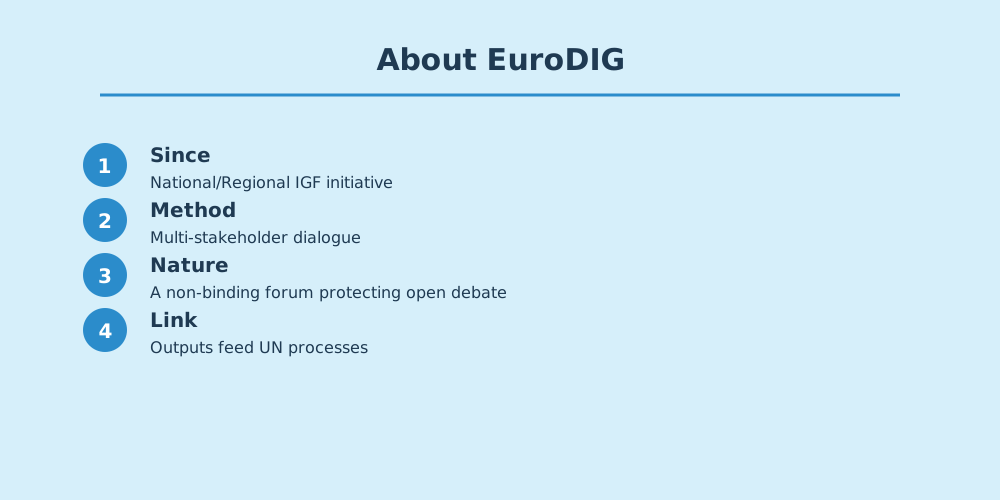
EuroDIG is a National or Regional IGF Initiative (NRI), aligning local internet governance discussion with global IGF principles.
Why It Matters to You
What was discussed here becomes the baseline for national digital policy, platform rules and AI regulation worldwide within a few years. The principles confirmed at the 2009 meeting are the foundation of the "next rules" for the phones, social platforms and AI services you use every day.
Sources & References
- EuroDIG 2009 — eurodigwiki.org (accessed 2026-07-10)
- Messages from Geneva (PDF) — Council of Europe (accessed 2026-07-10)
- Programme overview 2009 — eurodigwiki.org (accessed 2026-07-10)
- European Dialogue on Internet Governance — en (accessed 2026-07-10)
- Hosting EuroDIG(歴代開催地一覧) — eurodig.org (accessed 2026-07-10)
Quotes are translated or condensed from the records listed above. Bracketed numbers [n] refer to the source list.
Related links
- IGF official (NRI list): https://www.intgovforum.org/en/content/national-and-regional-igf-initiatives
- Japan IGF: https://japanigf.jp/
- Yuki Nakazawa's blog: https://nkzw.jp/category/igf/
Revision History
Rev. 1 — published 14 September 2009, 09:00 (Article published)
Rev. 2 — updated 10 July 2026, 23:16 (Fully revised into the in-depth edition: added the 3-line summary, minutes digest, short talk, source list and diagrams (all quotes verified against the listed sources))
— 中澤祐樹