

The 3-Line Summary
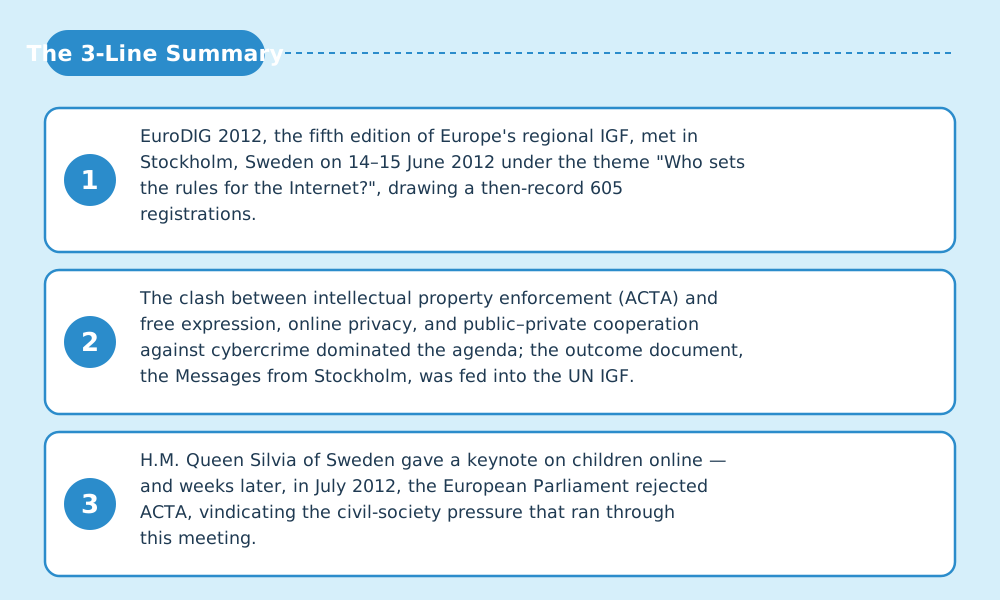
- EuroDIG 2012, the fifth edition of Europe's regional IGF, met in Stockholm, Sweden on 14–15 June 2012 under the theme "Who sets the rules for the Internet?", drawing a then-record 605 registrations.
- The clash between intellectual property enforcement (ACTA) and free expression, online privacy, and public–private cooperation against cybercrime dominated the agenda; the outcome document, the Messages from Stockholm, was fed into the UN IGF.
- H.M. Queen Silvia of Sweden gave a keynote on children online — and weeks later, in July 2012, the European Parliament rejected ACTA, vindicating the civil-society pressure that ran through this meeting.
Welcome — this is the Japan IGF Support Organization. This in-depth report on EuroDIG 2012 in Stockholm draws on official outputs, session records and on-site reporting. In a hurry? The three lines above and the diagrams carry the gist.
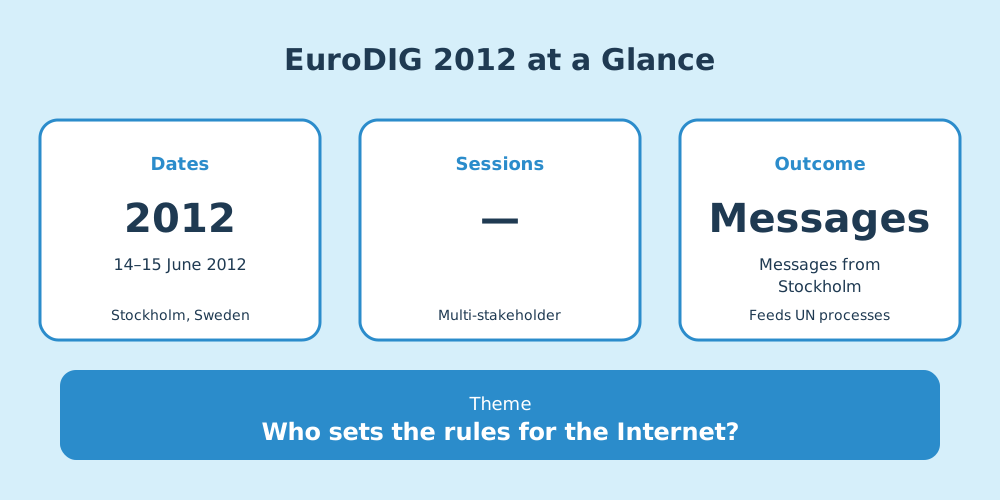
Conference at a Glance (from official records)
| Item | Detail |
|---|---|
| Dates | 14–15 June 2012 |
| Venue | Stockholm, Sweden |
| Theme | Who sets the rules for the Internet? |
| Registrations | 605 (Per EuroDIG's official year-by-year registration statistics published in the Messages from Berlin (2014)) |
| Host | Swedish Post and Telecom Authority (PTS) |
| Outcome | Messages from Stockholm |
(See the source list at the end of this article.)
Discussion Digest — from the Session Records
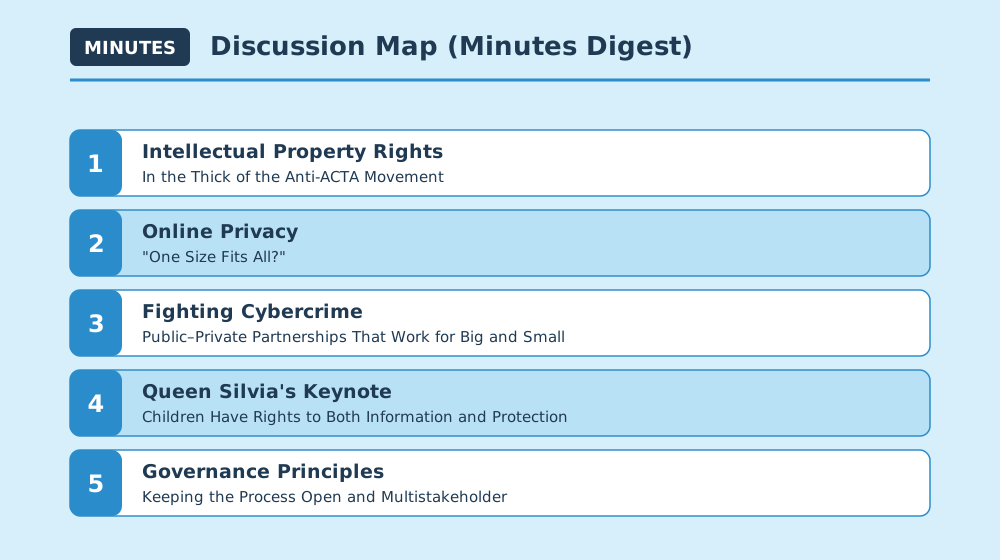
Key exchanges extracted from session records and transcripts.
1. Intellectual Property Rights — In the Thick of the Anti-ACTA Movement
Sessions: Plenary 1 "Intellectual property rights in the digital environment" (14 June, 11:00)
- "Intellectual property rights and the right to freedom of expression and access to information regardless of frontiers in the digital environment cannot be resolved solely by traditional approaches, laws, rules and regulations nor by single stakeholders such as governments" (Messages from Stockholm) [4][2]
- Jérémie Zimmermann of La Quadrature du Net argued for "the law that adapts to society" rather than the reverse, pointing to the campaign then under way to defeat ACTA in the European Parliament [4][2]
- Panellists noted that young people respect individual creators even if copyright complexity escapes them, that territorial restrictions penalise small countries with few legal offerings, and that ISPs should not act as content gatekeepers [4][2]
2. Online Privacy — "One Size Fits All?"
Sessions: Plenary 2 "Online privacy: one size fits all?" (14 June, 15:45) and WS 3 on data retention
- "The basic principles set by the Council of Europe's Convention '108' on data protection have stood the test of time" and remain valid in a globalised world, the Messages concluded [2]
- On data retention, participants called for improvements in the applicability of retention obligations, access to data, reimbursement of operators' costs, and an obligation for authorities to reveal what they do [2]
3. Fighting Cybercrime — Public–Private Partnerships That Work for Big and Small
Sessions: Plenary 5 "Public-private cooperation in the fight against cyber-crime and safeguarding cyber security" (15 June, 14:30)
"The Public Private Partnerships (PPP) model is a good way to enhance cybersecurity"
— Christoffer Karsberg (ENISA, the EU cybersecurity agency) [5][2]
- Successful partnerships require "trust, commitment and patience," the ENISA expert stressed [5][2]
- PPP models should be "feasible for both big and small enterprises," the Messages noted [5][2]
4. Queen Silvia's Keynote — Children Have Rights to Both Information and Protection
Sessions: Keynote on children and the Internet (15 June, 9:00)
- H.M. Queen Silvia of Sweden delivered a keynote, with Foreign Minister Carl Bildt, Commission Vice-President Neelie Kroes and Council of Europe Secretary General Thorbjørn Jagland also in attendance, per ENISA's report [3][2][5]
- "Children have the right to information and the right to protection; however, the means of protecting children changes as the Internet develops" — with education, privacy and ease of use flagged as what matters, the Messages record [3][2][5]
5. Governance Principles — Keeping the Process Open and Multistakeholder
Sessions: Plenary 7 on Internet governance principles (15 June, 16:30)
- "It must remain a priority to ensure that Internet governance remains an open, multi-stakeholder process" (Messages from Stockholm) [2][3]
- The session took stock of the governance-principles work done across institutions in 2011 — addressing the conference theme, "who sets the rules?", head-on [2][3]
Three-Minute Short Talk — Your Questions Answered
Q. What did the conference actually decide?
A. Nothing binding — it's a dialogue. But the conclusions were distilled into the Messages from Stockholm and carried to that year's UN IGF as Europe's voice: Convention 108's data-protection principles still hold, and governance must stay an open, multistakeholder process.
Q. What was the most contentious topic?
A. Copyright — specifically ACTA. Activists and rightsholders clashed head-on, and weeks later, in July 2012, the European Parliament killed the treaty. This meeting captures the moment when street protests and conference rooms were part of one conversation.
Q. Why should I care?
A. ACTA was signed in Tokyo in 2011 and championed by several major economies — Europe's citizen-driven rejection of it remains the defining case study in balancing IP enforcement against free expression online.
What Is EuroDIG? (for first-time readers)
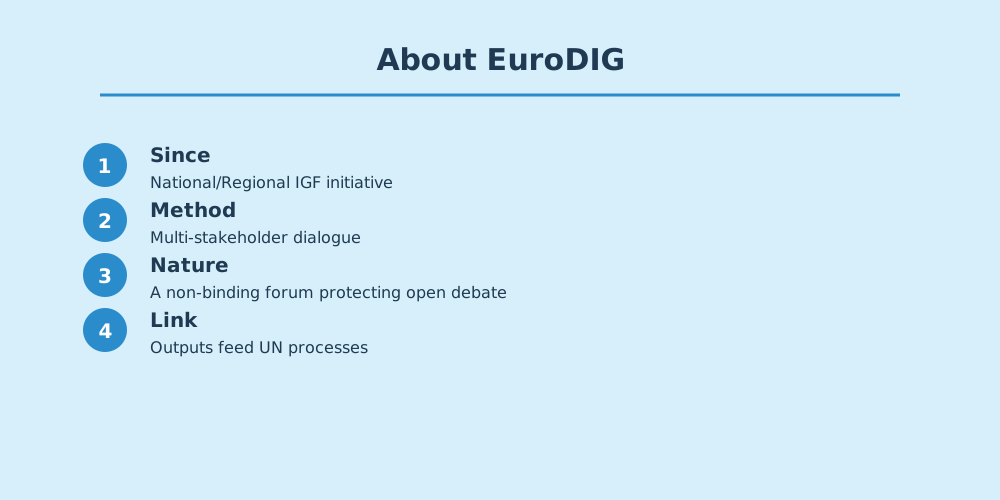
EuroDIG is a National or Regional IGF Initiative (NRI), aligning local internet governance discussion with global IGF principles.
Why It Matters to You
What was discussed here becomes the baseline for national digital policy, platform rules and AI regulation worldwide within a few years. The principles confirmed at the 2012 meeting are the foundation of the "next rules" for the phones, social platforms and AI services you use every day.
Sources & References
- EuroDIG 2012 — eurodigwiki.org (accessed 2026-07-10)
- Messages from Stockholm – 2012 — eurodigwiki.org (accessed 2026-07-10)
- Programme overview 2012 — eurodigwiki.org (accessed 2026-07-10)
- Intellectual property rights in the digital environment – PL 01 2012(セッション記録) — eurodigwiki.org (accessed 2026-07-10)
- ENISA at EuroDIG 2012 – Stockholm — ENISA(欧州ネットワーク情報セキュリティ庁) (accessed 2026-07-10)
- Messages from Berlin(2014年版・年次登録者統計を収録) — EuroDIG事務局 (accessed 2026-07-10)
Quotes are translated or condensed from the records listed above. Bracketed numbers [n] refer to the source list.
Related links
- IGF official (NRI list): https://www.intgovforum.org/en/content/national-and-regional-igf-initiatives
- Japan IGF: https://japanigf.jp/
- Yuki Nakazawa's blog: https://nkzw.jp/category/igf/
Revision History
Rev. 1 — published 14 June 2012, 09:00 (Article published)
Rev. 2 — updated 10 July 2026, 23:16 (Fully revised into the in-depth edition: added the 3-line summary, minutes digest, short talk, source list and diagrams (all quotes verified against the listed sources))
— 中澤祐樹