

The 3-Line Summary
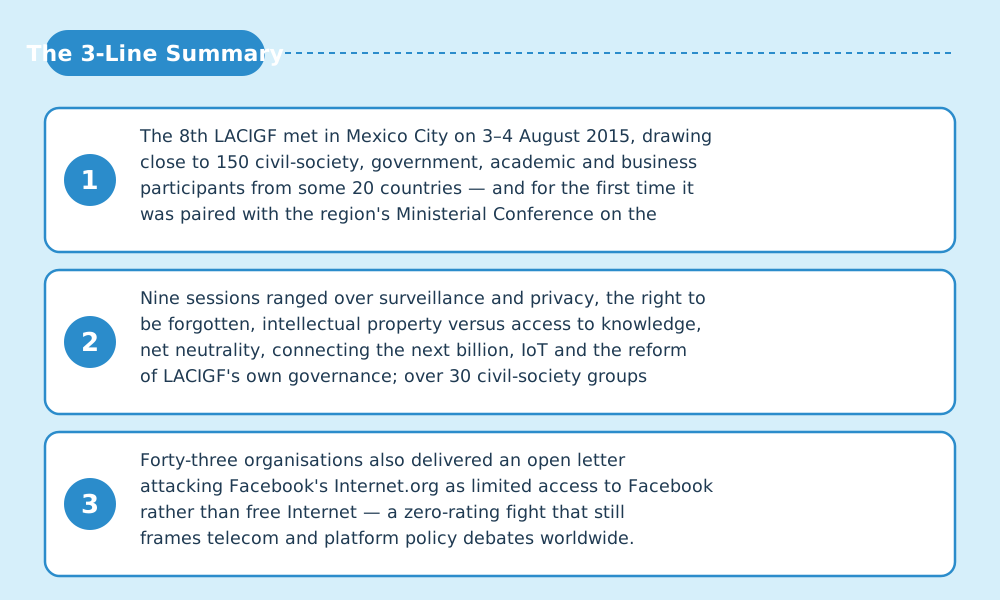
- The 8th LACIGF met in Mexico City on 3–4 August 2015, drawing close to 150 civil-society, government, academic and business participants from some 20 countries — and for the first time it was paired with the region's Ministerial Conference on the Information Society (eLAC2015, 5–7 August).
- Nine sessions ranged over surveillance and privacy, the right to be forgotten, intellectual property versus access to knowledge, net neutrality, connecting the next billion, IoT and the reform of LACIGF's own governance; over 30 civil-society groups launched the joint declaration 'Internet es nuestra' ('The Internet Is Ours').
- Forty-three organisations also delivered an open letter attacking Facebook's Internet.org as limited access to Facebook rather than free Internet — a zero-rating fight that still frames telecom and platform policy debates worldwide.
Welcome — this is the Japan IGF Support Organization. This in-depth report on LACIGF 2015 in Mexico City draws on official outputs, session records and on-site reporting. In a hurry? The three lines above and the diagrams carry the gist.
📍 The official list confirms the 8th LACIGF met in Mexico City on 3–4 August 2015, matching the catalogue; the one-year offset found for 2023–2025 does not affect this edition. The Fifth Ministerial Conference on the Information Society (eLAC2015) followed at the same location on 5–7 August, making it a de-facto co-located event.
Conference at a Glance (from official records)
| Item | Detail |
|---|---|
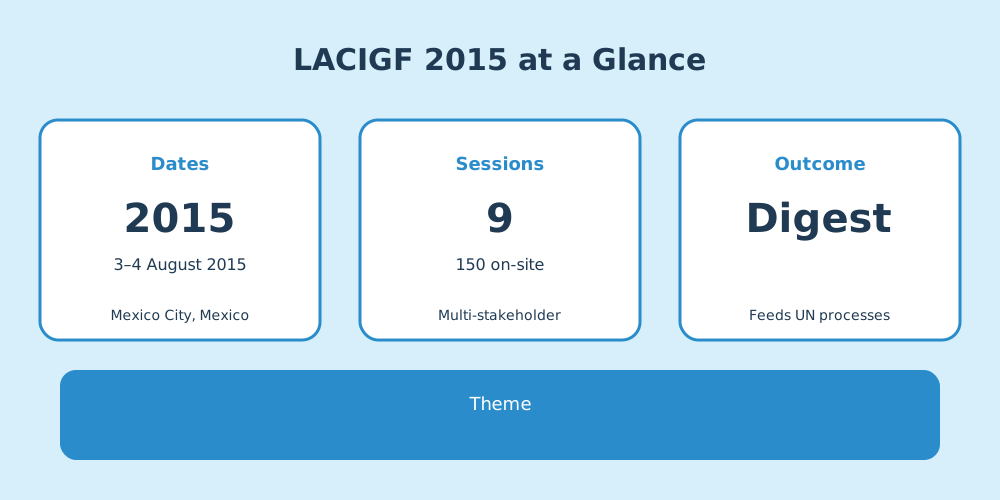
| Edition | 8th edition (LACIGF 8) |
| Dates | 3–4 August 2015 |
| Venue | Mexico City, Mexico |
| Theme | Regional governance themes |
| Participants | 150 (Close to 150 civil-society, government, academia and business representatives from approximately 20 countries (LACNIC annual report)) |
| Sessions | 9 (Nine thematic sessions per the official archived programme) |
| Award | During the forum, Ida Holz presented LACNIC's 2015 Outstanding Achievement Award to Raúl Echeberría |
| Host | LACNIC served as Technical Secretariat; held jointly with the eLAC2015 Ministerial Conference |
| Milestone | First co-location of the regional IGF with an intergovernmental ministerial conference; 30+ civil-society organisations issued the joint declaration 'Internet es nuestra' |
(See the source list at the end of this article.)
Discussion Digest — from the Session Records
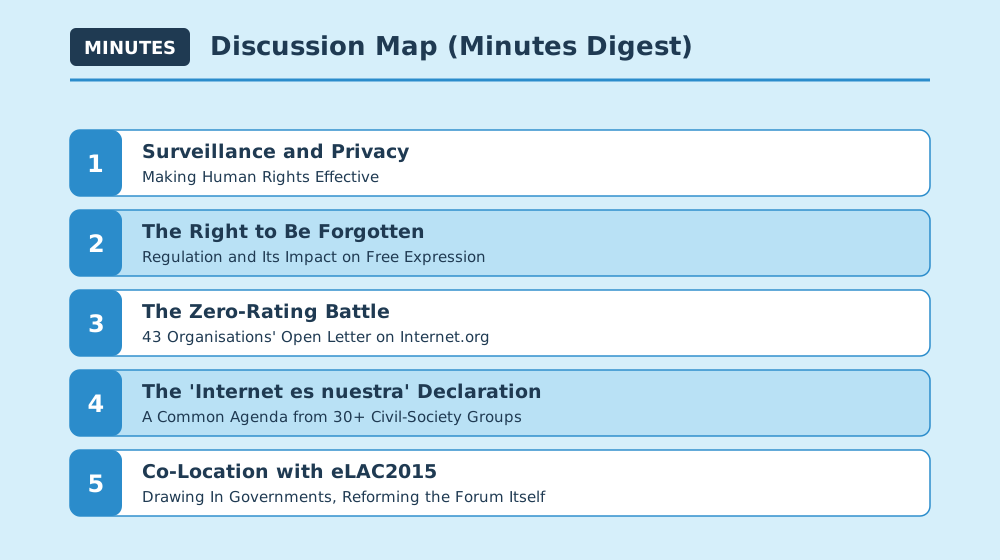
Key exchanges extracted from session records and transcripts.
1. Surveillance and Privacy — Making Human Rights Effective
Sessions: Session 'Guaranteeing and promoting human rights: surveillance and privacy in Latin America and the Caribbean' (3 August)
- State surveillance and privacy protection led the nine-session programme, putting the effectiveness of human-rights guarantees in the region squarely on the table [1][5]
- Eight thematic reports and nine session videos were published on the official site, keeping the debate transparent [1][5]
2. The Right to Be Forgotten — Regulation and Its Impact on Free Expression
Sessions: Session 'The right to be forgotten: regulation and its impact on the region and on freedom of expression' (3 August)
- With right-to-be-forgotten proposals spreading through the region after the EU Court of Justice's Google Spain ruling the year before, the session weighed the impact of such regulation on free expression and access to information [1][5]
- Parallel sessions on intellectual property versus access to knowledge and on the role of intermediaries made clashes between competing rights the through-line of the year [1][5]
3. The Zero-Rating Battle — 43 Organisations' Open Letter on Internet.org
Sessions: The net neutrality session and an open letter delivered during the forum
- Forty-three NGOs from the region signed an open letter opposing Facebook's Internet.org, arguing it 'does not provide free internet access; rather, it offers limited access to Facebook and a few other services' [3][1]
- The letter charged that the initiative violated net neutrality and excluded civil society from decision-making, echoing the forum's dedicated session on an open, interoperable Internet ecosystem [3][1]
4. The 'Internet es nuestra' Declaration — A Common Agenda from 30+ Civil-Society Groups
Sessions: Launch of the joint civil-society declaration during the forum
- More than 30 organisations — including Derechos Digitales, Fundación Karisma, Access, APC and R3D — jointly launched 'Internet es nuestra' ('The Internet Is Ours') [3]
- The declaration demanded broader access and diversity, protection of privacy and free expression, access to culture and knowledge, firm net neutrality, human-rights-respecting cybersecurity and participatory governance [3]
- The agenda was framed as an input for the global IGF meeting in João Pessoa, Brazil, that November [3]
5. Co-Location with eLAC2015 — Drawing In Governments, Reforming the Forum Itself
Sessions: The meeting overall and the session on 'a new governance structure for LACIGF' (4 August)
- Secretariat LACNIC concluded that co-location with the eLAC2015 Ministerial expanded government participation and raised both the quality of panels and the forum's relevance [2][1]
- Alongside sessions on connecting the next billion, the Internet as an economic opportunity and IoT in the region, a dedicated session began defining a new governance structure for LACIGF itself — debates that eventually led to the 2021 bylaws and the later change of secretariat [2][1]
- During the forum, Internet pioneer Ida Holz presented LACNIC's 2015 Outstanding Achievement Award to former LACNIC CEO Raúl Echeberría [2][1]
Three-Minute Short Talk — Your Questions Answered
Q. What did the forum actually decide?
A. Nothing binding — but the design was the breakthrough: holding the regional IGF back-to-back with the intergovernmental eLAC2015 Ministerial in the same venue, piping multistakeholder debate straight into governmental policy-making.
Q. What was the most contentious topic?
A. Facebook's Internet.org. Marketed as free Internet for the developing world, it drew an open letter from 43 regional organisations calling it limited access to Facebook rather than free Internet — an early salvo in the global zero-rating war.
Q. Why should I care?
A. The right to be forgotten and zero rating both went global after this. The tensions debated in Mexico City — free expression versus erasure, open access versus walled gardens — are the same ones regulators everywhere are still working through.
What Is LACIGF? (for first-time readers)
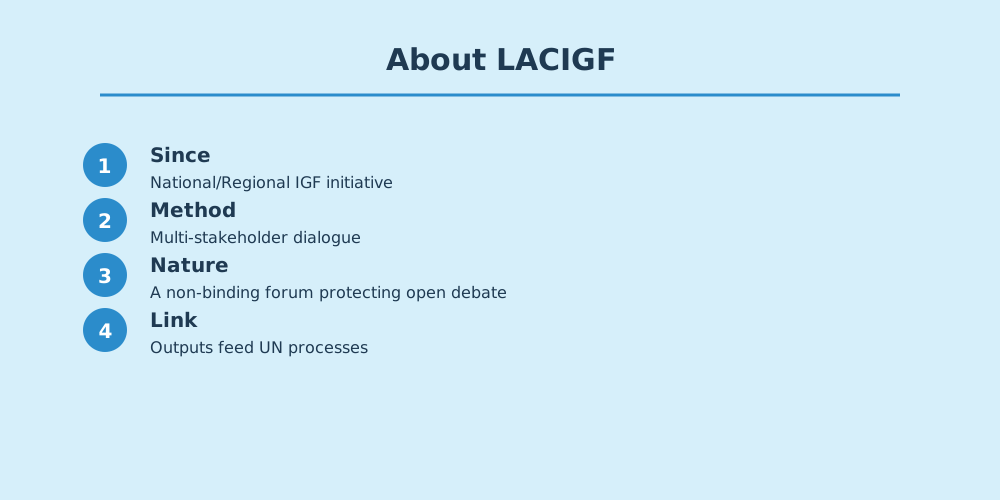
LACIGF is a National or Regional IGF Initiative (NRI), aligning local internet governance discussion with global IGF principles.
Why It Matters to You
What was discussed here becomes the baseline for national digital policy, platform rules and AI regulation worldwide within a few years. The principles confirmed at the 2015 meeting are the foundation of the "next rules" for the phones, social platforms and AI services you use every day.
Sources & References
- lacigf 8 — VIII Reunión Regional Preparatoria para el FGI(公式アーカイブ) — LACIGF(公式アーカイブサイト) (accessed 2026-07-10)
- LACNIC Annual Report 2015 — LACNIC(当時のLACIGFテクニカル事務局) (accessed 2026-07-10)
- 30 Organizaciones de América Latina Defendieron Los Derechos Humanos En Foro de Gobernanza de Internet — EFF (accessed 2026-07-10)
- Foros anteriores(歴代開催一覧) — LACIGF(公式) (accessed 2026-07-10)
- Reunión Regional Preparatoria para el Foro para la Gobernanza de Internet — Wikipedia(スペイン語版) (accessed 2026-07-10)
Quotes are translated or condensed from the records listed above. Bracketed numbers [n] refer to the source list.
Related links
- IGF official (NRI list): https://www.intgovforum.org/en/content/national-and-regional-igf-initiatives
- Japan IGF: https://japanigf.jp/
- Yuki Nakazawa's blog: https://nkzw.jp/category/igf/
Revision History
Rev. 1 — published 10 August 2015, 14:00 (Article published)
Rev. 2 — updated 10 July 2026, 23:16 (Fully revised into the in-depth edition: added the 3-line summary, minutes digest, short talk, source list and diagrams (all quotes verified against the listed sources))
— 中澤祐樹