


The 3-Line Summary
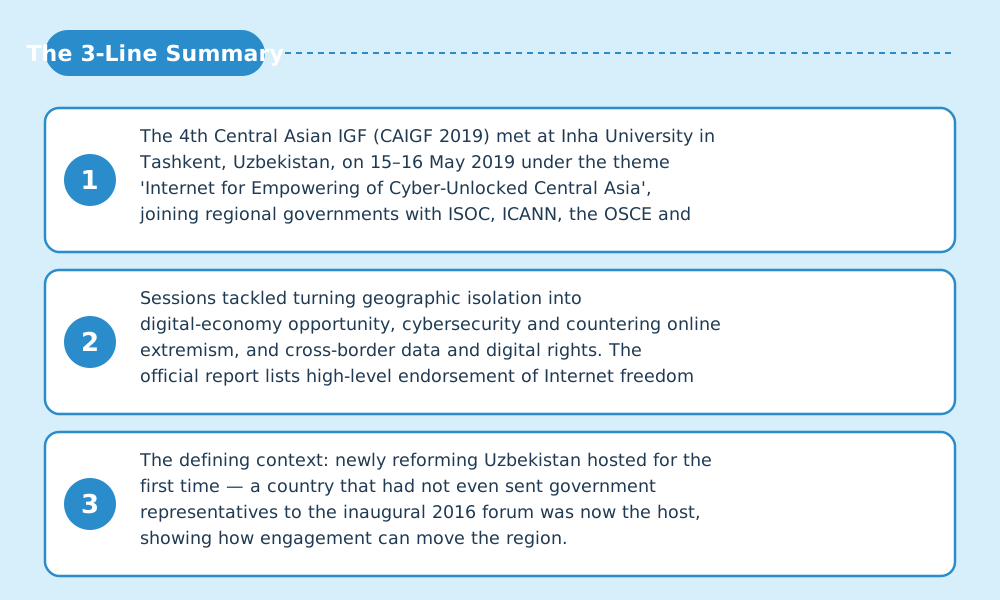
- The 4th Central Asian IGF (CAIGF 2019) met at Inha University in Tashkent, Uzbekistan, on 15–16 May 2019 under the theme 'Internet for Empowering of Cyber-Unlocked Central Asia', joining regional governments with ISOC, ICANN, the OSCE and experts from across the CIS.
- Sessions tackled turning geographic isolation into digital-economy opportunity, cybersecurity and countering online extremism, and cross-border data and digital rights. The official report lists high-level endorsement of Internet freedom principles among the outcomes.
- The defining context: newly reforming Uzbekistan hosted for the first time — a country that had not even sent government representatives to the inaugural 2016 forum was now the host, showing how engagement can move the region.
Welcome — this is the Japan IGF Support Organization. This in-depth report on CAIGF 2019 in Tashkent draws on official outputs, session records and on-site reporting. In a hurry? The three lines above and the diagrams carry the gist.
📍 Matches the catalogue: held in Tashkent in 2019 (4th edition), at Inha University in Tashkent
Conference at a Glance (from official records)
| Item | Detail |
|---|---|
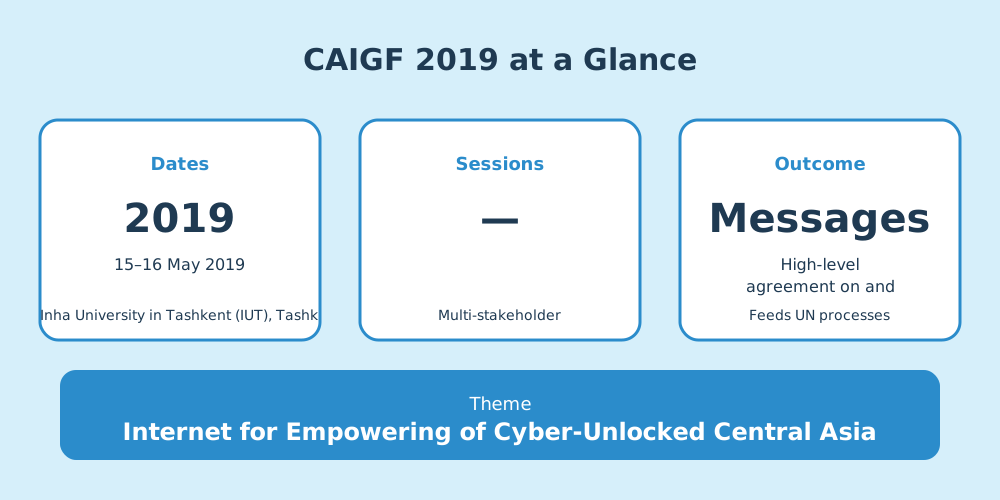
| Edition | 4th Central Asian IGF |
| Dates | 15–16 May 2019 |
| Venue | Inha University in Tashkent (IUT), Tashkent, Uzbekistan |
| Theme | Internet for Empowering of Cyber-Unlocked Central Asia |
| Host | Co-organised by Uzbekistan's Ministry for the Development of Information Technologies and Communications (MITC) and the Civil Initiative on Internet Policy (CIIP), with support from the OSCE, the SecDev Foundation (Canada), Facebook, Kaspersky, RIPE NCC, ICANN, the Internet Society, the IGF Support Association and UZTELECOM |
| Outcome | High-level agreement on and endorsement of Internet freedom principles, balancing cybersecurity with network openness and trust (per the official report) |
(See the source list at the end of this article.)
Discussion Digest — from the Session Records
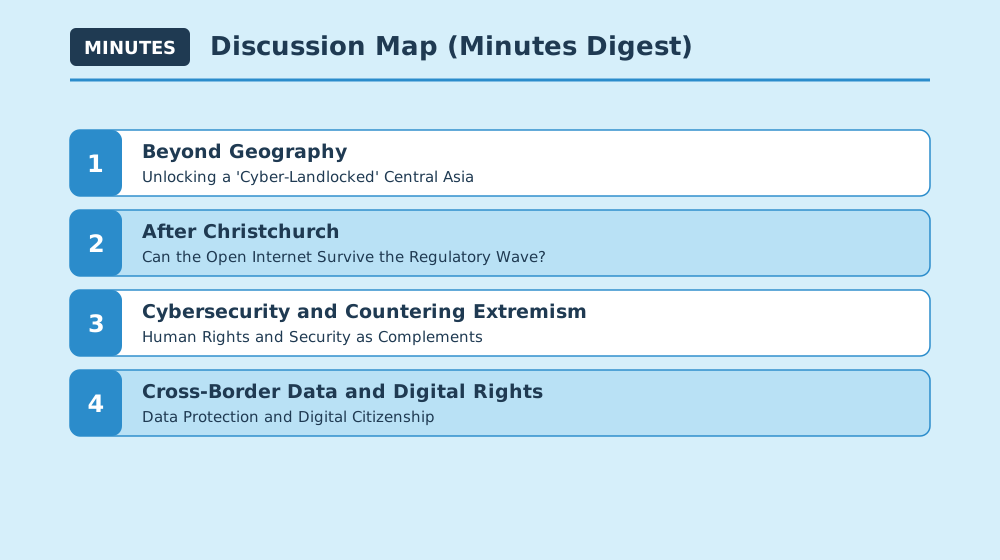
Key exchanges extracted from session records and transcripts.
1. Beyond Geography — Unlocking a 'Cyber-Landlocked' Central Asia
Sessions: Day 1 plenary 'Internet governance to address the geographical limitations of Central Asia in the digital era' (15 May, 10:00–12:00)
- Discussed multilateral regulatory cooperation to lower the time-and-space barriers of a landlocked region, and building data-oriented industries (innovative agriculture, the distance economy, e-commerce, blockchain, digital healthcare and education) into regional competitive advantages [1]
- Speakers included Ceren Unal, Regional Policy Manager for Europe at the Internet Society, Natalia Mochu of ICANN, the OSCE, and Kazakhstan's state ICT holding ZERDE [1]
2. After Christchurch — Can the Open Internet Survive the Regulatory Wave?
Sessions: Framing of the whole forum (introduction of the official report)
- The official report squarely raised the post-Christchurch surge in calls to regulate the Internet, digital borders and data sovereignty, framing the forum around one question: can an Internet whose openness drove its success adapt and survive the new age of government regulation? [1]
- It set out the policy challenge for Central Asian states: benefiting from the global digital economy through policies that balance regulation with a commitment to openness, interoperability and open standards [1]
3. Cybersecurity and Countering Extremism — Human Rights and Security as Complements
Sessions: Day 2 plenary 'Using the Internet to strengthen the resilience of the region' (16 May, 10:00–12:00) and breakout sessions
- Sessions covered international cybersecurity norms and confidence-building measures, critical infrastructure protection and preventing online radicalisation, positioning human rights and security as complementary components of cybersecurity [1]
- Speakers included Kavitha Kunhi Kannan of Facebook, Eneken Tikk and Nicolas Ott of the OSCE, Valeriy Zubanov, commercial director of Kaspersky Lab for Central Asia and Mongolia, and representatives of Uzbekistan's General Prosecutor's Office; international frameworks such as GIFCT and Tech Against Terrorism were also discussed [1]
4. Cross-Border Data and Digital Rights — Data Protection and Digital Citizenship
Sessions: Day 1 breakout 'Digital rights in a transnational context' (15 May, 13:30–15:30)
- The breakout examined cross-border data exchange under diverging national rules, personal data protection amid digital transformation, and questions of digital citizenship [1]
- A distinctive feature was the cross-border participation of Russophone legal and digital-rights communities, including Moscow State University's legal informatics laboratory, Belarus's Human Constanta and Russia's Center for Digital Rights [1]
Three-Minute Short Talk — Your Questions Answered
Q. Did the meeting actually decide anything?
A. It is a dialogue forum, not a decision-making body. Still, the official report cites high-level agreement on Internet freedom principles — balancing cybersecurity with openness and trust — and the very continuity of this multistakeholder dialogue into a fourth year was itself an outcome.
Q. What was the most contentious topic?
A. The post-Christchurch dilemma: regulate harder, or keep the Internet open? How to fight terrorism and extremism online without destroying the openness that made the Internet succeed ran through the whole two days.
Q. Why should I care?
A. The question of how far governments may regulate the Internet in the name of counter-terrorism is universal, and newly reforming Uzbekistan hosting the forum signalled Central Asia's emergence as a new digital frontier.
What Is CAIGF? (for first-time readers)
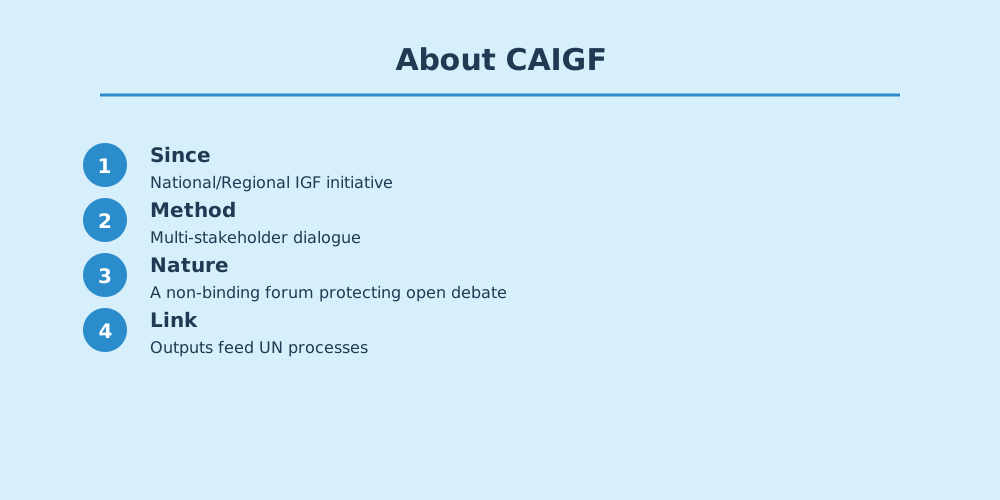
CAIGF is a National or Regional IGF Initiative (NRI), aligning local internet governance discussion with global IGF principles.
Why It Matters to You
What was discussed here becomes the baseline for national digital policy, platform rules and AI regulation worldwide within a few years. The principles confirmed at the 2019 meeting are the foundation of the "next rules" for the phones, social platforms and AI services you use every day.
Sources & References
- 4th Central Asian Internet Governance Forum: Internet for Empowering of Cyber-Unlocked Central Asia — Report (PDF) — caigf.org (accessed 2026-07-11)
- About CAIGF — CAIGF 2019 — CAIGF公式サイト(2019年アーカイブ) (accessed 2026-07-11)
- The 4th Central Asian Internet Governance Forum (CAIGF) will be held at IUT — Inha University in Tashkent (accessed 2026-07-11)
- Tashkent to host Central Asian Internet Governance Forum on May 15-16 — Kun.uz(ウズベキスタン) (accessed 2026-07-11)
- Central Asia Internet Governance Forum (CAIGF) — APC (accessed 2026-07-11)
Quotes are translated or condensed from the records listed above. Bracketed numbers [n] refer to the source list.
Related links
- IGF official (NRI list): https://www.intgovforum.org/en/content/national-and-regional-igf-initiatives
- Japan IGF: https://japanigf.jp/
- Yuki Nakazawa's blog: https://nkzw.jp/category/igf/
Revision History
Rev. 1 — published 10 September 2019, 13:00 (Article published)
Rev. 2 — updated 11 July 2026, 02:14 (Fully revised into the in-depth edition: added the 3-line summary, minutes digest, short talk, source list and diagrams (all quotes verified against the listed sources))
— 中澤祐樹

