

The 3-Line Summary
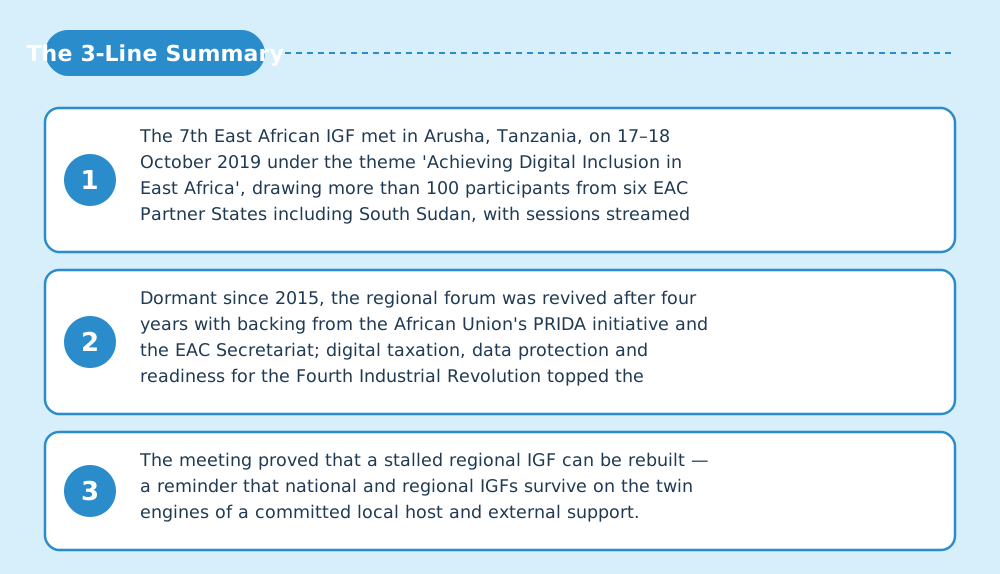
- The 7th East African IGF met in Arusha, Tanzania, on 17–18 October 2019 under the theme 'Achieving Digital Inclusion in East Africa', drawing more than 100 participants from six EAC Partner States including South Sudan, with sessions streamed online.
- Dormant since 2015, the regional forum was revived after four years with backing from the African Union's PRIDA initiative and the EAC Secretariat; digital taxation, data protection and readiness for the Fourth Industrial Revolution topped the agenda, and 20 deaf and blind participants joined for the first time.
- The meeting proved that a stalled regional IGF can be rebuilt — a reminder that national and regional IGFs survive on the twin engines of a committed local host and external support.
Welcome — this is the Japan IGF Support Organization. This in-depth report on East African IGF 2019 in Arusha draws on official outputs, session records and on-site reporting. In a hurry? The three lines above and the diagrams carry the gist.
📍 The catalogue lists both Dar es Salaam and Kampala; the meeting actually took place in Arusha, Tanzania. The official outcome report states it was the first time Tanzania hosted the forum since its 2008 inception, and dig.watch and ISOC webcast records also place it in Arusha
Conference at a Glance (from official records)
| Item | Detail |
|---|---|
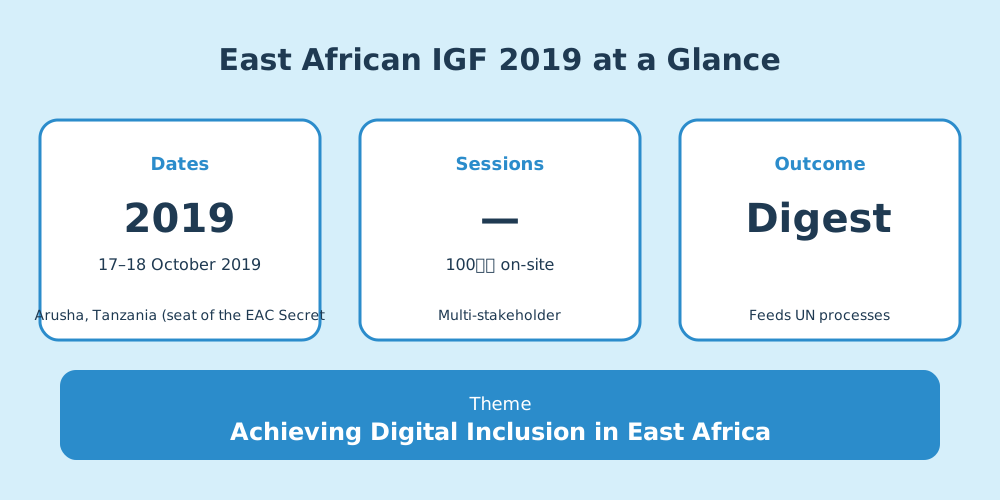
| Edition | 7th edition per the official outcome report (edition numbering varies across sources) |
| Dates | 17–18 October 2019 |
| Venue | Arusha, Tanzania (seat of the EAC Secretariat) |
| Theme | Achieving Digital Inclusion in East Africa |
| Participants | More than 100 participants from six EAC Partner States (Burundi, Kenya, Rwanda, Tanzania, Uganda and South Sudan) |
| Host | Hosted by the EAC Secretariat's Directorate of ICT under the auspices of the Internet Society Tanzania Chapter; streamed online courtesy of the Internet Society |
(See the source list at the end of this article.)
Discussion Digest — from the Session Records
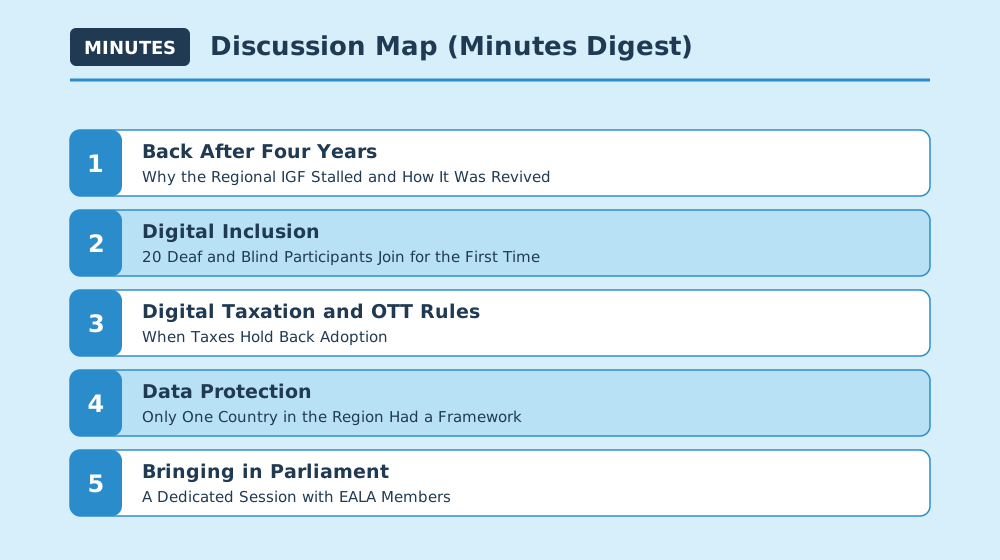
Key exchanges extracted from session records and transcripts.
1. Back After Four Years — Why the Regional IGF Stalled and How It Was Revived
Sessions: Introductory session (facilitated by EAIGF coordinator Lillian Nalwoga, PRIDA senior expert Dr. Margaret Nyambura and PRIDA regional focal point Eng. Daniel Murenzi)
- Panellists candidly acknowledged that the EAIGF 'had not been held since 2015 due to a myriad of challenges ranging from lack of local hosts to legitimacy issues' [1][2]
- The African Union Commission's PRIDA framework, which seeks to strengthen national and regional fora, made the revival possible, with the EAC Secretariat's ICT Directorate stepping in as host [1][2]
- The theme and discussion topics were crowdsourced from the six Partner States through national focal points and social media to ensure inclusivity [1][2]
2. Digital Inclusion — 20 Deaf and Blind Participants Join for the First Time
Sessions: Sessions on accessibility and 'access beyond connectivity'
- For the first time, 20 deaf and blind participants joined the forum, urging that internet governance deliberations consider stakeholders with disabilities and that organisers be 'deliberate and intentional' about their inclusion in policy conversations [1]
- Two infrastructure providers, Facebook and Basic Internet, showcased pilots for meaningful internet use in East Africa and the policy and digital-literacy challenges they faced [1]
- A well-attended youth session created a communication platform for sharing capacity-building and mentorship opportunities across the region [1]
3. Digital Taxation and OTT Rules — When Taxes Hold Back Adoption
Sessions: Session on digital taxation in East Africa
- Panellists reviewed the state of play and concluded that the approach used to implement digital taxation had negatively affected internet uptake and e-commerce in the region [1]
- Panellists and participants agreed on the need for engagement and capacity building so that policymakers understand how emerging technologies such as over-the-top (OTT) services operate [1]
4. Data Protection — Only One Country in the Region Had a Framework
Sessions: Session on data protection and privacy in the East African region
- It was observed that only one country in the region had legal and legislative data-protection frameworks in place, with the rest still developing theirs [1]
- Panellists argued that data protection and privacy frameworks were needed to protect the region's nascent e-commerce industry [1]
5. Bringing in Parliament — A Dedicated Session with EALA Members
Sessions: Special session with members of the East African Legislative Assembly (EALA)
- The session briefed EALA members on key regional internet-governance issues and urged them to take up their role as internet-governance champions (two members were able to attend) [1]
- A parallel session discussed multistakeholderism in East African internet governance, alongside sessions on smart ICT regulatory frameworks and the region's readiness for the Fourth Industrial Revolution [1]
Three-Minute Short Talk — Your Questions Answered
Q. What is this meeting, exactly?
A. The world's first regional IGF, bringing together governments, business and civil society from Kenya, Uganda, Tanzania, Rwanda and Burundi (later joined by South Sudan and others) once a year. In 2019 it met in Arusha, Tanzania, home of the EAC headquarters.
Q. What made 2019 special?
A. It was a revival: the forum had not met since 2015, stalled by the lack of local hosts among other problems. The African Union's PRIDA programme and the EAC Secretariat brought it back — and 20 deaf and blind participants joined for the first time.
Q. What was the substantive headline?
A. Digital taxation. Participants concluded that badly designed taxes had demonstrably hurt internet uptake and e-commerce in the region — and noted that only one country in the region had a data-protection law.
What Is East African IGF? (for first-time readers)
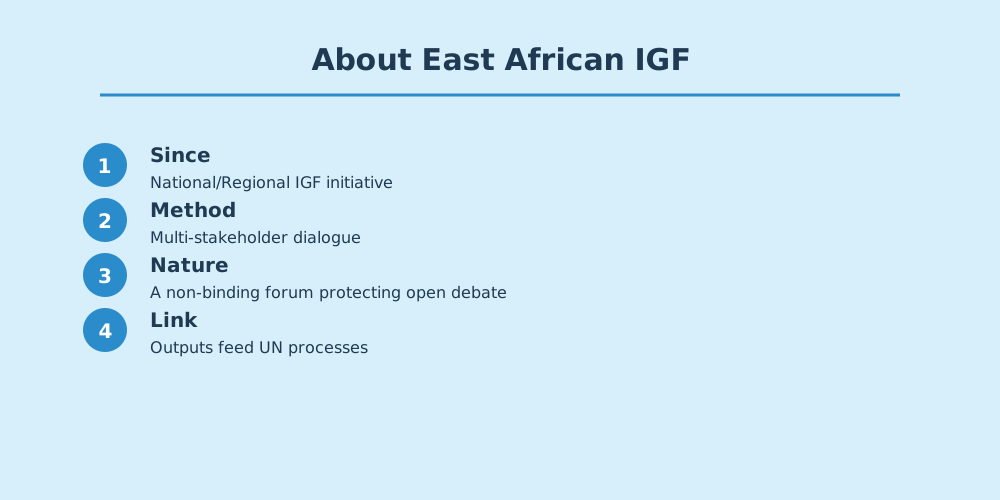
East African IGF is a National or Regional IGF Initiative (NRI), aligning local internet governance discussion with global IGF principles.
Why It Matters to You
What was discussed here becomes the baseline for national digital policy, platform rules and AI regulation worldwide within a few years. The principles confirmed at the 2019 meeting are the foundation of the "next rules" for the phones, social platforms and AI services you use every day.
Sources & References
- East African Internet Governance Forum 2019 Outcome Report (PDF) — 東アフリカ共同体(EAC)/EAIGF事務局 (accessed 2026-07-11)
- East African Internet Governance Forum (17–18 October 2019, Arusha) — DiploFoundation (accessed 2026-07-11)
- WEBCAST THU/FRI: East Africa Internet Governance Forum 2019 #eaigf19 — ISOC LIVE(Internet Society) (accessed 2026-07-11)
- East Africa Internet Governance Forum 2019 (EAIGF) — livestream archive — Internet Society(Livestream) (accessed 2026-07-11)
- Publications — East Africa Internet Governance Forum — EAIGF(公式サイト) (accessed 2026-07-11)
Quotes are translated or condensed from the records listed above. Bracketed numbers [n] refer to the source list.
Related links
- IGF official (NRI list): https://www.intgovforum.org/en/content/national-and-regional-igf-initiatives
- Japan IGF: https://japanigf.jp/
- Yuki Nakazawa's blog: https://nkzw.jp/category/igf/
Revision History
Rev. 1 — published 16 September 2019, 09:00 (Article published)
Rev. 2 — updated 11 July 2026, 02:14 (Fully revised into the in-depth edition: added the 3-line summary, minutes digest, short talk, source list and diagrams (all quotes verified against the listed sources))
— 中澤祐樹