

The 3-Line Summary
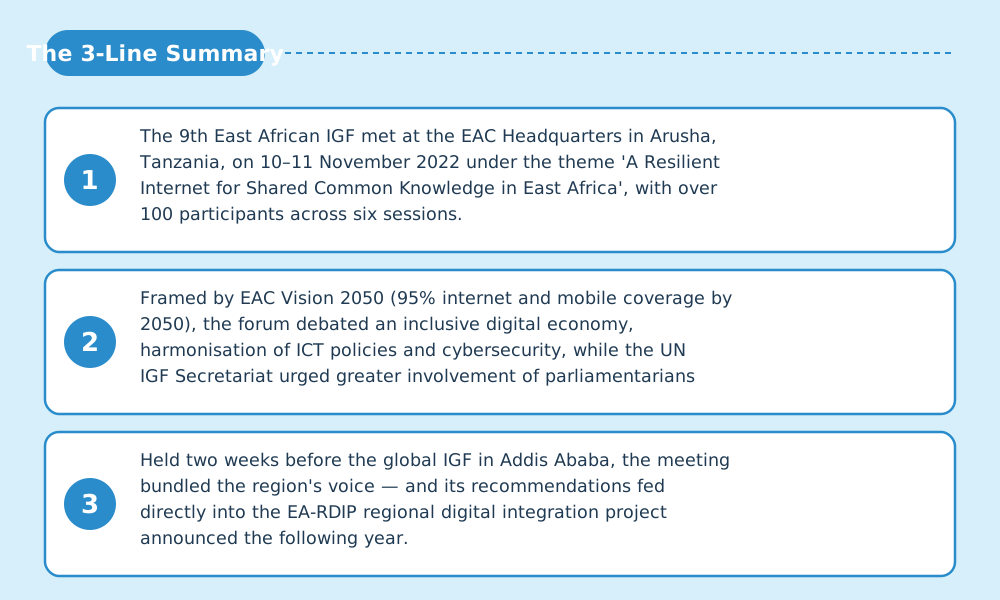
- The 9th East African IGF met at the EAC Headquarters in Arusha, Tanzania, on 10–11 November 2022 under the theme 'A Resilient Internet for Shared Common Knowledge in East Africa', with over 100 participants across six sessions.
- Framed by EAC Vision 2050 (95% internet and mobile coverage by 2050), the forum debated an inclusive digital economy, harmonisation of ICT policies and cybersecurity, while the UN IGF Secretariat urged greater involvement of parliamentarians and youth.
- Held two weeks before the global IGF in Addis Ababa, the meeting bundled the region's voice — and its recommendations fed directly into the EA-RDIP regional digital integration project announced the following year.
Welcome — this is the Japan IGF Support Organization. This in-depth report on East African IGF 2022 in Arusha draws on official outputs, session records and on-site reporting. In a hurry? The three lines above and the diagrams carry the gist.
📍 The catalogue lists Kigali, but the 2022 meeting was actually held at the EAC Headquarters in Arusha, Tanzania (confirmed by both the official report and the EAC events calendar). Kigali hosted the following year's 10th edition
Conference at a Glance (from official records)
| Item | Detail |
|---|---|
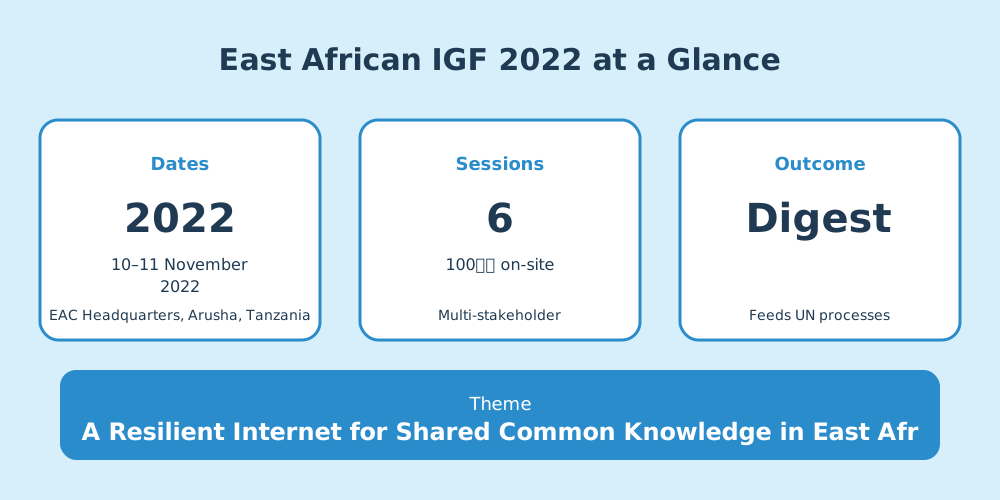
| Edition | 9th edition (the official 2023 report refers to the 2022 meeting as the 9th EAIGF) |
| Dates | 10–11 November 2022 |
| Venue | EAC Headquarters, Arusha, Tanzania |
| Theme | A Resilient Internet for Shared Common Knowledge in East Africa |
| Participants | Over 100 participants representing all stakeholder groups |
| Sessions | 6 |
| Host | Hosted by the EAC in partnership with the Internet Society Tanzania Chapter, with support from the Internet Society Foundation, AFRINIC, APC, ICANN and the African Union |
(See the source list at the end of this article.)
Discussion Digest — from the Session Records
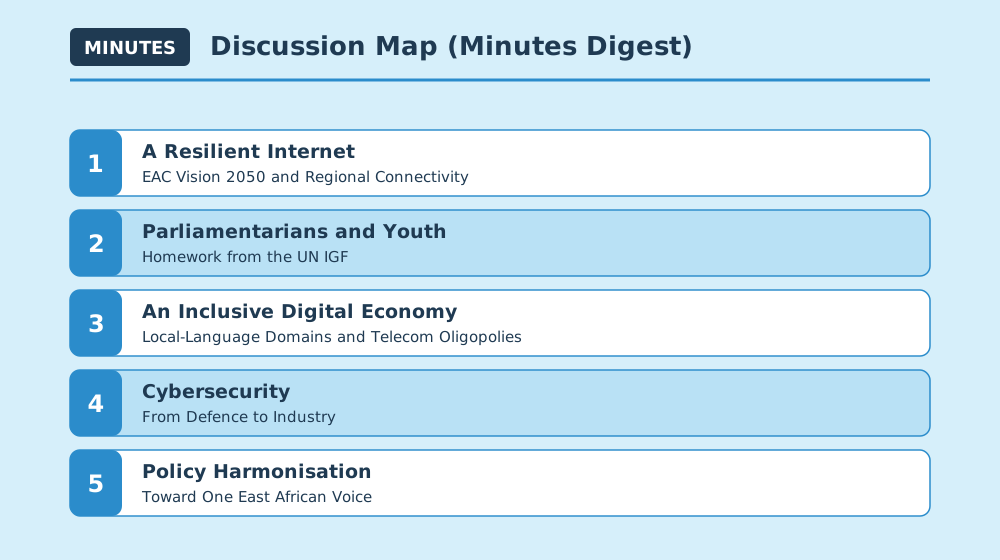
Key exchanges extracted from session records and transcripts.
1. A Resilient Internet — EAC Vision 2050 and Regional Connectivity
Sessions: Opening ceremony (10 November)
"We should therefore critically look into the internet governance issues relevant to our region and put in place a coordinated process to address issues concerning the Information Society and Knowledge Management in our region"
— Eng. Steven D. M. Mlote (EAC Deputy Secretary General) [1][2]
- EAC Vision 2050 sets numerical targets — 95% internet and mobile network penetration and 67% of individuals online by 2050 — alongside commitments to cut the cost and increase the robustness of cross-border communications [1][2]
- Tanzania's Regional Commissioner Hon. John V. K. Mongella warned of a widening gender gap in connectivity and women's under-representation in ICT jobs, and called for locally relevant content in local languages [1][2]
2. Parliamentarians and Youth — Homework from the UN IGF
Sessions: Opening ceremony (remarks by the UN IGF Secretariat's NRI coordinator)
"Many members of parliaments joining us from around the world to discuss matters related to safety online, but we must also think about tomorrow for sustainability of our practices — and youth are key as the upcoming generation of experts and leaders"
— Ms. Anja Gengo (NRI Initiative Coordinator, UN IGF Secretariat) [1]
- The multistakeholder approach to organising IGFs was underlined, with broader involvement of parliamentarians and youth framed as a condition for the sustainability of regional IGFs [1]
- Participants were urged to take part in the 17th global IGF in Addis Ababa and the 2022 Global Youth Summit held on 28 November as a pre-event [1]
3. An Inclusive Digital Economy — Local-Language Domains and Telecom Oligopolies
Sessions: Session Two: Building an Inclusive Digital Economy in EA
- With internationalised domain names now available in local languages, panellists flagged the remaining 'universal acceptance' problem — systems that cannot receive email from non-Latin-script domains [1]
- Telecom oligopolies of two or three operators per country were identified as a barrier to inclusion; citing Ethiopia's market opening, panellists urged policymakers to bring in new players with solutions close to people's real needs [1]
- Big operators supporting community networks was framed as a win-win, with Community Network Innovation Hubs seen as key to bridging last-mile access [1]
4. Cybersecurity — From Defence to Industry
Sessions: Session Five: Cyber Security Policy Needs for East Africa
"Most nations in Africa have the first level of security, so when these strategies are created, they should address the issues dealing with providing awareness, skills, and knowledge to its people. One of the fields that requires a lot of experts in Africa is the cybersecurity field, therefore we should start training young minds on how to benefit from the issues brought by cybersecurity"
— Dr. Martin Koyabe (Senior Project Manager, AUC–GFCE) [1]
"When it comes to cyber security issues it is more of a reactive than a proactive issue. Researches show that there has been an increase of 6% in cybercrimes in the world. It's also important that we understand the opportunities that come with this through entrepreneurship or innovations"
— Emmanuel Chagara (CEO, Milima Security) [1]
- Countries were urged to adopt national cybersecurity strategies and CERTs, and the spread of legislation referencing the Malabo Convention was noted [1]
- Panellists reframed cybersecurity as a business and innovation opportunity rather than a burden, calling for capacity building in educational institutions and expertise in cyber diplomacy [1]
5. Policy Harmonisation — Toward One East African Voice
Sessions: Session Three: Role of Policy Makers in Advancing Internet Development in East Africa
"As a region, it is very important that we have a harmonized policy and should ensure that there is inclusion, awareness, and capacity building. We should also think about how we can directly include the less fortunate while making these policies"
— Dr. Margaret Nyambura (Digital Innovations and Policy Specialist) [1]
- Harmonising ICT policies, laws and regulations across the EAC was deemed essential for better connectivity, along with proper implementation and continuous review of existing digital policies [1]
- Creating local alternatives to platforms like WhatsApp and Facebook was discussed as an option that could leverage Africa's large population [1]
Three-Minute Short Talk — Your Questions Answered
Q. So what did the meeting decide?
A. Nothing binding — it's the East African Community's annual multistakeholder forum where governments, business and civil society debate as equals. But its recommendations fed directly into EA-RDIP, the regional broadband integration project announced the following year, as the EAC's own ICT officer later confirmed.
Q. What was the biggest issue?
A. How to connect the unconnected. With most countries served by only two or three telecom operators, and prices and devices out of reach for many, the forum offered two prescriptions: open up the markets, and back community networks.
Q. Why should I care?
A. The 'universal acceptance' problem — email from local-language domains being rejected by legacy systems — affects every non-Latin-script language, and the idea of treating the cybersecurity skills gap as a business opportunity resonates well beyond East Africa.
What Is East African IGF? (for first-time readers)
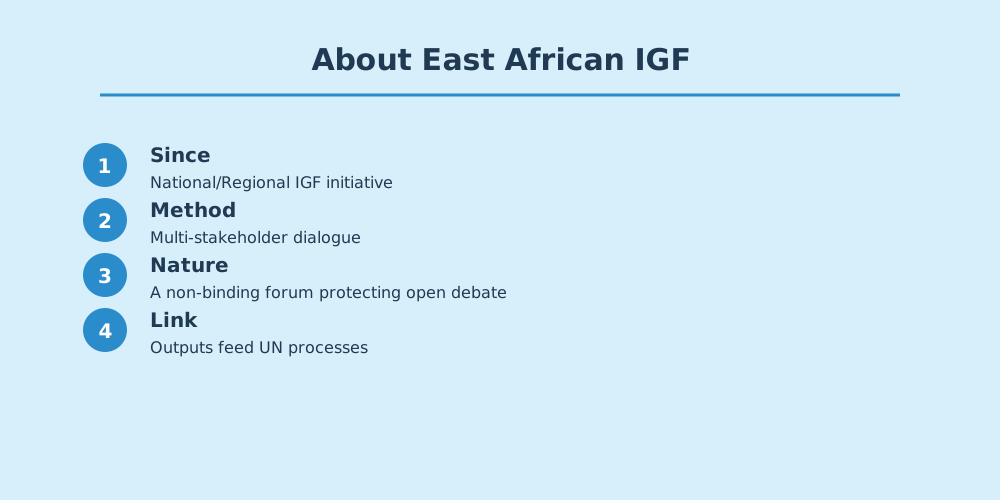
East African IGF is a National or Regional IGF Initiative (NRI), aligning local internet governance discussion with global IGF principles.
Why It Matters to You
What was discussed here becomes the baseline for national digital policy, platform rules and AI regulation worldwide within a few years. The principles confirmed at the 2022 meeting are the foundation of the "next rules" for the phones, social platforms and AI services you use every day.
Sources & References
- East Africa Internet Governance Forum Report 2022 (PDF) — 東アフリカ共同体(EAC)/EAIGF事務局 (accessed 2026-07-11)
- East African Internet Governance Forum (EAIGF) 2022 — Calendar of Events(Waybackアーカイブ) — 東アフリカ共同体(EAC) (accessed 2026-07-11)
- A RESILIENT INTERNET FOR A SHARED COMMON KNOWLEDGE IN EAST AFRICA(フォーラム中継録画) — East African Community(EAC公式YouTube) (accessed 2026-07-11)
- EAIGF 2022 — Full Forum Programme — EAIGF(Sched) (accessed 2026-07-11)
- Publications — East Africa Internet Governance Forum — EAIGF(公式サイト) (accessed 2026-07-11)
Quotes are translated or condensed from the records listed above. Bracketed numbers [n] refer to the source list.
Related links
- IGF official (NRI list): https://www.intgovforum.org/en/content/national-and-regional-igf-initiatives
- Japan IGF: https://japanigf.jp/
- Yuki Nakazawa's blog: https://nkzw.jp/category/igf/
Revision History
Rev. 1 — published 11 September 2022, 12:00 (Article published)
Rev. 2 — updated 11 July 2026, 02:14 (Fully revised into the in-depth edition: added the 3-line summary, minutes digest, short talk, source list and diagrams (all quotes verified against the listed sources))
— 中澤祐樹

