

The 3-Line Summary
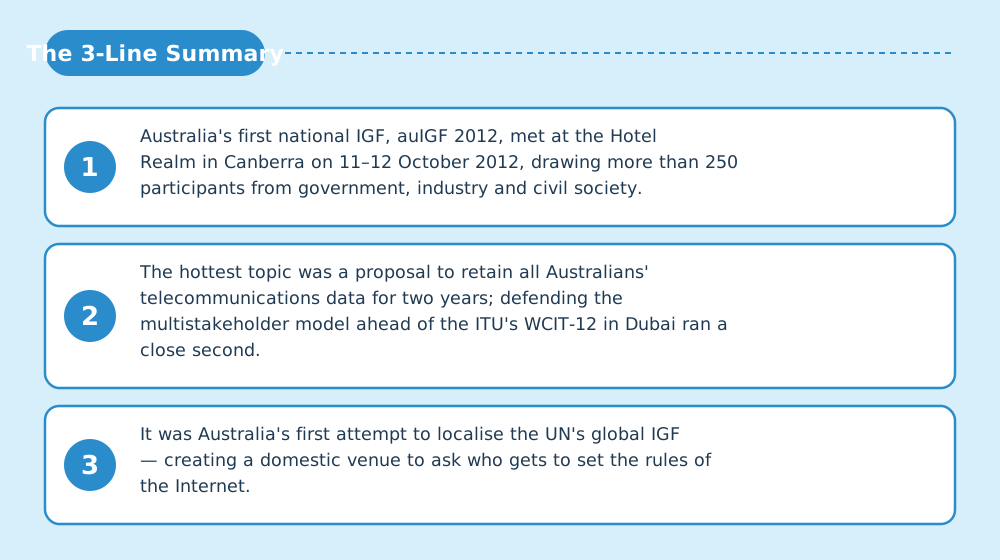
- Australia's first national IGF, auIGF 2012, met at the Hotel Realm in Canberra on 11–12 October 2012, drawing more than 250 participants from government, industry and civil society.
- The hottest topic was a proposal to retain all Australians' telecommunications data for two years; defending the multistakeholder model ahead of the ITU's WCIT-12 in Dubai ran a close second.
- It was Australia's first attempt to localise the UN's global IGF — creating a domestic venue to ask who gets to set the rules of the Internet.
Welcome — this is the Japan IGF Support Organization. This in-depth report on auIGF 2012 (Australian Internet Governance Forum) draws on official outputs, session records and on-site reporting. In a hurry? The three lines above and the diagrams carry the gist.
Conference at a Glance (from official records)
| Item | Detail |
|---|---|
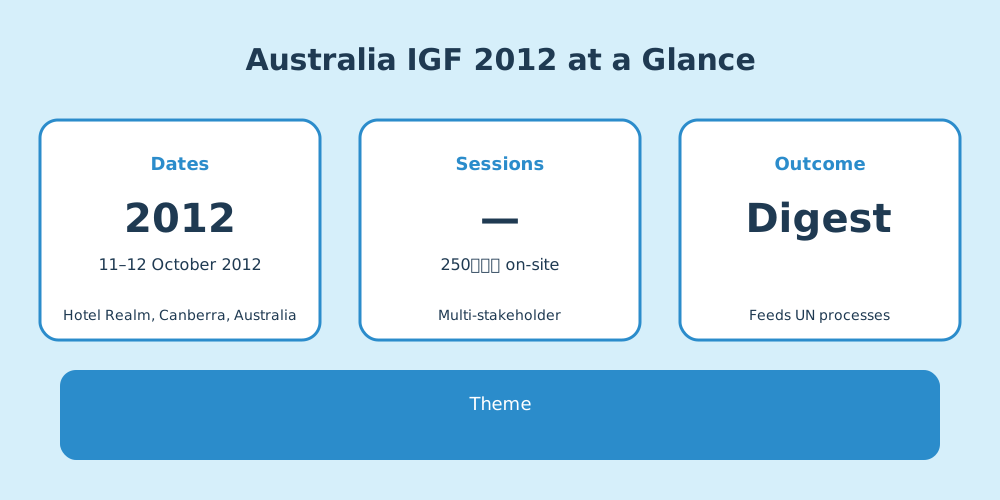
| Official name | auIGF 2012 (Australian Internet Governance Forum) |
| Edition | Inaugural edition (auDA ran the auIGF annually from 2012 to 2016) |
| Dates | 11–12 October 2012 |
| Venue | Hotel Realm, Canberra, Australia |
| Theme | Regional governance themes |
| Participants | Over 250 stakeholders (per auDA) |
| Host | Hosted by .au Domain Administration Ltd (auDA), co-convened with the Internet Industry Association, ISOC-AU, ACCAN and APNIC |
(See the source list at the end of this article.)
Discussion Digest — from the Session Records
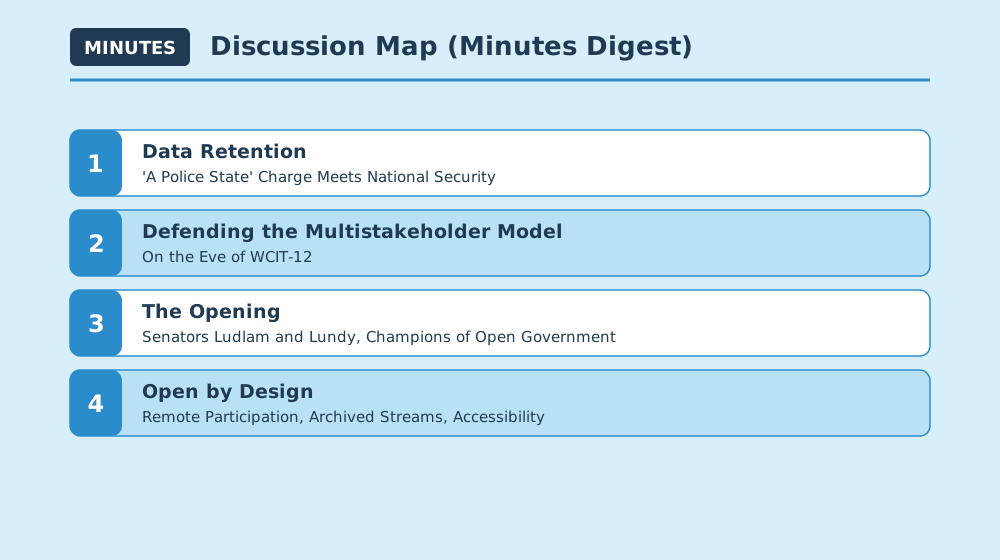
Key exchanges extracted from session records and transcripts.
1. Data Retention — 'A Police State' Charge Meets National Security
Sessions: Security and privacy sessions (headline theme)
"The massive industry and community response to proposed changes to security laws, shows just how strongly Australians feel about both Internet security and their right to privacy. … That is precisely why it is important that we have a neutral and open debate about these and other Internet policy issues, and why we have organised the auIGF to provide a forum for that discussion."
— Chris Disspain (CEO, auDA) [3][6]
- A plan to retain all Australians' communications data for two years, part of a national security law reform package, was before a parliamentary committee — billed in advance as the forum's most contentious issue [3][6]
- Over 200 submissions, mostly opposed, reached the inquiry; the auIGF's own blog highlighted Victoria's Acting Privacy Commissioner Anthony Bendall calling the proposals 'characteristic of a police state' [3][6]
- Senator Scott Ludlam (Greens), a leading opponent of data retention, took part and helped open the forum [3][6]
2. Defending the Multistakeholder Model — On the Eve of WCIT-12
Sessions: International Internet governance sessions
"The Internet's open and democratised governance model helped make it the massive success it is today. It allows individuals, organisations and businesses to meet governments on an equal footing and offers the greatest opportunity for all people to shape their Internet future."
— Chris Disspain (CEO, auDA) [4][6]
- The forum met weeks before the ITU's WCIT-12 in Dubai, where expanded regulatory authority over the Internet would be proposed; concern about government-centric pushes by China, India and Russia ran through the whole event [4][6]
- With over 2.5 million registered .au domains contributing an estimated half a billion dollars to the economy in 2011, the economic stakes of open governance were front and centre [4][6]
3. The Opening — Senators Ludlam and Lundy, Champions of Open Government
Sessions: Opening session (11 October)
- Senator Kate Lundy (Minister for Sport and Multicultural Affairs), architect of Gov 2.0 'Public Sphere' consultations, opened the inaugural auIGF together with Senator Scott Ludlam [5][6][1]
- The first forum focused on protecting critical infrastructure, 'the economic activity it underpins, and the most vulnerable individual users in our community' [5][6][1]
- Open-government advocate Pia Waugh curated a participant wiki so workshop outputs could be edited collaboratively after the event [5][6][1]
4. Open by Design — Remote Participation, Archived Streams, Accessibility
Sessions: Forum logistics and workshops (including cloud-services accessibility)
- Every panel was live-streamed with video, audio and transcripts published afterwards, and remote participants could join from mobile devices — global-IGF-style openness from day one [1][7]
- Pre-event online forums surfaced topics such as accessibility of cloud services for people with a disability and the NBN's bush-versus-city access gap [1][7]
- Holders of .gov.au email addresses attended free, lowering the barrier for government participation [1][7]
Three-Minute Short Talk — Your Questions Answered
Q. What exactly was the auIGF?
A. Australia's local version of the UN's global IGF. auDA, the .au domain administrator, convened it with industry and consumer groups so government, business and citizens could debate Internet policy as equals — a talking shop by design, not a decision-making body.
Q. What was the most contentious topic?
A. The plan to retain every Australian's communications data for two years. Critics called it 'characteristic of a police state'; supporters cited national security. Both sides shared the same stage. A version of the scheme became law in 2015 and remains contested.
Q. Why does a 2012 forum in Canberra matter?
A. It shows one way to build a national IGF: a domain registry funding an open, neutral forum. That model — and its later collapse and community revival — became a reference case for national IGFs everywhere.
What Is Australia IGF? (for first-time readers)
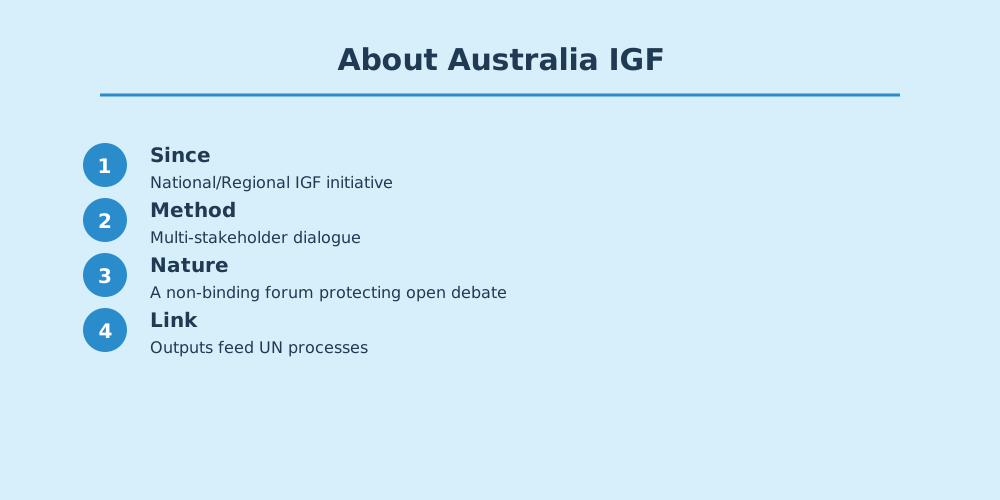
Australia IGF is a National or Regional IGF Initiative (NRI), aligning local internet governance discussion with global IGF principles.
Why It Matters to You
What was discussed here becomes the baseline for national digital policy, platform rules and AI regulation worldwide within a few years. The principles confirmed at the 2012 meeting are the foundation of the "next rules" for the phones, social platforms and AI services you use every day.
Sources & References
- Australian Internet Governance Forum — DiploFoundation (accessed 2026-07-11)
- Australian Internet Governance Forum (auIGF) — .au Domain Administration Ltd (accessed 2026-07-11)
- Privacy Laws A Hot Topic at Upcoming Multi-stakeholder Internet Forum(auIGF公式ブログ, 2012-09-12) — auIGF / auDA(Wayback Machineアーカイブ) (accessed 2026-07-11)
- Challenges and Threats to Neutral Internet Governance to be discussed at auIGF Conference(auIGF公式ブログ, 2012-09-21) — auIGF / auDA(Wayback Machineアーカイブ) (accessed 2026-07-11)
- Senator Kate Lundy to speak at the official opening of the auIGF(auIGF公式ブログ, 2012-09-26) — auIGF / auDA(Wayback Machineアーカイブ) (accessed 2026-07-11)
- Australia: Doing the right thing — Internet governance country report — GISWatch / APC (accessed 2026-07-11)
- About the Australian Internet Governance Forum(2015年版公式サイト。歴代参加者数を記載) — auIGF / auDA(Wayback Machineアーカイブ) (accessed 2026-07-11)
Quotes are translated or condensed from the records listed above. Bracketed numbers [n] refer to the source list.
Related links
- IGF official (NRI list): https://www.intgovforum.org/en/content/national-and-regional-igf-initiatives
- Japan IGF: https://japanigf.jp/
- Yuki Nakazawa's blog: https://nkzw.jp/category/igf/
Revision History
Rev. 1 — published 18 June 2012, 15:00 (Article published)
Rev. 2 — updated 16 July 2026, 20:09 (Fully revised into the in-depth edition: added the 3-line summary, minutes digest, short talk, source list and diagrams (all quotes verified against the listed sources))
— 中澤祐樹