


The 3-Line Summary
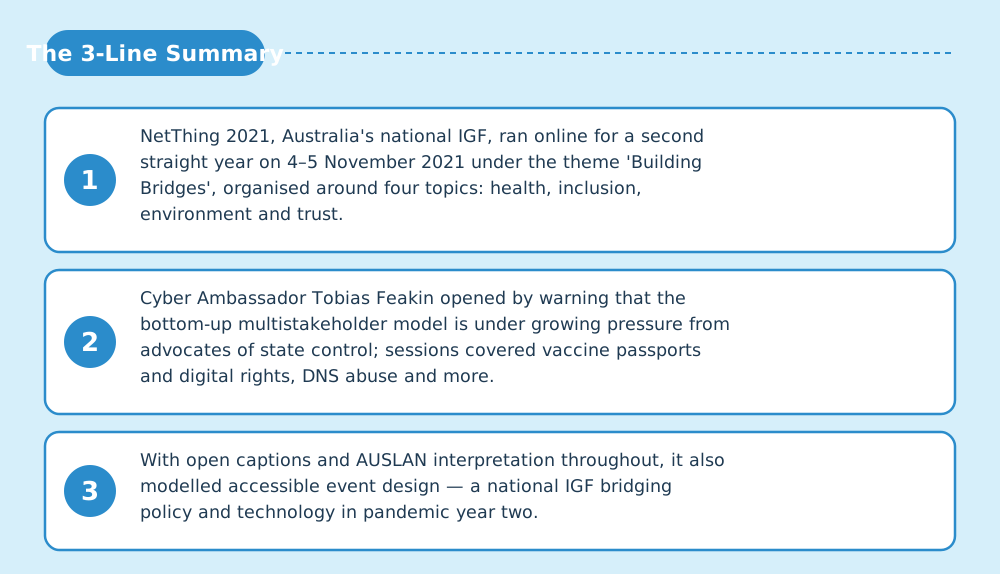
- NetThing 2021, Australia's national IGF, ran online for a second straight year on 4–5 November 2021 under the theme 'Building Bridges', organised around four topics: health, inclusion, environment and trust.
- Cyber Ambassador Tobias Feakin opened by warning that the bottom-up multistakeholder model is under growing pressure from advocates of state control; sessions covered vaccine passports and digital rights, DNS abuse and more.
- With open captions and AUSLAN interpretation throughout, it also modelled accessible event design — a national IGF bridging policy and technology in pandemic year two.
Welcome — this is the Japan IGF Support Organization. This in-depth report on NetThing 2021 (Australia's Internet Governance Forum) draws on official outputs, session records and on-site reporting. In a hurry? The three lines above and the diagrams carry the gist.
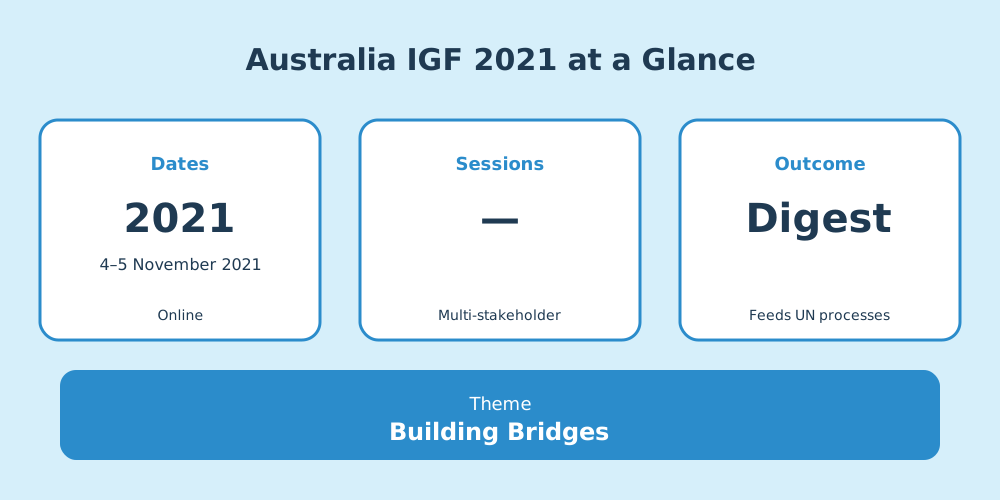
Conference at a Glance (from official records)
| Item | Detail |
|---|---|
| Official name | NetThing 2021 (Australia's Internet Governance Forum) |
| Dates | 4–5 November 2021 |
| Venue | Online |
| Theme | Building Bridges |
| Host | NetThing Steering Committee (ten partner organisations including auDA, GoDaddy Registry, APNIC, Linux Australia, ACCAN and ICANN) |
(See the source list at the end of this article.)
Discussion Digest — from the Session Records
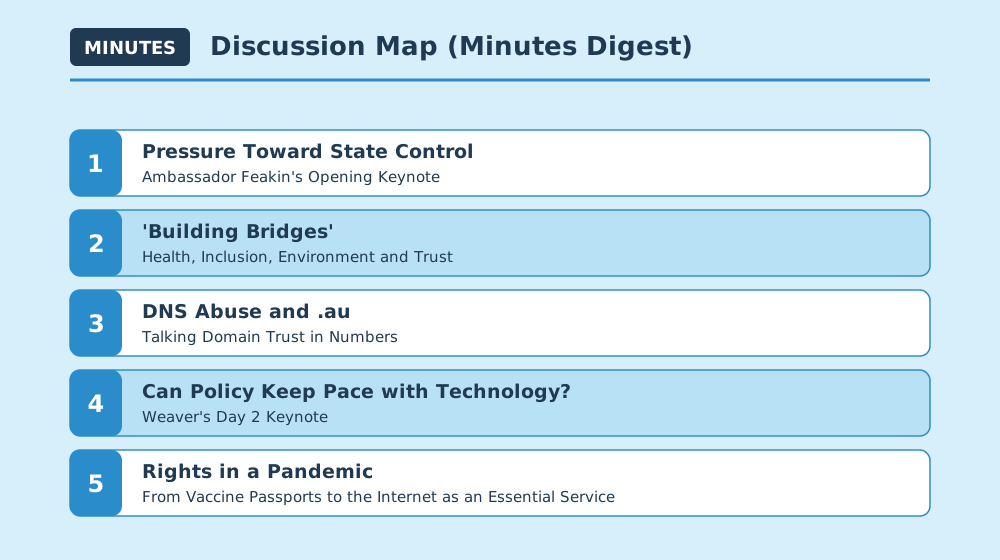
Key exchanges extracted from session records and transcripts.
1. Pressure Toward State Control — Ambassador Feakin's Opening Keynote
Sessions: Day 1 opening keynote by Dr Tobias Feakin, Ambassador for Cyber Affairs and Critical Technology
- Feakin argued the bottom-up multistakeholder model of Internet governance is under increasing pressure from those seeking state-based control of the Internet [2]
- He urged industry to step up its participation in Internet governance to sustain the model [2]
- His return — he also spoke at the inaugural 2019 NetThing — illustrates the forum's mix of government and community engagement [2]
2. 'Building Bridges' — Health, Inclusion, Environment and Trust
Sessions: Programme design: openly submitted sessions organised under four core topics
- Sessions gathered through an open call were organised under health, inclusion, environment and trust — spanning critical infrastructure, disinformation, blockchain, and mass surveillance and democracy [1][2][3]
- Questions like 'Is the Internet an essential service?' and 'Will technology save the planet?' reflected the pandemic and climate moment [1][2][3]
- Open captions and AUSLAN interpretation ran throughout, practising inclusion in the event's own design [1][2][3]
3. DNS Abuse and .au — Talking Domain Trust in Numbers
Sessions: DNS abuse panel (with auDA COO Dr Bruce Tonkin) and an auDA fireside chat (CEO Rosemary Sinclair with director Sandra Davey)
"Around 0.04 per cent of domain names in .au are associated with DNS abuse."
— Dr Bruce Tonkin (COO, auDA) [2]
- auDA, the .au registry operator, put a hard number on abuse rates to argue for the registry's trustworthiness [2]
- With the opening of second-level .au registrations due in March 2022, the CEO and a director held an open fireside chat on running .au [2]
4. Can Policy Keep Pace with Technology? — Weaver's Day 2 Keynote
Sessions: Day 2 keynote by Associate Professor Johanna Weaver, Director of the ANU Tech Policy Design Centre
- Weaver argued that existing policy structures are struggling to keep pace with the rate of tech innovation, calling for a more mature tech-policy ecosystem [2]
- Her newly founded ANU Tech Policy Design Centre would become a fixture of the forum, bridging research and policy practice [2]
5. Rights in a Pandemic — From Vaccine Passports to the Internet as an Essential Service
Sessions: Sessions including 'Vaccine passports and digital rights' and 'The Internet as an essential service'
- As proof-of-vaccination went digital, the forum tackled vaccine passports head-on: privacy, exclusion and discrimination risks [2][1]
- With lockdown life moved online, participants debated whether connectivity should be guaranteed as an essential service [2][1]
Three-Minute Short Talk — Your Questions Answered
Q. Bridges between what, exactly?
A. Between people, between technology and policy, and between Australia and the world — with openly submitted sessions organised under health, inclusion, environment and trust.
Q. What was the starkest warning?
A. Ambassador Feakin's opening keynote: the bottom-up multistakeholder model is under growing pressure from those who want state control of the Internet — foreshadowing the UN battles of the following years.
Q. Why should I care?
A. Vaccine passports, DNS abuse and access-as-essential-service were live issues everywhere, and the fully captioned, sign-interpreted format is a template for accessible policy events.
What Is Australia IGF? (for first-time readers)
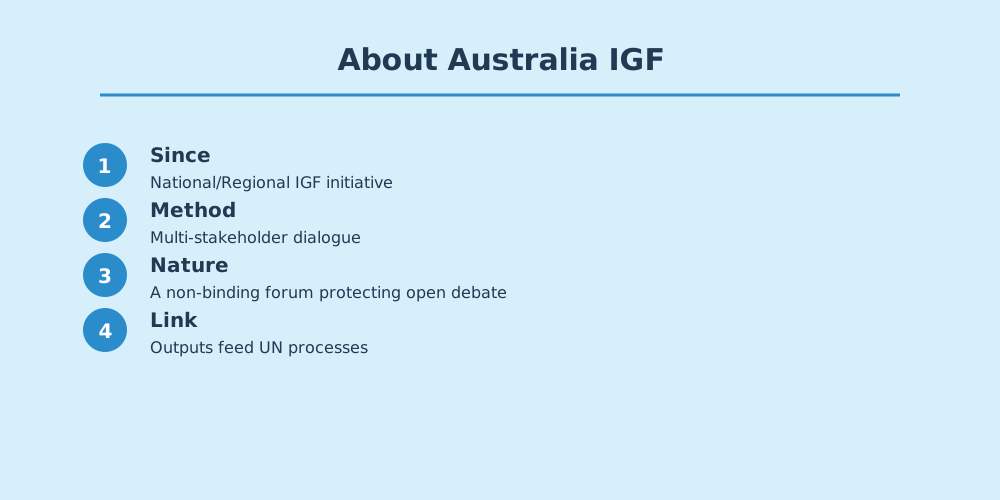
Australia IGF is a National or Regional IGF Initiative (NRI), aligning local internet governance discussion with global IGF principles.
Why It Matters to You
What was discussed here becomes the baseline for national digital policy, platform rules and AI regulation worldwide within a few years. The principles confirmed at the 2021 meeting are the foundation of the "next rules" for the phones, social platforms and AI services you use every day.
Sources & References
- NetThing 2021 — auIGF(旧NetThing)公式サイト (accessed 2026-07-11)
- NetThing 2021 – Australia's Internet Governance Forum — auDA(豪州ドメイン管理機構) (accessed 2026-07-11)
- SIMULCAST – Australia Internet Governance Forum #NetThing2021 — ISOC Live(インターネットソサエティ配信ノート) (accessed 2026-07-11)
- Australia IGF(NRI記録) — intgovforum.org (accessed 2026-07-11)
Quotes are translated or condensed from the records listed above. Bracketed numbers [n] refer to the source list.
Related links
- IGF official (NRI list): https://www.intgovforum.org/en/content/national-and-regional-igf-initiatives
- Japan IGF: https://japanigf.jp/
- Yuki Nakazawa's blog: https://nkzw.jp/category/igf/
Revision History
Rev. 1 — published 6 June 2021, 11:00 (Article published)
Rev. 2 — updated 16 July 2026, 20:09 (Fully revised into the in-depth edition: added the 3-line summary, minutes digest, short talk, source list and diagrams (all quotes verified against the listed sources))
— 中澤祐樹

