


The 3-Line Summary
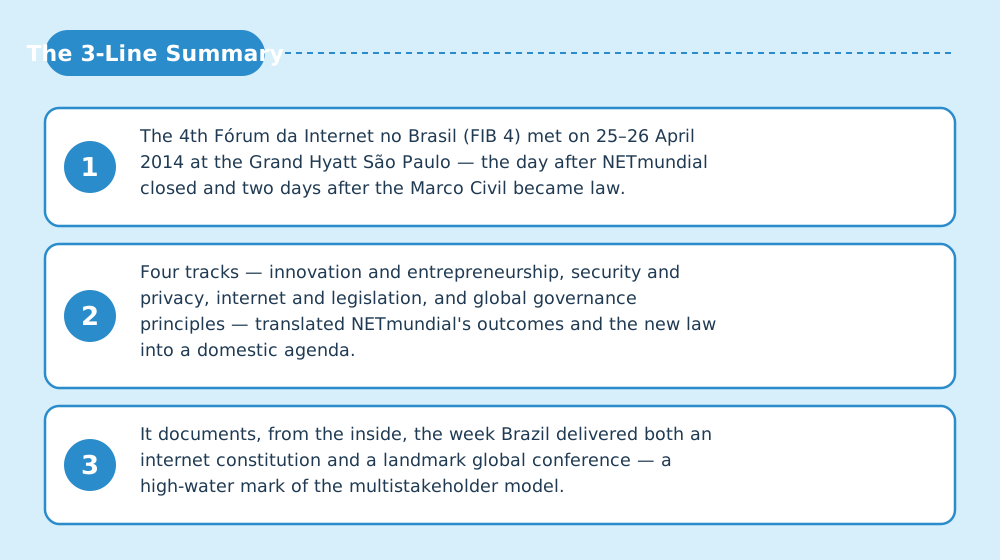
- The 4th Fórum da Internet no Brasil (FIB 4) met on 25–26 April 2014 at the Grand Hyatt São Paulo — the day after NETmundial closed and two days after the Marco Civil became law.
- Four tracks — innovation and entrepreneurship, security and privacy, internet and legislation, and global governance principles — translated NETmundial's outcomes and the new law into a domestic agenda.
- It documents, from the inside, the week Brazil delivered both an internet constitution and a landmark global conference — a high-water mark of the multistakeholder model.
Welcome — this is the Japan IGF Support Organization. This in-depth report on 4th Brazilian Internet Forum (IV Fórum da Internet no Brasil) draws on official outputs, session records and on-site reporting. In a hurry? The three lines above and the diagrams carry the gist.
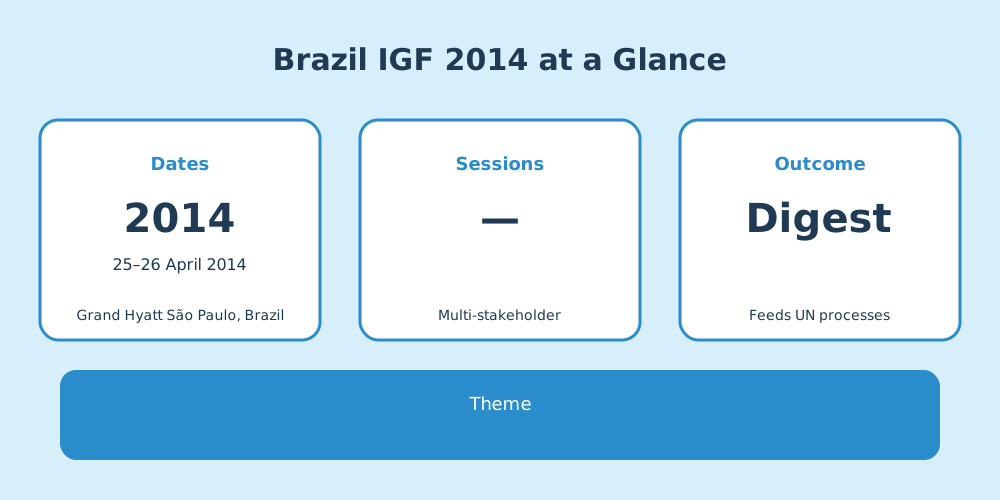
Conference at a Glance (from official records)
| Item | Detail |
|---|---|
| Official name | 4th Brazilian Internet Forum (IV Fórum da Internet no Brasil) |
| Dates | 25–26 April 2014 |
| Venue | Grand Hyatt São Paulo, Brazil |
| Theme | Regional governance themes |
| Tracks | 4 |
| Keynote | Keynote: Jeanette Hofmann, 'Internet, human rights and privacy' |
| Host | Brazilian Internet Steering Committee (CGI.br) |
| Context | Held in São Paulo immediately after the NETmundial global meeting (23–24 April); President Rousseff had signed the Marco Civil into law at NETmundial's opening on 23 April |
(See the source list at the end of this article.)
Discussion Digest — from the Session Records
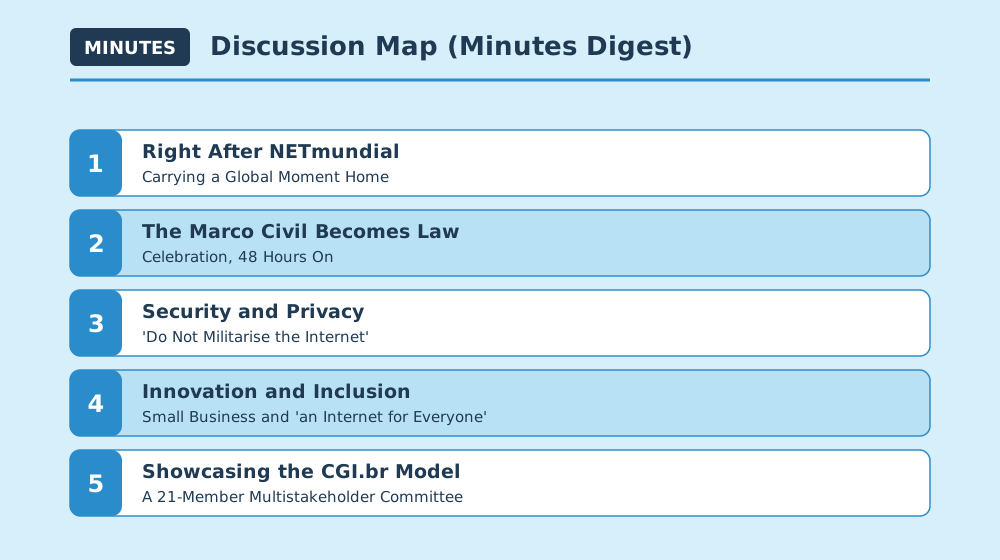
Key exchanges extracted from session records and transcripts.
1. Right After NETmundial — Carrying a Global Moment Home
Sessions: Panel on principles of global internet governance (26 April)
"NETmundial proved it is possible to create a debate where every sector of society participates on an equal footing"
— Veridiana Alimonti (CGI.br board member, civil society) [1][2]
- NETmundial (23–24 April), co-organised by CGI.br and 1NET with ICANN, IETF, ISOC and W3C among others, had just adopted its multistakeholder statement [1][2]
- FIB 4 convened immediately afterwards in the same city to deepen NETmundial's themes and channel them into domestic policy debate [1][2]
- Participants shared the view that NETmundial would shape all internet-governance discussions from then on [1][2]
2. The Marco Civil Becomes Law — Celebration, 48 Hours On
Sessions: 'Internet and legislation' track and others
"With the President's signing of the Marco Civil, Brazil's internet users came to feel protected"
— José Luiz Ribeiro Filho (CGI.br board member, scientific community) [2][4]
- President Rousseff signed the Marco Civil (Law 12,965) on stage at NETmundial's opening on 23 April, enacting an internet-rights law built on free expression, neutrality and privacy [2][4]
- Business-sector councillor Henrique Faulhaber argued net neutrality would foster competition and a market without favours to the biggest players [2][4]
- Others noted Brazilian law remained outdated on privacy and data protection — flagging a comprehensive data-protection law (the future LGPD) as the next task [2][4]
3. Security and Privacy — 'Do Not Militarise the Internet'
Sessions: 'Security and privacy' track
- The security track converged on the view that the internet must not be militarised and state action must remain subject to legal norms — less than a year after the NSA revelations [3]
- The presidential signing of the Marco Civil was framed as significant progress against surveillance overreach [3]
- The legislation track returned to Brazil's lag on privacy and data-protection law [3]
4. Innovation and Inclusion — Small Business and 'an Internet for Everyone'
Sessions: 'Innovation and entrepreneurship' track
"I dream of the day Brazil's internet belongs to everyone and works for everyone"
— Percival Henriques de Souza Neto (CGI.br board member, civil society) [2][3]
- The entrepreneurship track stressed the role of small businesses in the internet economy and called for proactive government innovation policy [2][3]
- Government-sector councillor Nazaré Lopes Bretas linked digital government to inclusion, arguing the best e-government practices are those that promote it [2][3]
5. Showcasing the CGI.br Model — A 21-Member Multistakeholder Committee
Sessions: Opening session and others
"The secret of a multistakeholder organisation is not to seek consensus at all times — what is needed is a practice where dissent is expressed naturally"
— Hartmut Glaser (Executive Secretary, CGI.br) [1][2]
- Coordinator Virgilio Almeida presented CGI.br's 21-member multisector model — government, business, academia and civil society — as internationally acclaimed [1][2]
- Keynote speaker Jeanette Hofmann addressed 'Internet, human rights and privacy', framing rights protection in the post-surveillance era [1][2]
Three-Minute Short Talk — Your Questions Answered
Q. Why is this edition special?
A. Timing. It opened the day after NETmundial closed in the same city, and just two days after the Marco Civil became law — capturing Brazilian internet policy at its peak.
Q. What does the Marco Civil actually do?
A. Often called an 'internet constitution', it guarantees free expression, net neutrality and privacy for internet users — and became a model for similar laws worldwide.
Q. Why should I care?
A. The Marco Civil and the multistakeholder CGI.br model are constant reference points in platform-regulation and internet-governance debates far beyond Brazil.
What Is Brazil IGF? (for first-time readers)
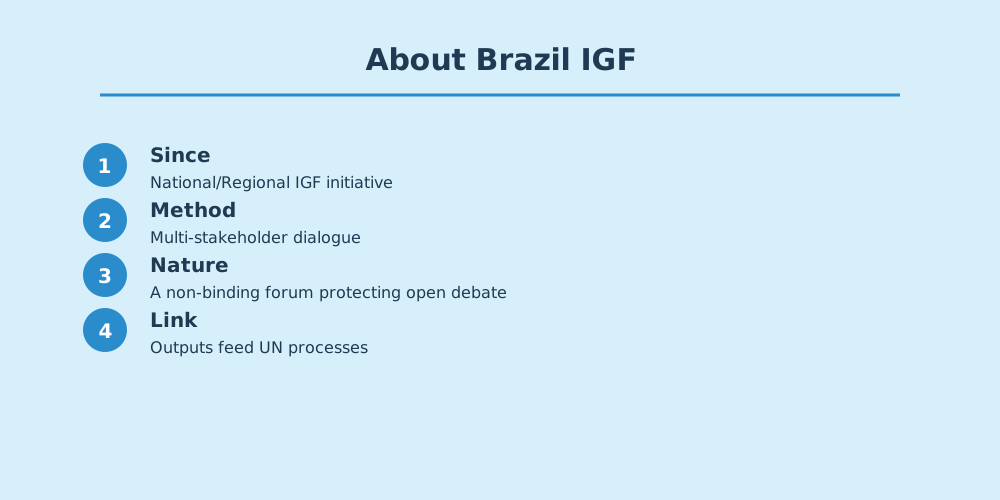
Brazil IGF is a National or Regional IGF Initiative (NRI), aligning local internet governance discussion with global IGF principles.
Why It Matters to You
What was discussed here becomes the baseline for national digital policy, platform rules and AI regulation worldwide within a few years. The principles confirmed at the 2014 meeting are the foundation of the "next rules" for the phones, social platforms and AI services you use every day.
Sources & References
- IV Fórum da Internet no Brasil(公式サイト) — CGI.br(FIB公式サイト) (accessed 2026-07-11)
- IV Fórum da Internet no Brasil aprofunda debate sobre temas discutidos no NETmundial — CGI.br(ニュース) (accessed 2026-07-11)
- Empreendedorismo e Marco Civil norteiam trilhas do IV Fórum da Internet no Brasil — CGI.br(プレスリリース) (accessed 2026-07-11)
- Brazilian Civil Rights Framework for the Internet(Marco Civil成立経緯) — en (accessed 2026-07-11)
- Edições — Fórum da Internet no Brasil — CGI.br(FIB公式サイト) (accessed 2026-07-11)
Quotes are translated or condensed from the records listed above. Bracketed numbers [n] refer to the source list.
Related links
- IGF official (NRI list): https://www.intgovforum.org/en/content/national-and-regional-igf-initiatives
- Japan IGF: https://japanigf.jp/
- Yuki Nakazawa's blog: https://nkzw.jp/category/igf/
Revision History
Rev. 1 — published 2 August 2014, 09:00 (Article published)
Rev. 2 — updated 16 July 2026, 20:09 (Fully revised into the in-depth edition: added the 3-line summary, minutes digest, short talk, source list and diagrams (all quotes verified against the listed sources))
— 中澤祐樹

