


The 3-Line Summary
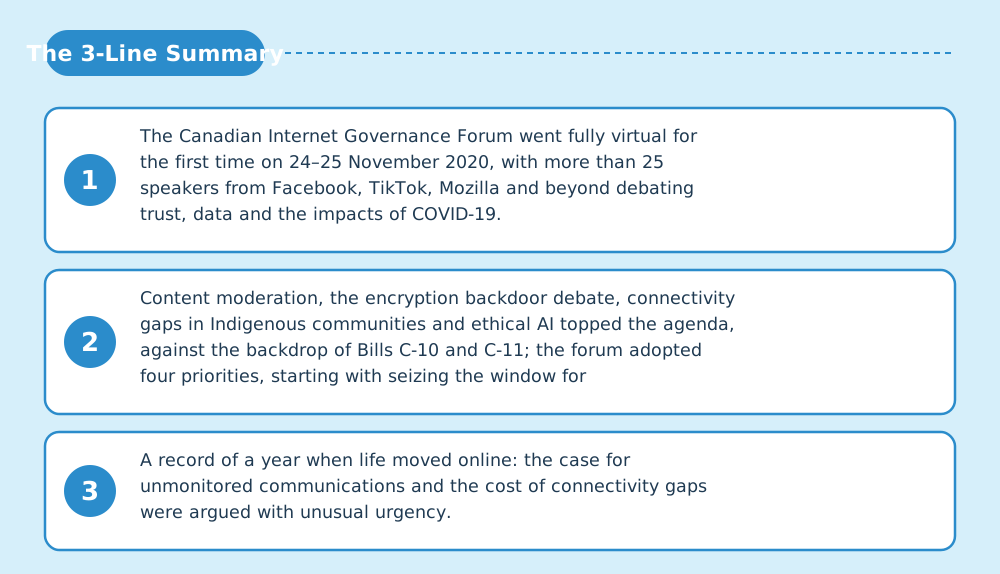
- The Canadian Internet Governance Forum went fully virtual for the first time on 24–25 November 2020, with more than 25 speakers from Facebook, TikTok, Mozilla and beyond debating trust, data and the impacts of COVID-19.
- Content moderation, the encryption backdoor debate, connectivity gaps in Indigenous communities and ethical AI topped the agenda, against the backdrop of Bills C-10 and C-11; the forum adopted four priorities, starting with seizing the window for implementation and standard-setting.
- A record of a year when life moved online: the case for unmonitored communications and the cost of connectivity gaps were argued with unusual urgency.
Welcome — this is the Japan IGF Support Organization. This in-depth report on Canadian Internet Governance Forum 2020 draws on official outputs, session records and on-site reporting. In a hurry? The three lines above and the diagrams carry the gist.
Conference at a Glance (from official records)
| Item | Detail |
|---|---|
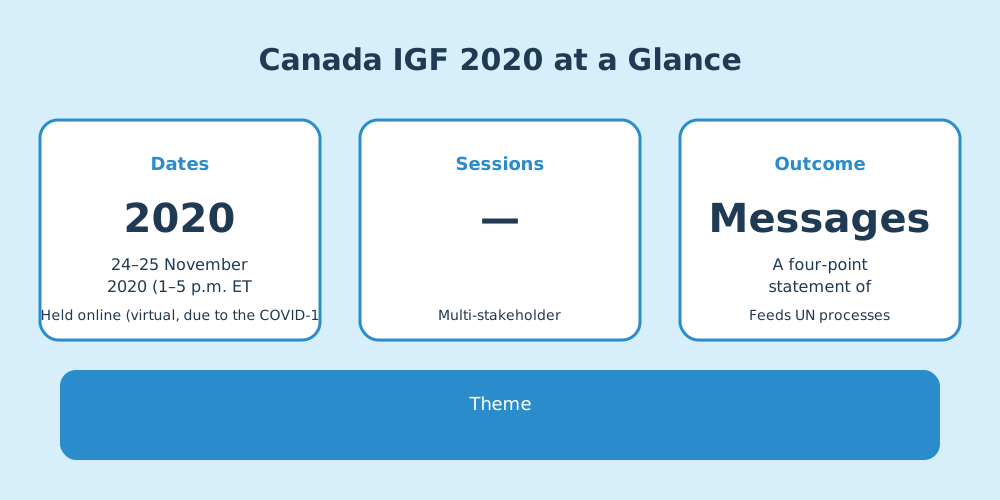
| Official name | Canadian Internet Governance Forum 2020 |
| Dates | 24–25 November 2020 (1–5 p.m. ET each day) |
| Venue | Held online (virtual, due to the COVID-19 pandemic) |
| Theme | Regional governance themes |
| Host | Multistakeholder steering committee chaired by Nancy Carter (CANARIE), with secretariat support from CIRA |
| Outcome | A four-point statement of priorities: act on the window of opportunity for implementation and standard-setting; strengthen respect for digital rights; make funding accessible to small organisations; continue multistakeholder cooperation |
(See the source list at the end of this article.)
Discussion Digest — from the Session Records
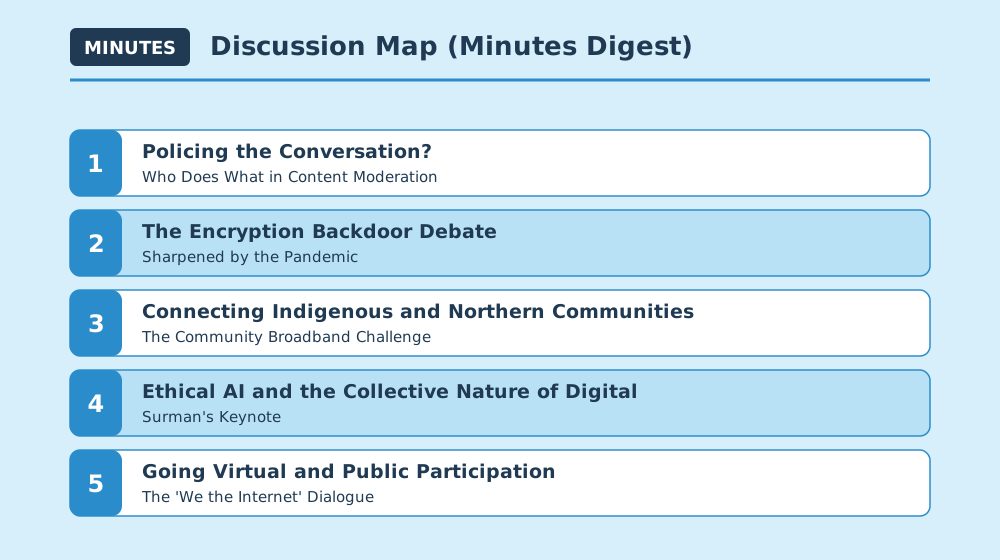
Key exchanges extracted from session records and transcripts.
1. Policing the Conversation? — Who Does What in Content Moderation
Sessions: Panel 'Policing the Conversation?' (Kevin Chan of Facebook, Steve de Eyre of TikTok, Suzie Dunn of the University of Ottawa, Fenwick McKelvey of Concordia University)
- The panel mapped complementary roles for government, platforms, civil society and users, warning that overly strict takedown-speed rules can unduly limit expression [1][2]
- Platforms were urged to provide plain-language community guidelines, human review and user notification on removals, and deeper cross-platform coordination [1][2]
- Harmful content was framed as a product of deep structural societal issues as much as of technology, demanding diverse perspectives [1][2]
2. The Encryption Backdoor Debate — Sharpened by the Pandemic
Sessions: Panel 'The Internet & COVID-19' (Brenda McPhail of the Canadian Civil Liberties Association, Christopher Parsons of Citizen Lab, Leo Ratledge, Matt Hatfield)
- The official report records that freedom of speech, expression, association, religion and equality rights require access to unmonitored communications to be fully realised [1]
- Over the previous two years Canada's position had shifted towards ensuring access for law enforcement and intelligence agencies, in line with debates in Europe and the US [1]
- Panellists reframed the issue as a tension between two kinds of security rather than security versus privacy, warning that any lawful-access system would itself be an extremely valuable target for bad actors [1]
3. Connecting Indigenous and Northern Communities — The Community Broadband Challenge
Sessions: Panel 'Connecting Indigenous Communities' (Tim Whiteduck, Melanie Pilon, John Kealoha Garcia, Michael Furdyk)
- With small populations spread across vast areas, attracting traditional ISPs is extremely difficult, making community broadband the most realistic path for many communities [1]
- Funding streams were criticised as skewed towards large, shovel-ready ISP projects; speakers called for streamlined, consistent funding accessible to under-resourced organisations [1]
- Networks spanning multiple municipalities and First Nations raise jurisdictional questions over funding, ownership and security [1]
4. Ethical AI and the Collective Nature of Digital Rights — Surman's Keynote
Sessions: Keynote 'Canada's Role in the Future of Ethical AI' by Mark Surman, Executive Director of the Mozilla Foundation
- From smartphones to social feeds, daily life is already driven by automation and data — we are the fuel of the modern AI environment, the keynote argued [1][2]
- The proposed Consumer Privacy Protection Act was welcomed as a concrete step towards implementing the Digital Charter, but faulted for not recognising the collective nature of digital rights, since individuals' data reveals information about others [1][2]
- Collective mechanisms such as data trusts and non-profit cooperatives were presented as ways to push back against a power imbalance favouring corporations and security services [1][2]
5. Going Virtual and Public Participation — The 'We the Internet' Dialogue
Sessions: Info session with Michel Lambert (eQualitie) and Deirdre Collings (SecDev Foundation)
- Results of the global 'We the Internet' consultation — roughly 5,000 participants from over 70 countries — were shared, with about half of participants saying they would share less data going forward [1]
- On disinformation, participants favoured government-led approaches, were sceptical of private-company involvement, and rated education and digital literacy the strongest tools [1]
- The consultation itself had to move online during the pandemic, and confirmed strong public appetite to learn about and engage with internet issues [1]
Three-Minute Short Talk — Your Questions Answered
Q. What was discussed?
A. Under the themes of trust, data and COVID-19, the two-day, fully virtual forum tackled content moderation, encryption, Indigenous connectivity and ethical AI, distilling four priorities for Canadian internet governance.
Q. What was most contentious?
A. Encryption. Against government moves towards lawful-access backdoors, civil society argued that unmonitored communications underpin fundamental rights — reframing the fight as two kinds of security in tension, not security versus privacy.
Q. Why should I care?
A. The pandemic pushed everyone's life online, making data use, disinformation and connectivity gaps personal issues everywhere — the same debates that shaped platform and telecom policy far beyond Canada.
What Is Canada IGF? (for first-time readers)
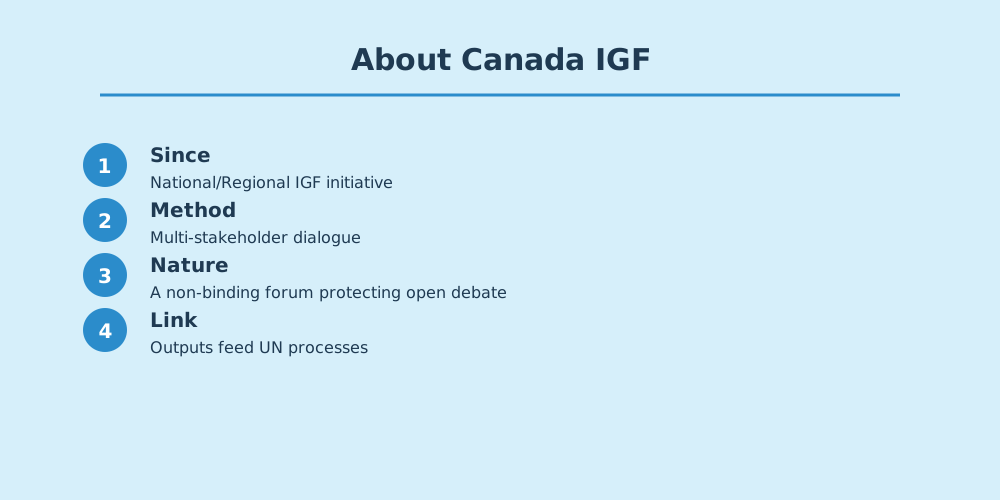
Canada IGF is a National or Regional IGF Initiative (NRI), aligning local internet governance discussion with global IGF principles.
Why It Matters to You
What was discussed here becomes the baseline for national digital policy, platform rules and AI regulation worldwide within a few years. The principles confirmed at the 2020 meeting are the foundation of the "next rules" for the phones, social platforms and AI services you use every day.
Sources & References
- Canadian Internet Governance Forum 2020 (official report) — Canadian IGF (accessed 2026-07-11)
- Media advisory: Internet leaders convene for online forum on Canadian digital policy issues this week — CIRA (accessed 2026-07-11)
- Canadian IGF — Past Events — Canadian IGF (accessed 2026-07-11)
- Canada IGF(NRI記録) — UN IGF Secretariat (accessed 2026-07-11)
Quotes are translated or condensed from the records listed above. Bracketed numbers [n] refer to the source list.
Related links
- IGF official (NRI list): https://www.intgovforum.org/en/content/national-and-regional-igf-initiatives
- Japan IGF: https://japanigf.jp/
- Yuki Nakazawa's blog: https://nkzw.jp/category/igf/
Revision History
Rev. 1 — published 16 October 2020, 13:00 (Article published)
Rev. 2 — updated 16 July 2026, 20:09 (Fully revised into the in-depth edition: added the 3-line summary, minutes digest, short talk, source list and diagrams (all quotes verified against the listed sources))
— 中澤祐樹

