


The 3-Line Summary
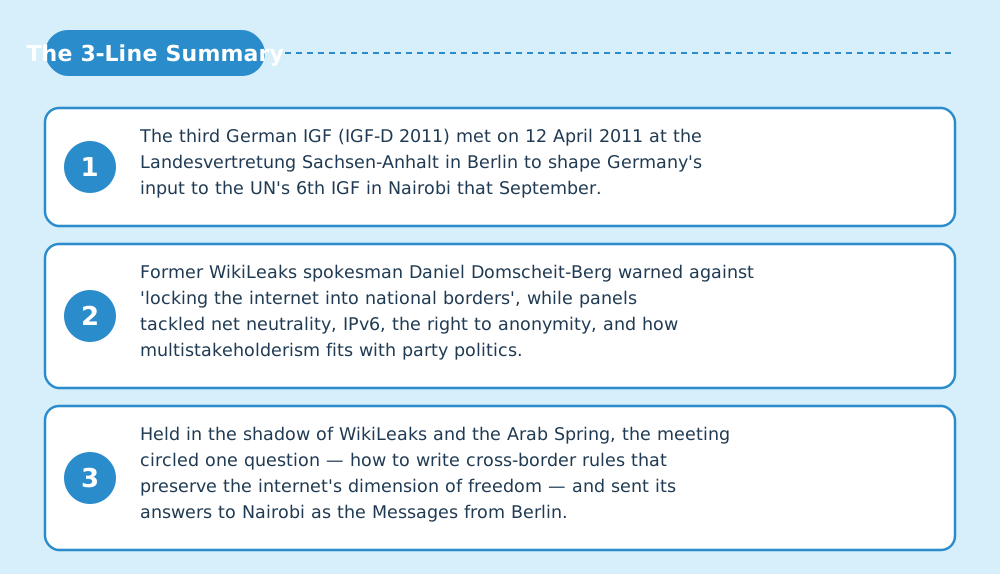
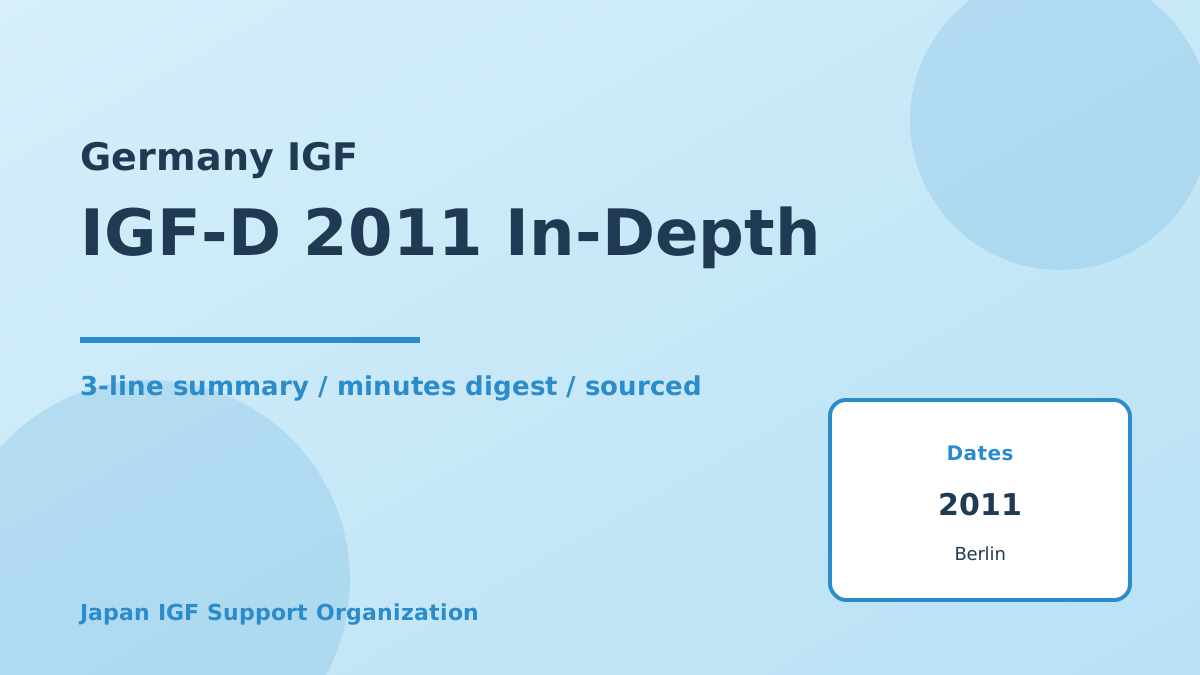
- The third German IGF (IGF-D 2011) met on 12 April 2011 at the Landesvertretung Sachsen-Anhalt in Berlin to shape Germany's input to the UN's 6th IGF in Nairobi that September.
- Former WikiLeaks spokesman Daniel Domscheit-Berg warned against 'locking the internet into national borders', while panels tackled net neutrality, IPv6, the right to anonymity, and how multistakeholderism fits with party politics.
- Held in the shadow of WikiLeaks and the Arab Spring, the meeting circled one question — how to write cross-border rules that preserve the internet's dimension of freedom — and sent its answers to Nairobi as the Messages from Berlin.
Welcome — this is the Japan IGF Support Organization. This in-depth report on III. Internet Governance Forum Deutschland (IGF-D 2011) draws on official outputs, session records and on-site reporting. In a hurry? The three lines above and the diagrams carry the gist.
Conference at a Glance (from official records)
| Item | Detail |
|---|---|
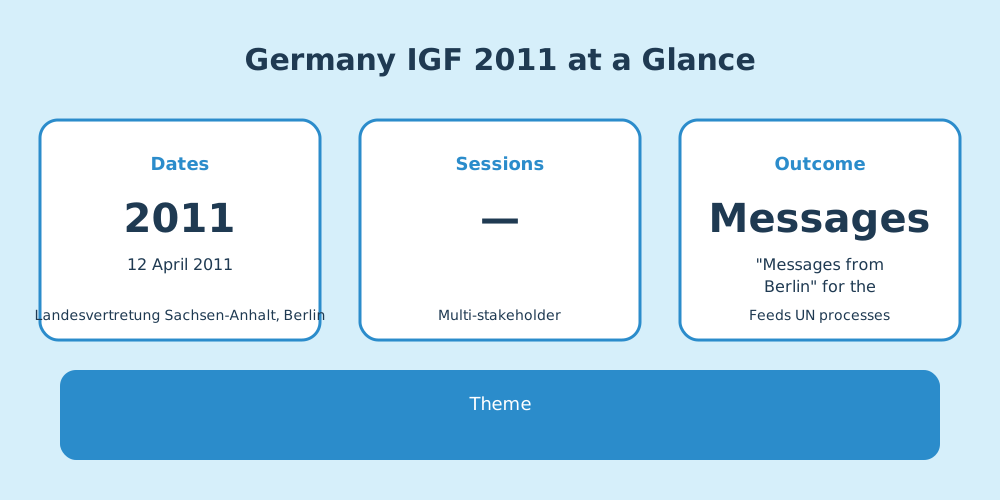
| Official name | III. Internet Governance Forum Deutschland (IGF-D 2011) |
| Dates | 12 April 2011 |
| Venue | Landesvertretung Sachsen-Anhalt, Berlin |
| Theme | Regional governance themes |
| Purpose | Germany's contribution to shaping the 6th UN IGF in Nairobi (September 2011) |
| Host | DGVN (German UN Association), eco, Humanistische Union, ISOC.DE and ver.di |
| Outcome | "Messages from Berlin" for the Nairobi IGF, published on 21 September 2011 |
(See the source list at the end of this article.)
Discussion Digest — from the Session Records
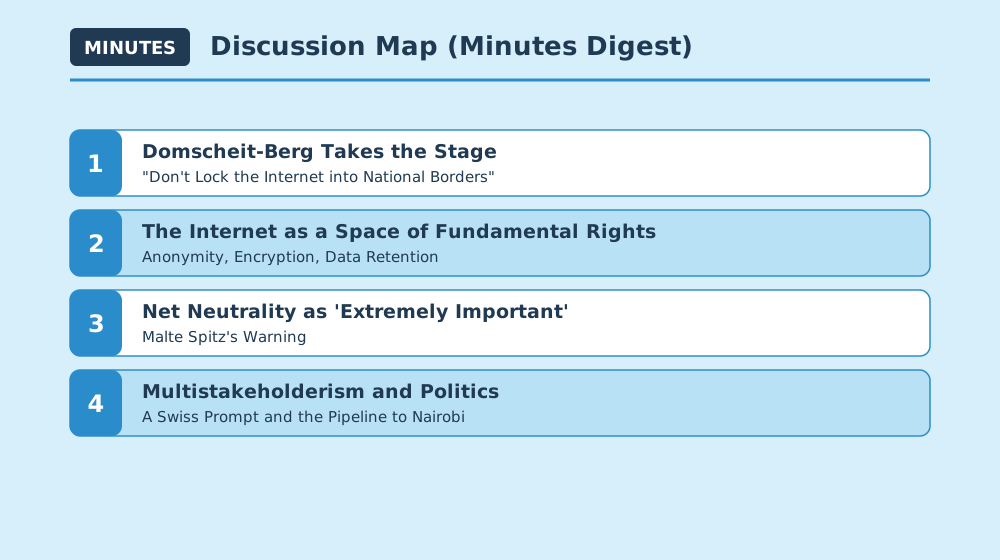
Key exchanges extracted from session records and transcripts.
1. Domscheit-Berg Takes the Stage — "Don't Lock the Internet into National Borders"
Sessions: Panel 1: "Freedom, Security and Responsibility in a Global Context" (14:30, moderated by Falk Lüke)
"We cannot yet properly gauge the significance of the internet. When you don't know what the right thing is, better to keep your hands off"
— Daniel Domscheit-Berg (founder of OpenLeaks, former WikiLeaks spokesman) [3][1]
- Fresh from founding OpenLeaks, Domscheit-Berg opposed confining the internet — 'the tool of the next generation' — within national borders, warning that hasty legislation makes limits on information freedom hard to reverse [3][1]
- Problems such as child abuse, he argued, must be tackled at their source, not with ineffective web blocking — a direct hit at Germany's then-raging access-blocking law dispute [3][1]
- Deutsche Post's Harald Lemke agreed that national regulation 'quickly reaches its limits' in the digital age and that global governance is needed [3][1]
2. The Internet as a Space of Fundamental Rights — Anonymity, Encryption, Data Retention
Sessions: Keynote by State Secretary Birgit Grundmann and exchanges across Panels 1 and 2
"The internet is not a space free of fundamental rights. Encryption capabilities in internet traffic must be consistently strengthened"
— Rosemarie Will (Federal Board, Humanistische Union; constitutional law professor) [3][1]
"What we need are cross-border mechanisms that preserve the internet's dimension of freedom. Eighty million Germans must not be placed under general suspicion"
— Birgit Grundmann (State Secretary, Federal Ministry of Justice) [3][1]
- The justice ministry kept its distance from re-introducing data retention — Germany's constitutional court had struck the law down the year before — while civil-liberties voices demanded guaranteed anonymity and stronger encryption [3][1]
- Panel 2 bundled universal service, the right to anonymity, net neutrality and IPv6 adoption — a snapshot of 2011, the year IPv4 addresses ran out [3][1]
- Regulators were present at working level: Bundesnetzagentur vice-president Iris Henseler-Unger and interior ministry IT director Martin Schallbruch among them [3][1]
3. Net Neutrality as 'Extremely Important' — Malte Spitz's Warning
Sessions: Interventions by Malte Spitz (Federal Board, Alliance 90/The Greens)
"We must make the value of free internet access clearer to people. The principle of net neutrality is of the most extreme importance"
— Malte Spitz (Federal Board member, Alliance 90/The Greens) [3][1]
- Spitz warned that abandoning net neutrality would within years skew the internet toward particular interests, and criticised ICANN's and the ITU's silence over the WikiLeaks infrastructure takedowns (an ICANN user representative later publicly disputed this) [3][1]
- Germany, he noted, claims a 'driving role' on internet freedom yet had barely engaged with the IGF process for two years [3][1]
- Enquete Commission members from four parties, academia (WZB's Jeanette Hofmann) and industry filled the panels, wiring the domestic debate into the international process [3][1]
4. Multistakeholderism and Politics — A Swiss Prompt and the Pipeline to Nairobi
Sessions: Panel 3: "Multistakeholderism and Politics" (18:30, moderated by Prof. Kleinwächter, introduction by Thomas Schneider)
- Thomas Schneider of the Swiss Federal Office of Communications (Switzerland's ICANN GAC representative) opened the panel with lessons on how governments can engage multistakeholder governance [1][2][4]
- Enquete Commission MPs Schulz (FDP), von Notz (Greens) and Jarzombek (CDU) joined economics-ministry department head Andreas Schuseil, with Google's Max Senges and DE-CIX's Harald Summa for business [1][2][4]
- The meeting's core themes were distilled into the Messages from Berlin, published on 21 September 2011 ahead of the Nairobi IGF (27–30 September) [1][2][4]
Three-Minute Short Talk — Your Questions Answered
Q. What kind of meeting was this?
A. Germany's third national IGF — an evening of debate to shape the country's input to the UN IGF in Nairobi, distilled into the 'Messages from Berlin' published that September.
Q. What was the headline moment?
A. Daniel Domscheit-Berg, just out of WikiLeaks, telling politicians to 'keep their hands off' the internet while its significance is still unknowable — aimed squarely at Germany's web-blocking law dispute.
Q. Why should I care?
A. The 2011 agenda — anonymity, encryption, net neutrality, data retention — is the same bundle of questions every democracy has wrestled with since. This meeting shows a national IGF absorbing that friction early.
What Is Germany IGF? (for first-time readers)
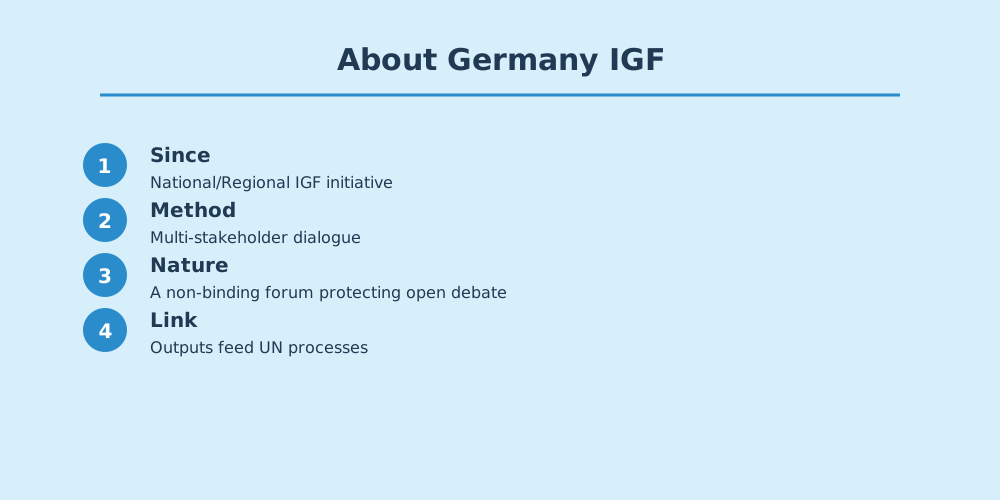
Germany IGF is a National or Regional IGF Initiative (NRI), aligning local internet governance discussion with global IGF principles.
Why It Matters to You
What was discussed here becomes the baseline for national digital policy, platform rules and AI regulation worldwide within a few years. The principles confirmed at the 2011 meeting are the foundation of the "next rules" for the phones, social platforms and AI services you use every day.
Sources & References
- Programm 2011 — 3. Internet Governance Forum Deutschland (IGF-D) 2011 — IGF-D(旧公式サイト igf-d.de、Wayback Machine保存) (accessed 2026-07-11)
- IGF-D 2011 — III. Internet Governance Forum Deutschland(公式Historieページ、主催団体一覧) — IGF-D e.V.(2020年版公式サイト、Wayback Machine保存) (accessed 2026-07-11)
- Openleaks-Gründer warnt vor Beschneidung von Internetfreiheiten(Stefan Krempl, 2011-04-12) — heise online (accessed 2026-07-11)
- Messages from Berlin für das UN IGF in Nairobi, Kenia(公式ニュース 2011-09-21) — IGF-D(旧公式サイト igf-d.de、Wayback Machine保存) (accessed 2026-07-11)
Quotes are translated or condensed from the records listed above. Bracketed numbers [n] refer to the source list.
Related links
- IGF official (NRI list): https://www.intgovforum.org/en/content/national-and-regional-igf-initiatives
- Japan IGF: https://japanigf.jp/
- Yuki Nakazawa's blog: https://nkzw.jp/category/igf/
Revision History
Rev. 1 — published 4 June 2011, 16:00 (Article published)
Rev. 2 — updated 16 July 2026, 20:09 (Fully revised into the in-depth edition: added the 3-line summary, minutes digest, short talk, source list and diagrams (all quotes verified against the listed sources))
— 中澤祐樹

