

The 3-Line Summary
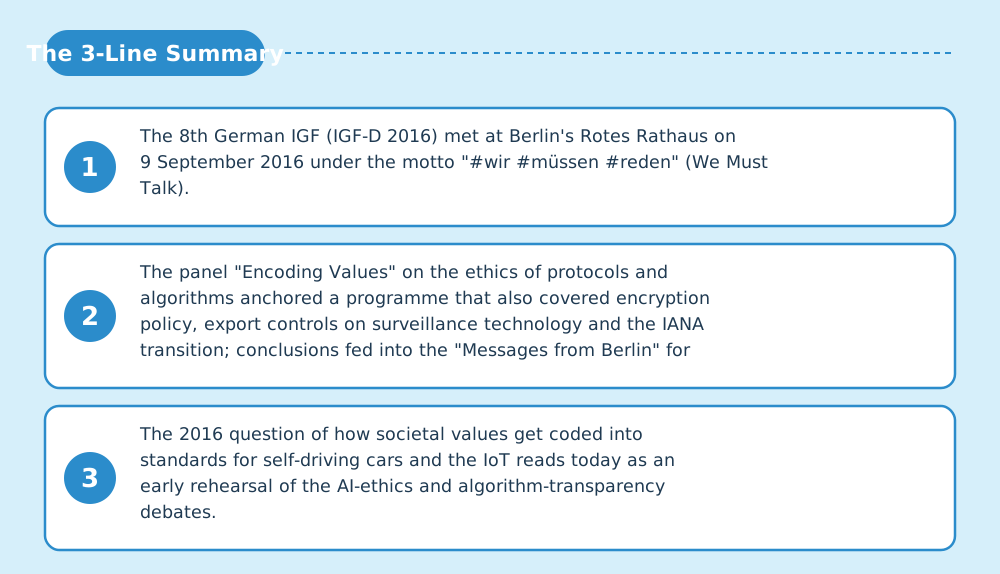
- The 8th German IGF (IGF-D 2016) met at Berlin's Rotes Rathaus on 9 September 2016 under the motto "#wir #müssen #reden" (We Must Talk).
- The panel "Encoding Values" on the ethics of protocols and algorithms anchored a programme that also covered encryption policy, export controls on surveillance technology and the IANA transition; conclusions fed into the "Messages from Berlin" for the UN IGF.
- The 2016 question of how societal values get coded into standards for self-driving cars and the IoT reads today as an early rehearsal of the AI-ethics and algorithm-transparency debates.
Welcome — this is the Japan IGF Support Organization. This in-depth report on IGF-D 2016 (8th German Internet Governance Forum / VIII. Internet Governance Forum Deutschland) draws on official outputs, session records and on-site reporting. In a hurry? The three lines above and the diagrams carry the gist.
Conference at a Glance (from official records)
| Item | Detail |
|---|---|
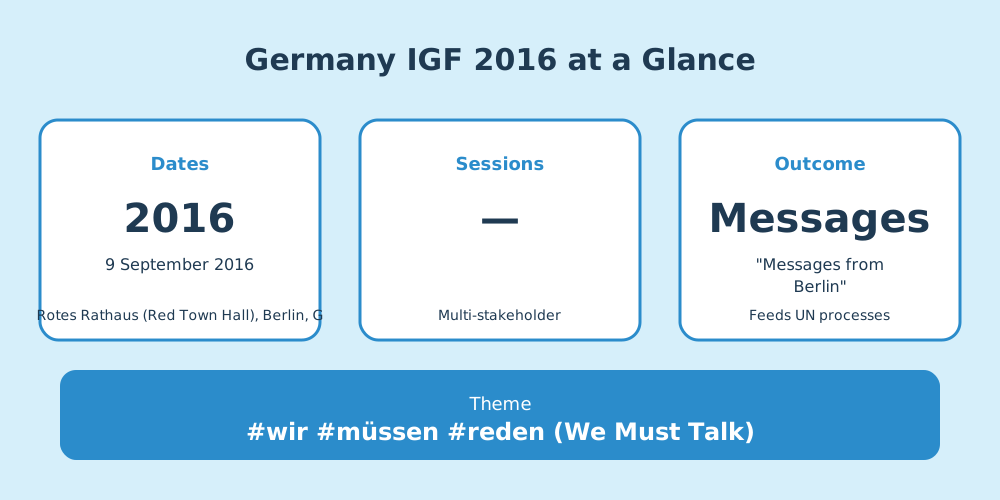
| Official name | IGF-D 2016 (8th German Internet Governance Forum / VIII. Internet Governance Forum Deutschland) |
| Dates | 9 September 2016 |
| Venue | Rotes Rathaus (Red Town Hall), Berlin, Germany |
| Theme | #wir #müssen #reden (We Must Talk) |
| Host | IGF-D multistakeholder steering committee (politics, government, technical community, academia, business and civil society) |
| Outcome | "Messages from Berlin" summarising the debates, submitted to the UN IGF |
(See the source list at the end of this article.)
Discussion Digest — from the Session Records
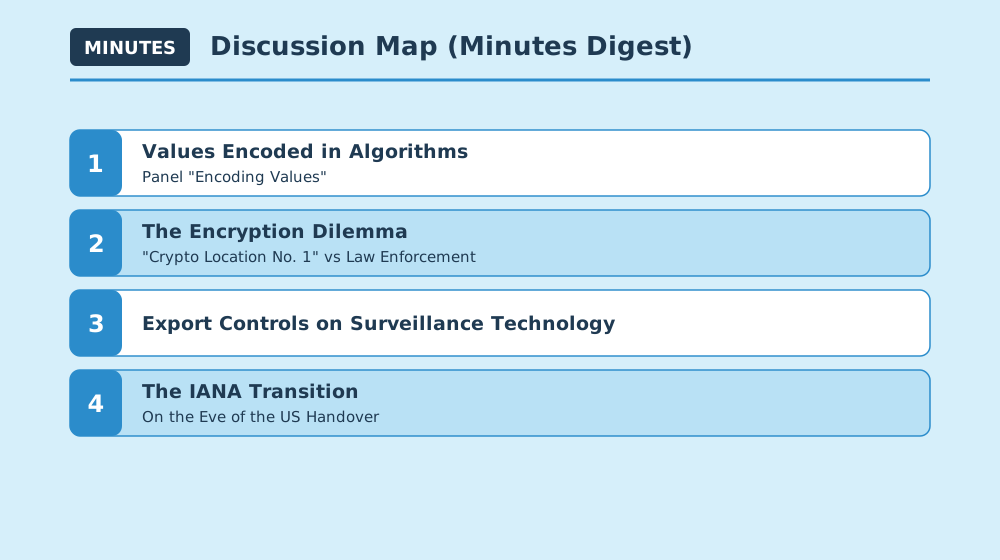
Key exchanges extracted from session records and transcripts.
1. Values Encoded in Algorithms — Panel "Encoding Values"
Sessions: Panel "Encoding Values – Zur Ethik von Protokollen" (On the Ethics of Protocols)
"As a society we should ask ourselves which innovations ought to be introduced at all (original German: "Man sollte sich als Gesellschaft fragen, welche Innovationen überhaupt eingeführt werden sollten")"
— Matthias Spielkamp (iRights / AlgorithmWatch), translated from German [3]
- Citing ProPublica's finding that US recidivism-risk software systematically rated Black defendants as higher risk, Spielkamp argued that semi-automated processes are not value-neutral [3]
- Constanze Bürger (Federal Ministry of the Interior) proposed an international "catalogue of values for the digital world"; Prof. Iris Eisenberger (BOKU Vienna) diagnosed "interdisciplinary illiteracy" and called for "rules made by humans for machines" [3]
- Panellists agreed that transdisciplinary approaches are needed to close fundamental knowledge gaps about how algorithms work [3]
2. The Encryption Dilemma — "Crypto Location No. 1" vs Law Enforcement
Sessions: Encryption policy session
- Germany's goal of being "crypto location No. 1" clashes with security authorities' difficulties with end-to-end encryption; the forum asked how to resolve this in harmony with democratic principles [2]
- Against the backdrop of Europe's 2016 counter-terrorism debates, participants discussed enabling investigations without weakening encryption [2]
3. Export Controls on Surveillance Technology
Sessions: Surveillance-technology export session
- The forum addressed the export of German and European surveillance software to states that routinely violate human rights [2]
- Participants discussed building international control regimes to stop such exports effectively [2]
4. The IANA Transition — On the Eve of the US Handover
Sessions: IANA transition session
- The programme covered the transition of the IANA functions from US-government oversight to the global multistakeholder community [2]
- The handover took effect about three weeks later, on 1 October 2016 — the forum debated it on the eve of a historic shift [2]
Three-Minute Short Talk — Your Questions Answered
Q. What was this meeting about?
A. Germany's national internet governance forum. In 2016, under the motto "We Must Talk," government, business and civil society debated the ethics of algorithms, encryption vs investigation, surveillance-tech exports and the IANA transition as equals.
Q. What was the highlight?
A. A panel asking whether algorithms are neutral. The racial bias found in US recidivism-prediction software was the case in point, and one panellist argued society should first ask which innovations to adopt at all — an early AI-ethics debate.
Q. Why does it matter now?
A. The 2016 questions — algorithmic transparency and balancing encryption with law enforcement — became the template for debates that every democracy, including Japan, has faced since.
What Is Germany IGF? (for first-time readers)
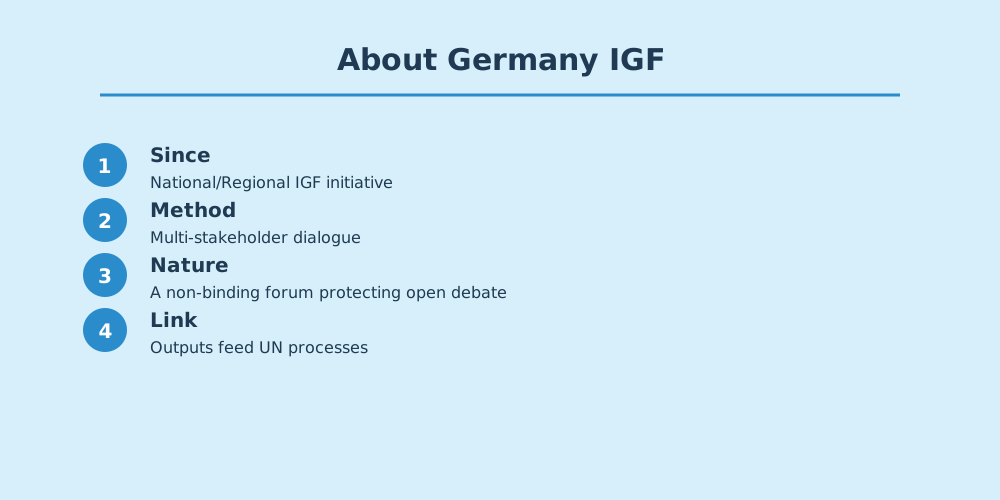
Germany IGF is a National or Regional IGF Initiative (NRI), aligning local internet governance discussion with global IGF principles.
Why It Matters to You
What was discussed here becomes the baseline for national digital policy, platform rules and AI regulation worldwide within a few years. The principles confirmed at the 2016 meeting are the foundation of the "next rules" for the phones, social platforms and AI services you use every day.
Sources & References
- Internet Governance Forum Deutschland 2016: #wir #müssen #reden — eco – Verband der Internetwirtschaft e.V. (accessed 2026-07-11)
- Einladung zum VIII. Internet Governance Forum Deutschland #wir #müssen #reden — GRÜN DIGITAL(同盟90/緑の党 デジタル政策サイト) (accessed 2026-07-11)
- Internet Governance Forum Deutschland 2016: zur Ethik der Digitalisierung — politik-digital.de (accessed 2026-07-11)
- Internet Governance Forum Deutschland — DiploFoundation (accessed 2026-07-11)
Quotes are translated or condensed from the records listed above. Bracketed numbers [n] refer to the source list.
Related links
- IGF official (NRI list): https://www.intgovforum.org/en/content/national-and-regional-igf-initiatives
- Japan IGF: https://japanigf.jp/
- Yuki Nakazawa's blog: https://nkzw.jp/category/igf/
Revision History
Rev. 1 — published 23 June 2016, 12:00 (Article published)
Rev. 2 — updated 16 July 2026, 20:09 (Fully revised into the in-depth edition: added the 3-line summary, minutes digest, short talk, source list and diagrams (all quotes verified against the listed sources))
— 中澤祐樹