


The 3-Line Summary
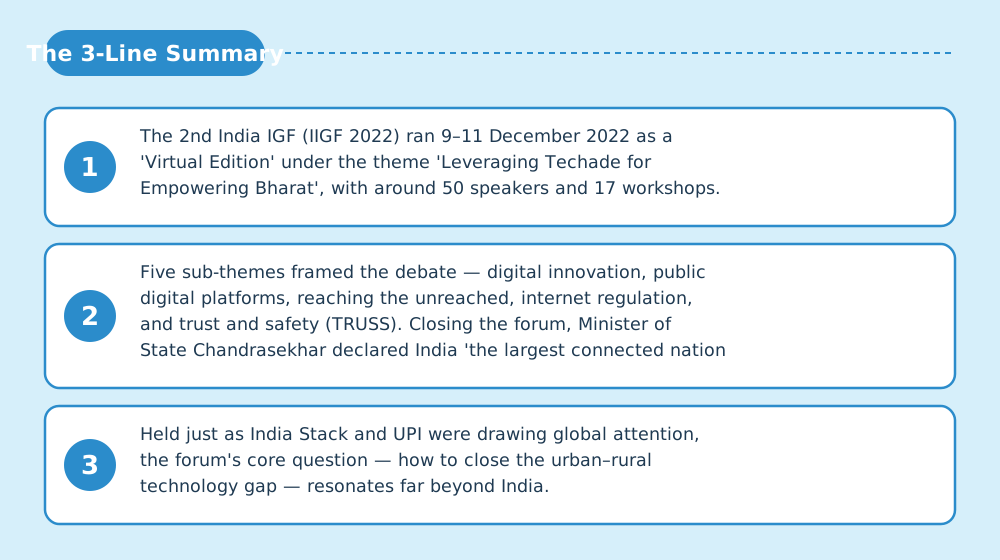
- The 2nd India IGF (IIGF 2022) ran 9–11 December 2022 as a 'Virtual Edition' under the theme 'Leveraging Techade for Empowering Bharat', with around 50 speakers and 17 workshops.
- Five sub-themes framed the debate — digital innovation, public digital platforms, reaching the unreached, internet regulation, and trust and safety (TRUSS). Closing the forum, Minister of State Chandrasekhar declared India 'the largest connected nation in the world' with 800 million users.
- Held just as India Stack and UPI were drawing global attention, the forum's core question — how to close the urban–rural technology gap — resonates far beyond India.
Welcome — this is the Japan IGF Support Organization. This in-depth report on India Internet Governance Forum (IIGF) 2022 draws on official outputs, session records and on-site reporting. In a hurry? The three lines above and the diagrams carry the gist.
📍 Officially billed as the Virtual Edition; per the official report to the UN IGF, the opening and closing ceremonies were held onsite while all other sessions ran online
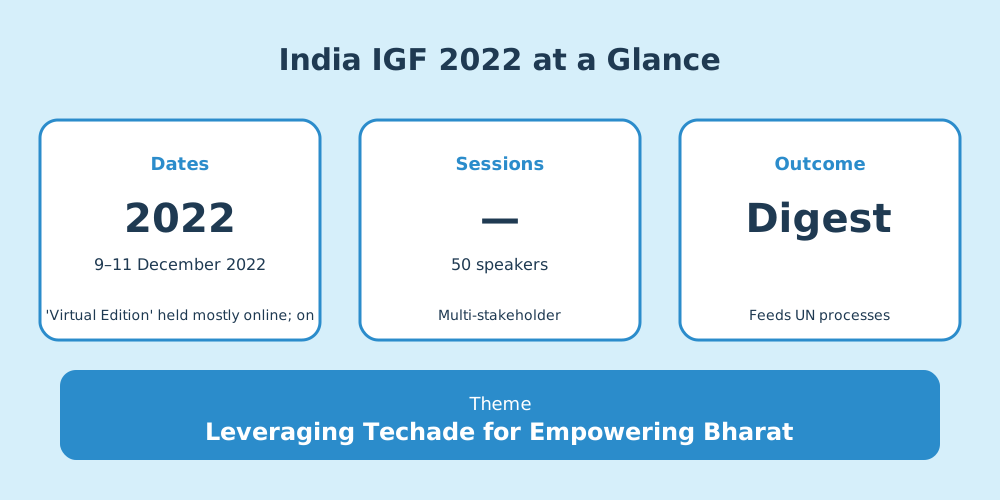
Conference at a Glance (from official records)
| Item | Detail |
|---|---|
| Official name | India Internet Governance Forum (IIGF) 2022 |
| Edition | 2nd edition |
| Dates | 9–11 December 2022 |
| Venue | 'Virtual Edition' held mostly online; only the opening and closing ceremonies took place onsite in New Delhi |
| Theme | Leveraging Techade for Empowering Bharat |
| Workshops | 17 |
| Sub-themes | 5 |
| Speakers | 50 |
| Host | Ministry of Electronics and IT (MeitY) and National Internet Exchange of India (NIXI) |
(See the source list at the end of this article.)
Discussion Digest — from the Session Records
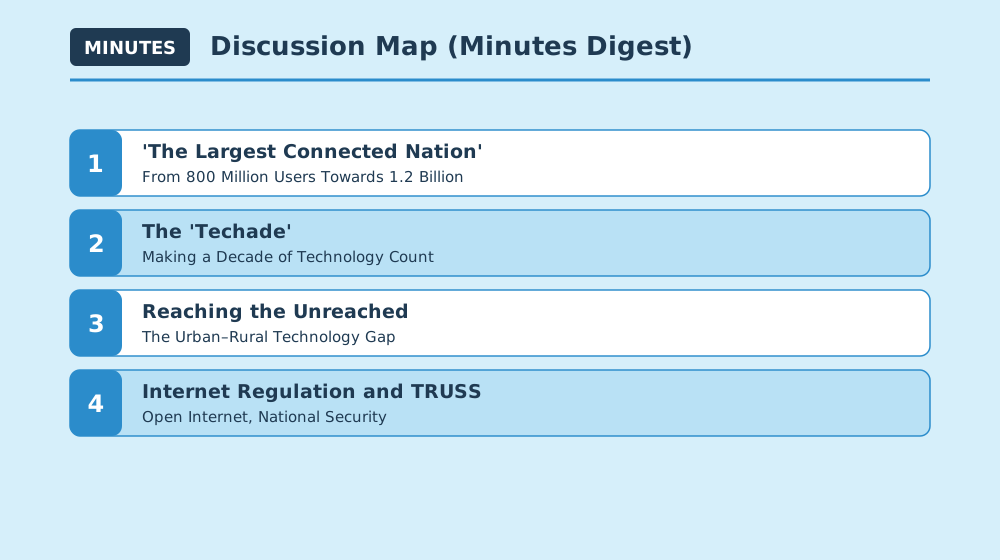
Key exchanges extracted from session records and transcripts.
1. 'The Largest Connected Nation' — From 800 Million Users Towards 1.2 Billion
Sessions: Closing ceremony (11 December, addresses by Minister of State Chandrasekhar and MeitY Secretary Alkesh Kumar Sharma)
"We are the largest 'connected' nation in the world with 800 million Indian users"
— Rajeev Chandrasekhar (Minister of State, MeitY) [4][2]
"In the next few years, this multistakeholder engagement must go beyond the intellectual academic discussion"
— Rajeev Chandrasekhar (Minister of State, MeitY) [4][2]
- With 5G and BharatNet, the world's largest rural broadband project, India's online population was projected to reach 1.2 billion [4][2]
- Chandrasekhar urged that multistakeholder dialogue translate into action keeping the internet safe, trusted and accountable for a billion 'digital nagriks' [4][2]
2. The 'Techade' — Making a Decade of Technology Count
Sessions: Overall theme, spanning the five sub-themes
- Five sub-themes structured the forum: fostering digital innovation, public digital platforms, reaching the unreached, internet regulation, and trust-resilience-safety-security (TRUSS) [1][2][3]
- The format expanded sharply from year one: 17 workshops, 2 high-level panels, 2 main sessions, 3 fireside chats and 3 flash talks [1][2][3]
- Two panels addressed South Asian regional issues, stretching the national IGF towards regional dialogue [1][2][3]
3. Reaching the Unreached — The Urban–Rural Technology Gap
Sessions: Sessions under the 'Reaching the Unreached' sub-theme and pre-events
- Extending technology's benefits from urban to rural India was framed as impossible without government, business, the technical community and civil society working together [1][2]
- Pre-events included training on Universal Acceptance — key to a multilingual internet — and sessions on voice-based internet access [1][2]
- The first Student Internet Governance Forum conference ran alongside, institutionalising youth participation [1][2]
4. Internet Regulation and TRUSS — Open Internet, National Security
Sessions: Sessions under the 'Internet Regulation' and 'TRUSS' sub-themes
- Trust, resilience, safety and security (TRUSS) anchored the regulatory debate [2][5]
- India made explicit its two-track stance: support for the multistakeholder model while retaining state authority over national-security matters [2][5]
- The backdrop was India's ongoing regulatory overhaul, from data-protection legislation to amended IT rules [2][5]
Three-Minute Short Talk — Your Questions Answered
Q. What does 'Techade' mean?
A. A government coinage blending 'tech' and 'decade' — the vision that the 2020s are India's decade of technology-driven leaps. IIGF 2022 ran under that banner.
Q. What was the headline moment?
A. The closing declaration that India is 'the largest connected nation in the world' with 800 million users, heading for 1.2 billion via 5G and BharatNet — connectivity as geopolitical weight.
Q. Why should I care?
A. India's public digital platforms like UPI became a global reference model soon after, and the forum's urban–rural gap debate mirrors last-mile challenges everywhere.
What Is India IGF? (for first-time readers)
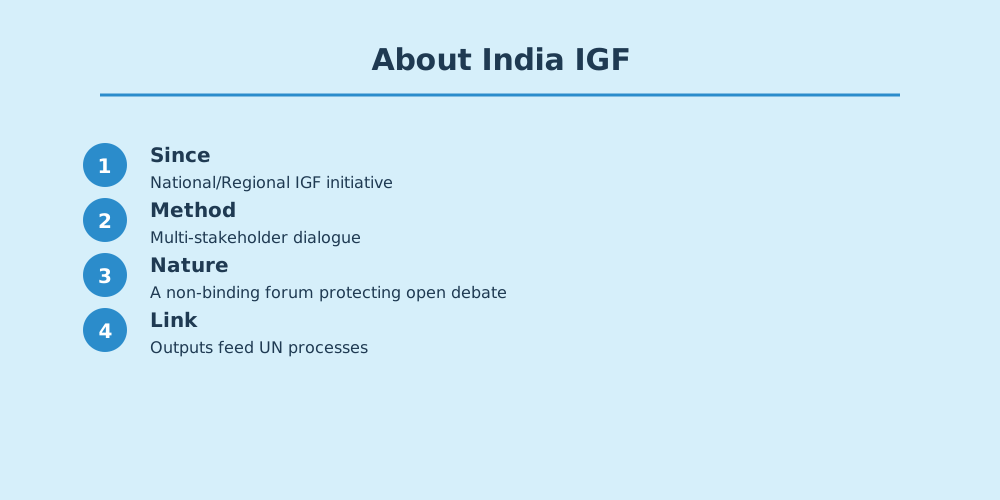
India IGF is a National or Regional IGF Initiative (NRI), aligning local internet governance discussion with global IGF principles.
Why It Matters to You
What was discussed here becomes the baseline for national digital policy, platform rules and AI regulation worldwide within a few years. The principles confirmed at the 2022 meeting are the foundation of the "next rules" for the phones, social platforms and AI services you use every day.
Sources & References
- India Internet Governance Forum 2022(公式サイト) — IIGF事務局(NIXI) (accessed 2026-07-11)
- Report of the India Internet Governance Forum 2022, 9-11 December 2022 (PDF) — 国連IGF事務局(IIGF提出報告書) (accessed 2026-07-11)
- India IGF(NRI紹介ページ) — 国連IGF事務局 (accessed 2026-07-11)
- India is largest 'connected' nation with 800 million broadband users: Chandrasekhar — Devdiscourse(ANI配信) (accessed 2026-07-11)
- India Internet Governance Forum 2022 — Drishti IAS (accessed 2026-07-11)
Quotes are translated or condensed from the records listed above. Bracketed numbers [n] refer to the source list.
Related links
- IGF official (NRI list): https://www.intgovforum.org/en/content/national-and-regional-igf-initiatives
- Japan IGF: https://japanigf.jp/
- Yuki Nakazawa's blog: https://nkzw.jp/category/igf/
Revision History
Rev. 1 — published 4 October 2022, 11:00 (Article published)
Rev. 2 — updated 16 July 2026, 20:09 (Fully revised into the in-depth edition: added the 3-line summary, minutes digest, short talk, source list and diagrams (all quotes verified against the listed sources))
— 中澤祐樹

