

The 3-Line Summary
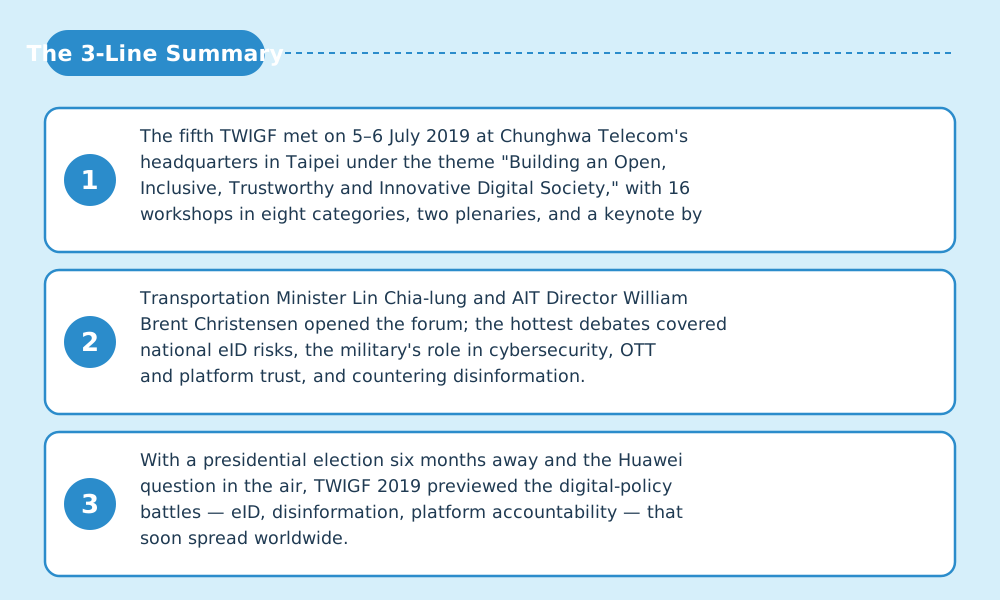
- The fifth TWIGF met on 5–6 July 2019 at Chunghwa Telecom's headquarters in Taipei under the theme "Building an Open, Inclusive, Trustworthy and Innovative Digital Society," with 16 workshops in eight categories, two plenaries, and a keynote by ICANN board member Akinori Maemura of JPNIC.
- Transportation Minister Lin Chia-lung and AIT Director William Brent Christensen opened the forum; the hottest debates covered national eID risks, the military's role in cybersecurity, OTT and platform trust, and countering disinformation.
- With a presidential election six months away and the Huawei question in the air, TWIGF 2019 previewed the digital-policy battles — eID, disinformation, platform accountability — that soon spread worldwide.
Welcome — this is the Japan IGF Support Organization. This in-depth report on Taiwan Internet Governance Forum 2019 (TWIGF 2019) draws on official outputs, session records and on-site reporting. In a hurry? The three lines above and the diagrams carry the gist.
Conference at a Glance (from official records)
| Item | Detail |
|---|---|
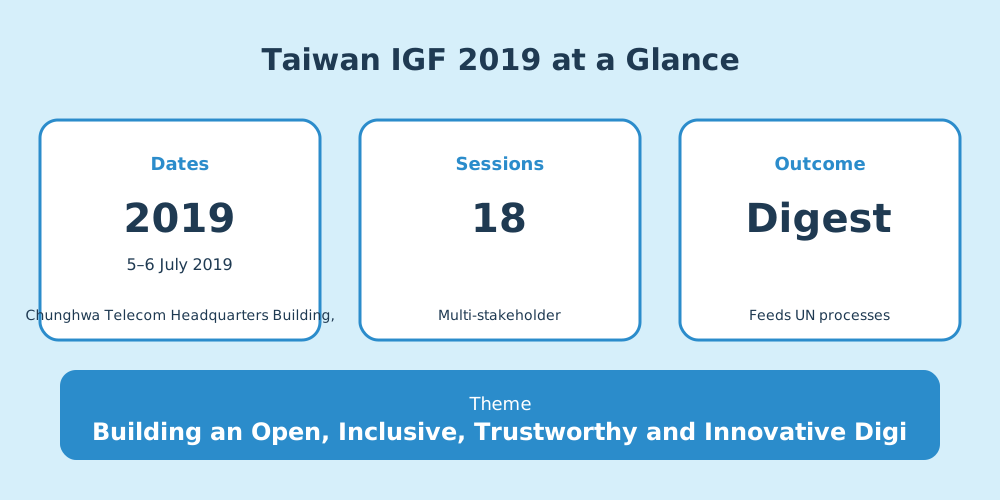
| Official name | Taiwan Internet Governance Forum 2019 (TWIGF 2019) |
| Edition | 5th edition |
| Dates | 5–6 July 2019 |
| Venue | Chunghwa Telecom Headquarters Building, Taipei |
| Theme | Building an Open, Inclusive, Trustworthy and Innovative Digital Society |
| Sessions | 18 (2 plenaries (OTT governance; building trust in digital platforms) plus 16 workshops across eight topic categories) |
| Keynote | Keynote "The way to Independence" by ICANN board member Akinori Maemura (JPNIC) |
| Opening | Opening remarks by Transportation Minister Lin Chia-lung and AIT Director William Brent Christensen |
| Host | Taiwan Internet Governance Forum (TWIGF), community-run under its multistakeholder steering group |
(See the source list at the end of this article.)
Discussion Digest — from the Session Records
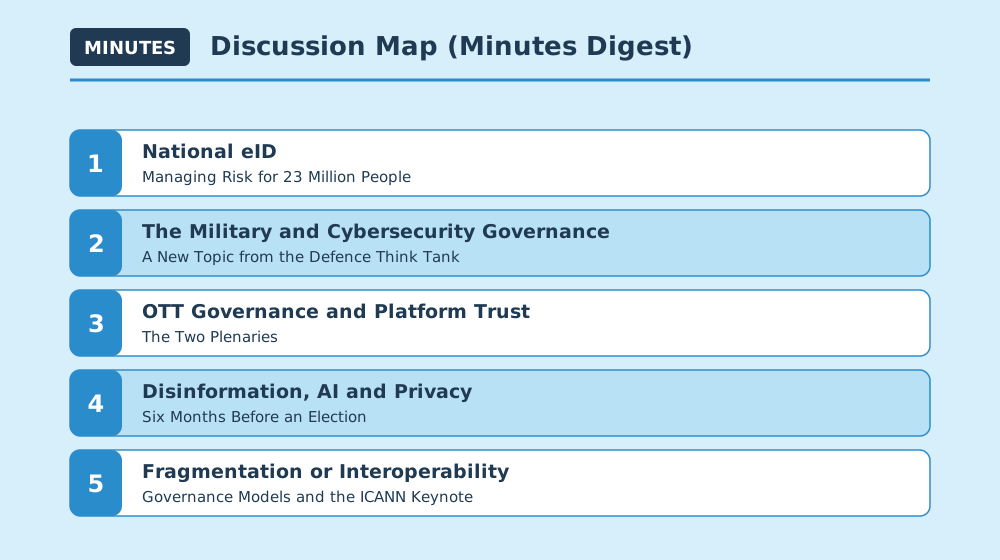
Key exchanges extracted from session records and transcripts.
1. National eID — Managing Risk for 23 Million People
Sessions: Workshop: National chip ID card — privacy and security risks
"The eID switchover involves at least 23 million people — an impact and risk on a scale the Taiwanese government has never faced (translated from Chinese)"
— T.H. Schee (participant blog) [2][3]
- A workshop scrutinised the privacy and security risks of issuing chip-embedded ID cards to the entire population [2][3]
- A data breach at the Ministry of Civil Service had surfaced about a week earlier, giving the debate over the government's capacity to manage large-scale leaks an uncomfortably concrete backdrop [2][3]
2. The Military and Cybersecurity Governance — A New Topic from the Defence Think Tank
Sessions: Workshop on the military's role in cybersecurity governance, proposed by the Institute for National Defense and Security Research (INDSR)
"The first session brought by the INDSR fully ranks among the top three most worthwhile sessions (I have heard since 2009) (translated from Chinese)"
— T.H. Schee (participant blog) [2]
- Taiwan's defence think tank INDSR stepped onto an IGF-style open stage to debate the military's role in cyberspace with civil society — a pairing rare anywhere [2]
- In his opening remarks, AIT Director Christensen highlighted Taiwan's 'pioneer experience' in excluding Chinese products, including Huawei, from core telecom infrastructure, making the security-governance nexus the year's undercurrent [2]
3. OTT Governance and Platform Trust — The Two Plenaries
Sessions: Plenaries on OTT governance and on building trust in digital platform providers
- Representatives of Google, Facebook and Netflix attended as the plenaries confronted how major platforms establish trust [2][4]
- Local OTT operators' anxiety about foreign entrants surfaced, though observers noted a shortage of solid research and policy work within the governance community [2][4]
- The debate fed into the NCC's subsequent draft law on internet audiovisual services — Taiwan's 'OTT act' [2][4]
4. Disinformation, AI and Privacy — Six Months Before an Election
Sessions: Workshops including Countering Fake News; AI — Applications and Governance; Security and Privacy in the AIoT Era
- With the January 2020 presidential election six months off, countering disinformation anchored the workshop programme, alongside a separate session on DNS blocking and domain takedowns [3][4]
- AI governance and AIoT-era privacy formed a cluster of sessions at the intersection of emerging tech and rights [3][4]
- A digital diplomacy session explored how Taiwan sustains international engagement through the internet community despite diplomatic isolation [3][4]
5. Fragmentation or Interoperability — Governance Models and the ICANN Keynote
Sessions: Keynote "The way to Independence" by ICANN board member Akinori Maemura, and related sessions
- Akinori Maemura of JPNIC, then on ICANN's board, keynoted on 'The way to Independence' — the history and future of internet resource management free from government control [3][2]
- Reviewing the forum, former NCC chairperson Nicole Chan contrasted three governance models — multistakeholder, multilateral and cyber-sovereignty — arguing the core task is to prevent internet fragmentation and preserve inclusiveness and interoperability [3][2]
Three-Minute Short Talk — Your Questions Answered
Q. What was the highlight?
A. A defence think tank walking into a civil-society forum to debate the military's role in cybersecurity — a session one veteran participant ranked among the top three he had heard in a decade of IGFs.
Q. What was the eID fight about?
A. A plan to issue chip-embedded ID cards to every citizen. With a government data breach revealed just days before, panellists asked bluntly whether the state could manage risk on a 23-million-person scale.
Q. Why should I care?
A. eID, disinformation ahead of elections, OTT rules, Huawei and 5G security — every debate at TWIGF 2019 played out in other democracies within a couple of years.
What Is Taiwan IGF? (for first-time readers)
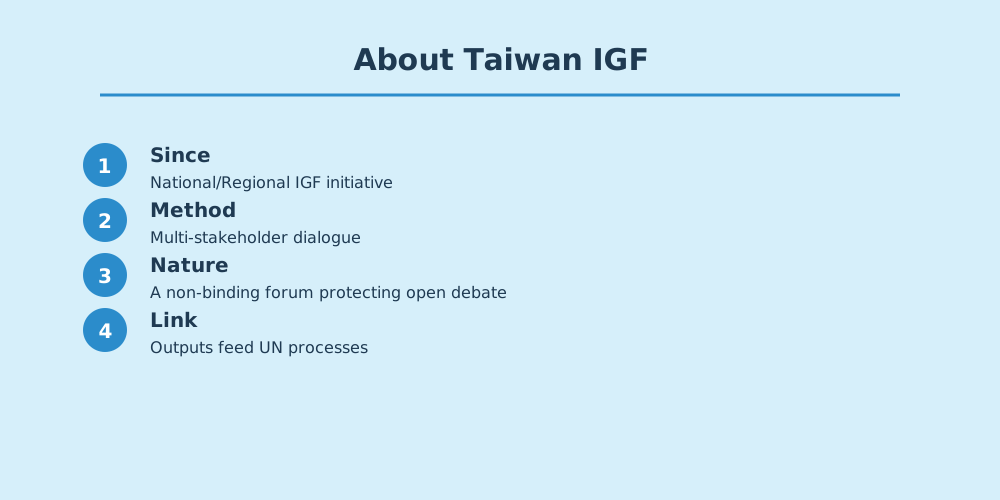
Taiwan IGF is a National or Regional IGF Initiative (NRI), aligning local internet governance discussion with global IGF principles.
Why It Matters to You
What was discussed here becomes the baseline for national digital policy, platform rules and AI regulation worldwide within a few years. The principles confirmed at the 2019 meeting are the foundation of the "next rules" for the phones, social platforms and AI services you use every day.
Sources & References
- 臺灣網路治理論壇 2019(大会公式サイト・議程) — 臺灣網路治理論壇(TWIGF) (accessed 2026-07-11)
- 今年的台灣網路治理論壇 (2019)(参加報告) — T.H. Schee(徐子涵)個人ブログ (accessed 2026-07-11)
- 2019 台灣網路治理論壇,這些趨勢你應該要知道!(INSIDE掲載コラムの転載) — 詹婷怡(元NCC主任委員), DTA台灣數位企業總會 (accessed 2026-07-11)
- TWIGF 2019臺灣網路治理論壇(開催案内) — 国立臺北大学犯罪学研究所 (accessed 2026-07-11)
- 歷屆年會(TWIGF公式アーカイブ一覧) — 臺灣網路治理論壇(TWIGF) (accessed 2026-07-11)
Quotes are translated or condensed from the records listed above. Bracketed numbers [n] refer to the source list.
Related links
- IGF official (NRI list): https://www.intgovforum.org/en/content/national-and-regional-igf-initiatives
- Japan IGF: https://japanigf.jp/
- Yuki Nakazawa's blog: https://nkzw.jp/category/igf/
Revision History
Rev. 1 — published 4 July 2019, 16:00 (Article published)
Rev. 2 — updated 16 July 2026, 20:09 (Fully revised into the in-depth edition: added the 3-line summary, minutes digest, short talk, source list and diagrams (all quotes verified against the listed sources))
— 中澤祐樹