


The 3-Line Summary
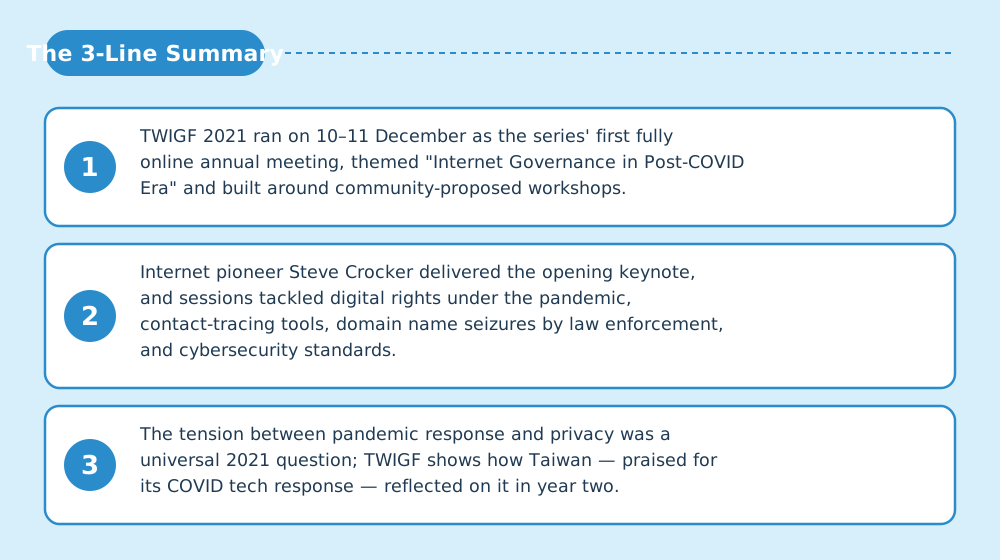
- TWIGF 2021 ran on 10–11 December as the series' first fully online annual meeting, themed "Internet Governance in Post-COVID Era" and built around community-proposed workshops.
- Internet pioneer Steve Crocker delivered the opening keynote, and sessions tackled digital rights under the pandemic, contact-tracing tools, domain name seizures by law enforcement, and cybersecurity standards.
- The tension between pandemic response and privacy was a universal 2021 question; TWIGF shows how Taiwan — praised for its COVID tech response — reflected on it in year two.
Welcome — this is the Japan IGF Support Organization. This in-depth report on TWIGF 2021 (Taiwan Internet Governance Forum) draws on official outputs, session records and on-site reporting. In a hurry? The three lines above and the diagrams carry the gist.
📍 The series' first fully online annual meeting; no physical venue, with sessions streamed on YouTube
Conference at a Glance (from official records)
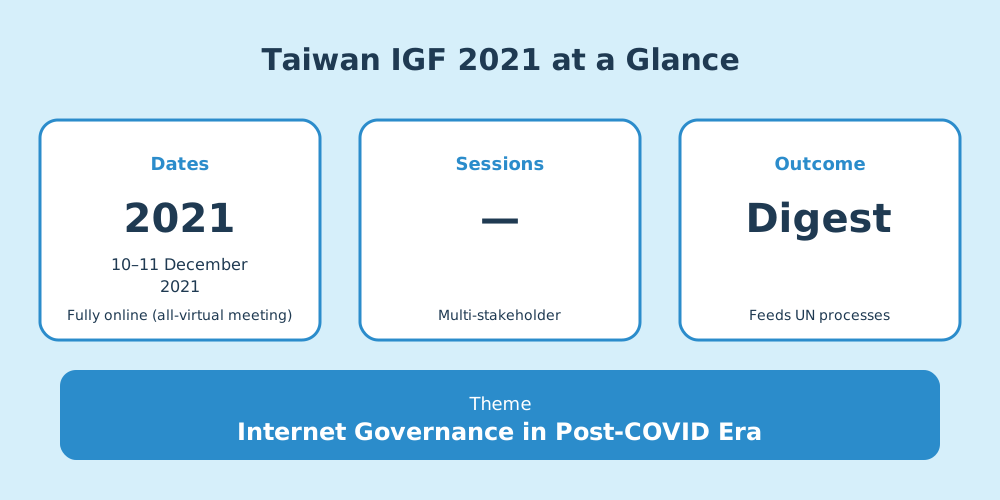
| Item | Detail |
|---|---|
| Official name | TWIGF 2021 (Taiwan Internet Governance Forum) |
| Edition | 7th annual meeting |
| Dates | 10–11 December 2021 |
| Venue | Fully online (all-virtual meeting) |
| Theme | Internet Governance in Post-COVID Era |
| Host | Taiwan Internet Governance Forum (TWIGF; secretariat: NII Enterprise Promotion Association) |
(See the source list at the end of this article.)
Discussion Digest — from the Session Records
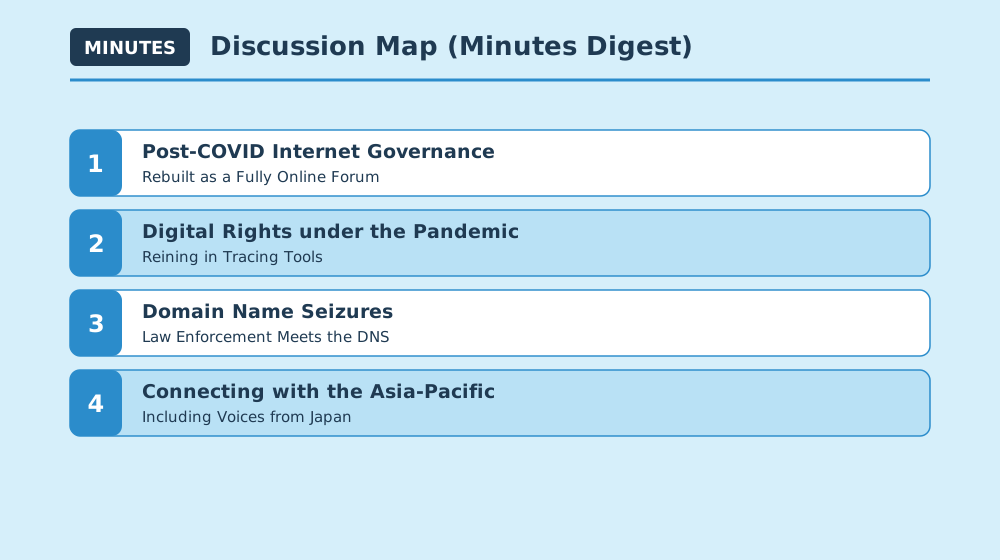
Key exchanges extracted from session records and transcripts.
1. Post-COVID Internet Governance — Rebuilt as a Fully Online Forum
Sessions: Overall programme (six sub-themes, around ten community-proposed workshop slots)
- Six sub-themes structured the meeting: Internet infrastructure; human rights and data protection; economy and digital transformation; cybercrime and cybersecurity; environmental sustainability; and cross-cutting issues [1][2][3]
- Workshops were community-proposed, 90-minute sessions with three to five panellists — and unlike 2020's hybrid format, every session ran online [1][2][3]
- Steve Crocker of the Edgemoor Research Institute, famed as the author of RFC 1 in the Internet's earliest days, gave the opening keynote [1][2][3]
2. Digital Rights under the Pandemic — Reining in Tracing Tools
Sessions: Sessions on COVID-19 and digital rights, rights protection during the pandemic, and digital tracing tools (10–11 December)
- International panellists including Lizzie O'Shea (Digital Rights Watch, Australia) and Prasanth Sugathan (SFLC.in, India) joined Taiwanese researchers and civil society to ask how pandemic-era surveillance can be kept in check [2][4]
- Using Taiwan's own contact-registration and tracing schemes as the case study, Henry Tsai, T.H. Schee and Cheng-Tsung Lo examined legal controls on tracing tools [2][4]
- Civil liberties advocates pressed the 'exit' question: how emergency measures get rolled back once the emergency ends [2][4]
3. Domain Name Seizures — Law Enforcement Meets the DNS
Sessions: Session on domain name seizure (10 December, moderated by Henry Tsai)
- TWNIC CEO Kenny Huang sat down with judges, prosecutors and lawyers to work through the technical and legal issues of seizing domain names in criminal investigations [2]
- The session localised a global dilemma: what registry-level takedowns mean for free expression and due process [2]
4. Connecting with the Asia-Pacific — Including Voices from Japan
Sessions: Plenary Panel 2 (11 December, moderated by Edmon Chung)
- Moderated by DotAsia's Edmon Chung, the plenary brought together Akinori Maemura of Japan's JPNIC, TWNIC's Kenny Huang and ICANN's Jia-Rong Low to survey regional Internet governance challenges [2][4]
- Going fully online lowered the barrier for overseas speakers, enabling cross-border sessions on EU digital governance and the private sector's role [2][4]
- European experts such as Wout de Natris and Mark Carvell joined the session on cybersecurity standards [2][4]
Three-Minute Short Talk — Your Questions Answered
Q. What made TWIGF 2021 different?
A. It was the first fully online annual meeting since the forum began in 2015 — no physical venue at all — with a theme that faced the pandemic head-on: Internet governance in the post-COVID era.
Q. Who spoke?
A. Internet pioneer Steve Crocker opened with the keynote, joined across two days by JPNIC's Akinori Maemura from Japan, ICANN staff, digital rights advocates from Australia and India, and Taiwanese judges, lawyers and engineers.
Q. Why should I care?
A. The contact-tracing-versus-privacy debate it hosted played out in every country, and its answers — legal limits and exit strategies for emergency tech — remain the playbook for the next crisis.
What Is Taiwan IGF? (for first-time readers)
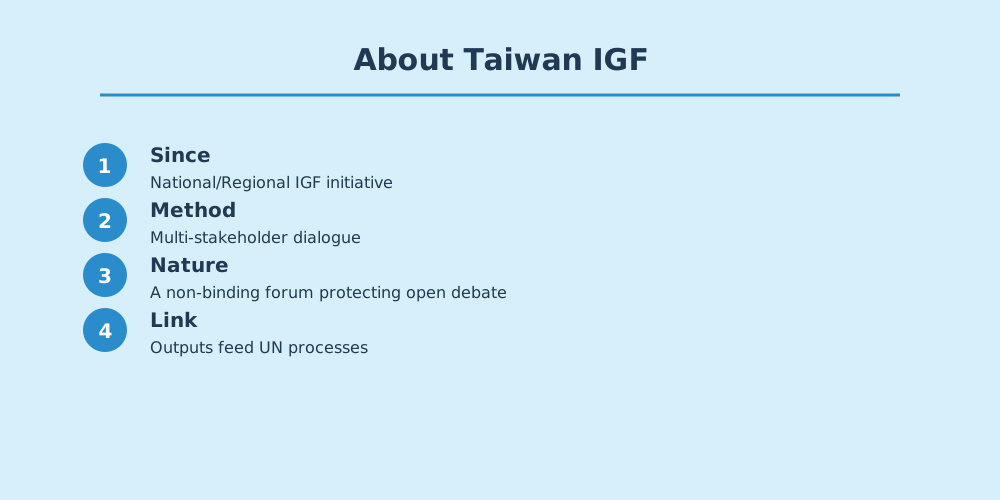
Taiwan IGF is a National or Regional IGF Initiative (NRI), aligning local internet governance discussion with global IGF principles.
Why It Matters to You
What was discussed here becomes the baseline for national digital policy, platform rules and AI regulation worldwide within a few years. The principles confirmed at the 2021 meeting are the foundation of the "next rules" for the phones, social platforms and AI services you use every day.
Sources & References
- TWIGF 2021(公式ページ) — TWIGF (accessed 2026-07-11)
- TWIGF 2021 與談人|Speaker(登壇者一覧) — TWIGF (accessed 2026-07-11)
- 2021臺灣網路治理論壇工作坊即日起徵求提案(ワークショップ公募) — TWIGF (accessed 2026-07-11)
- TWIGF 2021 (December 10-11) 録画プレイリスト — Taiwan IGF 秘書處(YouTube) (accessed 2026-07-11)
Quotes are translated or condensed from the records listed above. Bracketed numbers [n] refer to the source list.
Related links
- IGF official (NRI list): https://www.intgovforum.org/en/content/national-and-regional-igf-initiatives
- Japan IGF: https://japanigf.jp/
- Yuki Nakazawa's blog: https://nkzw.jp/category/igf/
Revision History
Rev. 1 — published 5 October 2021, 12:00 (Article published)
Rev. 2 — updated 16 July 2026, 20:09 (Fully revised into the in-depth edition: added the 3-line summary, minutes digest, short talk, source list and diagrams (all quotes verified against the listed sources))
— 中澤祐樹

