


The 3-Line Summary
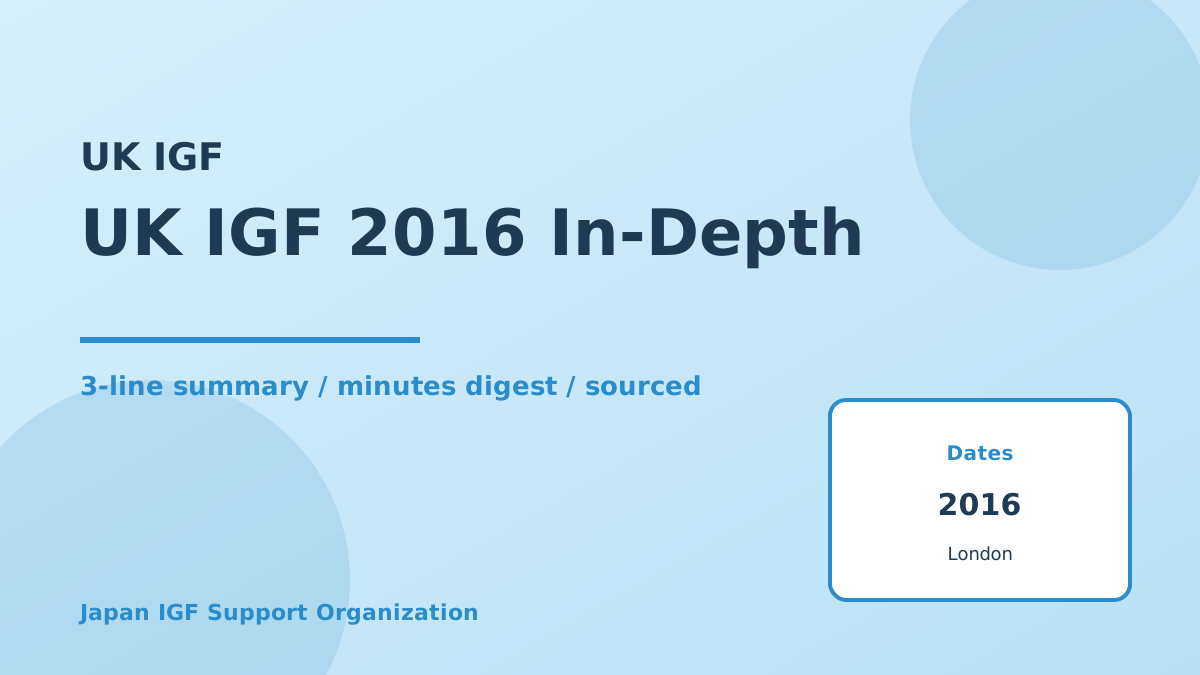
- UK IGF 2016 met on 17 November at 1 Drummond Gate, Victoria, London – weeks after the IANA transition completed – with US NTIA chief Lawrence Strickling and UK Digital Minister Matt Hancock headlining.
- The day covered the completed IANA transition, post-Brexit internet policy, the internet and politics (fake news), e-identification and privacy, cyber-attack preparedness and children online. Hancock declared: 'The Internet should be free, not lawless… Freedom is a framework.'
- Held in the shadow of the US election and the Brexit vote, the meeting's 'freedom within rules' doctrine foreshadowed the UK's later online-harms regulation.
Welcome — this is the Japan IGF Support Organization. This in-depth report on UK Internet Governance Forum 2016 draws on official outputs, session records and on-site reporting. In a hurry? The three lines above and the diagrams carry the gist.
Conference at a Glance (from official records)
| Item | Detail |
|---|---|
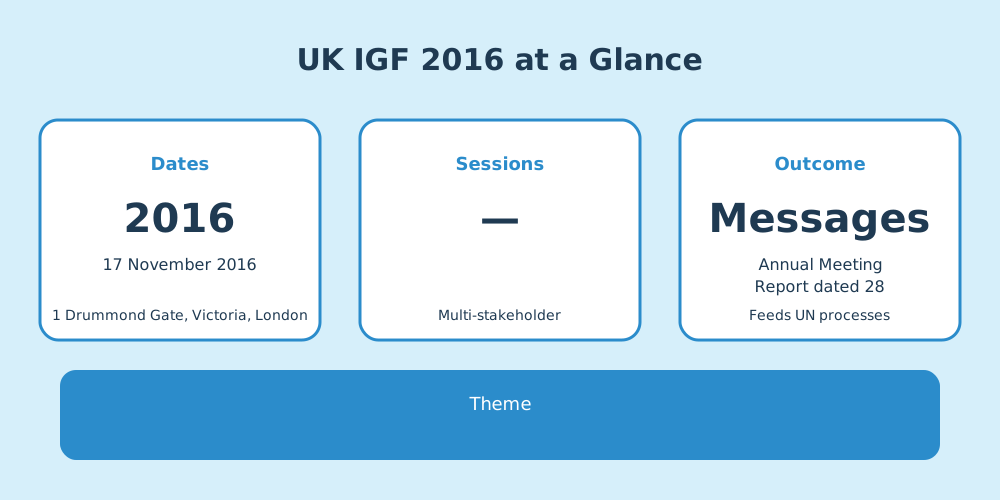
| Official name | UK Internet Governance Forum 2016 |
| Dates | 17 November 2016 |
| Venue | 1 Drummond Gate, Victoria, London |
| Theme | Regional governance themes |
| Outcome | Annual Meeting Report dated 28 November 2016, written by Zack Coleman (Valideus Ltd) |
(See the source list at the end of this article.)
Discussion Digest — from the Session Records
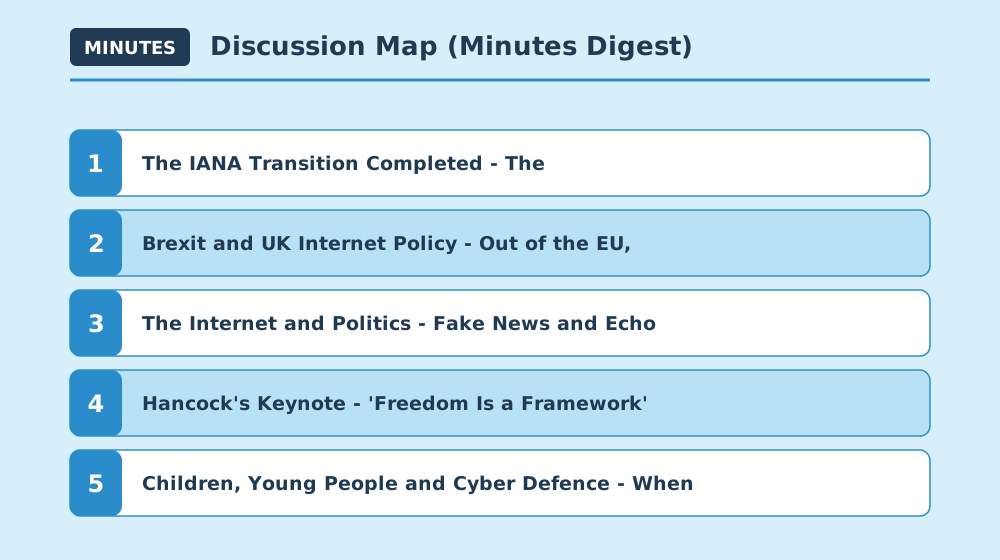
Key exchanges extracted from session records and transcripts.
1. The IANA Transition Completed – The Multistakeholder Model's Biggest Proof
Sessions: 'US Internet Governance' – Lawrence Strickling, US Assistant Secretary of Commerce and head of NTIA
- With the IANA functions contract expired on 1 October 2016, Strickling presented the transition as a tremendous success for the multistakeholder approach – the fulfilment of a near two-decade US commitment, irreversible by the next administration [1][4]
- The global community had poured over 26,000 working hours, 33,000 mailing-list messages and 600+ meetings into the transition proposal [1][4]
- He suggested consensus-based decision-making could extend to data protection, software vulnerabilities and AI, while citing the NetMundial Initiative as a top-down failure that showed the model's limits [1][4]
2. Brexit and UK Internet Policy – Out of the EU, Not Out of the World
Sessions: Plenary One: 'Brexit, what next for UK Internet Policy?'
- Former MEP Malcolm Harbour noted every piece of UK internet legislation had been developed with the European Parliament, welcomed UK adoption of the new EU data protection regulation, and concluded the UK 'cannot absent ourselves from the global political process' [1]
- The Great Repeal Bill was expected to require 2,000-3,000 statutory instruments – to be handled in parallel with IoT and AI regulatory challenges [1]
- Demos's Jamie Bartlett urged legislators to stress-test rules against future firms – such as a company existing purely on a blockchain, paid in cryptocurrency [1]
3. The Internet and Politics – Fake News and Echo Chambers
Sessions: Plenary Two: 'What is the Impact of the Internet on Political Debate?'
- FT's Seb Payne opened with the statistic that fake news had received eight times the prominence of factual stories in the US election [1]
- Demos's Carl Miller argued the Facebook news editor was 'the most powerful editor in the world' operating without scrutiny or redress, proposed digital literacy as the remedy – and floated a 'Royal College of Algorithmicians' [1]
- 'The Rise of Digital Politics' found 50% of respondents used social media, 70% of whom felt closer to politics and 40% more likely to vote – evidence the internet can also boost youth participation [1]
4. Hancock's Keynote – 'Freedom Is a Framework'
Sessions: Keynote address by Rt Hon Matt Hancock MP, Minister for Digital and Culture
"The Internet should be free, not lawless. Open not laissez-faire. Liberal, not libertarian. Freedom is a framework."
— Rt Hon Matt Hancock MP (Minister for Digital and Culture) [1][2]
"we do not entrust the rules of the Internet to any one country or part of society. Rather, because we value its freedom and openness so much, we entrust it only to a parliament of society, in which we all have a voice."
— Rt Hon Matt Hancock MP (Minister for Digital and Culture) [1][2]
- Rejecting a censored, state-controlled internet, Hancock argued the boundaries society accepts on offline speech should apply online too – a case for 'self-confidence in our values'. The full text is on gov.uk [1][2]
- He noted that national and regional multistakeholder events had 'replicated the UK model' in other countries [1][2]
5. Children, Young People and Cyber Defence – When 87% of Kids Are Online
Sessions: Baroness Shields keynote / Plenary Four: 'An Internet for Children and Young People' / 'Is the UK Prepared for the Threat of a Cyber Attack?'
- Citing Ofcom, Baroness Shields noted 87% of 5-15s go online and 12-15s spend nearly 19 hours a week online – overtaking TV for the first time – and set out the UK-led WeProtect alliance against online child sexual exploitation [1][5]
- The Diana Award youth panel (aged 14-18) testified they block bullies rather than report them, distrusting report systems with weak sanctions – and praised Facebook's human response within 24-48 hours as best practice [1][5]
- Professor Anthony Finkelstein, Chief Scientific Adviser for National Security, argued democratic processes are now part of critical national infrastructure and must be factored into cyber-protection strategy [1][5]
Three-Minute Short Talk — Your Questions Answered
Q. Why does 2016 matter so much?
A. On 1 October that year the US government stepped back from overseeing the internet's core resources (the IANA functions), completing the transition to the global community. The architect of that handover, NTIA chief Lawrence Strickling, gave his own verdict in London weeks later.
Q. What was the most contentious topic?
A. Fake news. Right after the US election, journalists and researchers clashed over whether social media distorts politics and whether platforms should bear editorial responsibility – alongside the fate of UK internet policy after Brexit.
Q. Why should I care?
A. The IANA transition underpins how the internet is run everywhere. And Hancock's 'freedom is a framework' doctrine became the blueprint for the UK's online-harms regulation – an approach platform-regulation debates worldwide still reference.
What Is UK IGF? (for first-time readers)
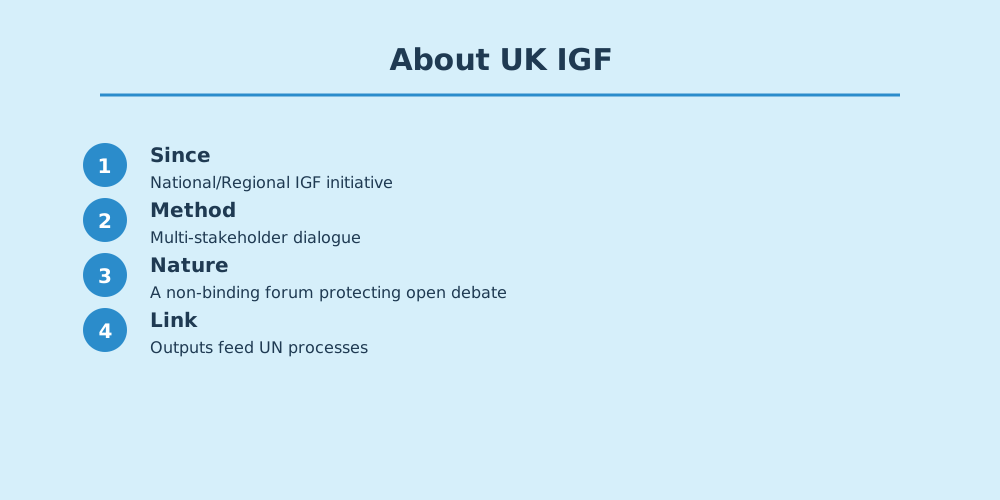
UK IGF is a National or Regional IGF Initiative (NRI), aligning local internet governance discussion with global IGF principles.
Why It Matters to You
What was discussed here becomes the baseline for national digital policy, platform rules and AI regulation worldwide within a few years. The principles confirmed at the 2016 meeting are the foundation of the "next rules" for the phones, social platforms and AI services you use every day.
Sources & References
- UK IGF Annual Meeting Report 2016(年次会合報告書PDF) — UK IGF / Valideus Ltd (accessed 2026-07-11)
- The future of the internet: freedom in a framework(ハンコック演説全文) — 英国政府(GOV.UK) (accessed 2026-07-11)
- 2016 UK IGF(公式イベントページ、開催日・会場の根拠) — UK IGF(公式サイト) (accessed 2026-07-11)
- Remarks of Assistant Secretary Strickling at the UK Internet Governance Forum — 米国商務省NTIA(直接アクセスは403のため検索スニペットと年次報告書で内容確認) (accessed 2026-07-11)
- An internet for children and young people(シールズ男爵夫人演説全文) — 英国政府(GOV.UK) (accessed 2026-07-11)
Quotes are translated or condensed from the records listed above. Bracketed numbers [n] refer to the source list.
Related links
- IGF official (NRI list): https://www.intgovforum.org/en/content/national-and-regional-igf-initiatives
- Japan IGF: https://japanigf.jp/
- Yuki Nakazawa's blog: https://nkzw.jp/category/igf/
Revision History
Rev. 1 — published 25 October 2016, 15:00 (Article published)
Rev. 2 — updated 16 July 2026, 20:09 (Fully revised into the in-depth edition: added the 3-line summary, minutes digest, short talk, source list and diagrams (all quotes verified against the listed sources))
— 中澤祐樹

