

The 3-Line Summary
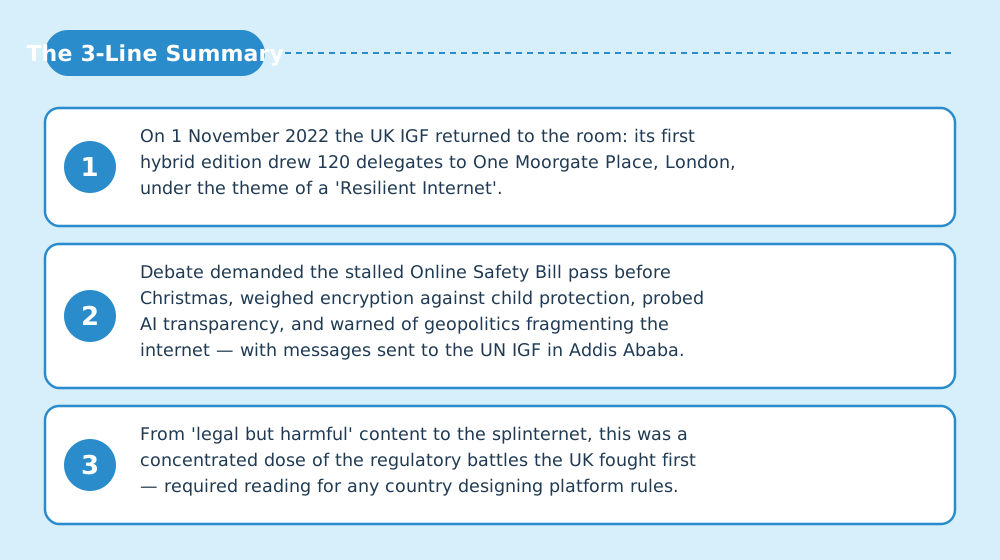
- On 1 November 2022 the UK IGF returned to the room: its first hybrid edition drew 120 delegates to One Moorgate Place, London, under the theme of a 'Resilient Internet'.
- Debate demanded the stalled Online Safety Bill pass before Christmas, weighed encryption against child protection, probed AI transparency, and warned of geopolitics fragmenting the internet — with messages sent to the UN IGF in Addis Ababa.
- From 'legal but harmful' content to the splinternet, this was a concentrated dose of the regulatory battles the UK fought first — required reading for any country designing platform rules.
Welcome — this is the Japan IGF Support Organization. This in-depth report on UK IGF 2022 draws on official outputs, session records and on-site reporting. In a hurry? The three lines above and the diagrams carry the gist.
Conference at a Glance (from official records)
| Item | Detail |
|---|---|
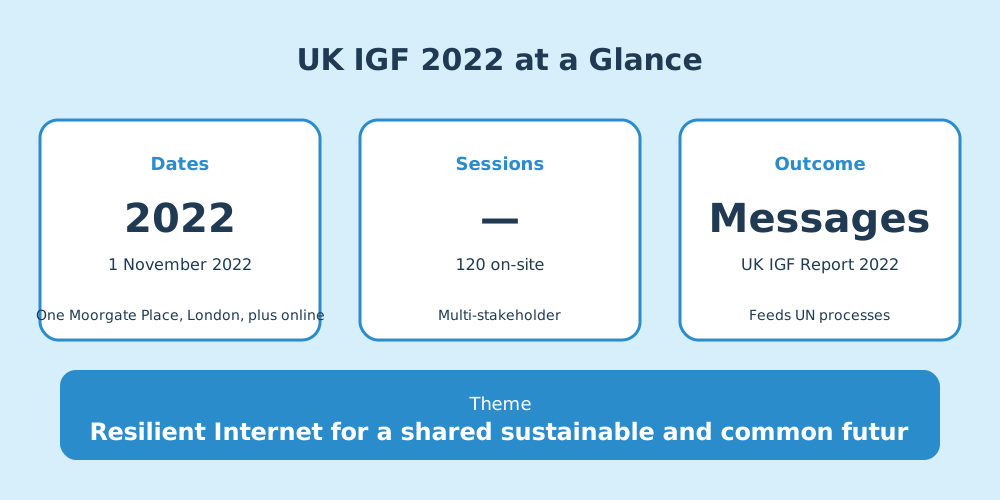
| Official name | UK IGF 2022 |
| Dates | 1 November 2022 |
| Venue | One Moorgate Place, London, plus online — the first hybrid UK IGF after two virtual years |
| Theme | Resilient Internet for a shared sustainable and common future |
| Participants | 120 (120 delegates from government, parliament, civil society, industry, the technical community and academia; 71% registered for the first time) |
| Host | UK IGF Steering Committee (secretariat: Nominet); sponsored in 2022 by Nominet and ICANN |
| Outcome | UK IGF Report 2022, carrying key messages to the UN IGF in Addis Ababa (28 November – 2 December 2022) |
(See the source list at the end of this article.)
Discussion Digest — from the Session Records
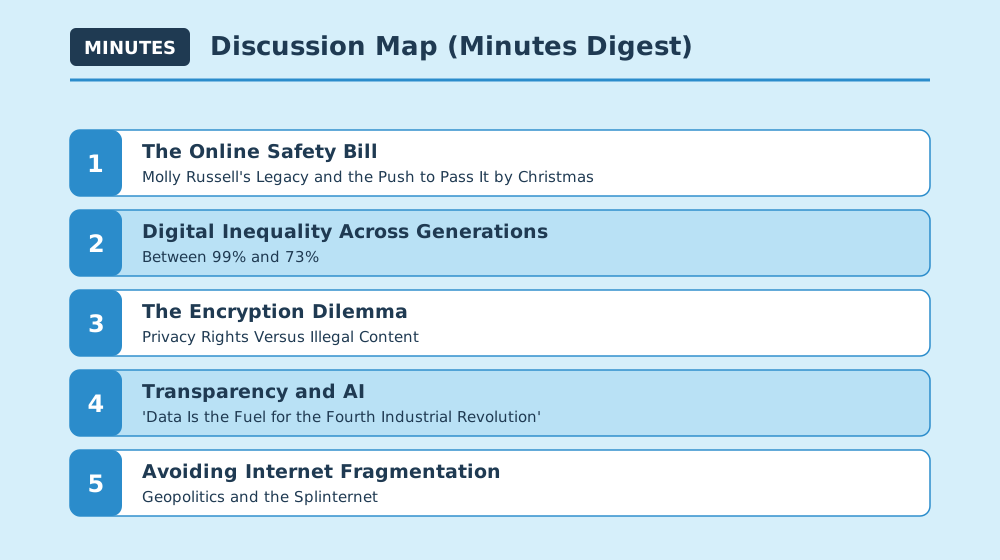
Key exchanges extracted from session records and transcripts.
1. The Online Safety Bill — Molly Russell's Legacy and the Push to Pass It by Christmas
Sessions: Address by Shadow DCMS Secretary Lucy Powell MP + 'Online Safety' panel (Damian Collins MP, Sharon Gaffka, Jon Higham, Parven Kaur)
"To win the race, players need to know the rules."
— Lucy Powell MP (Shadow DCMS Secretary of State) [1][4]
- Damian Collins MP cited the inquest into 14-year-old Molly Russell's death as tragic proof of the life-threatening harms AI-driven recommendation tools can cause [1][4]
- Parven Kaur criticised letting platforms decide what counts as 'legal but harmful' as allowing them 'to mark their own homework' [1][4]
- Powell warned the Bill could run out of parliamentary time if it missed the Lords by Christmas, adding that a third of households struggle to pay for broadband and 97% of low-income families miss out on the social tariff [1][4]
2. Digital Inequality Across Generations — Between 99% and 73%
Sessions: Panel 'Digital Inequalities: Barriers for Young and Old' (chaired by Sonia Livingstone, with Jess Barrett, Lizzie Coles-Kemp, Cliff Manning, Sally West)
- Livingstone's Ofcom figures: 99% of 16–24s use the internet at home versus 73% of those 75 and over; Cliff Manning noted 26% of children and young people do not own a laptop or computer, tying access to poverty [1][4]
- Jess Barrett argued young people should not be forced into the role of family 'digital lead', as they can lack the life experience and critical thinking it requires — parents need digital resilience training too [1][4]
- Sally West (Age UK): as banking and GP booking move online, growing numbers find life harder; people unable or unwilling to be online must still be able to access critical services [1][4]
3. The Encryption Dilemma — Privacy Rights Versus Illegal Content
Sessions: Panel 'Encryption' (Alec Muffett, Dan Sexton, Stephen Bonner)
- Dan Sexton (CTO, Internet Watch Foundation): encryption underpins a functional internet but is misused to share illegal content — privacy is a right, but not an absolute one if it contributes to harm [1][4]
- Stephen Bonner (ICO) argued mechanisms can protect private communication while limiting harm, such as blocking DMs to 13–15-year-olds and opt-in messaging for 16–18s, plus privacy enhancing technologies that spot harmful behaviour patterns [1][4]
- Alec Muffett, who led the team adding end-to-end encryption to Facebook Messenger, stressed that everyone has different threat models and trust underpins a secure digital environment [1][4]
4. Transparency and AI — 'Data Is the Fuel for the Fourth Industrial Revolution'
Sessions: Panel 'Transparency and AI' (Stephen Metcalfe MP, Bridget Boakye, Dr Evert Haasdijk)
"Data is the fuel for the fourth industrial revolution."
— Stephen Metcalfe MP (Co-Chair, All-Party Parliamentary Group on AI) [1][4]
- Metcalfe asked whether enough people know their data is being collected, how and why — urging greater scrutiny of intended and unintended bias [1][4]
- Bridget Boakye (Tony Blair Institute) noted low trust in big tech and government data collection and proposed an 'assurance ecosystem' where those who collect data also deliver the standards for its use [1][4]
- Dr Evert Haasdijk (Deloitte), drawing on AI used against financial crime, called for transparency across sectors about decisions to automate, the rationale for data collection and redress for errors [1][4]
5. Avoiding Internet Fragmentation — Geopolitics and the Splinternet
Sessions: Panel 'Avoiding Internet Fragmentation' (chaired by Margot James, with Scott Malcomson, Marjorie Buchser, Akos Erzse, Emily Taylor)
"Multi-stakeholder governance is 'less beautiful in implementation than it is in concept'."
— Emily Taylor (Chatham House) [1][4]
- Former digital minister Margot James chaired, candidly admitting the government she served could have done better on fragmentation, and pointed to the UN Global Digital Compact [1][4]
- Emily Taylor warned that the triad of regulation, sanctions and trade wars is accelerating fragmentation, with China's microchip developments risking irreversible change [1][4]
- Marjorie Buchser cautioned that if liberal democracies cannot agree a normative framework for a free, open and secure internet, other nations may be drawn into more oppressive models [1][4]
Three-Minute Short Talk — Your Questions Answered
Q. What did the forum decide?
A. Nothing binding — it's the UK's multistakeholder forum, back in person after three years. Its key messages went straight to the UN IGF in Addis Ababa later that month.
Q. What was most contested?
A. The Online Safety Bill. With a new PM mulling a rewrite, speakers warned it could die if it missed the Lords by Christmas — and letting platforms judge 'legal but harmful' content was likened to marking their own homework.
Q. Why should I care?
A. The encryption-versus-child-safety trade-off is live in every jurisdiction, and the Molly Russell inquest — which tied a teenager's death to recommendation algorithms — became a global turning point for platform regulation.
What Is UK IGF? (for first-time readers)
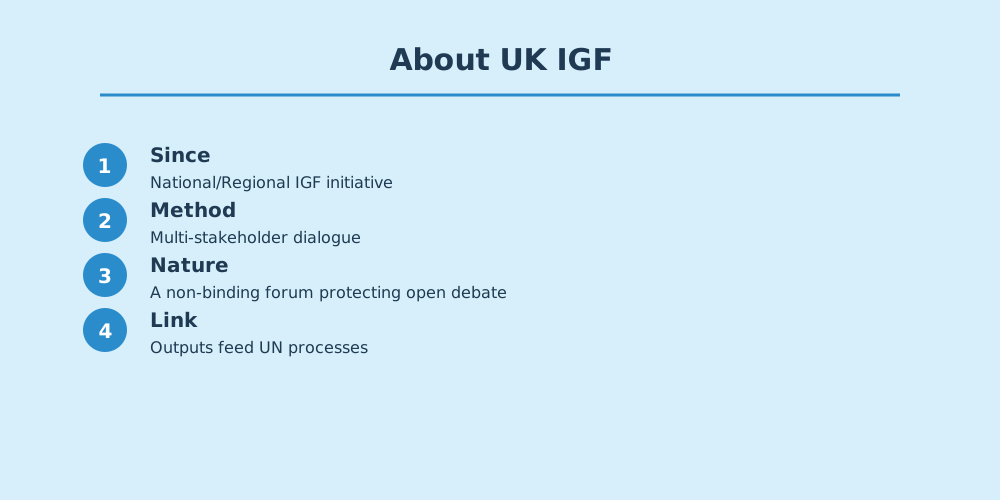
UK IGF is a National or Regional IGF Initiative (NRI), aligning local internet governance discussion with global IGF principles.
Why It Matters to You
What was discussed here becomes the baseline for national digital policy, platform rules and AI regulation worldwide within a few years. The principles confirmed at the 2022 meeting are the foundation of the "next rules" for the phones, social platforms and AI services you use every day.
Sources & References
- UK Internet Governance Forum Report 2022 (PDF) — UK IGF(事務局: Nominet) (accessed 2026-07-11)
- UK IGF 2022(公式イベントページ) — UK IGF (accessed 2026-07-11)
- UK IGF 2022 Highlights(セッション録画) — UK IGF (accessed 2026-07-11)
- 2022 Agenda — UK IGF (accessed 2026-07-11)
Quotes are translated or condensed from the records listed above. Bracketed numbers [n] refer to the source list.
Related links
- IGF official (NRI list): https://www.intgovforum.org/en/content/national-and-regional-igf-initiatives
- Japan IGF: https://japanigf.jp/
- Yuki Nakazawa's blog: https://nkzw.jp/category/igf/
Revision History
Rev. 1 — published 13 October 2022, 15:00 (Article published)
Rev. 2 — updated 16 July 2026, 20:09 (Fully revised into the in-depth edition: added the 3-line summary, minutes digest, short talk, source list and diagrams (all quotes verified against the listed sources))
— 中澤祐樹