

The 3-Line Summary
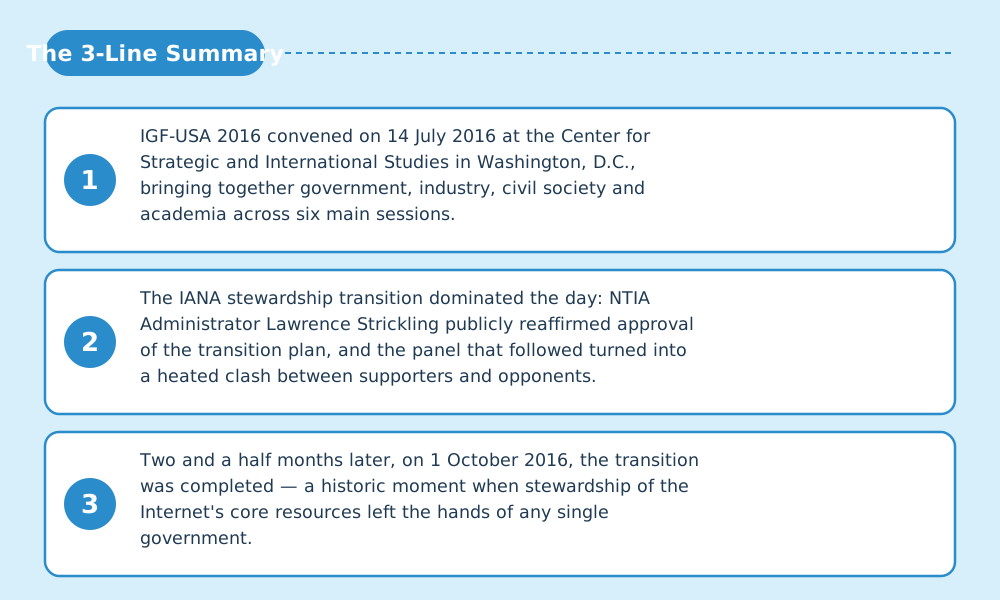
- IGF-USA 2016 convened on 14 July 2016 at the Center for Strategic and International Studies in Washington, D.C., bringing together government, industry, civil society and academia across six main sessions.
- The IANA stewardship transition dominated the day: NTIA Administrator Lawrence Strickling publicly reaffirmed approval of the transition plan, and the panel that followed turned into a heated clash between supporters and opponents.
- Two and a half months later, on 1 October 2016, the transition was completed — a historic moment when stewardship of the Internet's core resources left the hands of any single government.
Welcome — this is the Japan IGF Support Organization. This in-depth report on IGF-USA 2016 draws on official outputs, session records and on-site reporting. In a hurry? The three lines above and the diagrams carry the gist.
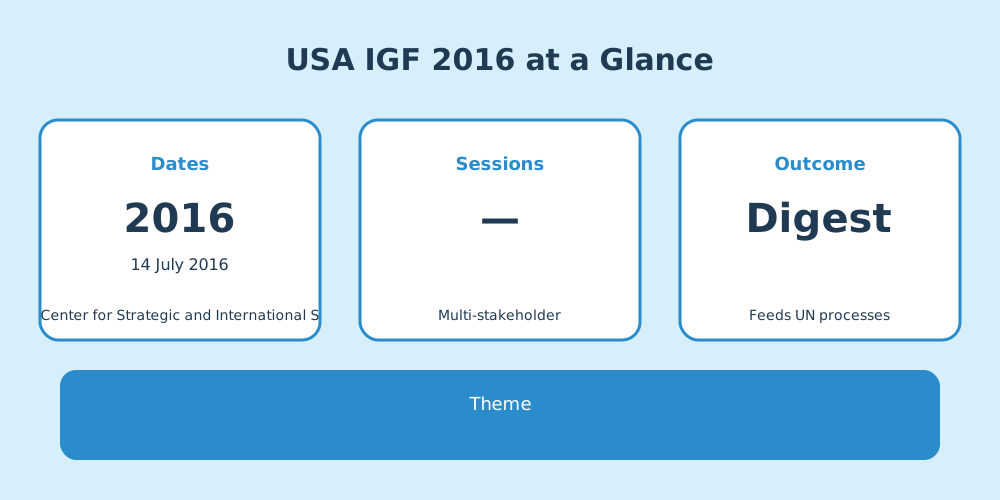
Conference at a Glance (from official records)
| Item | Detail |
|---|---|
| Official name | IGF-USA 2016 |
| Dates | 14 July 2016 |
| Venue | Center for Strategic and International Studies (CSIS), Washington, D.C. |
| Theme | Regional governance themes |
| Host | IGF-USA multistakeholder steering group (civil society, industry, academia and government) |
(See the source list at the end of this article.)
Discussion Digest — from the Session Records
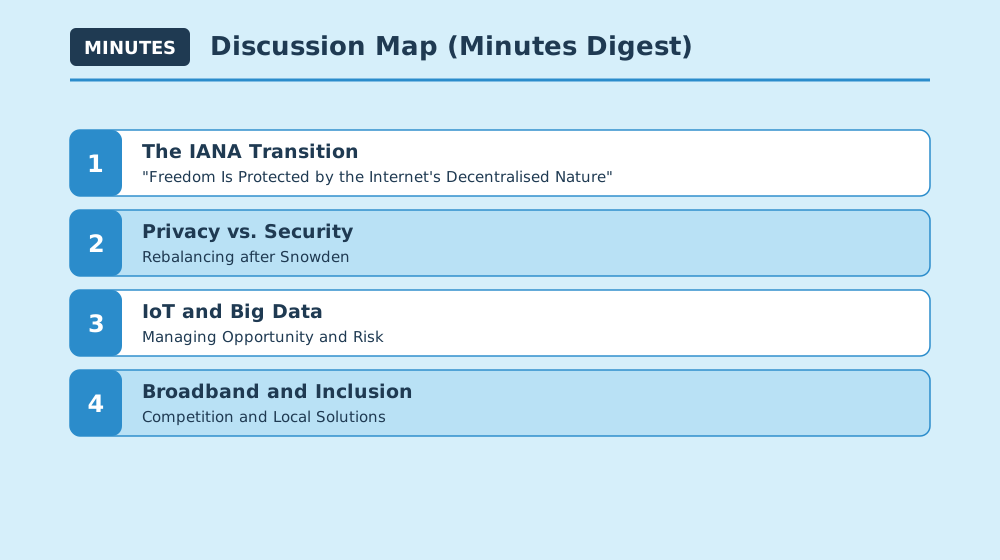
Key exchanges extracted from session records and transcripts.
1. The IANA Transition — "Freedom Is Protected by the Internet's Decentralised Nature"
Sessions: Statement by NTIA Administrator Lawrence Strickling and plenary panel "ICANN and the IANA Transition: What's Next and What's at Stake?"
"Protecting Internet openness and freedom has been a key criterion for the IANA transition from the day we announced it in March 2014."
— Lawrence Strickling (Administrator, NTIA, U.S. Department of Commerce) [4][5]
"We haven't actually empowered the community adequately, and in this respect, the transition is being rushed."
— Berin Szoka (President, TechFreedom) [4][5]
- Strickling recounted that NTIA's intensive inter-agency review found on 9 June that the plan satisfied every criterion, backing completion of the transition when the contract lapsed at the end of September [4][5]
- The panel that followed saw opponents — including conservative groups — clash head-on with supporters; NTIA countered that misperceptions persisted despite an open, transparent two-year process [4][5]
- The transition was completed on 1 October 2016, moving stewardship of the root zone and number resources to a global multistakeholder regime [4][5]
2. Privacy vs. Security — Rebalancing after Snowden
Sessions: Panel "Is There Room for Both Privacy and Security in the Internet's Future?"
- The panel tackled the privacy–security tension that persisted after the Snowden revelations, with encryption and government access at the core [1][3]
- Civil-society voices including EPIC's Marc Rotenberg pressed for checks on surveillance policy [1][3]
3. IoT and Big Data — Managing Opportunity and Risk
Sessions: Panel "Managing the Opportunities and Risks of the Internet of Things and Big Data"
- Panellists weighed the innovation promised by fast-growing IoT and big data against security, privacy and societal risks [1][2][3]
- Keynoters included Carnegie Mellon's David Farber, a 'grandfather of the Internet', urging engineers and policymakers to bridge their worlds [1][2][3]
4. Broadband and Inclusion — Competition and Local Solutions
Sessions: Panels "How Better Broadband Benefits Everyone" and "Expanding Access, Adoption, and Digital Literacy"
- Competition was framed as a 'lever towards progress', with remedies examined across access, adoption and digital literacy [1][3]
- Speakers including Brookings' Blair Levin, who led the FCC's National Broadband Plan, stressed community-driven solutions [1][3]
- A parallel session on countering violent extremism weighed national security against human rights online [1][3]
Three-Minute Short Talk — Your Questions Answered
Q. So what did the conference actually decide?
A. IGF-USA doesn't decide anything — it's the U.S. national IGF where government, industry and civil society debate as equals. But this edition was special: the NTIA administrator publicly reaffirmed approval of the IANA transition plan, setting the stage for the October handover.
Q. What was the most contentious topic?
A. The IANA transition itself. Opponents argued that relinquishing U.S. stewardship would embolden authoritarian states; supporters countered that the decentralised multistakeholder model is precisely what protects Internet freedom.
Q. Why should I care?
A. IANA underpins the domain names and IP addresses everyone uses. After the transition, stewardship passed to the global community — this meeting captured the arguments at that turning point.
What Is USA IGF? (for first-time readers)
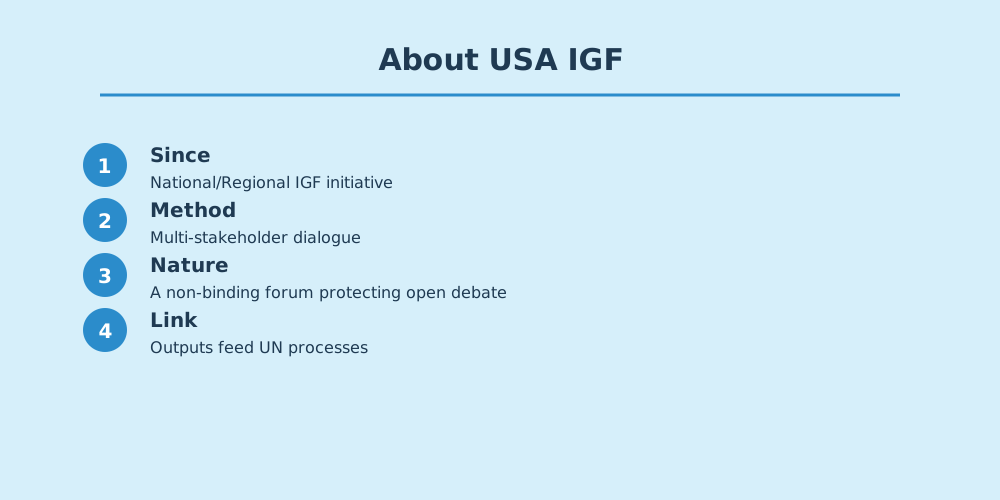
USA IGF is a National or Regional IGF Initiative (NRI), aligning local internet governance discussion with global IGF principles.
Why It Matters to You
What was discussed here becomes the baseline for national digital policy, platform rules and AI regulation worldwide within a few years. The principles confirmed at the 2016 meeting are the foundation of the "next rules" for the phones, social platforms and AI services you use every day.
Sources & References
- IGF-USA 2016 — IGF-USA(公式サイト) (accessed 2026-07-11)
- Internet Governance Forum USA 2016, Thursday July 14 — CircleID (accessed 2026-07-11)
- Elon student team travels to Washington to document major tech policy event – IGF-USA 2016 — Today at Elon (accessed 2026-07-11)
- Statement – U.S. NTIA's Strickling Says U.S. NTIA Supports IANA Transition — Elon University Imagining the Internet (accessed 2026-07-11)
- Plenary Panel – ICANN and the Internet Assigned Names and Numbers Authority Transition: What's Next and What's at Stake? — Elon University Imagining the Internet (accessed 2026-07-11)
Quotes are translated or condensed from the records listed above. Bracketed numbers [n] refer to the source list.
Related links
- IGF official (NRI list): https://www.intgovforum.org/en/content/national-and-regional-igf-initiatives
- Japan IGF: https://japanigf.jp/
- Yuki Nakazawa's blog: https://nkzw.jp/category/igf/
Revision History
Rev. 1 — published 7 July 2016, 14:00 (Article published)
Rev. 2 — updated 16 July 2026, 20:09 (Fully revised into the in-depth edition: added the 3-line summary, minutes digest, short talk, source list and diagrams (all quotes verified against the listed sources))
— 中澤祐樹