


The 3-Line Summary
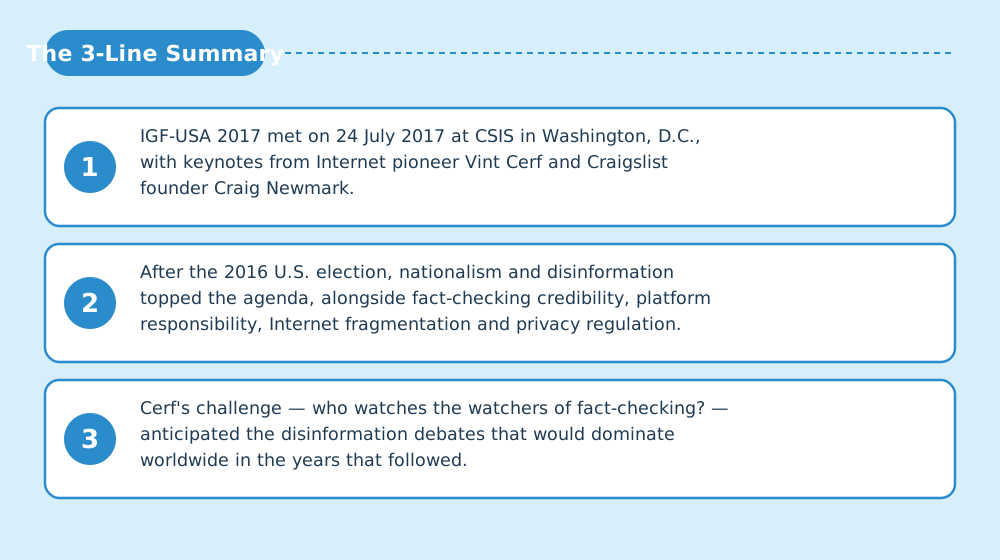
- IGF-USA 2017 met on 24 July 2017 at CSIS in Washington, D.C., with keynotes from Internet pioneer Vint Cerf and Craigslist founder Craig Newmark.
- After the 2016 U.S. election, nationalism and disinformation topped the agenda, alongside fact-checking credibility, platform responsibility, Internet fragmentation and privacy regulation.
- Cerf's challenge — who watches the watchers of fact-checking? — anticipated the disinformation debates that would dominate worldwide in the years that followed.
Welcome — this is the Japan IGF Support Organization. This in-depth report on IGF-USA 2017 draws on official outputs, session records and on-site reporting. In a hurry? The three lines above and the diagrams carry the gist.
Conference at a Glance (from official records)
| Item | Detail |
|---|---|
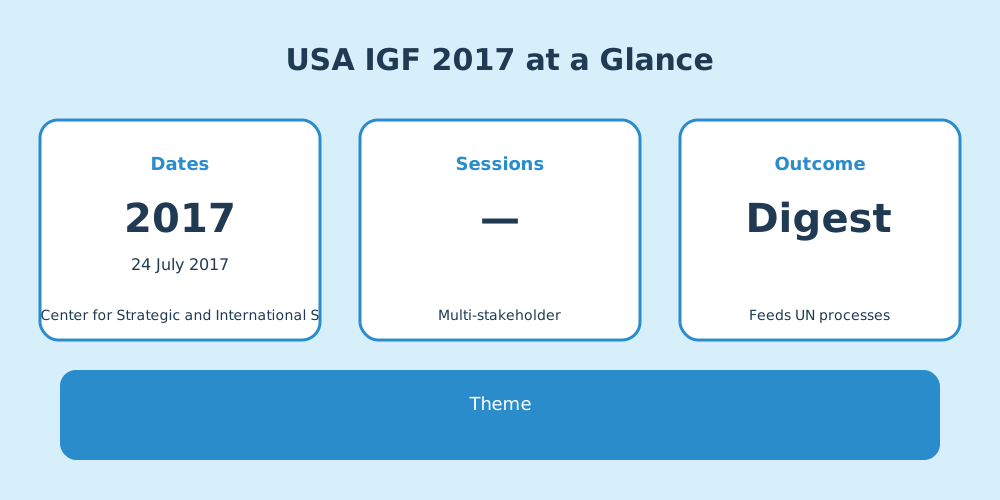
| Official name | IGF-USA 2017 |
| Dates | 24 July 2017 |
| Venue | Center for Strategic and International Studies (CSIS), Washington, D.C. |
| Theme | Regional governance themes |
| Host | IGF-USA multistakeholder steering group (civil society, industry, academia and government) |
(See the source list at the end of this article.)
Discussion Digest — from the Session Records
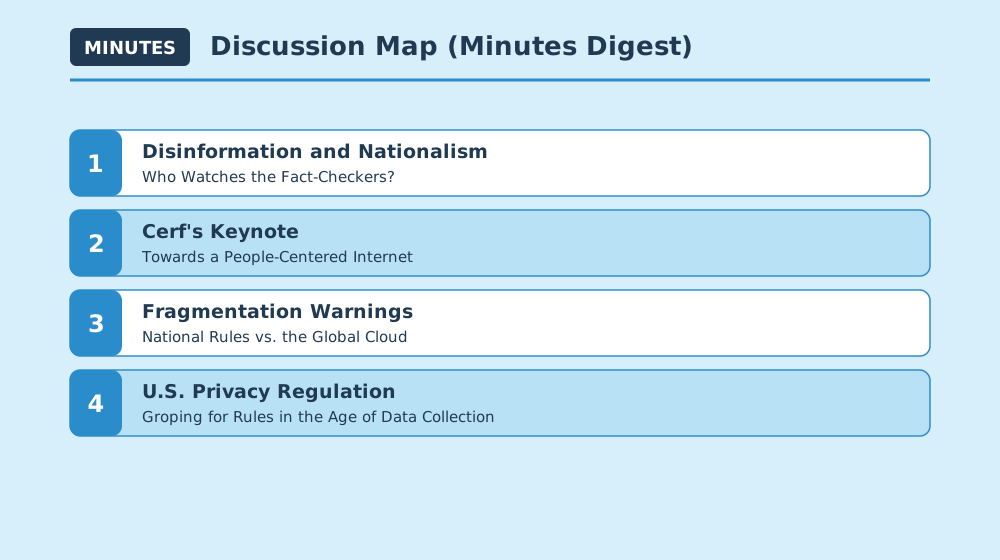
Key exchanges extracted from session records and transcripts.
1. Disinformation and Nationalism — Who Watches the Fact-Checkers?
Sessions: Plenary panel "Nationalism, Disinformation and Free Expression in the Age of the Internet" (moderated by Dana Priest, The Washington Post)
"There's a nature in the lizard part of our brain that favors sensational."
— Karen Kornbluh (Council on Foreign Relations) [4]
- Newmark proposed credibility scoring backed by networks of fact-checkers holding news organisations to codes of ethics [4]
- Cerf pushed back, asking who would watch the watchers; Newmark answered that transparency and redundancy would keep the system accountable [4]
- Access Now's Amie Stepanovich cautioned against government takedown mandates, favouring critical-thinking education and amplifying marginalised voices [4]
2. Cerf's Keynote — Towards a People-Centered Internet
Sessions: Keynote by Vint Cerf, Google VP and Chief Internet Evangelist
"It's this uncriticality that really disturbs me."
— Vint Cerf (Google VP; co-inventor of the Internet Protocol) [3]
"Let's make it a more people-centered system, something which is taking into account solving problems for people, helping people discover each other, and helping each other to make life a lot better for us and others in this world."
— Vint Cerf (Google VP) [3]
- Cerf named the spread of false information as the Internet's biggest challenge, rooted in social-media echo chambers and collapsing newspaper business models [3]
- Citing foreign-originated fake articles in the 2016 election, he advocated teaching critical thinking from an early age [3]
3. Fragmentation Warnings — National Rules vs. the Global Cloud
Sessions: Panels "Healing Internet Fragmentation" and "National Regulations Versus the Global Cloud"
- Participants shared concern that data-localisation mandates and tightening national rules could splinter the single global Internet [1][2]
- How to 'heal' the legal collisions between cross-border data flows and cloud services became the practical question [1][2]
4. U.S. Privacy Regulation — Groping for Rules in the Age of Data Collection
Sessions: Panel "Privacy Regulation in the United States" plus keynotes from FTC and ISOC leaders
- Keynotes also came from FTC Acting Chairman Maureen Ohlhausen and ISOC's Sally Shipman Wentworth, probing the future of the U.S. enforcement-led privacy model [1][2]
- A companion panel asked where the Internet's promised 'digital dividends' had gone, examining the uneven distribution of its benefits [1][2]
Three-Minute Short Talk — Your Questions Answered
Q. So what did the conference actually decide?
A. Nothing binding — it's the annual U.S. multistakeholder dialogue. Disinformation took centre stage this year, and the findings were carried to the global IGF 2017 in Geneva that December.
Q. What was the most contentious topic?
A. Who should police disinformation. Newmark backed networks of fact-checkers; Cerf shot back 'who would watch the watchers?'; civil society warned against government regulation and pushed education instead.
Q. Why should I care?
A. The fact-checking and platform-responsibility arguments rehearsed here became the template for disinformation policy debates now playing out in many countries.
What Is USA IGF? (for first-time readers)
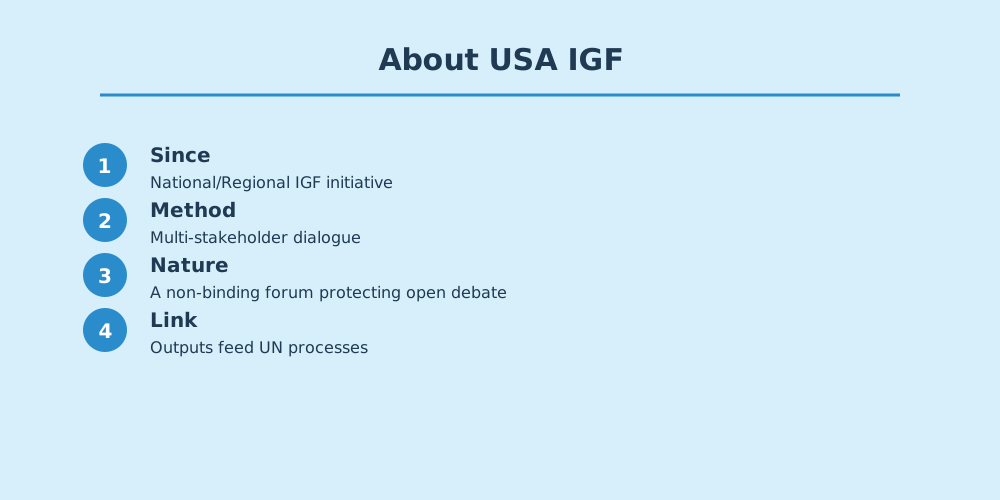
USA IGF is a National or Regional IGF Initiative (NRI), aligning local internet governance discussion with global IGF principles.
Why It Matters to You
What was discussed here becomes the baseline for national digital policy, platform rules and AI regulation worldwide within a few years. The principles confirmed at the 2017 meeting are the foundation of the "next rules" for the phones, social platforms and AI services you use every day.
Sources & References
- IGF-USA 2017 — IGF-USA(公式サイト) (accessed 2026-07-11)
- Internet Governance Forum – USA, 2017(大会別カバレッジ) — Elon University Imagining the Internet (accessed 2026-07-11)
- Keynote – Internet Hall of Famer and Google VP Vint Cerf Shares Insights on Emerging Trends — Elon University Imagining the Internet (accessed 2026-07-11)
- Plenary Panel Session – Nationalism, Disinformation and Free Expression in the Age of the Internet — Elon University Imagining the Internet (accessed 2026-07-11)
Quotes are translated or condensed from the records listed above. Bracketed numbers [n] refer to the source list.
Related links
- IGF official (NRI list): https://www.intgovforum.org/en/content/national-and-regional-igf-initiatives
- Japan IGF: https://japanigf.jp/
- Yuki Nakazawa's blog: https://nkzw.jp/category/igf/
Revision History
Rev. 1 — published 26 July 2017, 09:00 (Article published)
Rev. 2 — updated 16 July 2026, 20:09 (Fully revised into the in-depth edition: added the 3-line summary, minutes digest, short talk, source list and diagrams (all quotes verified against the listed sources))
— 中澤祐樹

