


The 3-Line Summary
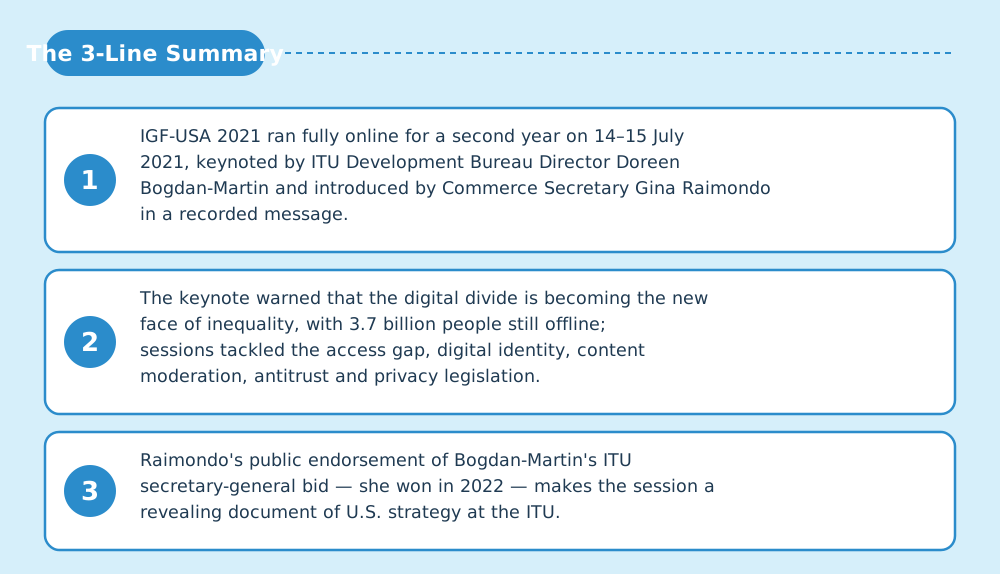
- IGF-USA 2021 ran fully online for a second year on 14–15 July 2021, keynoted by ITU Development Bureau Director Doreen Bogdan-Martin and introduced by Commerce Secretary Gina Raimondo in a recorded message.
- The keynote warned that the digital divide is becoming the new face of inequality, with 3.7 billion people still offline; sessions tackled the access gap, digital identity, content moderation, antitrust and privacy legislation.
- Raimondo's public endorsement of Bogdan-Martin's ITU secretary-general bid — she won in 2022 — makes the session a revealing document of U.S. strategy at the ITU.
Welcome — this is the Japan IGF Support Organization. This in-depth report on IGF-USA 2021 draws on official outputs, session records and on-site reporting. In a hurry? The three lines above and the diagrams carry the gist.
📍 Fully virtual for the second consecutive year
Conference at a Glance (from official records)
| Item | Detail |
|---|---|
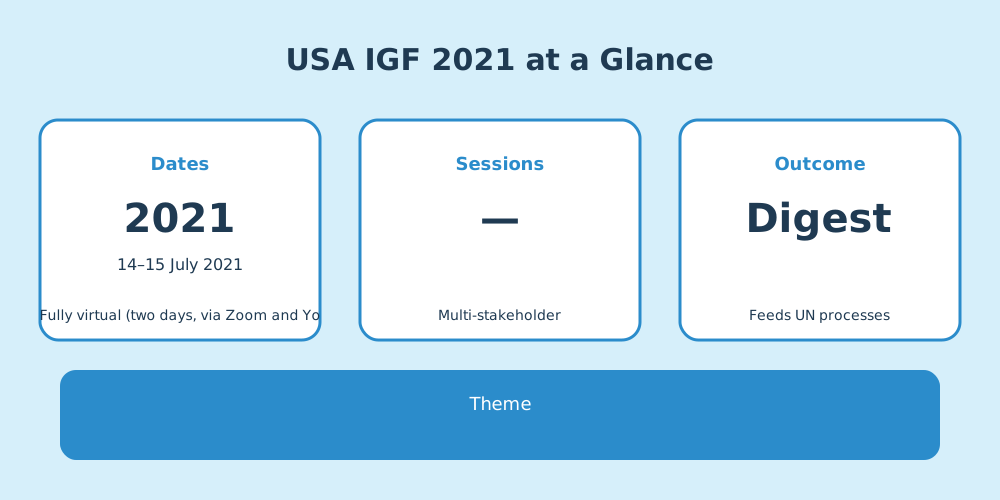
| Official name | IGF-USA 2021 |
| Dates | 14–15 July 2021 |
| Venue | Fully virtual (two days, via Zoom and YouTube) |
| Theme | Regional governance themes |
| Host | IGF-USA multistakeholder steering group (civil society, industry, academia and government) |
(See the source list at the end of this article.)
Discussion Digest — from the Session Records
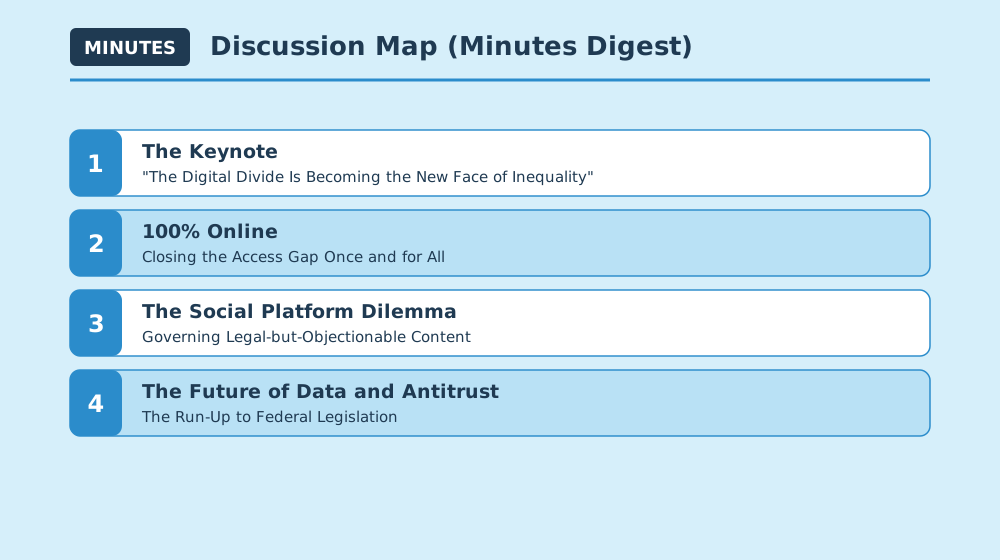
Key exchanges extracted from session records and transcripts.
1. The Keynote — "The Digital Divide Is Becoming the New Face of Inequality"
Sessions: Welcome session and introductory keynote (14 July) by Doreen Bogdan-Martin, Director of the ITU Telecommunication Development Bureau, introduced in a recorded message by U.S. Commerce Secretary Gina Raimondo
"We have heard that the digital divide is becoming the new face of inequality, and it's in our power to stop this from happening."
— Doreen Bogdan-Martin (Director, ITU Telecommunication Development Bureau) [2]
"In the 21st century, broadband access and affordability isn't a luxury, it's essential. Essential for our jobs, our education, and our healthcare."
— Gina Raimondo (U.S. Secretary of Commerce) [2]
- Bogdan-Martin noted that nearly half of humanity remains offline, citing the ITU estimate that connecting the unconnected 3.7 billion by 2030 would take some $428 billion for infrastructure alone [2]
- She pointed to analyst estimates that 25% of the U.S. population still lacks home broadband, and FCC reporting that 100 million Americans do not subscribe even where service exists [2]
- Raimondo publicly endorsed Bogdan-Martin's candidacy for ITU secretary-general — a post she won in 2022 as the first woman to hold it [2]
2. 100% Online — Closing the Access Gap Once and for All
Sessions: Session "100% Online: How to close the Internet access gap once and for all"
- Panellists worked from a shared premise: 18 months of pandemic had shifted broadband from desirable to essential, demanding permanent fixes [1][2]
- NTIA's three newly launched connectivity grant programmes and its new broadband map framed the discussion on the eve of America's big broadband investments [1][2]
3. The Social Platform Dilemma — Governing Legal-but-Objectionable Content
Sessions: Session "The Social Platform Dilemma: Governance Approaches to Moderate Legal But 'Objectionable' Content"
- The session moved past the Section 230 fight to the harder question: who should handle content that is legal yet objectionable, and by what process [1][4]
- Alongside a session asking why better digital identity doesn't exist, the agenda leaned into institutional design [1][4]
4. The Future of Data and Antitrust — The Run-Up to Federal Legislation
Sessions: Sessions "The Future of Data: Privacy Foundations and Legislative Approaches", "Reexamining Antitrust in a Digital Economy", "Facilitating Interoperability" and "The Road to IoT Security"
- The two big legislative themes then live in Congress — federal privacy law and rethinking antitrust for the digital economy — each got a dedicated session [1][3][4]
- Supply-chain security interoperability and public-private IoT security reflected post-SolarWinds anxieties [1][3][4]
- Day two opened with a keynote from FCC Commissioner Nathan Simington and closed with "Scenarios for 2026", war-gaming fragmentation and interoperability five years out [1][3][4]
Three-Minute Short Talk — Your Questions Answered
Q. So what did the conference actually decide?
A. Nothing binding — but it staged a notable political moment: the U.S. Commerce Secretary publicly endorsed Doreen Bogdan-Martin for ITU secretary-general, previewing the 2022 contest she went on to win.
Q. What was the most contentious topic?
A. Legal-but-objectionable content. Moderating what is lawful yet harmful is harder than removing illegal material, and the session exposed the standing tension between free expression and user protection.
Q. Why should I care?
A. The keynote's framing — connectivity as a near-essential utility, with a $428 billion global price tag to connect everyone — set the terms for broadband investment debates in many countries.
What Is USA IGF? (for first-time readers)
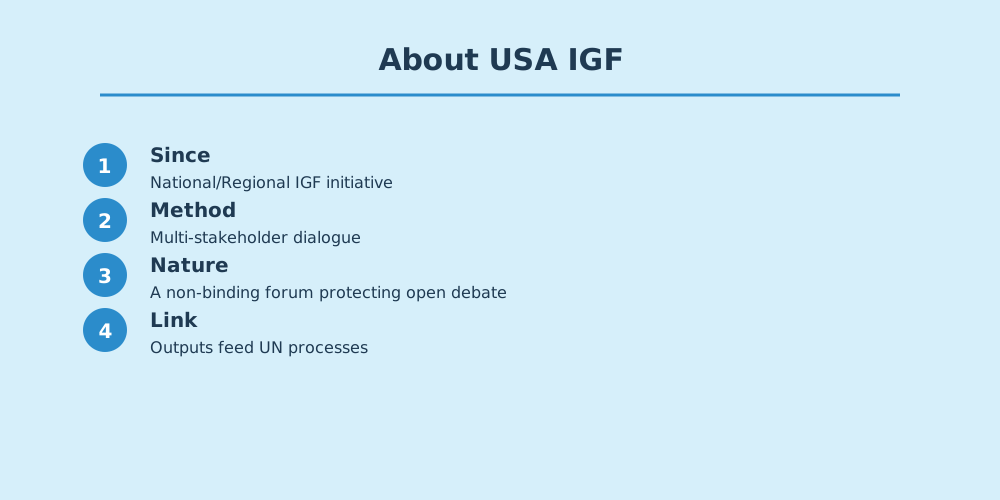
USA IGF is a National or Regional IGF Initiative (NRI), aligning local internet governance discussion with global IGF principles.
Why It Matters to You
What was discussed here becomes the baseline for national digital policy, platform rules and AI regulation worldwide within a few years. The principles confirmed at the 2021 meeting are the foundation of the "next rules" for the phones, social platforms and AI services you use every day.
Sources & References
- IGF-USA 2021 — IGF-USA(公式サイト) (accessed 2026-07-11)
- IGF-USA 2021 Welcome Session and Keynote – Finished File(公式逐語トランスクリプト、PDF) — IGF-USA(公式サイト) (accessed 2026-07-11)
- IGF-USA 2021 Media Advisory — IGF-USA(公式サイト) (accessed 2026-07-11)
- IGF-USA 2021 — DiploFoundation (accessed 2026-07-11)
Quotes are translated or condensed from the records listed above. Bracketed numbers [n] refer to the source list.
Related links
- IGF official (NRI list): https://www.intgovforum.org/en/content/national-and-regional-igf-initiatives
- Japan IGF: https://japanigf.jp/
- Yuki Nakazawa's blog: https://nkzw.jp/category/igf/
Revision History
Rev. 1 — published 19 July 2021, 10:00 (Article published)
Rev. 2 — updated 16 July 2026, 20:09 (Fully revised into the in-depth edition: added the 3-line summary, minutes digest, short talk, source list and diagrams (all quotes verified against the listed sources))
— 中澤祐樹

