


The 3-Line Summary
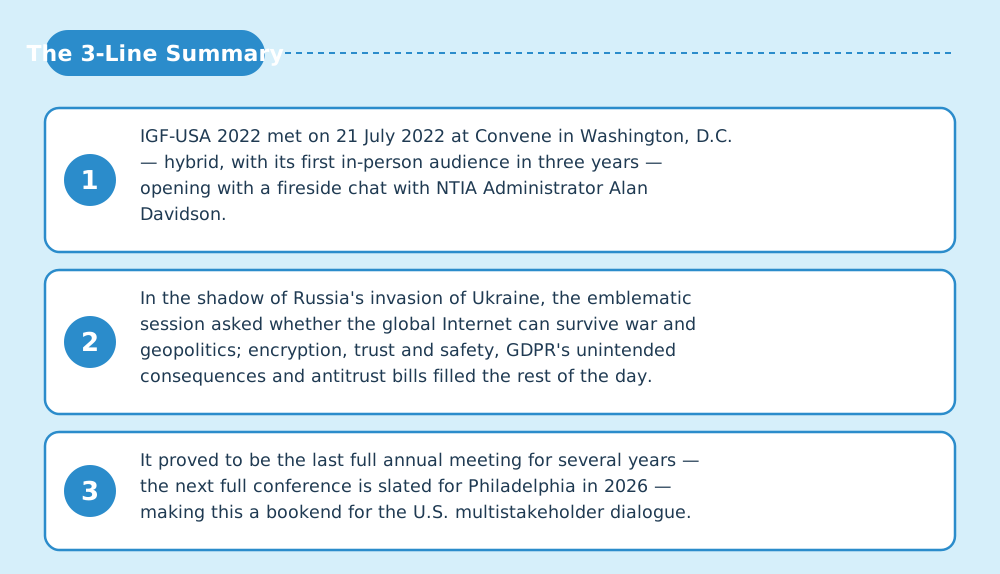
- IGF-USA 2022 met on 21 July 2022 at Convene in Washington, D.C. — hybrid, with its first in-person audience in three years — opening with a fireside chat with NTIA Administrator Alan Davidson.
- In the shadow of Russia's invasion of Ukraine, the emblematic session asked whether the global Internet can survive war and geopolitics; encryption, trust and safety, GDPR's unintended consequences and antitrust bills filled the rest of the day.
- It proved to be the last full annual meeting for several years — the next full conference is slated for Philadelphia in 2026 — making this a bookend for the U.S. multistakeholder dialogue.
Welcome — this is the Japan IGF Support Organization. This in-depth report on IGF-USA 2022 draws on official outputs, session records and on-site reporting. In a hurry? The three lines above and the diagrams carry the gist.
📍 Hybrid: the first in-person venue in three years, combined with online participation via Zoom
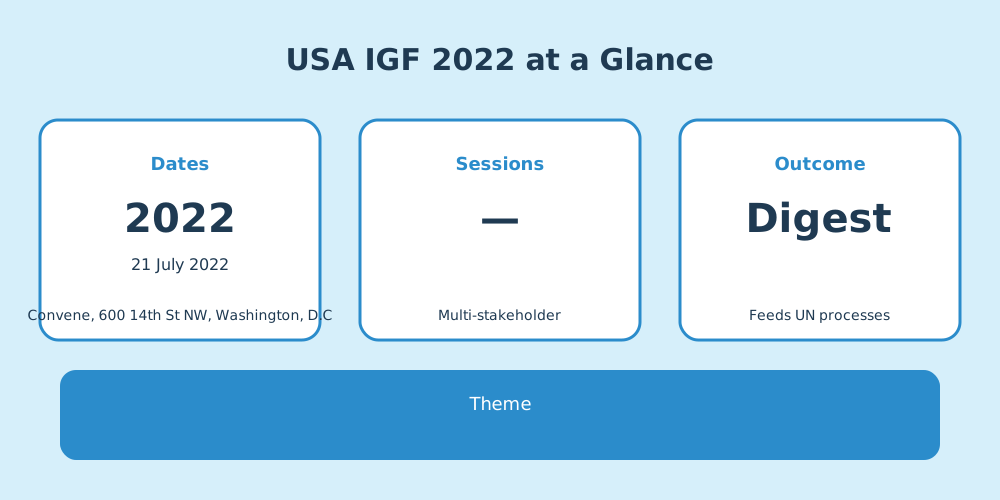
Conference at a Glance (from official records)
| Item | Detail |
|---|---|
| Official name | IGF-USA 2022 |
| Dates | 21 July 2022 |
| Venue | Convene, 600 14th St NW, Washington, D.C. |
| Theme | Regional governance themes |
| Host | IGF-USA multistakeholder steering group (co-chairs Melinda Clem and Dustin Loup) |
(See the source list at the end of this article.)
Discussion Digest — from the Session Records
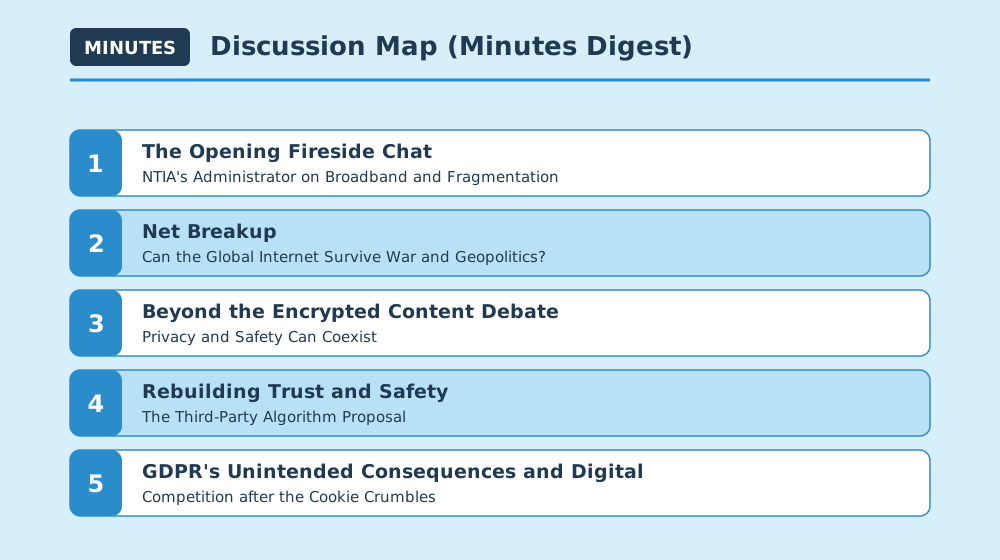
Key exchanges extracted from session records and transcripts.
1. The Opening Fireside Chat — NTIA's Administrator on Broadband and Fragmentation
Sessions: Opening Fireside Chat (21 July, 9:10–9:30am EDT): Alan Davidson, Assistant Secretary of Commerce and NTIA Administrator, with IGF-USA co-chair Dustin Loup
- Davidson laid out the administration's priorities along three axes: broadband and digital equity, cybersecurity, and Internet fragmentation [2]
- Recently arrived from a career including the Mozilla Foundation, he spoke as the official steering America's massive infrastructure-law broadband buildout [2]
2. Net Breakup — Can the Global Internet Survive War and Geopolitics?
Sessions: Session "Net Breakup – Can the Global Internet survive war and geopolitics?"
- Post-invasion, the session examined how sanctions and takedown demands strain the Internet's unity — including ICANN's decision to keep '.ru' functioning to preserve information flows despite Ukrainian requests [1][3]
- Fragmentation, participants noted, can occur at many layers from access to domain management, in a system that by design has no central overseer [1][3]
3. Beyond the Encrypted Content Debate — Privacy and Safety Can Coexist
Sessions: Session "Beyond the Encrypted Content Debate"
- Starting from end-to-end encryption's value for privacy, the session mapped the tension with law-enforcement access — converging on the view that privacy and safety are not mutually exclusive [1][3]
- With speakers including the FBI, participants explored safety approaches that do not break into content itself [1][3]
4. Rebuilding Trust and Safety — The Third-Party Algorithm Proposal
Sessions: Session "Beyond Content: Improving Trust and Safety and Enabling User Choice"
- Confronting platform power over speech and algorithmic opacity, panellists floated 'third-party algorithms' letting users choose their own content filters [1][3]
- The caveats were acknowledged in the same breath: privacy risks, and continued exposure to harmful material [1][3]
5. GDPR's Unintended Consequences and Digital Markets — Competition after the Cookie Crumbles
Sessions: Sessions "The Unintended Consequences of GDPR: What Happens When the (3rd Party) Cookie Crumbles" and "Future of Online Markets"
- Panellists audited the side effects of GDPR-driven third-party-cookie decline on the ad market and smaller players — regulation's unintended consequences in action [1][3]
- The online-markets session took up pending antitrust bills, notably the American Innovation and Choice Online Act (S.2992), aimed at level competition without naming targets [1][3]
Three-Minute Short Talk — Your Questions Answered
Q. So what did the conference actually decide?
A. Nothing binding — but after three years, stakeholders were back in one room, and the NTIA administrator personally laid out the administration's priorities on broadband, cybersecurity and fragmentation.
Q. What was the most contentious topic?
A. War and the Internet. Russia's invasion made 'should Russia be cut off?' a live question, and ICANN's decision to keep .ru running crystallised the tension between sanctions and the Internet's unity.
Q. Why should I care?
A. Whether the global Internet stays whole in wartime affects every connected country — and this was the room where the U.S. community argued it out. It was also the last full IGF-USA before a multi-year pause.
What Is USA IGF? (for first-time readers)
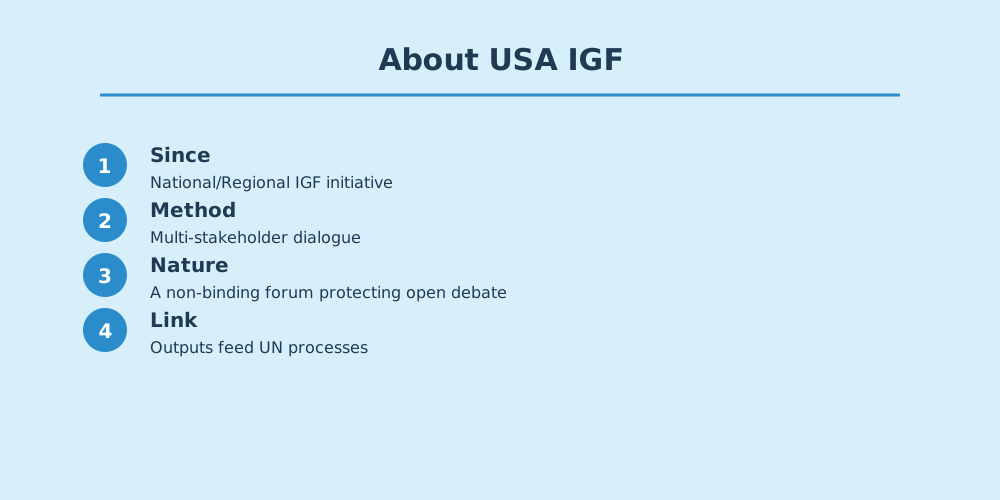
USA IGF is a National or Regional IGF Initiative (NRI), aligning local internet governance discussion with global IGF principles.
Why It Matters to You
What was discussed here becomes the baseline for national digital policy, platform rules and AI regulation worldwide within a few years. The principles confirmed at the 2022 meeting are the foundation of the "next rules" for the phones, social platforms and AI services you use every day.
Sources & References
- IGF-USA 2022 — IGF-USA(公式サイト) (accessed 2026-07-11)
- Opening Fireside Chat(セッションページ) — IGF-USA(公式サイト) (accessed 2026-07-11)
- Our takeaways from the USA IGF — IGF Spain(スペインIGF事務局ブログ) (accessed 2026-07-11)
- IGF-USA 2022 Registration Open — 国連IGF事務局(intgovforum.org) (accessed 2026-07-11)
- IGF-USA(イベント案内:2022年7月21日・Convene) — ARIN(米国インターネット番号レジストリ) (accessed 2026-07-11)
Quotes are translated or condensed from the records listed above. Bracketed numbers [n] refer to the source list.
Related links
- IGF official (NRI list): https://www.intgovforum.org/en/content/national-and-regional-igf-initiatives
- Japan IGF: https://japanigf.jp/
- Yuki Nakazawa's blog: https://nkzw.jp/category/igf/
Revision History
Rev. 1 — published 22 July 2022, 12:00 (Article published)
Rev. 2 — updated 16 July 2026, 20:09 (Fully revised into the in-depth edition: added the 3-line summary, minutes digest, short talk, source list and diagrams (all quotes verified against the listed sources))
— 中澤祐樹

