


The 3-Line Summary
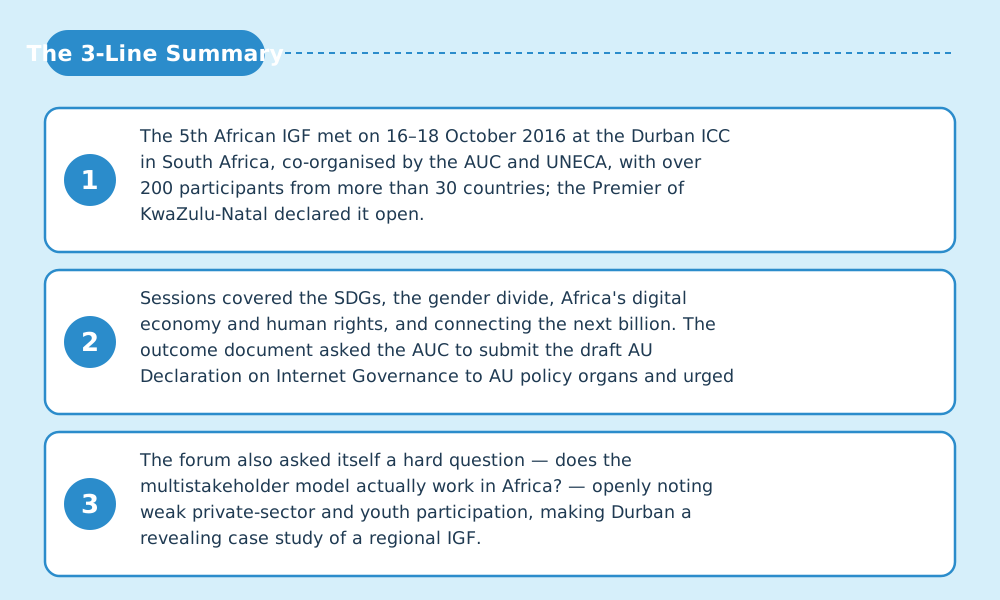
- The 5th African IGF met on 16–18 October 2016 at the Durban ICC in South Africa, co-organised by the AUC and UNECA, with over 200 participants from more than 30 countries; the Premier of KwaZulu-Natal declared it open.
- Sessions covered the SDGs, the gender divide, Africa's digital economy and human rights, and connecting the next billion. The outcome document asked the AUC to submit the draft AU Declaration on Internet Governance to AU policy organs and urged ratification of the Malabo Convention.
- The forum also asked itself a hard question — does the multistakeholder model actually work in Africa? — openly noting weak private-sector and youth participation, making Durban a revealing case study of a regional IGF.
Welcome — this is the Japan IGF Support Organization. This in-depth report on AfIGF 2016 in Durban draws on official outputs, session records and on-site reporting. In a hurry? The three lines above and the diagrams carry the gist.
Conference at a Glance (from official records)
| Item | Detail |
|---|---|
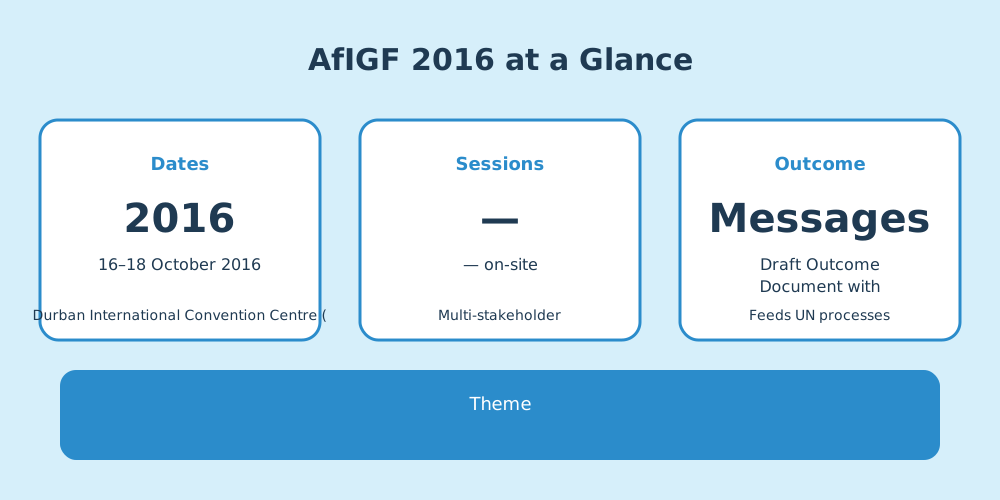
| Edition | 5th African Internet Governance Forum (AfIGF) |
| Dates | 16–18 October 2016 |
| Venue | Durban International Convention Centre (ICC), Durban, South Africa |
| Theme | Regional governance themes |
| Participants | Over 200 on-site participants from more than 30 countries (official outcome document) |
| Opening | Opened by KwaZulu-Natal Premier Willies Mchunu; keynote by South African Communications Minister Dr Siyabonga Cwele |
| Livestream | Livestream viewed by over 1,200 people by 18:30 on 18 October |
| Host | Co-organised by the African Union Commission (AUC) and UNECA in cooperation with the Government of South Africa, fully supported by APC and the NEPAD Agency |
| Outcome | Draft Outcome Document with recommendations — requesting the AUC to submit the draft AU Declaration on Internet Governance to AU policy organs, and urging signature/ratification of the Malabo Convention |
(See the source list at the end of this article.)
Discussion Digest — from the Session Records
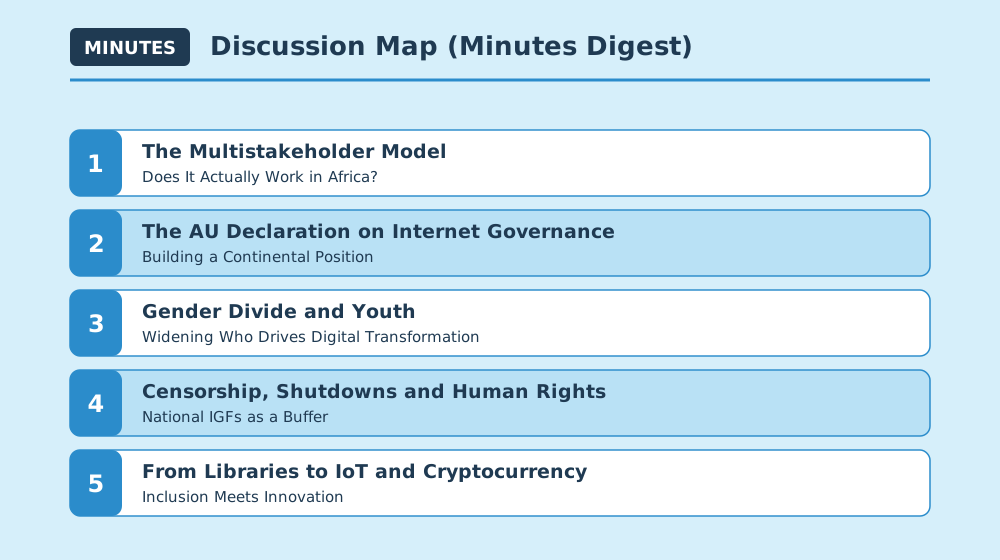
Key exchanges extracted from session records and transcripts.
1. The Multistakeholder Model — Does It Actually Work in Africa?
Sessions: Cross-cutting reflections on the Durban forum, reported at the African Union session of the global IGF 2016
"Expanding stakeholder engagement requires 'embracing' policy documents such as the African Union Convention on Cyber Security and the African Declaration on Internet Rights and Freedoms to ensure 'contextual understanding of key concerns'"
— Olusegun Olugbile (AfIGF technical committee member, Nigeria) [4]
- Private sector and youth were significantly under-represented in Durban, and stakeholders' lack of trust in the dialogue process and its outcomes was flagged [4]
- Participants openly discussed the 'implementation gap' — recommendations without follow-up — and insufficient political will [4]
2. The AU Declaration on Internet Governance — Building a Continental Position
Sessions: Plenary Session 10, 'The African Union Declaration on Internet Governance' (18 October)
- The forum formally requested the AUC to submit the draft AU Declaration on Internet Governance to AU policy organs for consideration and adoption [1]
- It also decided to publish the draft African IGF Charter online for stakeholder input (the Charter was adopted at the 2017 edition) [1]
3. Gender Divide and Youth — Widening Who Drives Digital Transformation
Sessions: Plenary Session 2 'Bridging the gender divide' and Session 7 'Youth Entrepreneurship and Innovation' (17–18 October)
- Member states were urged to run campaigns helping women use the internet safely, and to bring more women into both technology development and content creation [1]
- Governments should involve young people when making policy for youth and children, and integrate innovation and entrepreneurship into education systems [1]
4. Censorship, Shutdowns and Human Rights — National IGFs as a Buffer
Sessions: Plenary Session 3 'Africa's Digital Economy: Africa and Human Rights on the Internet' and Session 4 'Connecting the next billion'
- Civil society should educate government leaders and politicians about the political and economic costs of internet censorship [1]
- National IGFs were framed as standing dialogue channels between government and citizens that can anticipate and mitigate internet shutdowns [1]
- Community networks, local IXPs and IPv6 migration, and subsidised broadband for schools and libraries were recommended to cut access costs [1]
5. From Libraries to IoT and Cryptocurrency — Inclusion Meets Innovation
Sessions: Pre-conference workshops and the High Level Segment (16 October)
- A DC-PAL/EIFL workshop on how libraries bring people online for the SDGs and AU Agenda 2063 featured case studies from public libraries in Cape Town and Nairobi [1][3]
- The High Level Segment covered IoT, cryptocurrency and e-commerce, and DONA Foundation president Dr Robert Kahn signed a Multi-Primary Administrator service agreement with Minister Cwele [1][3]
Three-Minute Short Talk — Your Questions Answered
Q. So what did the conference actually decide?
A. The AfIGF doesn't make binding decisions, but Durban's outcome document asked the African Union Commission to put the draft AU Declaration on Internet Governance before AU policy organs, and urged countries to sign and ratify the Malabo cybersecurity convention.
Q. What was the most contentious topic?
A. The multistakeholder model itself. Participants openly criticised weak private-sector and youth participation and an 'implementation gap' where forum recommendations never get followed up.
Q. Why should I care?
A. Durban's ideas — using national IGFs as standing dialogue channels to prevent internet shutdowns, and libraries as connectivity hubs — are practical templates for digital inclusion anywhere.
What Is AfIGF? (for first-time readers)
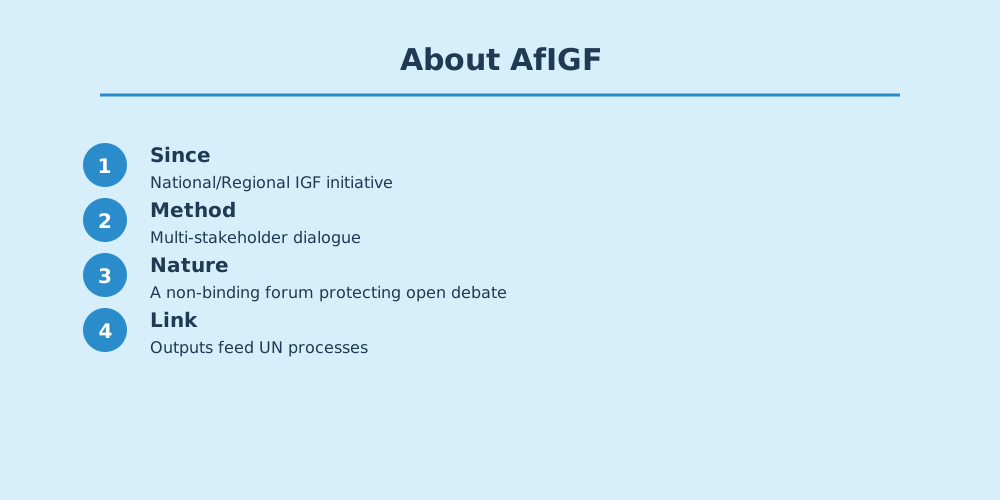
AfIGF is a National or Regional IGF Initiative (NRI), aligning local internet governance discussion with global IGF principles.
Why It Matters to You
What was discussed here becomes the baseline for national digital policy, platform rules and AI regulation worldwide within a few years. The principles confirmed at the 2016 meeting are the foundation of the "next rules" for the phones, social platforms and AI services you use every day.
Sources & References
- The African Internet Governance Forum – AfIGF 2016 Draft Outcome Document (Durban) — アフリカIGF事務局(AUC・UNECA) (accessed 2026-07-10)
- AfIGF 2016: Event Report for Fifth African IGF — igf.africa (accessed 2026-07-10)
- 5th African Internet Governance Forum — Electronic Information for Libraries (accessed 2026-07-10)
- IGF 2016: How applicable is the multistakeholder approach to internet governance in Africa? — Association for Progressive Communications (accessed 2026-07-10)
- African Internet Governance Forum — en (accessed 2026-07-10)
Quotes are translated or condensed from the records listed above. Bracketed numbers [n] refer to the source list.
Related links
- IGF official (NRI list): https://www.intgovforum.org/en/content/national-and-regional-igf-initiatives
- Japan IGF: https://japanigf.jp/
- Yuki Nakazawa's blog: https://nkzw.jp/category/igf/
Revision History
Rev. 1 — published 16 October 2016, 09:00 (Article published)
Rev. 2 — updated 10 July 2026, 23:16 (Fully revised into the in-depth edition: added the 3-line summary, minutes digest, short talk, source list and diagrams (all quotes verified against the listed sources))
— 中澤祐樹

