


The 3-Line Summary
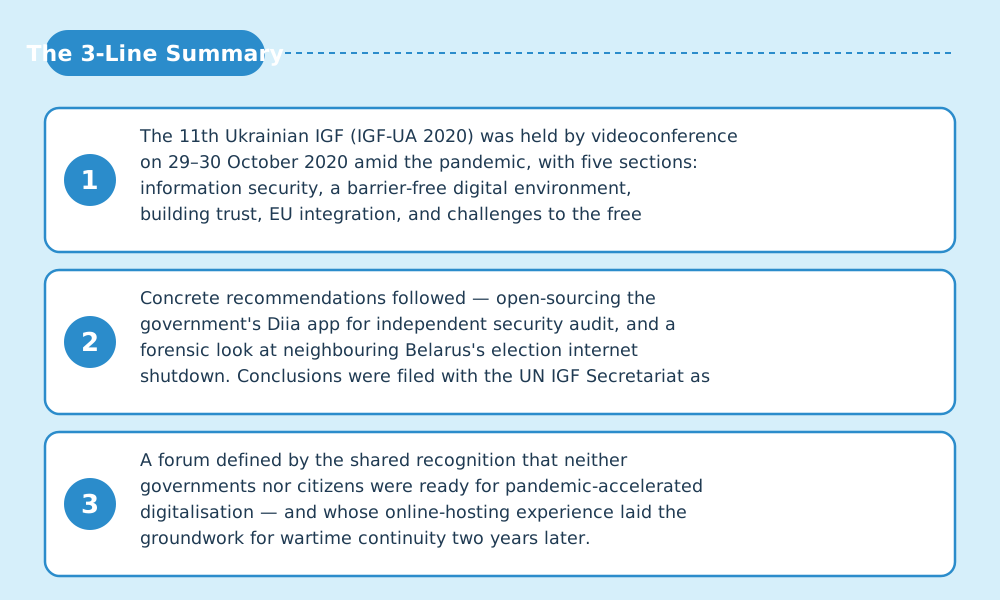
- The 11th Ukrainian IGF (IGF-UA 2020) was held by videoconference on 29–30 October 2020 amid the pandemic, with five sections: information security, a barrier-free digital environment, building trust, EU integration, and challenges to the free internet in Eastern Europe.
- Concrete recommendations followed — open-sourcing the government's Diia app for independent security audit, and a forensic look at neighbouring Belarus's election internet shutdown. Conclusions were filed with the UN IGF Secretariat as an annual report.
- A forum defined by the shared recognition that neither governments nor citizens were ready for pandemic-accelerated digitalisation — and whose online-hosting experience laid the groundwork for wartime continuity two years later.
Welcome — this is the Japan IGF Support Organization. This in-depth report on IGF-UA 2020 (11th Ukrainian Internet Governance Forum) draws on official outputs, session records and on-site reporting. In a hurry? The three lines above and the diagrams carry the gist.
Conference at a Glance (from official records)
| Item | Detail |
|---|---|
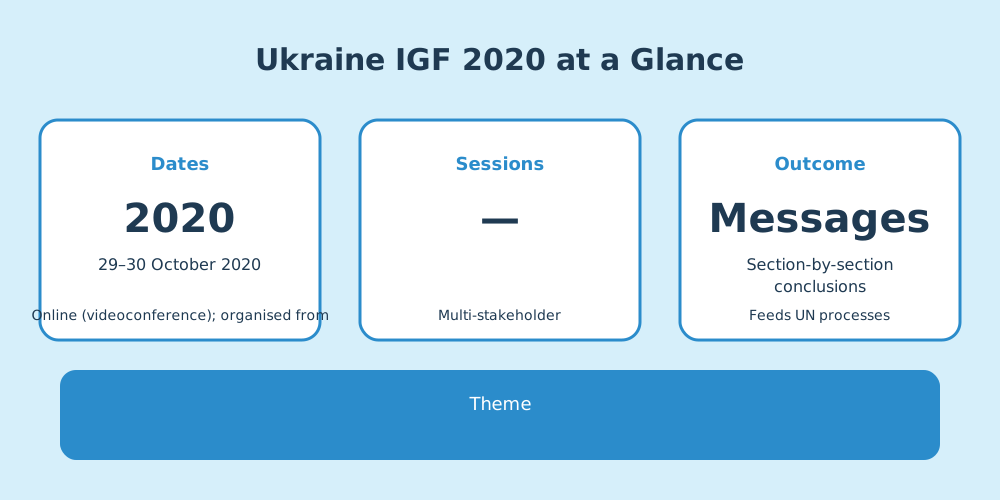
| Official name | IGF-UA 2020 (11th Ukrainian Internet Governance Forum) |
| Edition | 11th edition |
| Dates | 29–30 October 2020 |
| Venue | Online (videoconference); organised from Kyiv |
| Theme | Regional governance themes |
| Host | Internet Association of Ukraine (InAU), Commission on Science and IT of the USPP, RIPE NCC, IGF Supporting Association and the Internet Society, sponsored by ICANN and the Adamant group |
| Outcome | Section-by-section conclusions recorded in the annual report |
(See the source list at the end of this article.)
Discussion Digest — from the Session Records
Key exchanges extracted from session records and transcripts.
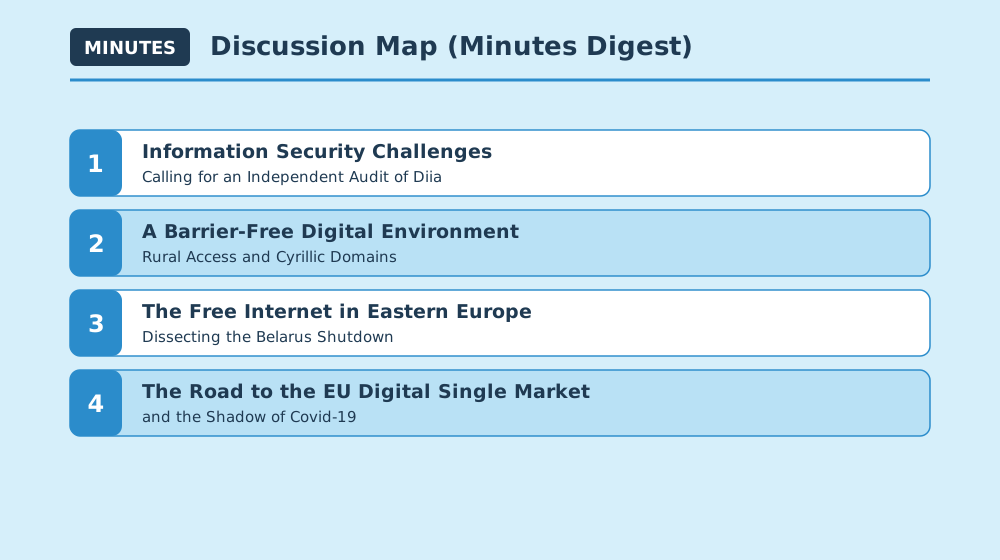
1. Information Security Challenges — Calling for an Independent Audit of Diia
Sessions: Section 1 'Information Security Challenges' (mod. Ivan Pietukhov, USPP Commission on Science and IT)
- Doubts were raised over personal-data protection in the government's Diia e-government app and state registries; the section recommended that the Digital Transformation Ministry open Diia's source code for an independent, published security audit [1]
- It also urged drafting critical-infrastructure legislation through public-private partnership with recognised market experts, and moving from the legacy KSZI certification model to ISO 27000-style process certification [1]
2. A Barrier-Free Digital Environment — Rural Access and Cyrillic Domains
Sessions: Section 2 'A Barrier-Free Digital Environment' (mod. Svitlana Tkachenko, Hostmaster)
- Speakers included the Digital Ministry's Andrii Nabok (fixed broadband) and Mstyslav Banik (head of the Diia project) plus ICANN's Mikhail Anisimov; for commercially unviable rural broadband they proposed alternative infrastructure, revised construction norms and subsidies [1]
- The shortage of local-language content was named a barrier to adoption, and ICANN's Universal Acceptance programme — ensuring applications handle Cyrillic and other non-Latin domain names — was endorsed [1]
- Digital inclusion for older people and people with disabilities, the section concluded, requires accessible interfaces and skills education, not just more online services [1]
3. The Free Internet in Eastern Europe — Dissecting the Belarus Shutdown
Sessions: Section 5 'Challenges to the Free Internet in Eastern Europe: Infrastructure and Legal Dimensions' (mod. Vitalii Moroz, Internews-Ukraine)
- Human Constanta co-founder Aliaksei Kazliuk and colleagues dissected the internet shutdown around Belarus's August 2020 presidential election: the government falsely blamed external DDoS attacks and gave no information about the restrictions for two weeks [1]
- The shutdown was enabled by a monopoly market with only two providers of international connectivity — and that year's IGF Belarus could not be held at all, as engaging with the government had become impossible [1]
- The section examined 'digital resistance' — VPN installers passed on flash drives, messengers used to mobilise protesters — and the accountability of DPI suppliers China's Huawei and America's Sandvine; under pressure, Sandvine announced it would cancel its Belarus contract [1]
4. The Road to the EU Digital Single Market — and the Shadow of Covid-19
Sessions: Section 4 'Ukraine on the Way to Europe's Digital Single Market' (mod. Oksana Prykhodko, European Media Platform)
- With MP Oleksandr Fedienko, the Digital Ministry, InAU, consumer groups, RIPE NCC and ICANN at the table, participants agreed Ukraine's European integration is irreversible and DSM integration could be the pilot that pulls other sectors along [1]
- They flagged risks in implementing European norms — harm to small businesses, GDPR non-compliance — and warned against the creation of fake multistakeholder entities [1]
- The pandemic had multiplied personal-data leaks and their resale; many sites selling Ukrainians' data were registered in Russia, and the state had no effective counter-mechanism [1]
Three-Minute Short Talk — Your Questions Answered
Q. How was it held during the pandemic?
A. Entirely by videoconference — anyone could watch without registration, with feedback via chat and email. That fully-online operating experience became the foundation for wartime continuity from 2022.
Q. What was the boldest recommendation?
A. That the government open the source code of its flagship Diia app for an independent, published security audit — civil society demanding concrete transparency of a national app.
Q. Why should I care?
A. Auditing government apps, funding rural broadband and including older users are challenges every digitalising country shares — and the Belarus shutdown analysis shows how fragile internet freedom can be next door.
What Is Ukraine IGF? (for first-time readers)
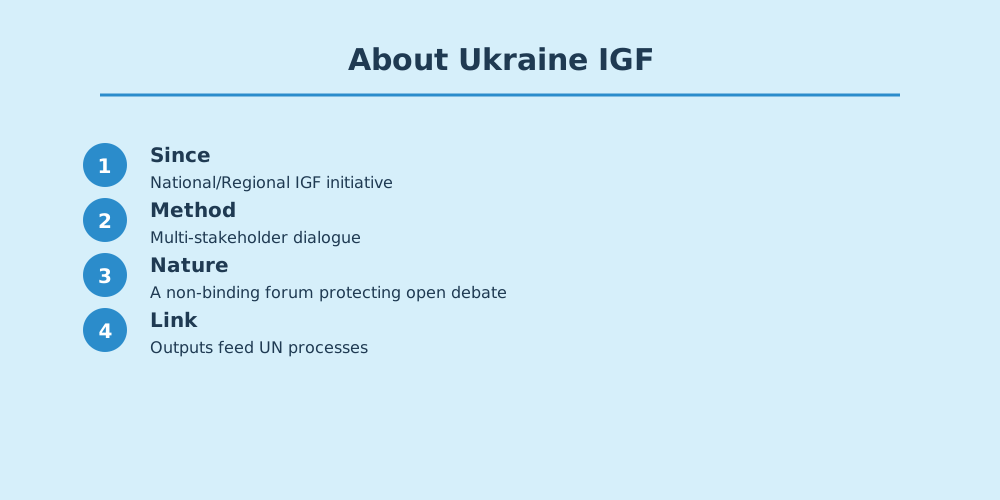
Ukraine IGF is a National or Regional IGF Initiative (NRI), aligning local internet governance discussion with global IGF principles.
Why It Matters to You
What was discussed here becomes the baseline for national digital policy, platform rules and AI regulation worldwide within a few years. The principles confirmed at the 2020 meeting are the foundation of the "next rules" for the phones, social platforms and AI services you use every day.
Sources & References
- Річний звіт IGF-UA 2020(XI Український форум з управління Інтернетом 公式年次報告書・ウクライナ語DOCX) — IGF-UA組織委員会 (accessed 2026-07-17)
- IGF-UA 2020 公式アーカイブサイト(11-й Український форум з управління Інтернетом IGF-UA 2020) — IGF-UA組織委員会 (accessed 2026-07-17)
- IGF-UA 公式報告書一覧(2020/2021/2023/2024/2025年報告書の配布ページ) — IGF-UA組織委員会 (accessed 2026-07-17)
- 11-й Український форум з управління Інтернетом IGF-UA(全セッション動画) — I-UA.tv(メディアパートナー) (accessed 2026-07-17)
Quotes are translated or condensed from the records listed above. Bracketed numbers [n] refer to the source list.
Related links
- IGF official (NRI list): https://www.intgovforum.org/en/content/national-and-regional-igf-initiatives
- Japan IGF: https://japanigf.jp/
- Yuki Nakazawa's blog: https://nkzw.jp/category/igf/
更新履歴
第1稿投稿 2026年7月20日 20時15分(記事コンテンツアップ)
— 中澤祐樹

