


The 3-Line Summary
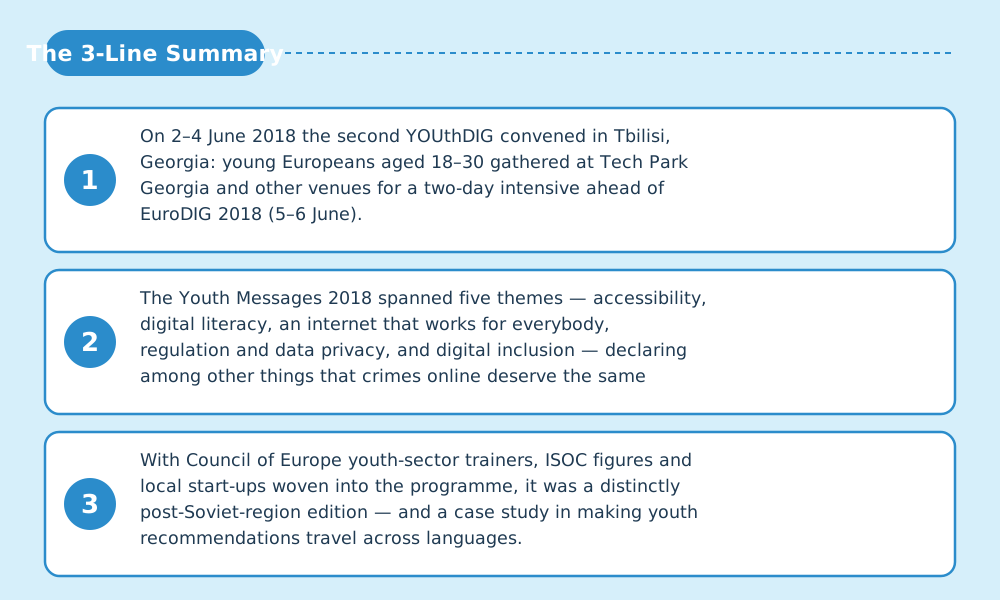
- On 2–4 June 2018 the second YOUthDIG convened in Tbilisi, Georgia: young Europeans aged 18–30 gathered at Tech Park Georgia and other venues for a two-day intensive ahead of EuroDIG 2018 (5–6 June).
- The Youth Messages 2018 spanned five themes — accessibility, digital literacy, an internet that works for everybody, regulation and data privacy, and digital inclusion — declaring among other things that crimes online deserve the same seriousness as crimes offline, published in 14 languages including Georgian.
- With Council of Europe youth-sector trainers, ISOC figures and local start-ups woven into the programme, it was a distinctly post-Soviet-region edition — and a case study in making youth recommendations travel across languages.
Welcome — this is the Japan IGF Support Organization. This in-depth report on YOUthDIG 2018 — Youth Dialogue on Internet Governance, Tbilisi draws on official outputs, session records and on-site reporting. In a hurry? The three lines above and the diagrams carry the gist.
Conference at a Glance (from official records)
| Item | Detail |
|---|---|
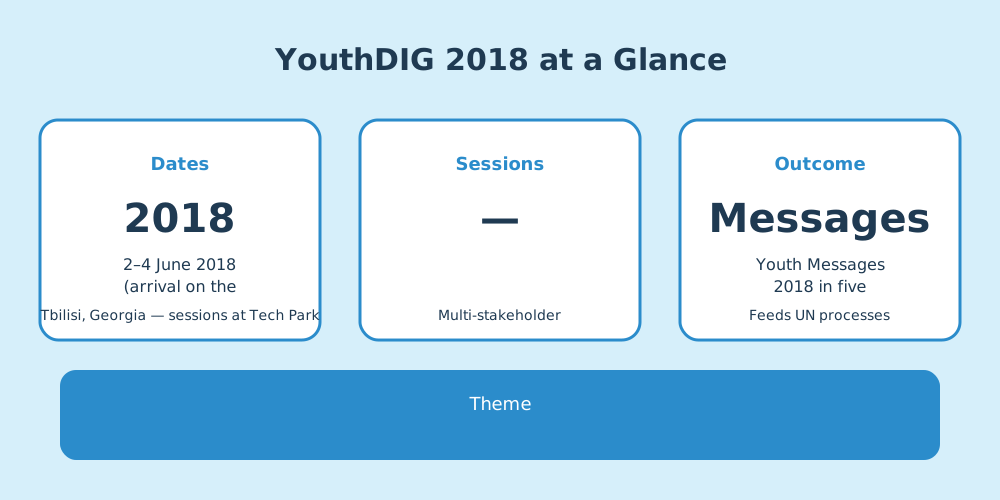
| Official name | YOUthDIG 2018 — Youth Dialogue on Internet Governance, Tbilisi |
| Dates | 2–4 June 2018 (arrival on the 2nd; the two-day programme ran 3–4 June) |
| Venue | Tbilisi, Georgia — sessions at Tech Park Georgia (GITA) and Rooms Hotel Tbilisi |
| Theme | Regional governance themes |
| Outcome | Youth Messages 2018 in five themes — accessibility, digital literacy, an internet that works for everybody, regulation/data privacy/cybercrime, and digital inclusion — published in 14 languages including Georgian and Urdu, and presented at EuroDIG and the global IGF |
(See the source list at the end of this article.)
Discussion Digest — from the Session Records
Key exchanges extracted from session records and transcripts.
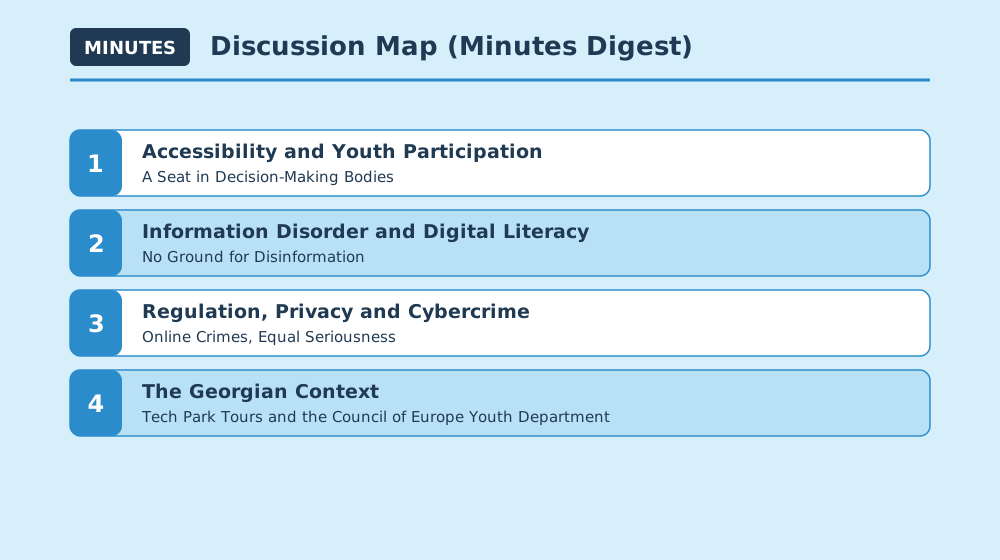
1. Accessibility and Youth Participation — A Seat in Decision-Making Bodies
Sessions: Youth Message 'Accessibility' and the youth participation workshop (4 June, 9:00; facilitated by Larry Strickling of ISOC and Michael J. Oghia)
- The messages called for equity of participation for underprivileged young people — women, minorities, LGBTQI+ — through funding mechanisms from governments, companies and international organisations [2][3]
- They demanded a systematic approach to youth participation in the statutory structures of internet governance stakeholders, such as youth representation in decision-making bodies [2][3]
- A dedicated session on how to get involved was facilitated by ISOC's Larry Strickling — the former NTIA administrator who oversaw the IANA stewardship transition [2][3]
2. Information Disorder and Digital Literacy — No Ground for Disinformation
Sessions: Youth Message 'Digital literacy'
- The messages declared that no one should tolerate mis-, dis- and malinformation nor give ground to those who create and share it, calling for more resources for critical thinking about information disorder [3]
- Education — identifying scams, netiquette, knowing your rights and responsibilities as a digital citizen — was framed as vital to digital literacy and online safety [3]
- Literacy education carried over from the 2017 messages as the cohort's most consistent demand [3]
3. Regulation, Privacy and Cybercrime — Online Crimes, Equal Seriousness
Sessions: Youth Message 'Regulation of the internet, data privacy and legal protection against cybercrime'
- Meeting days after GDPR took effect (25 May 2018), the cohort insisted everyone should have the right to decide how their own data is used — and that this right must be reasonably enforceable [3]
- Crimes committed online should be given the same seriousness and priority as crimes committed offline, they argued, while being tackled with tools suited to the online world [3]
- Regulation should be enforced by governments and intermediaries while empowering and protecting end users [3]
4. The Georgian Context — Tech Park Tours and the Council of Europe Youth Department
Sessions: Tech Park Georgia tours and start-up discussions (3–4 June); human rights workshop (3 June, 11:00, Rui Gomes, Head of Education and Training, CoE Youth Department)
- At Tech Park Georgia, run by the Georgian government's innovation agency GITA, fellows toured labs and debated with local start-ups, moderated by eco's Michael Rotert and GITA's Mariam Lashkhi [2]
- Rui Gomes and colleagues from the Council of Europe's Youth Department led workshops on human rights in the new media age and a rights-based approach to youth participation [2]
- Remote-participation moderator training (Bernard Sadaka) prepared fellows to help run sessions at the main EuroDIG meeting [2]
Three-Minute Short Talk — Your Questions Answered
Q. What made this edition distinctive?
A. The Georgian setting. Fellows debated with local start-ups at a government-run tech park, and the Council of Europe's Youth Department ran the human rights workshops — a distinctly eastern-frontier edition of EuroDIG.
Q. What do the Youth Messages actually say?
A. About fifteen recommendations across five themes. Highlights: treat online crimes with the same seriousness as offline ones, and put youth representatives in decision-making bodies. Fresh after GDPR, data self-determination featured strongly.
Q. Why should I care?
A. Publishing the messages in 14 languages — down to Georgian and Urdu — is a model for making youth recommendations travel beyond their home audience.
What Is YouthDIG? (for first-time readers)
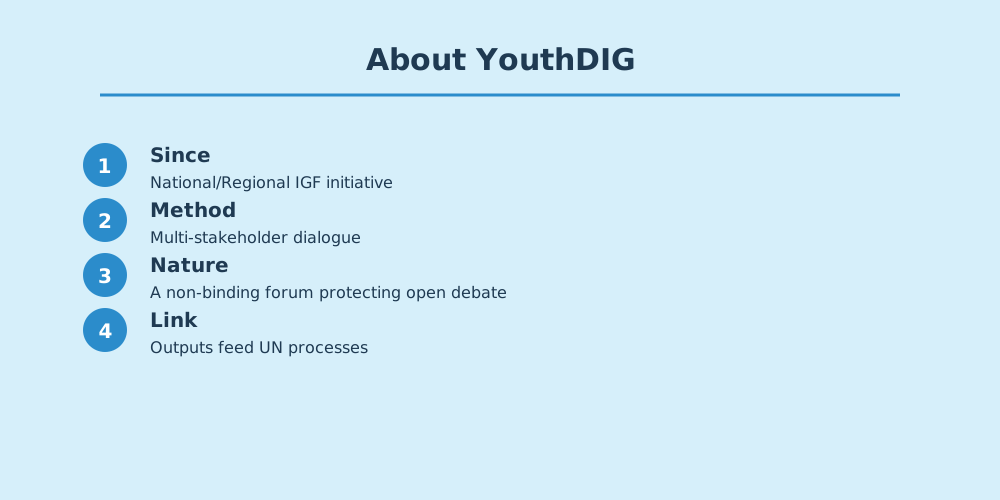
YouthDIG is a National or Regional IGF Initiative (NRI), aligning local internet governance discussion with global IGF principles.
Why It Matters to You
What was discussed here becomes the baseline for national digital policy, platform rules and AI regulation worldwide within a few years. The principles confirmed at the 2018 meeting are the foundation of the "next rules" for the phones, social platforms and AI services you use every day.
Sources & References
- YOUthDIG 2018(概要・体制・フェローシップ) — EuroDIG Wiki(EuroDIG公式) (accessed 2026-07-22)
- YOUthDIG 2018 programme(2-4 June 2018, Tbilisi, Georgia/会場・進行者一覧) — EuroDIG Wiki(EuroDIG公式) (accessed 2026-07-22)
- YOUthDIG 2018 messages(ユースメッセージ全文・14言語) — EuroDIG Wiki(EuroDIG公式) (accessed 2026-07-22)
- EuroDIG 2018(June 5–6, Tbilisi / Georgia) — EuroDIG Wiki(EuroDIG公式) (accessed 2026-07-22)
- YOUthDIG(系列概要と歴代ユースメッセージのアーカイブ) — EuroDIG(eurodig.org) (accessed 2026-07-22)
Quotes are translated or condensed from the records listed above. Bracketed numbers [n] refer to the source list.
Related links
- IGF official (NRI list): https://www.intgovforum.org/en/content/national-and-regional-igf-initiatives
- Japan IGF: https://japanigf.jp/
- Yuki Nakazawa's blog: https://nkzw.jp/category/igf/
更新履歴
第1稿投稿 2026年7月22日 14時02分(記事コンテンツアップ)
— 中澤祐樹

