


The 3-Line Summary
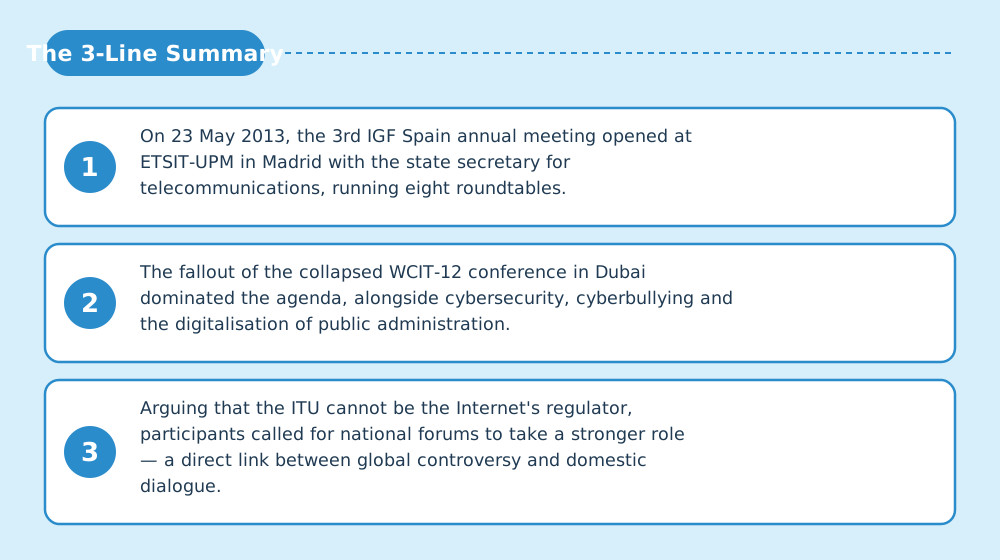
- On 23 May 2013, the 3rd IGF Spain annual meeting opened at ETSIT-UPM in Madrid with the state secretary for telecommunications, running eight roundtables.
- The fallout of the collapsed WCIT-12 conference in Dubai dominated the agenda, alongside cybersecurity, cyberbullying and the digitalisation of public administration.
- Arguing that the ITU cannot be the Internet's regulator, participants called for national forums to take a stronger role — a direct link between global controversy and domestic dialogue.
Welcome — this is the Japan IGF Support Organization. This in-depth report on 3rd Annual Meeting of the Internet Governance Forum Spain (IGF Spain 2013) draws on official outputs, session records and on-site reporting. In a hurry? The three lines above and the diagrams carry the gist.
Conference at a Glance (from official records)
| Item | Detail |
|---|---|
| Official name | 3rd Annual Meeting of the Internet Governance Forum Spain (IGF Spain 2013) |
| Edition | 3rd Annual Meeting |
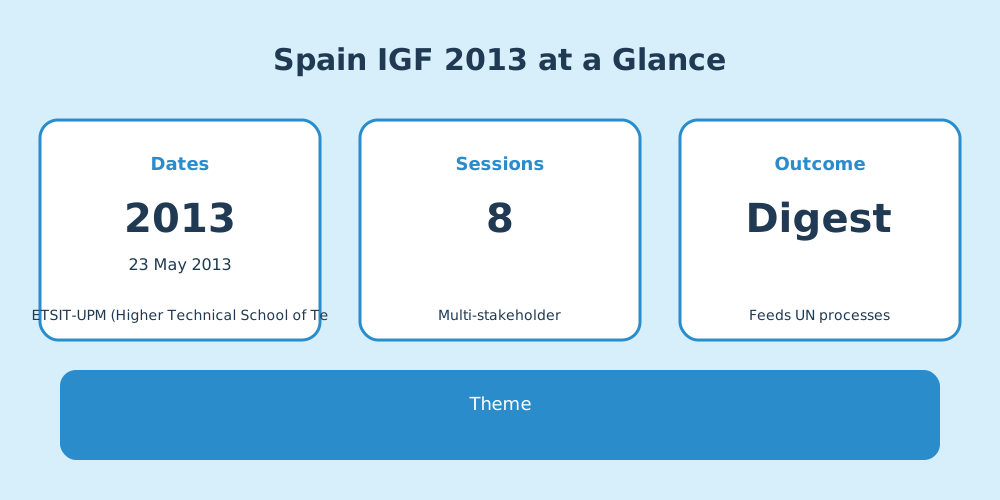
| Dates | 23 May 2013 |
| Venue | ETSIT-UPM (Higher Technical School of Telecommunications Engineering, Universidad Politécnica de Madrid), Madrid |
| Theme | Regional governance themes |
| Sessions | 8 (Eight roundtables and expert presentations) |
| Opening | Opened by State Secretary Víctor Calvo-Sotelo, ETSIT director Félix Pérez and coordinator Jorge Pérez |
| Host | Coordinated by Jorge Pérez; supported by Fundación Telefónica, Fundación Vodafone, Google and Orange, with Asociación de Internautas, AMETIC, ANEI, CENTAC and others |
(See the source list at the end of this article.)
Discussion Digest — from the Session Records
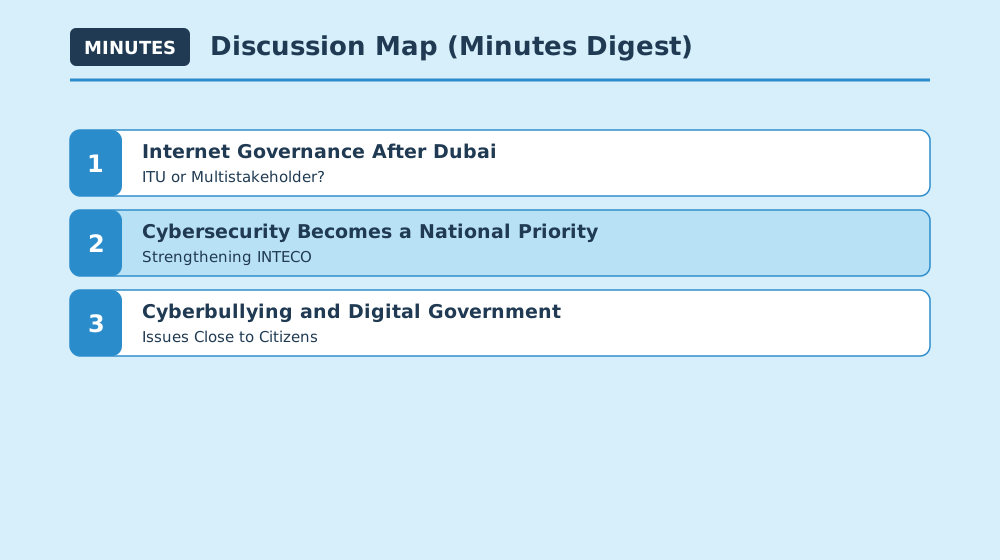
Key exchanges extracted from session records and transcripts.
1. Internet Governance After Dubai — ITU or Multistakeholder?
Sessions: Session 'Internet governance after the Dubai Conference' (#igfGob)
"Getting Europe to align on the Internet today is highly complicated — that is why we must influence governments"
— Víctor Domingo (President, Asociación de Internautas) [1][2]
- Jorge Pérez argued that the collapse of WCIT-12 in Dubai over the new telecom regulations showed the ITU cannot be the body that governs the Internet, urging national forums to step up [1][2]
- Juan Corro, chief of staff to the state secretary, noted how hard it is for the EU-27 to reach 'useful, balanced and feasible' common positions [1][2]
2. Cybersecurity Becomes a National Priority — Strengthening INTECO
Sessions: Opening session and cybersecurity discussions
- State Secretary Calvo-Sotelo said cybersecurity had become a top concern for governments and companies that year, explaining the government's reinforcement of INTECO (now INCIBE) [1][2]
- The debate on public-private roles unfolded in the run-up to Spain's first National Cybersecurity Strategy, adopted in December 2013 [1][2]
3. Cyberbullying and Digital Government — Issues Close to Citizens
Sessions: Roundtables on cyberbullying and cyber-coexistence, and digital public administration
- Parallel roundtables covered cyberbullying and online coexistence, intellectual property, privacy and digital inclusion [1][2]
- Digitalising public administration was framed as a route to efficiency and transparency, with participants agreeing on the need for rules that make the Internet safer and more inclusive [1][2]
Three-Minute Short Talk — Your Questions Answered
Q. What did the meeting decide?
A. It was a dialogue, not a decision body — but coming right after WCIT-12 split the world into ITU-centric and multistakeholder camps, it was a key moment for Spain to work out who should govern the Internet.
Q. What was the most contentious topic?
A. Control of Internet governance. Against ITU-centred intergovernmental management, Spain's Internet-users association argued openly for ICANN-style models and for influencing governments.
Q. Why does it matter?
A. The WCIT-12 fault line debated here — with countries like Japan and the US refusing to sign the new regulations — still defines global Internet-governance politics today.
What Is Spain IGF? (for first-time readers)
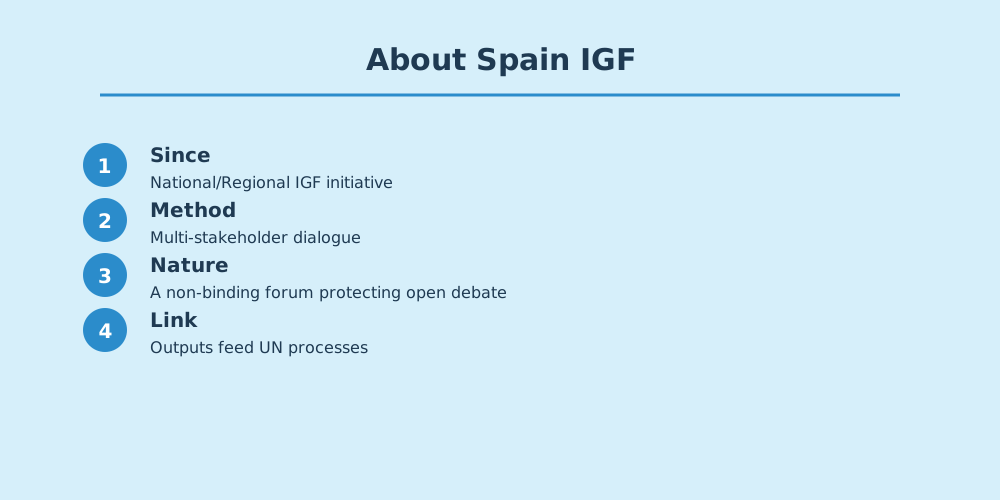
Spain IGF is a National or Regional IGF Initiative (NRI), aligning local internet governance discussion with global IGF principles.
Why It Matters to You
What was discussed here becomes the baseline for national digital policy, platform rules and AI regulation worldwide within a few years. The principles confirmed at the 2013 meeting are the foundation of the "next rules" for the phones, social platforms and AI services you use every day.
Sources & References
- IGF Spain 2013 – III Jornadas anuales — igfspain.org (accessed 2026-07-22)
- III Jornadas Anuales IGF Spain 2013(当時の詳細報告・発言記録) — igfspain.org (accessed 2026-07-22)
- Programa Jornada IGF Spain 2013(プログラムPDF) — igfspain.org (accessed 2026-07-22)
- Historia de los 10 años del Foro de Gobernanza de Internet Spain — IGF Spain(10周年史, jornadasigfspain.es) (accessed 2026-07-22)
Quotes are translated or condensed from the records listed above. Bracketed numbers [n] refer to the source list.
Related links
- IGF official (NRI list): https://www.intgovforum.org/en/content/national-and-regional-igf-initiatives
- Japan IGF: https://japanigf.jp/
- Yuki Nakazawa's blog: https://nkzw.jp/category/igf/
更新履歴
第1稿投稿 2026年7月15日 18時42分(記事コンテンツアップ)
— 中澤祐樹

